
 EN
ENAuthor: Ajay Bhoyar, Senior Global Technical Manager, EW Nutrition
Why strategic use of xylanase in addition to phytase matters
Modern poultry and swine diets rely heavily on plant-derived ingredients such as corn, wheat, barley, soybean meal, rice bran, sunflower meal, and various co-products based on regional availability. While these ingredients provide valuable nutrients, some may also contain anti-nutritional factors in varying amounts that limit nutrient utilization.
Two of the most important anti-nutritional factors are phytate (phytic acid), the primary storage form of phosphorus in plants, and arabinoxylans, the major non-starch polysaccharides (NSP) found in cereals. Phytate reduces the availability of phosphorus and can bind proteins, amino acids, minerals, and digestive enzymes, whereas arabinoxylans can increase digesta viscosity and physically entrap nutrients within plant cell walls (Ravindran and Son 2011; Selle and Ravindran 2007).
Traditionally, phytase was viewed primarily as a phosphorus-releasing enzyme and xylanase as a carbohydrase targeting arabinoxylans. However, contemporary research has demonstrated that both enzymes exert effects beyond their primary substrates. High-dose phytase programs can substantially reduce phytate’s anti-nutritional effects through extensive de-phytinization of the diet, while xylanase can stimulate fiber fermentation and beneficial microbial activity through the production of xylo-oligosaccharides (XOS) and arabinoxylo-oligosaccharides (AXOS). These expanded functional roles have renewed interest in combined phytase-xylanase strategies in poultry and swine nutrition (Cowieson, Wilcock, and Bedford 2011; Moita and Kim 2022).
Understanding the Individual Roles of Phytase and Xylanase
Phytase: Unlocking Phytate-Bound Nutrients
Phytase (myo-inositol hexakisphosphate phosphohydrolase) catalyzes the stepwise removal of phosphate from phytic acid or its salt phytate. The removal of the phosphate group starts with a fully phosphorylated phytic acid (IP6), followed by penta- (IP5), tetra- (IP4), tri- (IP3), di- and mono-esters of inositol in descending order of preference. The stepwise hydrolysis results in the release of phosphorus and reduces the anti-nutritional effects of phytate (Wyss et al. 1999 and Yu et al. 2012). Beyond phosphorus release, phytase improves the availability of calcium, amino acids, energy, and trace minerals by reducing phytate-protein and phytate-mineral complexes (Adeola and Cowieson 2011; Dersjant-Li et al. 2015).
Research over the past two decades has consistently demonstrated that phytase supplementation:
-
Improves phosphorus digestibility and retention.
-
Reduces the requirement for inorganic phosphate supplementation.
-
Enhances amino acid and energy utilization.
-
Improves growth performanc and feed efficiency.
-
Reduces phosphorus excretion and environmental loading (Dersjant-Li et al. 2015; Moita and Kim 2022).
Higher phytase inclusion rates (super-dosing) can further increase phytate destruction and myo-inositol generation, creating so-called extra-phosphoric benefits that extend beyond phosphorus release (Cowieson et al. 2011; Dersjant-Li et al. 2015).
Xylanase: Breaking Down Cell Wall Barriers
Xylanase hydrolyzes arabinoxylans and other xylan-containing NSPs. In cereal-based diets, arabinoxylans can increase intestinal viscosity and encapsulate nutrients, reducing nutrient accessibility (Bedford and Cowieson 2020; Ravindran 2013).
By degrading arabinoxylans, xylanase:
-
Reduces digesta viscosity.
-
Improves nutrient diffusion and enzyme-substrate interaction.
-
Releases nutrients trapped within cell wall structures.
-
Enhances metabolizable energy utilization.
-
Generates arabino xylo-oligosaccharides (AXOS) and xylo-oligosaccharides (XOS), which may support beneficial microbial populations and short-chain fatty acid production (Courtin et al. 2008; Kiarie et al. 2013). These effects contribute to improved feed efficiency, gut health, and nutrient digestibility in both poultry and pigs (Ravindran and Son 2011).
In a broiler study (corn-soy-rice diets), Axxess XY resulted in about 20% improvement in the butyrogenic to the total microbiome ratio, while maintaining performance in terms of body weight and FCR in the reduced energy diets (Fig.1).
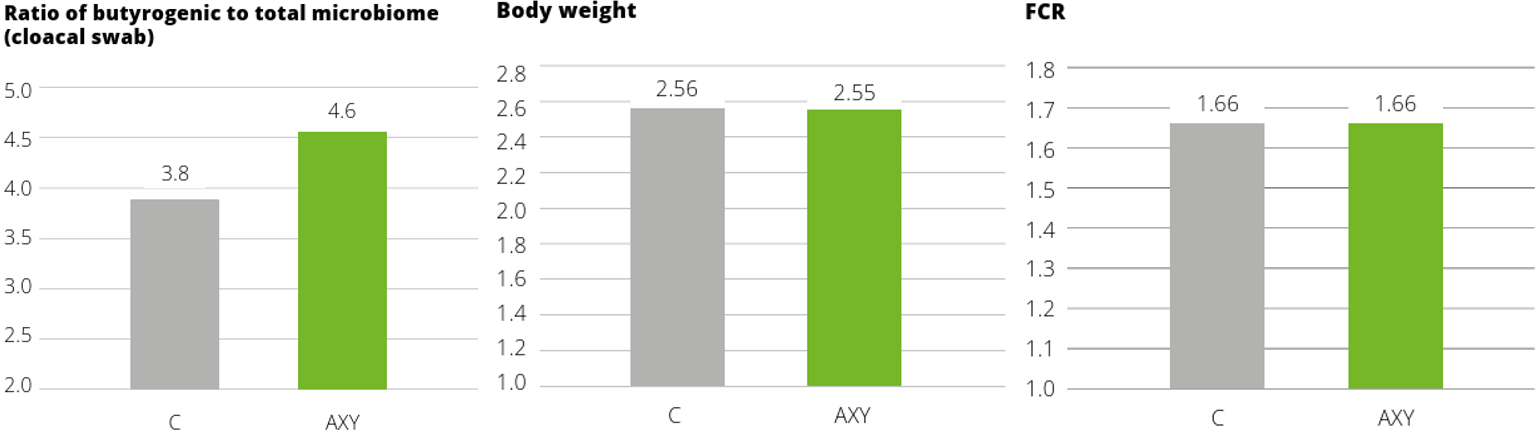
Control (C) = Standard diet
Axxess XY (AXY) = Standard diet – 100 kcal/kg + Axxess XY
Why Phytase and Xylanase Work Well Together
The biological relationship between phytase and xylanase can be viewed as a sequential removal of nutritional barriers.
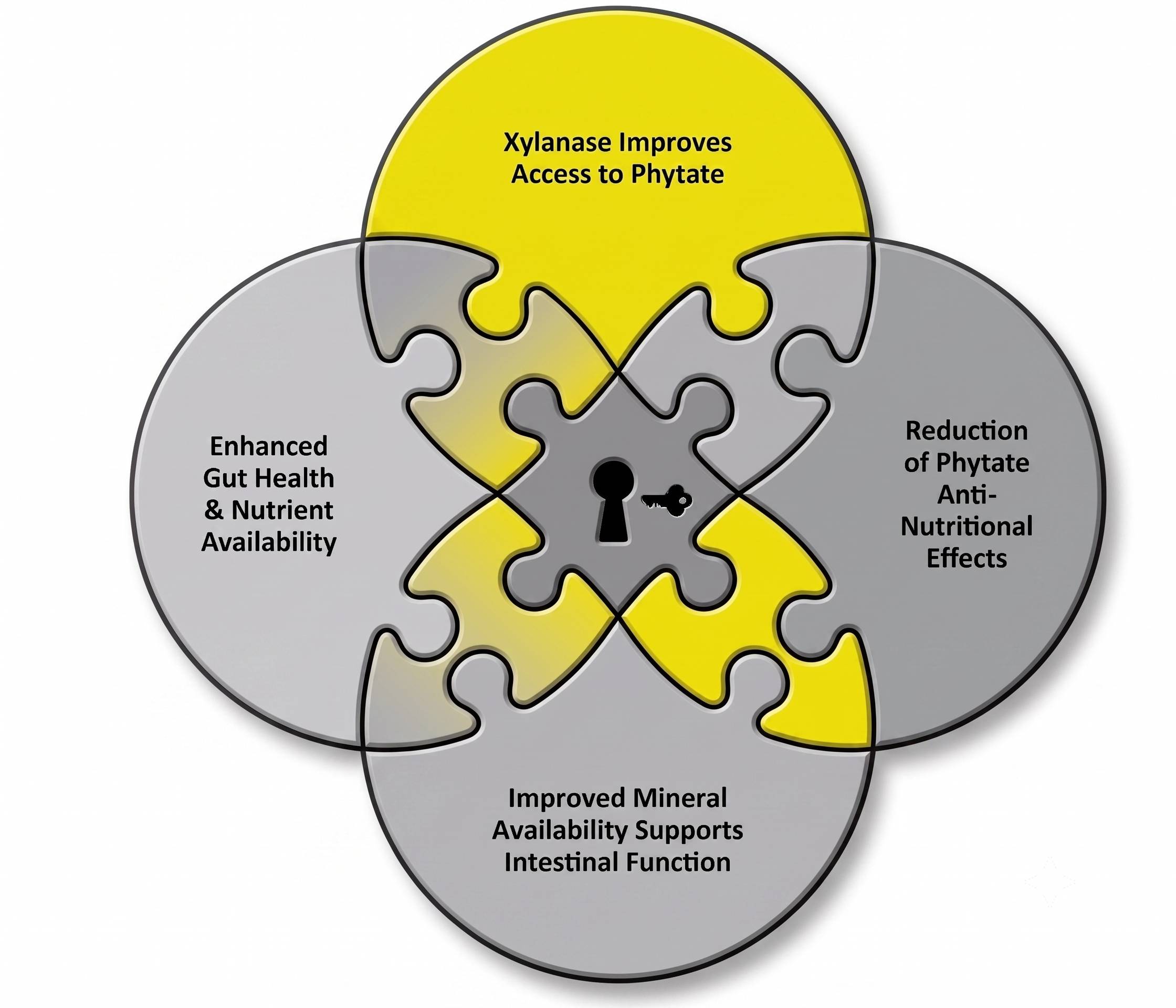
First, xylanase degrades cell-wall arabinoxylans, reducing nutrient encapsulation and improving access to intracellular nutrients, including phytate. Second, phytase hydrolyzes the newly accessible phytate, reducing its anti-nutritional effects and releasing phosphorus, minerals, amino acids, and myo-inositol. Third, the reduction in phytate-protein and phytate-mineral complexes improves digestive efficiency and may enhance the utilization of nutrients liberated through NSP degradation (Cowieson and Adeola 2005; Dersjant-Li et al. 2015)
Simultaneously, xylanase-generated XOS and AXOS may stimulate microbial fermentation, while phytase reduces phytate-mediated disruption of digestion and intestinal physiology. These complementary mechanisms create opportunities for additive or synergistic responses, particularly in diets rich in both phytate and NSP.
Mechanisms Underpinning Complementary and Synergistic Responses
1. Xylanase Improves Access to Phytate
A substantial portion of dietary phytate is physically associated with plant cell structures. By degrading cell walls and reducing encapsulation, xylanase can increase exposure of phytate molecules to phytase activity. This improves the likelihood of phytate hydrolysis occurring earlier and more completely during digestion (Cowieson and Adeola 2005; Bedford and Cowieson 2020).
In practical terms, xylanase opens cell wall structure and helps expose nutrients that phytase can then liberate.
2. Reduction of Phytate Anti-Nutritional Effects
Phytate binds proteins, amino acids, minerals, and endogenous digestive enzymes. When phytase degrades phytate:
-
Protein-mineral-phytate complexes are reduced.
-
Digestive enzymes operate more effectively.
-
Nutrients released by xylanase become more accessible and usable.
Consequently, phytase may enhance the nutritional response obtained from NSP degradation (Adeola and Cowieson 2011; Dersjant-Li et al. 2015).
3. Improved Mineral Availability Supports Intestinal Function
Phytase increases the availability of phosphorus, calcium, zinc, and other minerals. Adequate mineral nutrition supports epithelial integrity, enzyme activity, skeletal development, and immune competence, thereby improving the animal’s ability to utilize nutrients released through xylanase activity (Dersjant-Li et al. 2015; Moita and Kim 2022).
4. Enhanced Gut Health and Nutrient Availability
Emerging evidence suggests that both enzymes exert functional effects beyond nutrient release.
Phytase has been associated with improved intestinal morphology, reduced anti-nutritional pressure from phytate, and enhanced nutrient utilization (Adeola and Cowieson 2011).
Xylanase has been associated with reduced intestinal viscosity, increased production of fermentable oligosaccharides, enhanced populations of beneficial bacteria, and greater short-chain fatty acid production (Courtin et al. 2008; Kiarie et al. 2013).
When combined, these effects may support a more resilient gastrointestinal ecosystem, particularly in young broilers and nursery pigs (Moita and Kim 2022).
Evidence of phytase and xylanase synergy in monogastric animals
A comprehensive review by Moita and Kim (2022) concluded that phytase and xylanase consistently improve nutrient digestibility and growth performance in both nursery pigs and broiler chickens. Importantly, the authors also highlighted emerging evidence that both enzymes may positively influence intestinal health, oxidative status, and microbial ecology, indicating that their benefits extend beyond simple nutrient release.
In poultry, phytase super-dosing programs have repeatedly demonstrated benefits beyond phosphorus release, while xylanase supplementation has been associated with improvements in energy utilization, gut health, and microbial fermentation. In swine, phytase improves phosphorus and calcium digestibility and reduces phytate-associated anti-nutritional effects, while xylanase contributes to improved utilization of cereal fiber fractions and supports intestinal function. Together, these mechanisms support the use of combined enzyme strategies in modern precision nutrition programs
Evidence in Broilers
Broilers represent one of the best-documented examples of multi-enzyme benefits.
Numerous studies have shown independent improvements from phytase and xylanase supplementation in average daily gain, feed conversion ratio, phosphorus digestibility, amino acid digestibility, metabolizable energy, and bone mineralization (Ravindran 2013; Adeola and Cowieson 2011).
From a mechanistic perspective:
-
Xylanase opens cell-wall structures.
-
More intracellular phytate becomes accessible.
-
Phytase hydrolyzes phytate more effectively.
-
Greater quantities of phosphorus, amino acids, and energy become available.
The resulting response is often greater than would be expected from either enzyme alone (Cowieson and Adeola 2005).
The beneficial effects of Axxess XY, a novel xylanase, even with phytase superdosing (5000 FTU/g at 150 g/ton dose), were observed in a broiler trial with corn-soy-rice and rapeseed meal-based diets pelleted at 85 °C for 60 sec. In this study, Axxess XY improved broiler performance compared to the control group (Fig.2) through its ability to break down both soluble and insoluble arabinoxylans, even with varying levels of broken rice alongside corn and soy and improves the digestion and utilization of nutrients.
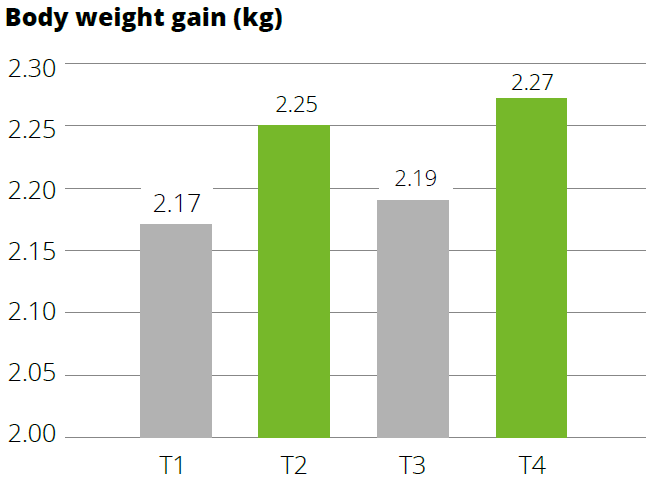
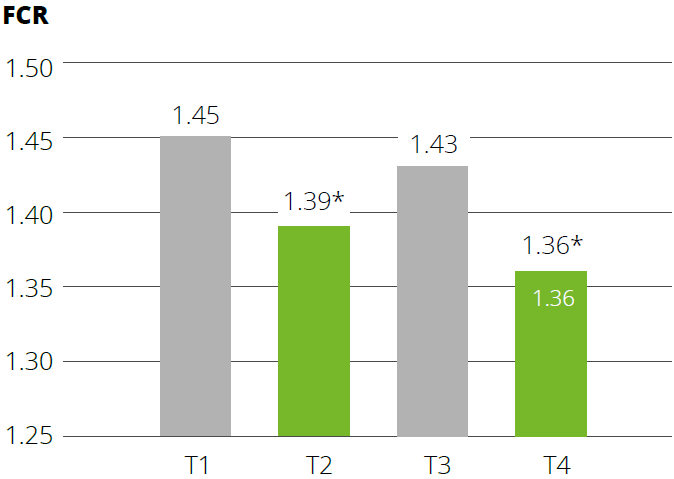
Fig.2: Axxess XY improved broiler body weight and FCR with Phytase superdose
T1: Control low (corn, soy diet with low inclusion of rice), T2: T1 + Axxess XY – 100 ADXU/Kg of feed, T3: Control High (corn, soy diet with high inclusion of rice), T4: T3 + Axxess XY – 100 ADXU/Kg of feed
Evidence in Laying Hens
Taylor et al. (2018) evaluated phytase and xylanase supplementation in wheat-barley-based layer diets and reported increased hen-day egg production, improved phosphorus digestibility, enhanced phytate degradation, and greater myo-inositol generation with increasing phytase inclusion.
Interestingly, xylanase improved feed efficiency when phytase was included at 300 FTU/kg, suggesting a functional interaction between the two enzymes (Taylor et al. 2018).
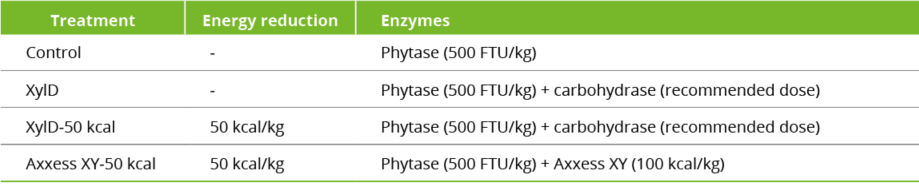
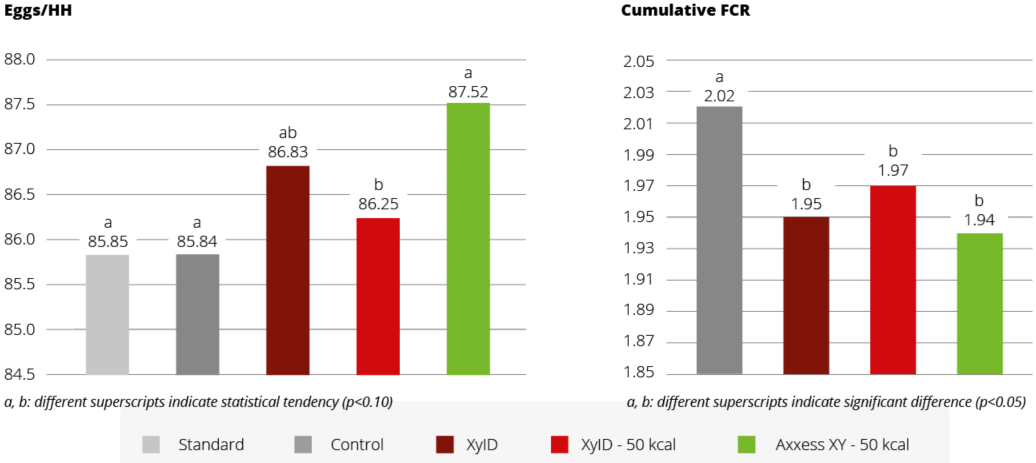
A commercial laying hen study with 23-week-old HyLine W-80 laying hens indicated that the inclusion of Axxess XY, a novel bacterial xylanase in the diet, and a reduction of 50 kcal/kg improved laying hen performance (Fig.3). All the diets in this study were supplemented with 500 FTU/kg phytase.
For commercial layer operations, these findings suggest opportunities for:
-
Improve phosphorus utilization.
-
Support egg output and feed efficiency.
-
Reduce reliance on inorganic phosphate sources.
-
Lower nutrient excretion.
Evidence in Nursery and Growing Pigs
Historically, responses to NSP-degrading enzymes in pigs were considered less dramatic than in poultry because pigs possess a longer digestive tract and greater fermentative capacity (Ravindran and Son 2011).
However, recent research has demonstrated substantial benefits from both phytase and xylanase, particularly in nursery pigs. Phytase supplementation has been associated with improved phosphorus and calcium digestibility, enhanced growth performance, increased myo-inositol availability, and favorable modulation of intestinal microbiota (Moita and Kim 2022).
Similarly, xylanase supplementation has been associated with improved nutrient digestibility, enhanced fiber utilization, and beneficial shifts in gut microbial populations (Moita and Kim 2022).
The review by Moita and Kim (2022) concluded that phytase and xylanase contribute not only to nutrient digestibility and growth performance but also to improved intestinal health and microbiome function in nursery pigs and broiler chickens.
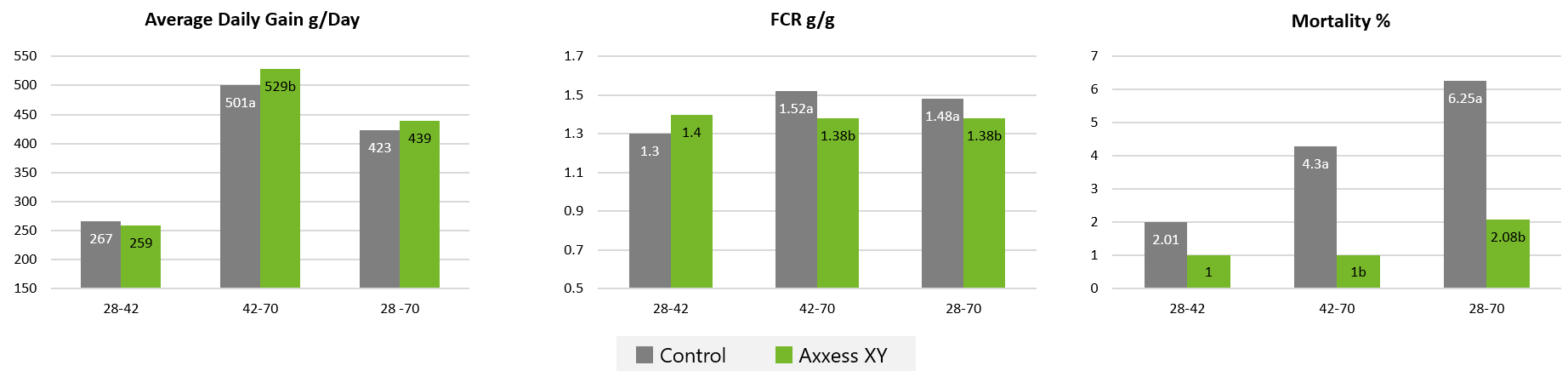
EW Nutrition trial results (Fig.4) demonstrated that piglets receiving Axxess XY showed a 14-point improvement in FCR between 43 and 70 days of age, resulting in a 10-point improvement in overall FCR compared to the control group. Higher average daily gain (ADG) during days 28–70 resulted in slightly higher overall daily weight gain at the end of the trial. Moreover, mortality was 4 percentage points lower in the Axxess XY group (2.08%) than in the control group (6.25%). Throughout the trial, piglets supplemented with Axxess XY demonstrated higher daily gain in the second phase and lower feed intake throughout the study, resulting in improved FCR. Additionally, mortality was lower in the Axxess XY group. All diets were supplemented with standard phytase at 500 FTU/kg.
Practical Applications
The strongest justification for combining phytase and xylanase occurs when diets contain:
-
Alternative raw materials and by-products.
-
Reduced phosphorus specifications.
-
Reduced energy formulations.
-
Young animals with immature digestive capacity (Ravindran and Son 2011; Ravindran 2013).
Under these conditions, the combination often delivers greater economic value than either enzyme alone.
Economic and Sustainability Benefits
The combined use of phytase and xylanase can contribute to lower feed costs through matrix application, reduced inorganic phosphorus inclusion, improved feed conversion, and greater ingredient flexibility (Bedford and Cowieson 2020).
From an environmental perspective, improved nutrient digestibility translates into lower phosphorus and nutrient excretion, helping producers reduce the environmental footprint of poultry and swine production (Ravindran and Son 2011; Moita and Kim 2022).
Conclusion
Phytase and xylanase address different but interconnected anti-nutritional constraints in poultry and swine diets. Xylanase reduces cell-wall barriers and nutrient encapsulation, while phytase hydrolyzes phytate and releases phosphorus, essential minerals, amino acids, and energy.
The available evidence supports a predominantly complementary relationship between these enzymes, with synergistic responses frequently observed when nutrient accessibility limits phytase activity or when phytate constrains the utilization of nutrients released through NSP degradation.
For broilers, laying hens, and nursery pigs, the combination can improve nutrient digestibility, feed efficiency, gut function, mineral utilization, and sustainability outcomes. As feed formulations increasingly incorporate alternative ingredients and tighter nutrient specifications, the strategic use of phytase and xylanase together will remain a cornerstone of precision nutrition.
References:
Adeola, O., and A. J. Cowieson. 2011. “Opportunities and Challenges in Using Exogenous Enzymes to Improve Nonruminant Animal Production.” Journal of Animal Science 89 (10): 3189–3218.
Bedford, M. R., and A. J. Cowieson. 2020. “Matrix Values for Exogenous Enzymes and Their Application in the Real World.” Journal of Applied Poultry Research 29 (1): 15–22.
Courtin, C. M., W. F. Broekaert, K. Swennen, O. Lescroart, O. Onagbesan, J. Buyse, E. Decuypere, and J. A. Delcour. 2008. “Dietary Inclusion of Wheat Bran Arabinoxylooligosaccharides Induces Beneficial Nutritional Effects in Chickens.” Cereal Chemistry 85: 607–613.
Cowieson, A. J., and O. Adeola. 2005. “Carbohydrase, Protease and Phytase Have an Additive Beneficial Effect in Nutritionally Marginal Diets for Broiler Chicks.” Poultry Science 84: 1860–1867.
Cowieson, A. J., P. Wilcock, and M. R. Bedford. 2011. “Super-Dosing Effects of Phytase in Poultry and Other Monogastrics.” World’s Poultry Science Journal 67 (2): 225–236.
Dersjant-Li, Y., A. Awati, H. Schulze, and G. Partridge. 2015. “Phytase in Non-Ruminant Animal Nutrition: A Critical Review on Phytase Activities in the Gastrointestinal Tract and Influencing Factors.” Journal of the Science of Food and Agriculture 95 (5): 878–896.
Lei, X. G., J. D. Weaver, E. Mullaney, A. H. Ullah, and M. J. Azain. 2013. “Phytase, a New Life for an ‘Old’ Enzyme.” Annual Review of Animal Biosciences 1: 283–309.
Moita, V. H. C., and S. W. Kim. 2022. “Nutritional and Functional Roles of Phytase and Xylanase Enhancing the Intestinal Health and Growth of Nursery Pigs and Broiler Chickens.” Animals 12 (23): 3322.
Ravindran, V. 2013. “Feed Enzymes: The Science, Practice and Metabolic Realities.” In Feed Enzymes, edited by M. R. Bedford and G. G. Partridge. Wallingford, UK: CAB International.
Ravindran, V., and J.-H. Son. 2011. “Feed Enzyme Technology: Present Status and Future Developments.” Recent Patents on Food, Nutrition and Agriculture 3 (2): 102–109.
Taylor, A. E., M. R. Bedford, S. C. Pace, and H. M. Miller. 2018. “The Effects of Phytase and Xylanase Supplementation on Performance and Egg Quality in Laying Hens.” British Poultry Science 59 (5): 554–561.
Wyss, M., R. Brugger, A. Kronenberger, R. Rémy, R. Fimbel, G. Oesterhelt, et al. 1999. “Biochemical Characterization of Fungal Phytases (Myo-Inositol Hexakisphosphate Phosphohydrolase): Catalytic Properties.” Applied and Environmental Microbiology 65 (2): 367–373.
Yu, S., A. Cowieson, C. Gilbert, P. Plumstead, and S. Dalsgaard. 2012. “Interactions of Phytate and Myo-Inositol Phosphate Esters (IP1–5), Including IP5 Isomers, with Dietary Protein and Iron and Inhibition of Pepsin.” Journal of Animal Science 90 (6): 1824–1832.







 Brasil
 Colombia (ES)
 México (ES)
 United States
 Belgium (EN)
 Croatia (EN)
 Deutschland
 España
 France
 Great Britain
 Italia
 Nederland (EN)
 Österreich (DE)
 Polska
 Россия
 Schweiz (DE)
 Türkiye
 Україна (RU)
 عربى
عربى South Africa (EN)
 Morocco
 Nigeria
 Uganda
 Kenya
Kenya Tanzania
 Australia
 中国大陆
中国大陆 India (EN)
 日本
日本 Malaysia (EN)
 Philippines (EN)
 ไทย (EN)
 Việt Nam (EN)
