 OK
OK
 EN
EN
by Ivan Ilič, Application Manager EW Nutrition GmbH
Choosing the right strategy
During global client visits, I frequently observe that the primary objective of a process is disconnected from the subsequent steps and final actions. Choosing a strategy is sometimes done paradoxically – like putting worn-out winter tires on a vehicle just because they are cheap and available in your garage, and then attempting to race in the Paris-Dakar rally. To succeed, you must choose the right race or use the proper equipment; anything else is a waste of time and energy without meaningful results. Let’s examine heat treatment and Salmonella control in feed processing as a prime example.
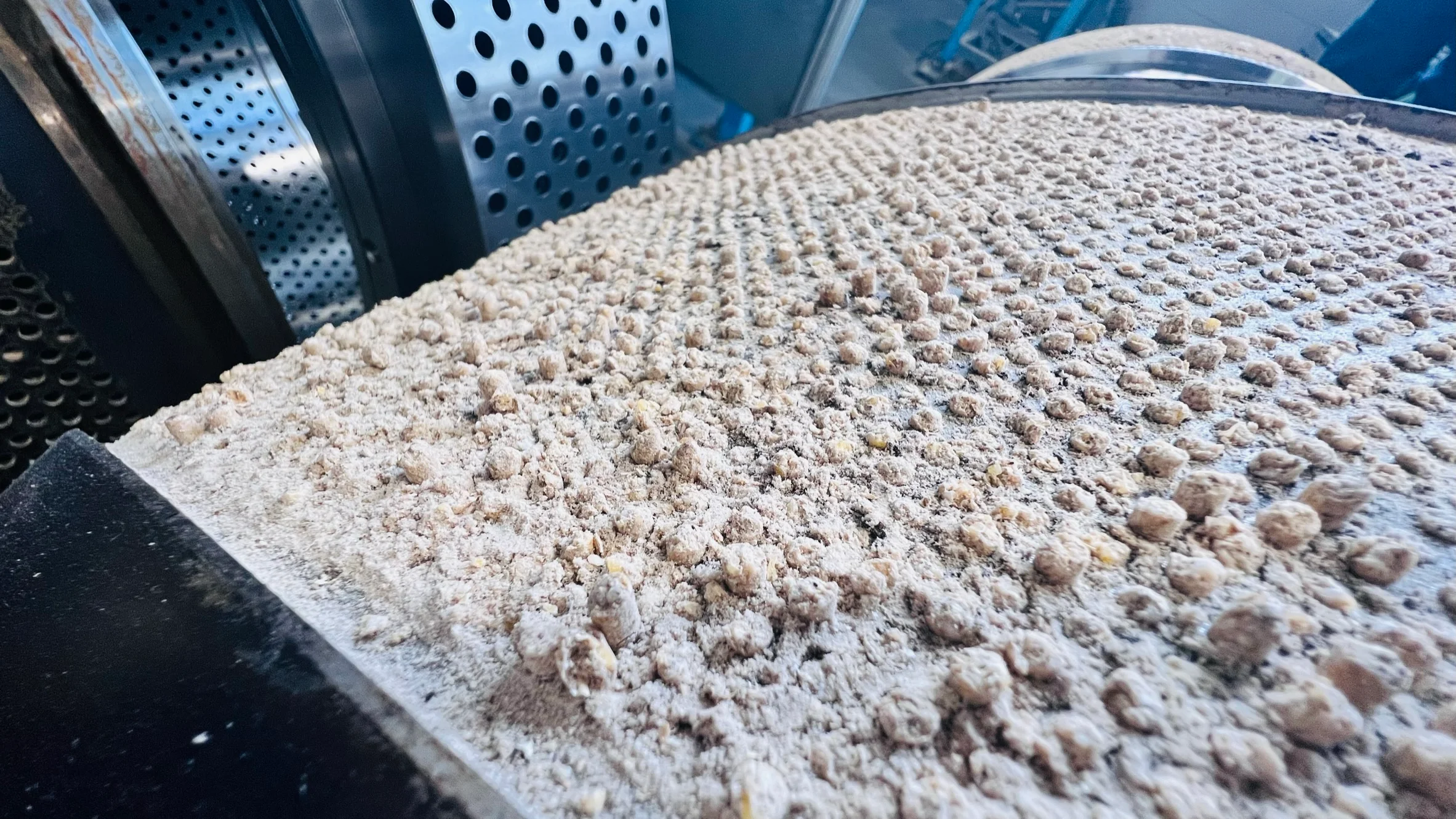
Moisture is not merely a percentage point in the final product; it is a fundamental component of high-quality feed. While much has been written about its influence on pellet quality, energy efficiency, and starch gelatinization, its role extends much further. Moisture is one of the most critical parameters influencing the effectiveness of Salmonella control in feed manufacturing. Its impact is observed across multiple stages, including thermal treatment, chemical control using organic acids, and post-processing stability during storage and handling.
Thermal processing and microbial resistance
From a thermal processing perspective, moisture directly affects the heat resistance of Salmonella. In low-moisture environments, such as dry feed (10–11% moisture), Salmonella cells exhibit significantly increased thermal resistance. This is primarily because reduced moisture stabilizes cellular structures and limits heat-induced damage. As demonstrated by Gautam et al. (2020), decreasing moisture leads to increased survival of Salmonella during heat exposure. Consequently, higher temperatures or longer retention times are required to achieve equivalent microbial reduction in dry feed.
In contrast, the presence of moisture – especially in the form of steam during conditioning – enhances heat transfer and increases microbial susceptibility. Coe et al. (2022) showed that effective reductions (>6 log₁₀) of Salmonella in feed could be achieved under hydrothermal conditions, confirming that temperature, moisture, and time must be considered together. Moisture facilitates protein denaturation within bacterial cells and disrupts membrane integrity, significantly improving the lethality of heat treatment.

The role of organic acids
Moisture also plays a key role in the efficacy of organic acids used for Salmonella control. Organic acids act primarily through their undissociated form, which penetrates bacterial cell membranes. This mechanism is highly dependent on the presence of water. Liquid acids, already in an aqueous phase, are immediately active and capable of rapid antimicrobial action. Powder acids, on the other hand, require moisture for dissolution, diffusion, and activation. Under dry conditions, their antimicrobial effect is delayed or reduced; however, in conditioned feed, they can approach the efficacy of liquid acids.
When comparing powder versus liquid acids, it is important to distinguish between immediate efficacy in feed hygiene and biological efficacy in the bird. Liquid acids are typically more effective for rapid feed decontamination because they distribute more readily and do not require the same degree of moisture activation. Powder acids and salts may be less aggressive, easier to handle, and more stable during storage, providing a longer-lasting effect against recontamination. However, their performance depends heavily on feed moisture, conditioning, and release characteristics.
In the bird, protected or coated acids may outperform free liquid acids in later gut segments because they are designed to survive the upper digestive tract. Therefore, the definition of ‘better’ depends on the target: surface/feed kill, residual feed hygiene, or gut modulation. Direct comparative evidence remains limited, so this distinction should be viewed as a mechanistic interpretation rather than a universal ranking.
Balancing hygiene and nutritional quality
The interaction between heat treatment and organic acids also affects broiler performance. Research by Goodarzi Boroojeni et al. indicates that thermal processing severity changes nutrient digestibility. Their work shows that harsh conditioning can reduce ileal nutrient digestibility, while organic acid inclusion can improve early feed efficiency and help maintain performance. This is a vital practical point: the most aggressive hygienization strategy is not necessarily the best biological strategy. A feed mill can reduce microbial risk but may lose nutritional value if the thermal load is excessive.
Additionally, moisture improves the distribution and penetration of acids into microenvironments where bacteria may be protected, such as within dust particles or organic matrices. However, excessive moisture can dilute acids and reduce their local concentration. As in many aspects of processing, balance is the key.
Post-process hygiene and recontamination
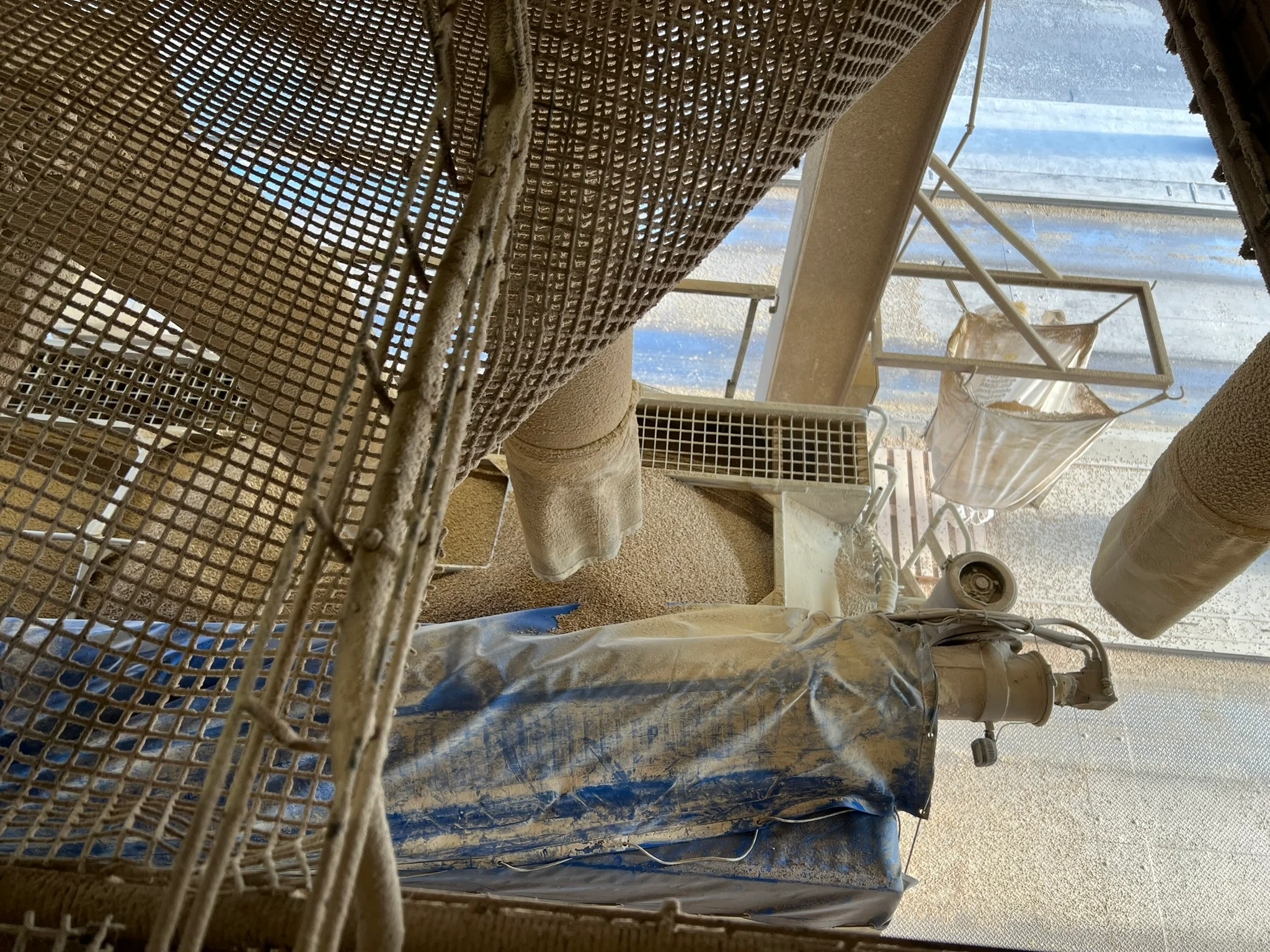
Reviews of Salmonella in feed manufacturing emphasize that even heat-treated feed may become contaminated again via dust, coolers, conveyors, or storage. While moisture and heat determine the success of the initial ‘kill step,’ post-process hygiene determines whether those gains are maintained. This is why chemical control measures are usually discussed as complements to – not replacements for – hydrothermal processing and mill hygiene.
Practical conclusions
Moisture acts as both an enabler and a risk factor. It enhances heat and acid efficacy during processing but can increase microbial risk if not properly managed after production. Effective Salmonella control requires an integrated approach. The research supports three practical conclusions:
- Moisture significantly enhances the effectiveness of heat treatment; dry feed protects Salmonella and increases its thermal resistance.
- Moisture influences acid efficacy, with powder forms being more moisture-dependent than liquid forms for rapid action.
- Organic acids can support animal performance, particularly body weight gain and feed efficiency.
With products like Surf-Ace, we can achieve increased pellet output, improved conditioning, enhanced durability of the pelleted feed, reduced fines formation, and improved overall quality of the final feed product. However, the best feed hygiene strategy is not to rely on one tool alone, but to also integrate controlled moisture, appropriate thermal treatment, organic acid application, and strict post-pellet hygiene into a single cohesive system. We just need to select the right tools to achieve the results we want.
References
Abd El-Ghany, W. A. (2024). Applications of organic acids in poultry production: An updated and comprehensive review. Agriculture, 14(10), 1756. https://doi.org/10.3390/agriculture14101756
Coe, N., Wei, S., Little, C., & Shen, C. (2022). Thermal inactivation of Salmonella surrogate, Enterococcus faecium, in mash broiler feed pelleted in a university pilot feed mill. Poultry Science, 104(5), 104998. https://doi.org/10.1016/j.psj.2025.104998
Gautam, M., Lian, K., Jin, Y., Steinbrunner, P., & Tang, J. (2020). Water activity influence on the thermal resistance of Salmonella in soy protein powder at elevated temperatures. Food Control, 113, 107160. https://doi.org/10.1016/j.foodcont.2020.107160
Goodarzi Boroojeni, F., Mader, A., Knorr, F., Vahjen, W., & Zentek, J. (2014). The effect of different thermal processing methods and carbohydrate sources on performance, nutrient digestibility and the intestinal microbiota of broiler chickens. Poultry Science, 93(5), 1152–1162. https://doi.org/10.3382/ps.2013-03632
Polycarpo, G. V., Burbarelli, M. F., Carão, A. C., Merseguel, C. E., Dadalt, J. C., Magalhães, R., … & Albuquerque, R. (2017). Effects of organic acids, probiotics and antibiotics on performance, gastrointestinal pH, and intestinal morphology of broiler chickens. Poultry Science, 96(1), 127–134. https://doi.org/10.3382/ps/pew270
Tomičić, Z., Čabarkapa, I., Čolović, R., Đuragić, O., & Tomičić, R. (2019). Salmonella in the feed industry: Problems and potential solutions. Journal of Agronomy, Technology and Engineering Management, 2(1), 130–139.
Van Immerseel, F., Russell, J. B., Flythe, M. D., Gantois, I., Timbermont, L., Pasmans, F., … & Ducatelle, R. (2006). The use of organic acids to combat Salmonella in poultry: A mechanistic explanation of the efficacy. Avian Pathology, 35(3), 182–188. https://doi.org/10.1080/03079450600711045





 Brasil
 Colombia (ES)
 México (ES)
 United States
 Belgium (EN)
 Croatia (EN)
 Deutschland
 España
 France
 Great Britain
 Italia
 Nederland (EN)
 Österreich (DE)
 Polska
 Россия
 Schweiz (DE)
 Türkiye
 Україна (RU)
 عربى
عربى South Africa (EN)
 Morocco
 Nigeria
 Uganda
 Kenya
Kenya Tanzania
 Australia
 中国大陆
中国大陆 India (EN)
 日本
日本 Malaysia (EN)
 Philippines (EN)
 ไทย (EN)
 Việt Nam (EN)
