
 EN
ENAuthors: Valentina Mayorga, Predrag Persak, and Inge Heinzl, EW Nutrition
Every day, dairy cows convert large amounts of feed into milk, but part of that valuable energy is inevitably lost in the form of methane produced during rumen fermentation. This gas not only represents a metabolic inefficiency for the animal but has also become one of the most discussed environmental impacts. Some organizations, such as the Institute for European Environmental Policy (IEEP), state that livestock production in the European Union accounts for approximately 65% of agricultural greenhouse gas (GHG) emissions (Hart et al., 2025). A very high number! As sustainability requirements and pressure from policymakers, processors, and consumers intensify, the dairy industry faces a critical challenge: reducing methane emissions while maintaining rumen health, fermentation efficiency, and productive performance.
Can feed additives master this difficult task?
In response to this challenge, a variety of feed additives and nutritional strategies have been developed to mitigate methane emissions in ruminants. However, methane mitigation must be approached carefully. Some products aim to suppress specific microbial pathways involved in methane formation, potentially altering rumen fermentation dynamics if not properly balanced.
One of the key mechanisms involved in methane mitigation is the redirection of hydrogen within the rumen. During ruminal fermentation, hydrogen produced by microbial activity can follow different metabolic pathways:
1. Traditionally, a significant portion of this hydrogen is utilized by methanogenic archaea to produce methane
2. However, hydrogen can also be incorporated into alternative pathways, particularly the formation of propionate. When rumen fermentation shifts toward propionate production, less hydrogen becomes available for methanogenesis, resulting in lower methane emissions. This process, often referred to as hydrogen redirection, enables methane reduction without suppressing overall microbial fermentation.
Among the nutritional approaches explored, plant-derived compounds, such as essential oils, have gained increasing attention for their ability to modulate rumen microbial populations. With essential oils, it is possible to influence specific groups of microorganisms involved in rumen fermentation, but also in methane production.
Many methanogens, e.g., are closely associated with rumen protozoa; therefore, reducing protozoal populations may indirectly decrease methane formation while maintaining normal fermentation processes.
Activo Premium trial gives reason for hope
Activo Premium, a blend of carefully selected essential oils, has been evaluated for its effects on rumen fermentation and methane production under controlled experimental conditions.
Trial Design:
| Ingredients | g/kg DM |
| Chopped Tifton hay | 500 |
| Ground maize | 325 |
| Soybean meal | 172 |
| Chemical composition | % in DM |
| Organic matter | 91.8 |
| Crude protein | 13.2 |
| Neutral detergent fiber | 59.4 |
The study was conducted at the CENA (University of São Paulo). Nine rumen-cannulated Santa Inês sheep (55 ± 3.7 kg of BW) were divided into three groups and randomly distributed in a 3×3 Latin square design for three consecutive periods of 37 days each.
At the beginning of each trial period, all sheep were fed ad libitum a basal diet without additives for 15 days. After this period, the animals were distributed to three different groups:
Group 1: Control (basal diet without additives)
Group 2: Basal diet with 200 mg product/kg DM
Group 3: Basal diet with 400 mg product/kg DM.
The sheep were fed experimental diets twice daily in equal portions and had free access to fresh water.
Results:
Experimental results showed a significant reduction in protozoa from day 7 after the first application and in methane production.
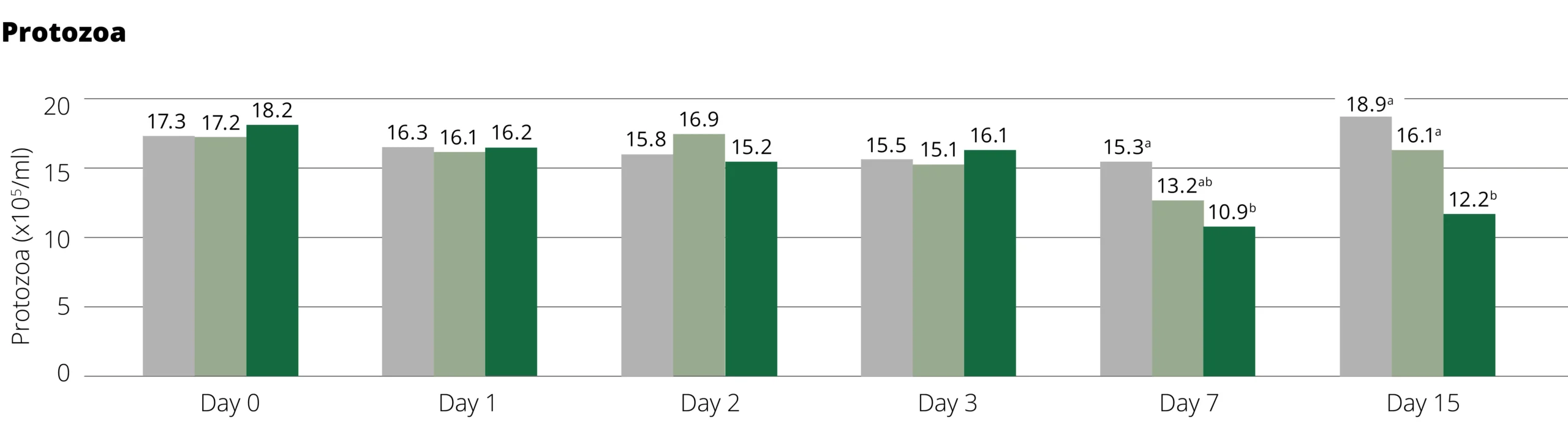
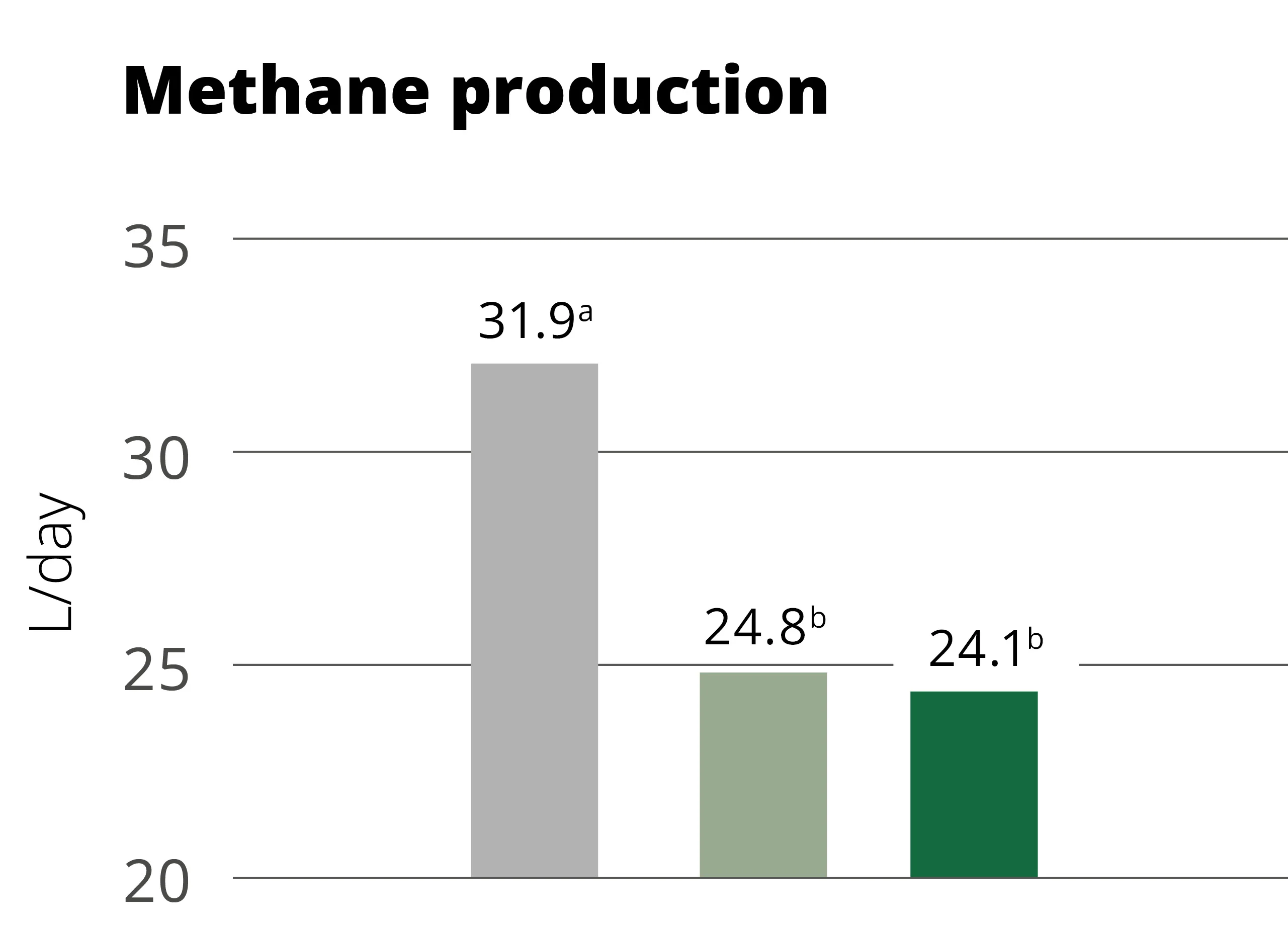

Figure 2: Decreasing methane production due to the application of Activo Premium
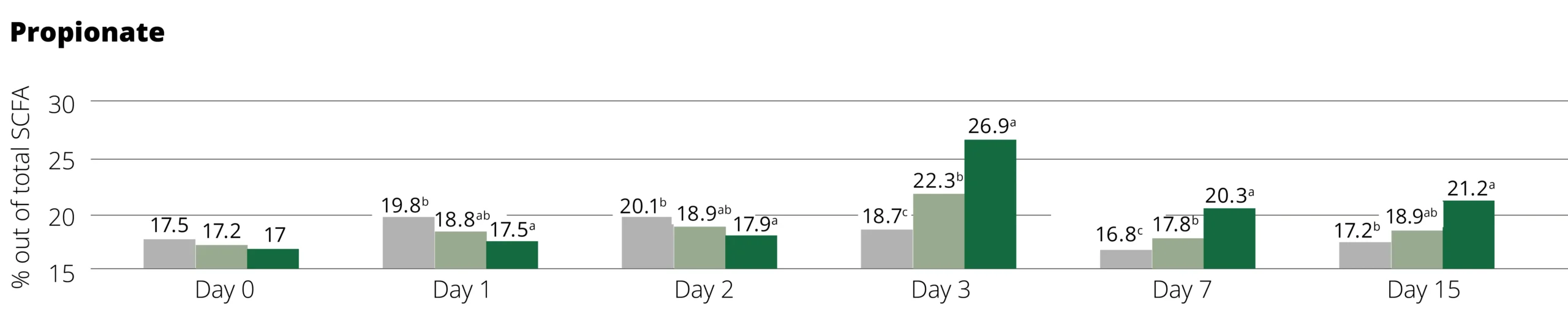
Furthermore, propionate levels increased. The shift in SCFA towards propionic acid indicates that hydrogen, which methanogenic bacteria would have otherwise used for methane production, can now be used by rumen bacteria to produce bacterial protein, which then can serve as a nutrient for the sheep.
Phytomolecules are an optimal tool for methane reduction
Reducing greenhouse gas emissions has become a global responsibility to protect the future of our planet. Among agricultural sources, methane production from ruminants is considered one of the major contributors to greenhouse gas emissions. Therefore, effective nutritional strategies are increasingly important for sustainable livestock production. Phytomolecules-based products, such as Activo Premium, represent a promising approach to reducing methane formation by modulating rumen fermentation while maintaining animal productivity. This offers benefits for both farmers and the environment.
References
Hart, K., Tremblay, L.-L., Durrant, L., Scheid, A., Pazmiño, J., & Riedel, A. (2025, September 30). Leveraging the common agricultural policy to accelerate livestock emission reductions. Institute for European Environmental Policy (IEEP) & Ecologic Institute. https://ieep.eu/publications/leveraging-the-common-agricultural-policy-to-accelerate-livestock-emission-reductions/
Rapetti, L., & Colombini, S. (n.d.). Evaluation of the effects of a blend of essential oils (named ACTIVO PREMIUM) on in vivo rumen microbiota and in vitro fermentation profile: Final report of the experimental trial. Università degli Studi di Milano, Department of Agricultural and Environmental Sciences.




 Brasil
 Colombia (ES)
 México (ES)
 United States
 Belgium (EN)
 Croatia (EN)
 Deutschland
 España
 France
 Great Britain
 Italia
 Nederland (EN)
 Österreich (DE)
 Polska
 Россия
 Schweiz (DE)
 Türkiye
 Україна (RU)
 عربى
عربى South Africa (EN)
 Morocco
 Nigeria
 Uganda
 Kenya
Kenya Tanzania
 Australia
 中国大陆
中国大陆 India (EN)
 日本
日本 Malaysia (EN)
 Philippines (EN)
 ไทย (EN)
 Việt Nam (EN)
