
 EN
ENBy Dr. Inge Heinzl, EW Nutrition
Calves are particularly susceptible to disease because ruminants have a multilayered placenta (placenta epitheliochorialis), and transplacental transfer of immunoglobulins is either absent or occurs only to a very limited extent. This means that the animals must build up their own defenses during the first weeks of life and depend on the immunological support provided by maternal colostrum. Its intake, therefore, is vital. Several studies evaluating the immunoglobulin Y (IgY) supply in calves have shown that not all calves have sufficient immunoglobulins to withstand disease challenges, especially diarrhea.
Insufficient intake of colostrum or colostrum with an inadequate content of relevant antibodies leads to failure of passive transfer in calves (Figure 1).
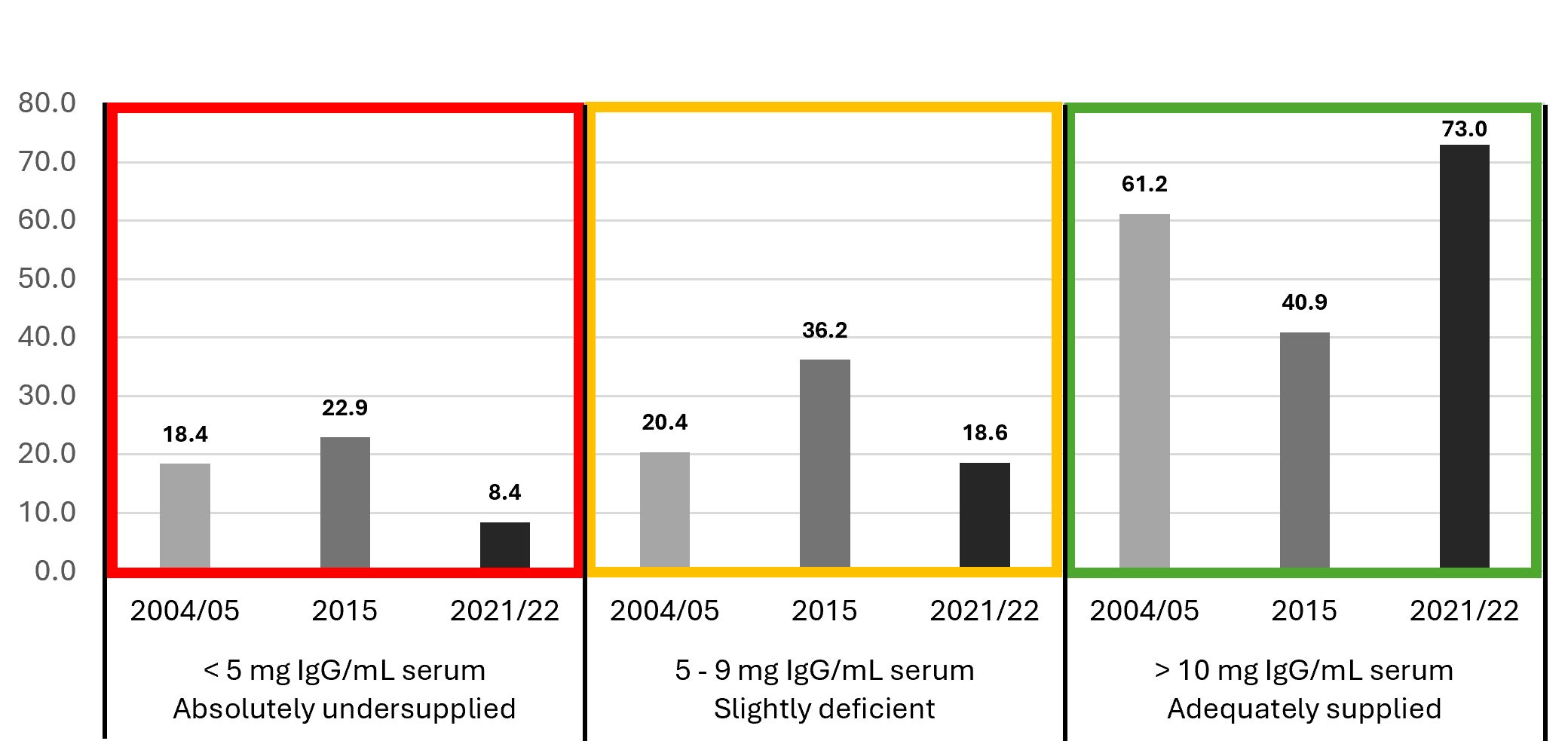
(2004/05: E.K. McMorran, 2006; 2015: K. Stemme et al., 2016; 2021/22: K. Stemme et al., 2022)
Old method – newly applied
To generally support young animals, and especially runts, it was common practice in “the good old days” to feed them raw chicken eggs. Back then, people may not have always known why, but it helped. Dr. Felix Klemperer (1893) provided the explanation. He discovered that chickens form antibodies against a wide variety of germs – not just chicken-relevant ones – they come into contact with and then transfer these antibodies into the egg.
Since, in the past, all animals were kept under one roof, chickens were also exposed to the diarrhea-causing pathogens of all animals living on the farm. Without becoming sick themselves, they formed immunoglobulins (IgY = immunoglobulins from the egg yolk) against these pathogens and transferred them to the egg – the only way to provide their offspring with an immunological head start.
Advantages of egg immunoglobulins: They work not only in birds but can also support mammals immunologically against diarrheal diseases (Yokoyama et al., 1992; Yokoyama et al., 1993; Ikemori et al., 1992; Kuroki et al., 1993; Kellner et al., 1994; Ehrhard et al., 1993; Kuroki, 1999), and they can be produced in high quantities without wounding or killing the hens.
Modern technology enables the provision of complementary dietary feeds containing egg immunoglobulins, supporting calves…and also other young animals suffering from failure of passive transfer (FPT) to overcome critical phases of life.
Egg immunoglobulins mainly act in the gut. There, they bind to pathogens such as E. coli, Cryptosporidia, rotaviruses, and coronaviruses.
Field trials prove the efficacy of egg immunoglobulins
Several trials were conducted in the field to evaluate the efficacy of egg immunoglobulins in calf rearing.
1. Lower number of treatments and decreased mortality rate
A trial conducted in the Netherlands with 300 veal calves (Holstein Friesian and Brown Swiss) examined the effect of egg immunoglobulins on the number of treatments and mortality rate. Both groups were fed standard milk replacer. The IgY group additionally received decreasing amounts of an IgY-containing product (Globigen Life Start).
Days 1-3: 16 g
Days 4-7: 8 g
Days 8-14: 4 g, and
Weeks 3-28: 0.4 g /animal/day.
Results:
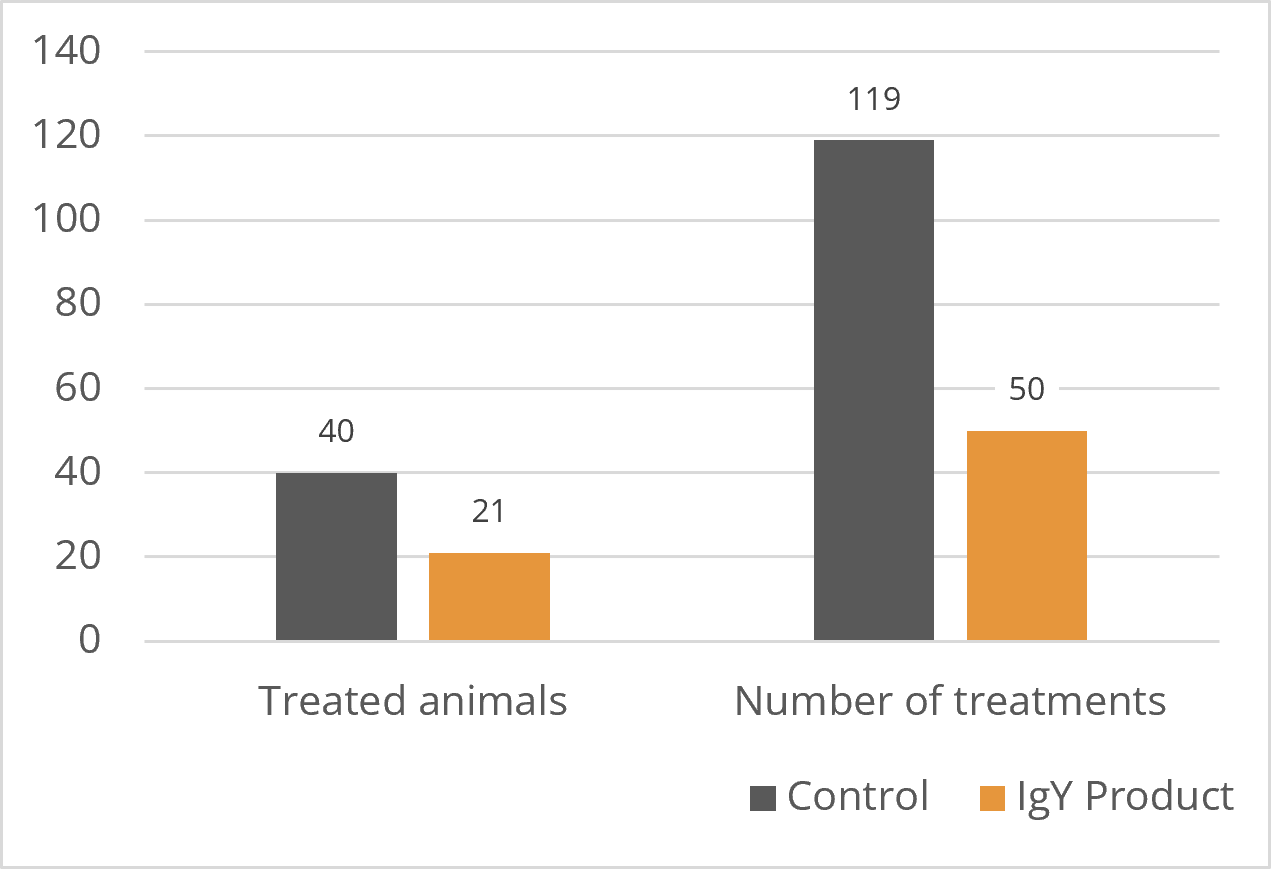
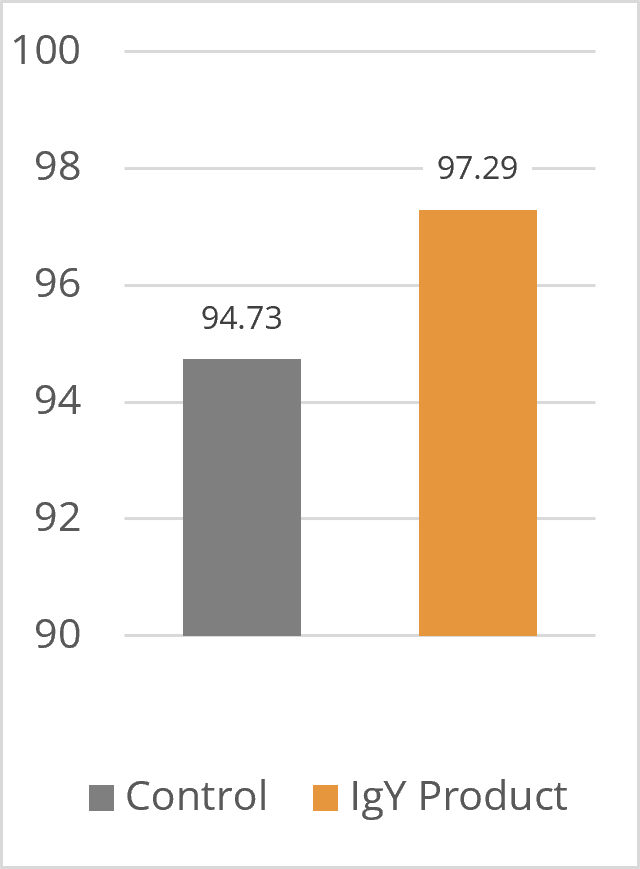
In the group fed the IgY product, nearly 50% fewer animals (21 vs. 40) required medical treatment, and the number of treatments also decreased significantly, from 119 in the control to 50 in the Globigen Life Start group. Better health status resulted in a 2.5% higher livability rate in the group receiving the IgY Product (97.29% vs. 94.73% in the control).
2. Improved weight development
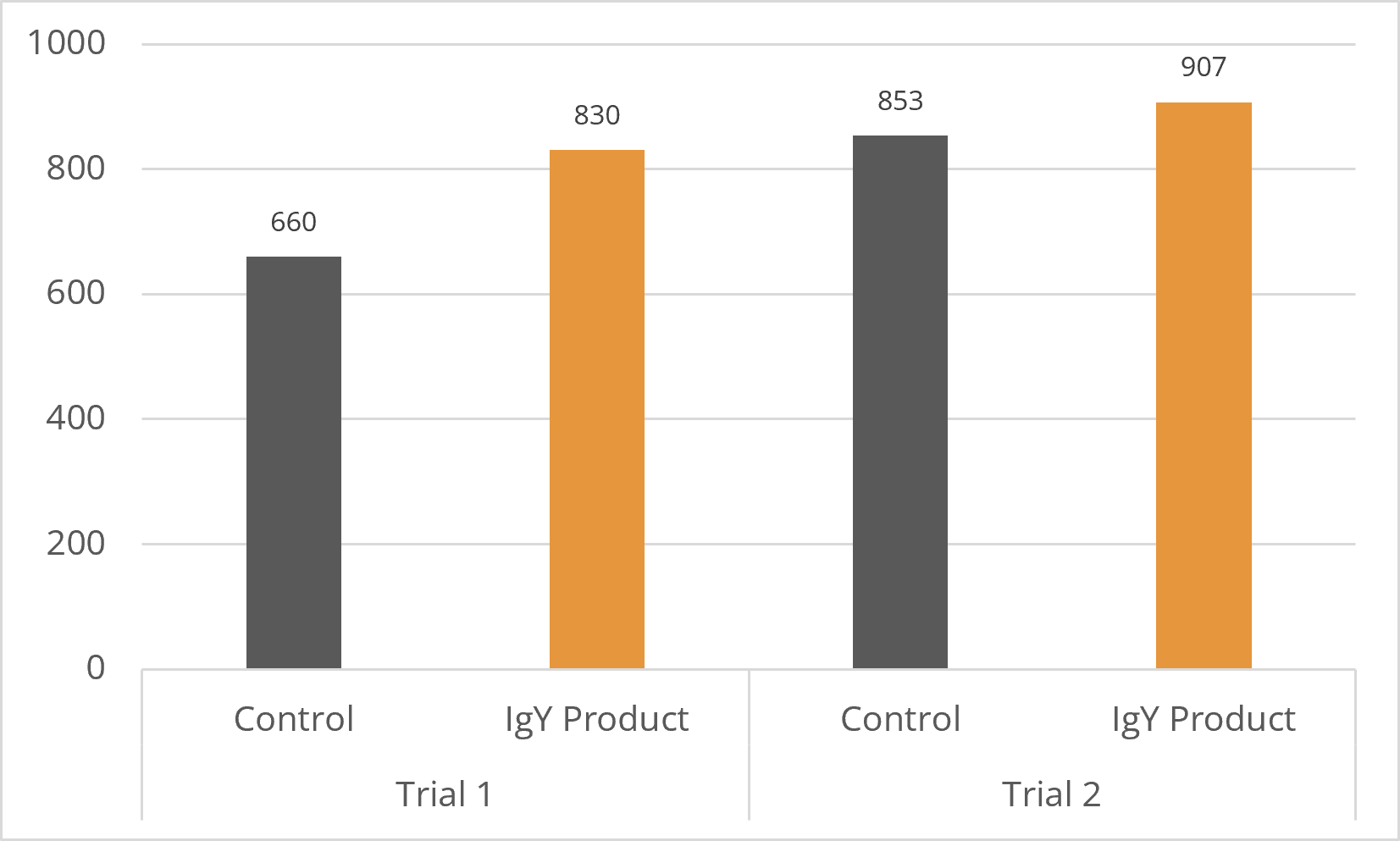
Two trials were conducted in Germany to evaluate the effect of an IgY-containing product (Globigen Life Start) on the weight development of calves. In both trials, the trial group was fed 4 g of Globigen Life Start/animal per day, in trial 1 on days 2 to 30 and in trial 2 from day 2 until weaning.
Results:
The trial results are presented in Figure 4.
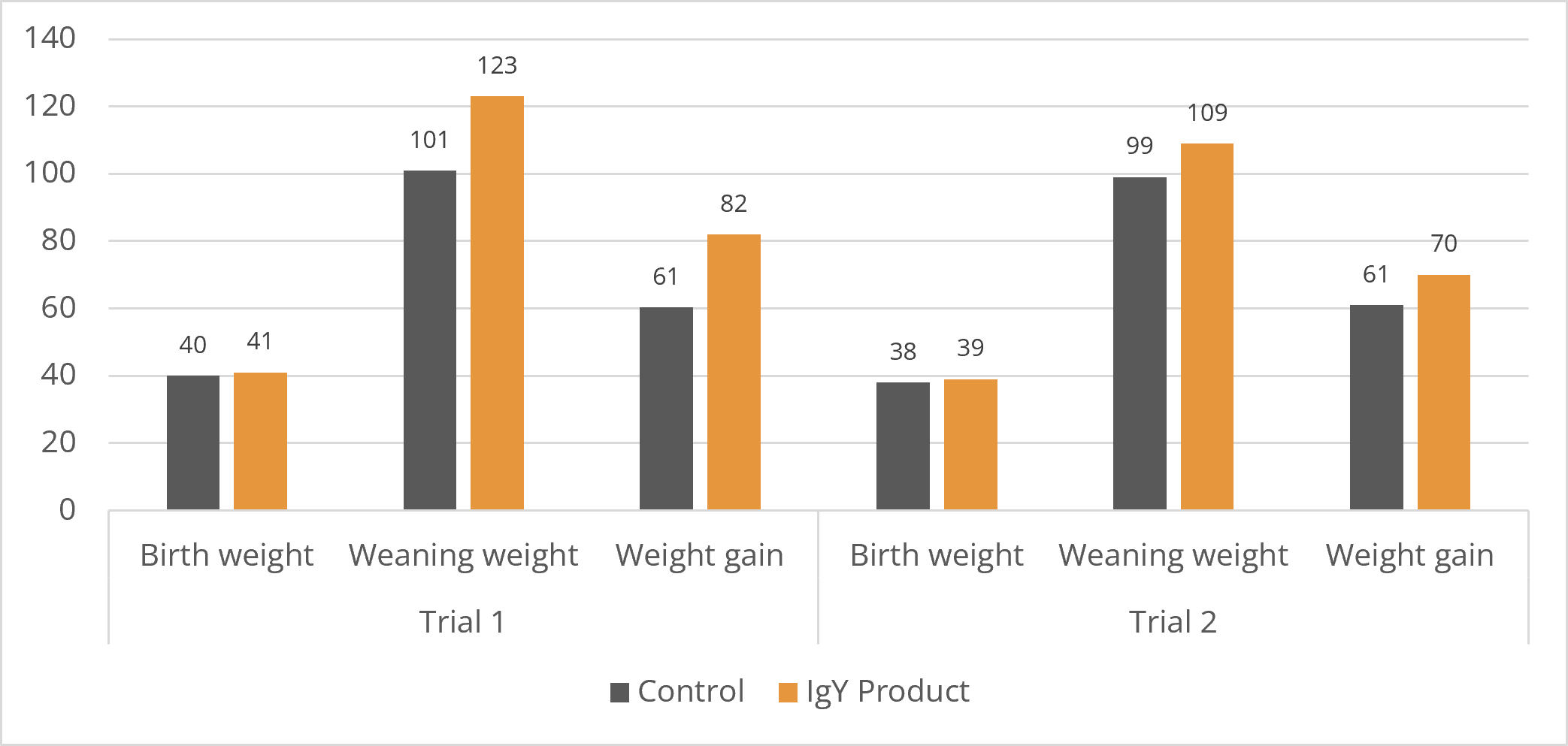
The IgY groups finished the trial with weaning weights more than 20 kg (trial 1) and 10 kg (trial 2) higher than their respective control groups, resulting in 9 kg and 21 kg higher weight gains, respectively. Daily gain is shown in Figure 5.
Egg immunoglobulins improve animal health, welfare, and performance
Egg immunoglobulins support young animals such as calves during their first weeks of life by binding pathogens in the intestine. Reducing the pathogenic pressure has two positive consequences:
- Decreased occurrence of diarrhea and
- Fewer competitors for nutrients
The result, as shown in several trials, is fewer medical treatments, improved livability, and better performance, thereby reducing antibiotic use in calf rearing.
References:
Erhard, M.H., J. Kellner, J. Eichelberger, and U. Lösch. “Neue Möglichkeiten in Der Oralen Immunprophylaxe Der Neugeborenendiarrhoe Des Kalbes- Ein Feldversuch Mit Spezifischen Eiantikörpern.” Berl Münch Tierärztl Wochenschr 106 (1993): 383–87.
Ikemori, Yutaka, Masahiko Kuroki, Robert C. Peralta, Hideaki Yokoyama, and Yoshikatsu Kodama. “Protection of Neonatal Calves against Fatal Enteric Colibacillosis by Administration of Egg Yolk Powder from Hens Immunized with K99-Piliated Enterotoxigenic Escherichia Coli.” American Journal of Veterinary Research 53, no. 11 (November 1, 1992): 2005–8. https://doi.org/10.2460/ajvr.1992.53.11.2005.
Ikemori, Yutaka, Masahiko Kuroki, Robert C. Peralta, Hideaki Yokoyama, and Yoshikatsu Kodama. “Protection of Neonatal Calves against Fatal Enteric Colibacillosis by Administration of Egg Yolk Powder from Hens Immunized with K99-Piliated Enterotoxigenic Escherichia Coli.” American Journal of Veterinary Research 53, no. 11 (November 1, 1992): 2005–8. https://doi.org/10.2460/ajvr.1992.53.11.2005.
Kellner, J., M.H. Erhard, M. Renner, and U. Lösch. “Therapeutischer Einsatz Von Spezifischen Eiantikörpern Bei Saugferkeldurchfall – Ein Feldversuch.” Tierärztliche Umschau 49, no. 1 (January 1994): 31–34.
Klemperer, Felix. “Ueber Natürliche Immunität Und Ihre Verwerthung Für Die Immunisirungstherapie.” Archiv für Experimentelle Pathologie und Pharmakologie 31, no. 4–5 (June 1893): 356–82. https://doi.org/10.1007/bf01832882.
Kuroki, M. “Oral Passive Immunization Using Chicken Egg Yolk Immunoglobulins against Bovine Rotavirus and Coronavirus Infections.” Recent Res. Devel. Virol. 1 (1999): 95–106.
Kuroki, Masahiko, Yutaka Ikemori, Hideaki Yokoyama, Robert C. Peralta, Faustino C. Icatlo, and Yoshikatsu Kodama. “Passive Protection against Bovine Rotavirus-Induced Diarrhea in Murine Model by Specific Immunoglobulins from Chicken Egg Yolk.” Veterinary Microbiology 37, no. 1–2 (October 1993): 135–46. https://doi.org/10.1016/0378-1135(93)90188-d.
McMorran, Elizabeth Kay. “Bundesweite Untersuchung Zur Kolostralen Versorgung von Neugeborenen Kälbern von Elizabeth Kay McMorran.” Bundesweite Untersuchung Zur Kolostralen Versorgung von Neugeborenen Kälbern von Elizabeth Kay McMorran. Dissertation, LMU, 2006.
Stemme, K., E. Rauch, N. Franz, S. Reese, and M. Erhard. “11. Berlin-Brandenburgischer Rindertag.” In Das Gesunde Kalb – Eine Deutschlandweite Erhebung Zur Kolostralversorgung Neugeborener Kälber, 41–42. Berlin: Cuvillier, n.d.
Stemme, K., M. Erhard, D. Klaus-Halla, S. Reese, and E. Rauch. “DVG-Vet-Congress – Fachgruppenübergreifende Buiatrik-Tagung,” 49–53. Berlin: DVG e.V., 2022.
Yokoyama, H, R C Peralta, R Diaz, S Sendo, Y Ikemori, and Y Kodama. “Passive Protective Effect of Chicken Egg Yolk Immunoglobulins against Experimental Enterotoxigenic Escherichia Coli Infection in Neonatal Piglets.” Infection and Immunity 60, no. 3 (March 1992): 998–1007. https://doi.org/10.1128/iai.60.3.998-1007.1992.
Yokoyama, Hideaki, Robert C. Peralta, Kouji Umeda, Tomomi Hashi, Faustino C. Icatlo, Masahiko Kuroki, Yutaka Ikemori, and Yoshikatsu Kodama. “Prevention of Fatal Salmonellosis in Neonatal Calves, Using Orally Administered Chicken Egg Yolk Salmonella-Specific Antibodies.” American Journal of Veterinary Research 59, no. 4 (April 1, 1998): 416–20. https://doi.org/10.2460/ajvr.1998.59.04.416.
Yokoyama, Hideaki, Robert C. Peralta, Sadako Sendo, Yutaka Ikemori, and Yoshikatsu Kodama. “Detection of Passage and Absorption of Chicken Egg Yolk Immunoglobulins in the Gastrointestinal Tract of Pigs by Use of Enzyme-Linked Immunosorbent Assay and Fluorescent Antibody Testing.” American Journal of Veterinary Research 54, no. 6 (June 1, 1993): 867–72. https://doi.org/10.2460/ajvr.1993.54.06.867.





 Brasil
 Colombia (ES)
 México (ES)
 United States
 Belgium (EN)
 Croatia (EN)
 Deutschland
 España
 France
 Great Britain
 Italia
 Nederland (EN)
 Österreich (DE)
 Polska
 Россия
 Schweiz (DE)
 Türkiye
 Україна (RU)
 عربى
عربى South Africa (EN)
 Morocco
 Nigeria
 Uganda
 Kenya
Kenya Tanzania
 Australia
 中国大陆
中国大陆 India (EN)
 日本
日本 Malaysia (EN)
 Philippines (EN)
 ไทย (EN)
 Việt Nam (EN)
