Effective phytomolecules combine superior processing stability and strong action in the animal

By Dr. Inge Heinzl, Editor, and Dr. Ruturaj Patil, Global Product Manager – Phytogenics, EW Nutrition 

For millennia, plants have been used for medicinal purposes in human and veterinary medicine and as spices in the kitchen. Since the ban of antibiotic growth promoters in 2006 by the European Union, they also came into focus in animal nutrition. Due to their digestive, antimicrobial, and gut health-promoting characteristics, they seemed an ideal alternative to compensate for the reduced use of antibiotics in critical periods such as brooding, feed change or gut-related stress.

To optimize the benefits of phytomolecules, it is crucial that

  • the phytomolecules levels are standardized for consistent results and synergy
  • they show the highest stability during stringent feed processing; being often highly volatile substances, they should not get lost at high temperatures and pressure
  • the phytomolecules are preferably completely released and available in the animal to achieve the best effectiveness.

First step: Standardized phytomolecules

Essential oils and other phytogenics are sourced from plants. The composition of the plants substantially depends on genetic dissimilarity within accessions, plant origin, the site conditions, such as weather, soil, community, and harvest time, but also sample drying, storage, and extraction processes (Sadeh et al., 2019; Yang et al., 2018; Ehrlinger, 2007). For example, the oil extracted from thyme can contain between 22 and 71 % of the relevant phenol thymol (Soković et al., 2009; Shabnum and Wagay, 2011; Kowalczyk et al., 2020).

Modern technology enables the production of standardized phytomolecules with the highest degree of purity and lowest possible batch-to-batch variation for high-quality products. It also offers increased environmental and economic sustainability due to reliable and cost-effective sourcing technology.

Using such highly standardized phytomolecules enables the production of phytogenic-based feed supplements of consistently high quality.

Second step: Selection of the most suitable phytomolecules

Phytomolecules have different primary characteristics. Some support digestion (Cho et al., 2006, Oetting, 2006; Hernandez, 2004); others act against pathogens (Sienkiewitz et al., 2013; Smith-Palmer et al., 1998; Özer et al., 2007) or are antioxidants (Wei and Shibamoto, 2007; Cuppett and Hall, 1998). To optimize gut health in animal production, one of the main promising mechanisms is reducing pathogens while promoting beneficial microbes. The decrease of pathogens in the gut not only decreases the risk of enteritis incidence but also eliminates the inconvenient competitors for feed.

In order to find out the best combination serving the intended purpose, a high number of different phytomolecules need to be evaluated concerning their structure, chemical properties, and biological activities first. Availability and costs of the substances are further factors to consider. With the selection of the most suitable phytomolecules, different mixtures are produced and tested for their effectiveness. Here, it is essential to concern synergistic or antagonistic effects.

For an effective and efficient blend of phytomolecules, many steps of selection and tests are necessary – and as a result, possibly only a few mixtures can meet the requirements.

Third step: Protecting the ingredients

Many phytomolecules are inherently highly volatile. So, only having a standardized content of phytogenics in the product can not ensure the full availability of phytomolecules when used through animal feed. Some parts of the ingredients might already get lost in the feed mill due to the stringent feed hygienization process followed by feed millers to reduce pathogenic load. The heating is a significant challenge for the highly-volatile components in a phytomolecule-based product. So, protecting these phytomolecules becomes imperative to guarantee that the phytomolecules put into the feed will reach the animal.

A delicate balancing act is required to ensure the availability and activity of phytomolecules at the right site in the gut. The phytomolecules must not get lost during feed processing but must also be released in the intestine. A carrier with capillary binding of the phytomolecules together with a protective coating can be one of the available effective solutions. It protects the ingredients during feed processing, and ensures the release in the animal.

Study shows excellent stability of Ventar D under challenging conditions

Ventar D is a latest generation phytomolecule-based solution for gut health optimization introduced by ​EW Nutrition, GmbH. A scientific study was conducted to compare the stability of Ventar D, in the pelleting process, with two leading phytogenics competitor feed supplements.

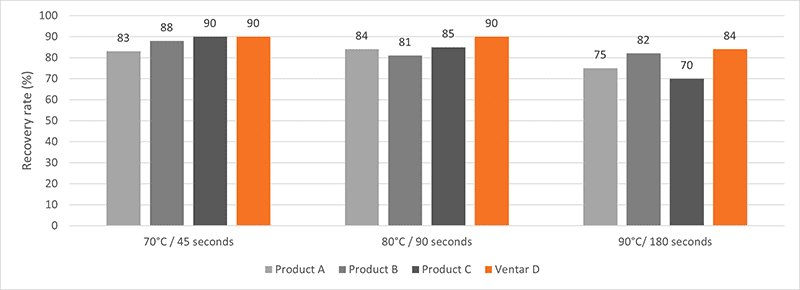
For this trial, feed with the different added phytogenic feed supplements had to undergo a conditioning and pelletization process. The active ingredients were analyzed before and after the pelletization process. All phytogenic feed supplements under testing were added to standard broiler feed at the producer’s recommended inclusion rate. The tests took place under conditioning times of 45, 90, and 180 seconds and pelleting temperatures of 70, 80, and 90°C (158, 176, and 194°F). After cooling, triplicate samples were collected and analyzed. The respective marker substance was analyzed through gas chromatography/mass spectrometry (GC/MS) analysis to measure the recovery rate in the finished feed. The phytomolecule content of the mash feed (before pelletization) found by the laboratory was used as a baseline and set to 100% recovery. The recovery rates of the pelleted feed were evaluated relative to this baseline.

The results are presented in figure 1. Ventar D showed the highest stability of active ingredients with recovery rates of 90% at 70°C/45 sec. or 80°C/90 sec and 84% at 90°C/180 sec. The modern production technology used for Ventar D ensures that the active ingredients are well protected throughout the pelletization process.

Figure Recovery Rates Heat StabilityFigure 1: Phytomolecule stability under processing conditions, relative to mash baseline (100%)

Another trial was conducted in a feed mill in the US. For this trial, ten samples were collected from different batches of mash feed where Ventar D was added at 110g/t. Conditioning of the mash feed was at 87.8°C (190°F) for 6 minutes and 45 seconds. After the pelleting process, ten samples from the pelleted feed were collected from the continuous flow with a 5 min gap between the samplings to determine Ventar D’s recovery.

The average recovery achieved for Ventar D was 92%.

Trials show improved growth performance

Initial trials showed Ventar D’s complete release in digestion models. To examine the benefit in in-vivo conditions, Ventar D was tested in broilers at an inclusion rate of 100 g/MT.

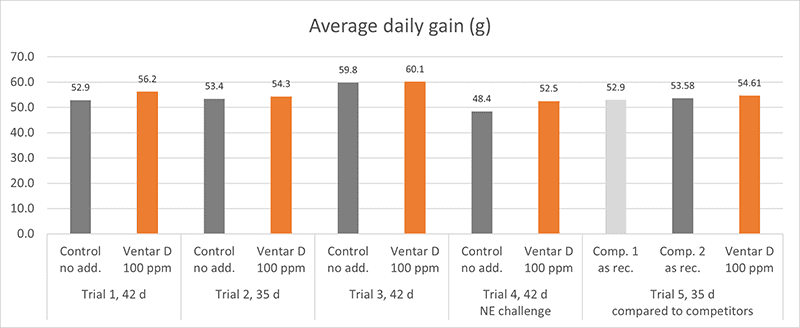
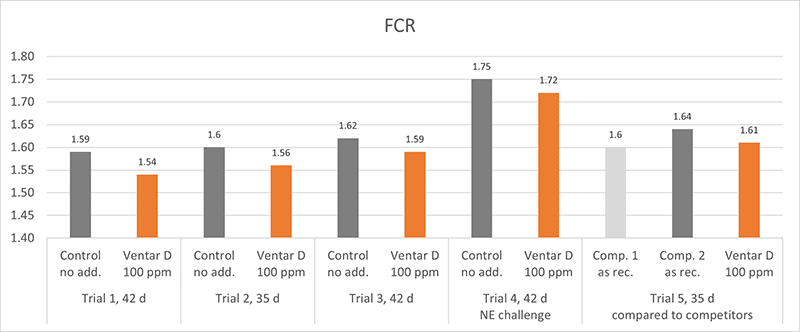
Several in vitro studies proved the antimicrobial activity of Ventar D. One test also confirms that Ventar D could exhibit differential antimicrobial activity by having stronger activity against common enteropathogenic bacteria while sparing the beneficial ones (Heinzl, 2022). Moreover, Ventar D’s antioxidant and anti-inflammatory activity support better gut barrier functioning. Better gut health leads to higher growth performance and improved feed conversion, which could be demonstrated in several trials with broilers (figures 2 and 3). In the tests, a group fed Ventar D was compared to either a control group with no such feed supplement or groups supplied with competitor products at the recommended inclusion rates.

Compared to a negative control group, the Ventar D group consistently showed a higher average daily gain of 0.3-4.1 g (0.5-8.5 %)  and a 3-4 points better feed conversion. Compared to competitor products, Ventar D provided 1-1.7 g (2-3 %) higher average daily gain and a 3 points better /1 point higher FCR than competitors 2 and 1.

Figure Daily GainFigure 2: Average daily gain (g) – results of several trials conducted with broilers


Figure FcrFigure 3: FCR – results of several trials conducted with broilers

Standardization and new technologies for higher profitability

Several in vitro and in vivo studies proved that Ventar D takes “phytomolecules’ power” to the next level: Combining standardized phytomolecules and optimal active ingredient protection leads to superior product stability during feed processing. The higher amount of active ingredients arriving in the gut improves gut health and increases the production performance of the animals. Ventar D shows how we can use phytomolecules more effectively and benefit from higher farm profitability.


References:

Cho, J. H., Y. J. Chen, B. J. Min, H. J. Kim, O. S. Kwon, K. S. Shon, I. H. Kim, S. J. Kim, and A. Asamer. “Effects of Essential Oils Supplementation on Growth Performance, IGG Concentration and Fecal Noxious Gas Concentration of Weaned Pigs”. Asian-Australasian Journal of Animal Sciences 19, no. 1 (2005): 80–85. https://doi.org/10.5713/ajas.2006.80.

Cuppett, Susan L., and Clifford A. Hall. “Antioxidant Activity of the Labiatae”. Advances in Food and Nutrition Research 42 (1998): 245–71. https://doi.org/10.1016/s1043-4526(08)60097-2.

Ehrlinger, M. “Phytogenic Additives in Animal Nutrition.” Dissertation, Veterinary Faculty of the Ludwig Maximilians University, 2007.

Heinzl, I. “Efficient Microbiome Modulation with Phytomolecules”. EW Nutrition, August 30, 2022. https://ew-nutrition.com/pushing-microbiome-in-right-direction-phytomolecules/.

Hernández, F., J. Madrid, V. García, J. Orengo, and M.D. Megías. “Influence of Two Plant Extracts on Broilers Performance, Digestibility, and Digestive Organ Size.” Poultry Science 83, no. 2 (2004): 169–74. https://doi.org/10.1093/ps/83.2.169.

Kowalczyk, Adam, Martyna Przychodna, Sylwia Sopata, Agnieszka Bodalska, and Izabela Fecka. “Thymol and Thyme Essential Oil—New Insights into Selected Therapeutic Applications.” Molecules 25, no. 18 (2020): 4125. https://doi.org/10.3390/molecules25184125.

Lindner, , U. “Aromatic Plants – Cultivation and Use.” Düsseldorf: Teaching and Research Institute for Horticulture Auweiler-Friesdorf, 1987.

Oetting, Liliana Lotufo, Carlos Eduardo Utiyama, Pedro Agostinho Giani, Urbano dos Ruiz, and Valdomiro Shigueru Miyada. “Efeitos De Extratos Vegetais e Antimicrobianos Sobre a Digestibilidade Aparente, O Desempenho, a Morfometria Dos Órgãos e a Histologia Intestinal De Leitões Recém-Desmamados.” Revista Brasileira de Zootecnia 35, no. 4 (2006): 1389–97. https://doi.org/10.1590/s1516-35982006000500019.

Sadeh, Dganit, Nadav Nitzan, David Chaimovitsh, Alona Shachter, Murad Ghanim, and Nativ Dudai. “Interactive Effects of Genotype, Seasonality and Extraction Method on Chemical Compositions and Yield of Essential Oil from Rosemary (Rosmarinus Officinalis L”.).” Industrial Crops and Products 138 (2019): 111419. https://doi.org/10.1016/j.indcrop.2019.05.068.

Shabnum, Shazia, and Muzafar G. Wagay. “Essential Oil Composition of Thymus Vulgaris L. and Their Uses”. Journal of Research & Development 11 (2011): 83–94.

Sienkiewicz, Monika, Monika Łysakowska, Marta Pastuszka, Wojciech Bienias, and Edward Kowalczyk. “The Potential of Use Basil and Rosemary Essential Oils as Effective Antibacterial Agents.” Molecules 18, no. 8 (2013): 9334–51. https://doi.org/10.3390/molecules18089334.

Smith-Palmer, A., J. Stewart, and L. Fyfe. “Antimicrobial Properties of Plant Essential Oils and Essences against Five Important Food-Borne Pathogens”. Letters in Applied Microbiology 26, no. 2 (1998): 118–22. https://doi.org/10.1046/j.1472-765x.1998.00303.x.

Soković, Marina, Jelena Vukojević, Petar Marin, Dejan Brkić, Vlatka Vajs, and Leo Van Griensven. “Chemical Composition of Essential Oils of Thymus and Mentha Species and Their Antifungal Activities”. Molecules 14, no. 1 (2009): 238–49. https://doi.org/10.3390/molecules14010238.

Wei, Alfreda, and Takayuki Shibamoto. “Antioxidant Activities and Volatile Constituents of Various Essential Oils.” Journal of Agricultural and Food Chemistry 55, no. 5 (2007): 1737–42. https://doi.org/10.1021/jf062959x.

Yang, Li, Kui-Shan Wen, Xiao Ruan, Ying-Xian Zhao, Feng Wei, and Qiang Wang. “Response of Plant Secondary Metabolites to Environmental Factors”. Molecules 23, no. 4 (2018): 762. https://doi.org/10.3390/molecules23040762.

Özer, Hakan, Münevver Sökmen, Medine Güllüce, Ahmet Adigüzel, Fikrettin Şahin, Atalay Sökmen, Hamdullah Kiliç, and Özlem Bariş. “Chemical Composition and Antimicrobial and Antioxidant Activities of the Essential Oil and Methanol Extract of Hippomarathrum Microcarpum (Bieb.) from Turkey”. Journal of Agricultural and Food Chemistry 55, no. 3 (2007): 937–42. https://doi.org/10.1021/jf0624244.


Feed processing is the sustainability champion no one knows about (yet!)

By Predrag Persak, Regional Technical Manager Europe, EW Nutrition

Imagine you’re at a pub quiz dedicated to feed production, and this question pops up: name a process that returns up to 25 times what was invested in it. Do you know the answer? I’m pretty sure you are probably using it every day: pelleting. For every unit of used energy, pelleting generates up to 25 times more in terms of the nutritional value for animals (mostly metabolizable energy).

The math is simple: while we gain 200 kcal/kg by pelleting broiler mash feed, only 10 Kilowatts are used to produce one ton of broiler feed. This is just one example of how sustainability is at the core of feed production – and has always been, long before it became a buzzword. So, to all those who operate feed mills, who take care of sourcing and quality, and to those behind numbers that represent nutritional values: You are pioneers of sustainability and should be proud of that.

How feed processing can drive sustainability efforts

Besides being proud, we must also be very responsible. Every nutritionist should focus on

  1. how processing of feed materials and feed influences the release of nutrients, nutrient density, and exclusion of antinutrients, and
  2. how processing can improve these dimensions, making feed more sustainable.

Do we take processing sufficiently into consideration? Do we create formulations in a dynamic or more static way? Not least in an era of precision feeding, the shift from static to dynamic is inevitable.

This is even clearer when we consider how processing can influence digestion, absorption, and the performance of animals. How so? Feed processing makes previously unusable materials suitable for nutrition or improves already usable materials. So, the feed processing itself is a key to sustainability.


Feed processing converts energy into more energy (?!)

Feed processing, in simple terms, means converting energy into more energy. This shouldn’t work, given the law of thermodynamics, but it does. Compound feed contains various feed materials and additives. Grains and protein sources (many times wrongly declared as byproducts), fibrous roughages and many other different components should not go together. Thanks to processing, they become feed which ensures the availability of all nutrients to the species, category, or animal production system for which that feed is intended.

Through processing, we alter the physical, chemical, and edible properties of used feed materials, making them usable for animals. Through proper processing, we improve the digestibility of feed materials by up to 20%, enabling a more effective – and thus more sustainable – use of feed resources. In practice, there is room for improvement to make feed processing even more of a sustainability champion.

Moisture optimization is key to energy-efficient pelleting

Let’s take a closer look at pelleting since it requires the most energy within feed processing. How much energy is used? This depends on many factors and can range from 5 KW/h up to 25. Pelleting is mostly used in broiler diets to reduce nutrient segregation and feed sorting and, by extension, feed wastage. Pelleting has also been found to increase the weight gain of individual birds and flock uniformity, and overall feed efficiency is higher.

Pelleting involves the agglomeration of mixed feed into whole pellets through a mechanical process using heat, moisture, and pressure (Falk, 1985). Heat (energy that is transported through steam) has the largest impact on pelleting efficacy. Steam injected during conditioning increases feed moisture and temperature, softens feed particles, extracts natural binders, and reduces friction which leads to greater production rates and pellet quality (Skoch et al., 1981).

The key to an efficient pelleting process is to set the parameters at the levels that will enable proper energy transfer from steam to feed particles. Besides steam quality, the moisture of the feed is a critical factor for efficient energy transfer. Generally, the thermal conductivity of the most used feed materials increases with increasing moisture. A level of 17% moisture in the conditioner is needed for efficient energy transfer. Below 17%, we need more steam (more energy) or more time (more capacity) to achieve the same result. That is why proper moisture optimization is needed to use the energy transferred through steam in the most efficient way.

Reduce shrinkage, improve sustainability

What about shrinkage? Shrinkage is not just a cost factor but a sustainability issue. We must not lose scarce and valuable materials and nutrients. Overall shrinkage tends to be around 1%. For global feed production as a whole, 1% annual shrinkage is equivalent to 15 years of Croatian compound feed production!

We help our industry to keep up sustainability efforts in terms of energy savings and shrinkage reduction by offering SurfAce. It’s a liquid preservative premixture with multiple economic and environmental benefits to the customer. It helps increase pellet output, improves conditioning, enhances the durability of the pelleted feed, reduces the formation of fines, and improves the overall quality of the final feed product. But most importantly, it optimizes feed production costs through energy savings and reduced labor input while also supporting the microbiological quality of the feed.

In the food sector, we have seen vast improvements in non-thermal food processing over the past decade. Examples include ultrasonication, cold plasma technology, supercritical technology, irradiation, pulsed electric field, high hydrostatic pressure, pulsed ultraviolet technology, and ozone treatment. I’m sure some of these technologies will be applied to feed processing one day. Until then, we must keep up our high sustainability standards and make it more efficient by applying all available tools in our feed processing toolbox.

References

Falk, D. “Pelleting Cost Center.” Essay. In Feed Manufacturing Technology III, edited by Robert R. McEllhiney, 167–90. Arlington, VA: American Feed Industry Association, 1981.

Skoch, E.R., K.C. Behnke, C.W. Deyoe, and S.F. Binder. “The Effect of Steam-Conditioning Rate on the Pelleting Process.” Animal Feed Science and Technology 6, no. 1 (1981): 83–90. https://doi.org/10.1016/0377-8401(81)90033-x.


Feed producers: here’s how to deal with fats shortages and high costs

feed mill

By Technical Team EW Nutrition

COVID-19 and its aftermath, the Russia-Ukraine war, and climate change have all contributed to the current crisis. Energy price increases, supply chain difficulties, and raw material availability and rising prices are all consequences felt deeply across the animal production sector. It is now time that the industry puts in place mitigation plans and starts taking action.

Cost and availability of fats – a looming problem

The lockdowns during the COVID-19 pandemic in 2019/2020 caused a rapid drop in energy demand and therefore a cut in global oil production. In 2021, as normality was recovered, it was met an energy supply-demand imbalance leading to a global supply chain crisis that further stressed the delivery of energy sources. In 2022, one of Europe’s driest summers compounded by the Russian-Ukrainian war have greatly contributed to the increasing energy prices.

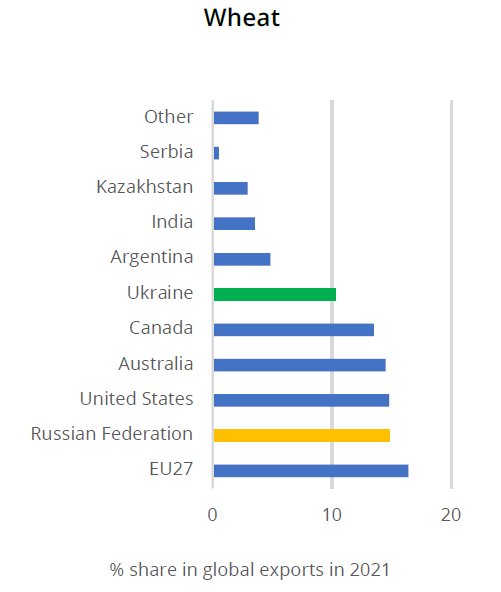
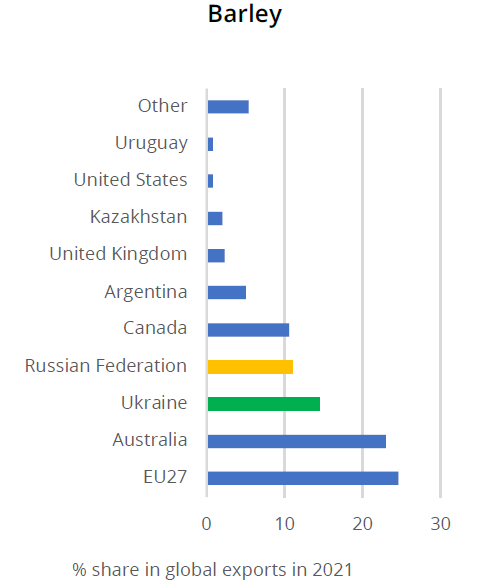
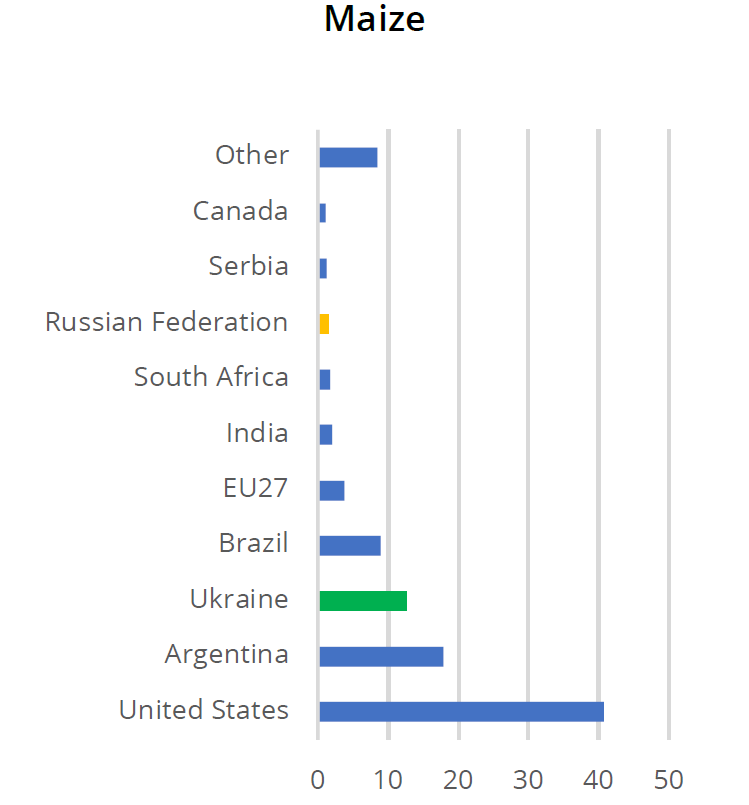
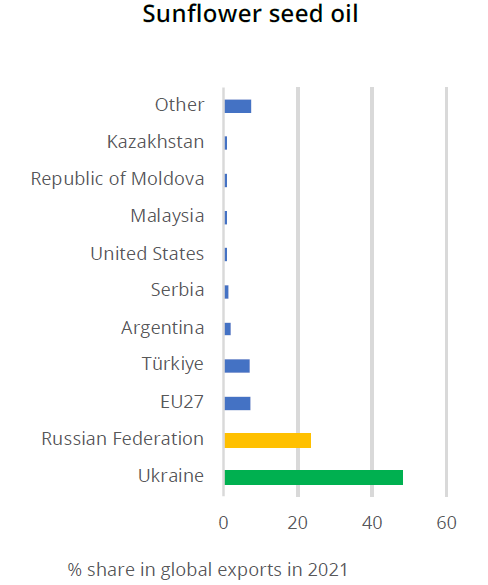
With two of the largest suppliers of grains and oil – Russia and Ukraine – at war, the global food supply and prices are also compromised. These two countries provide the world with more than 20% of all wheat and barley, 15% of corn and 60% of sunflower oil (FAO, 2022).


Moreover, corn and soybean yields in South America also fell sharply in 2019-20 and 2021-22 due to the impact of La Nina and are expected to continue being low in the next season.

Biofuels and animal production compete for crops

Biofuels have been seen as a solution to decrease fossil-fuel energy dependance. Before the war, global biofuel production was at a record high. However, in the current crisis, biofuels may be a contributor to the rise in food prices, as they use a significant percentage of feed-production crops. Only in the US, around 30% of the corn production goes into biofuels, while biodiesel accounts for 40% of soybean oil use (O’Malley & Searle, 2021).

For the animal production industry, maintaining performance and profitability during price hikes involves a combination of strategies. Feed production accounts for up to 70% of meat production costs. With the soaring energy and raw material crisis, feed production costs are on the spot.

The impact of fat in pelleting process output

Oils and fats generally are added to animal feeds as a rich source of energy and other essential nutrients. For the feed production unit, fats can be a pellet quality and energy output enhancer.

During the pelleting process, fat can increase production output, save energy, and prolong the production life of the die as it can act as a lubricant during the process. The feed ingredients contain fat, and a portion of fat/oil is usually added in the mixer. Too much in-mixer fat addition (higher than 2%) negatively affects pellet quality, and when fat is too low (no addition), the production rate decreases. Fats and oils are also added through a pellet coating system, which has been demonstrated to improve pellet quality.

In fats/oils high cost and shortage scenarios, feed production managers and nutritionists are faced with the challenge of production with higher constraints. In-mixer fat addition has consequences in throughput. However, in-mixer moisture addition facilitates conditioner steam penetration into the feed particles. With that, the efficiency of the process may be partially recovered.

Solving the efficiency & quality equation

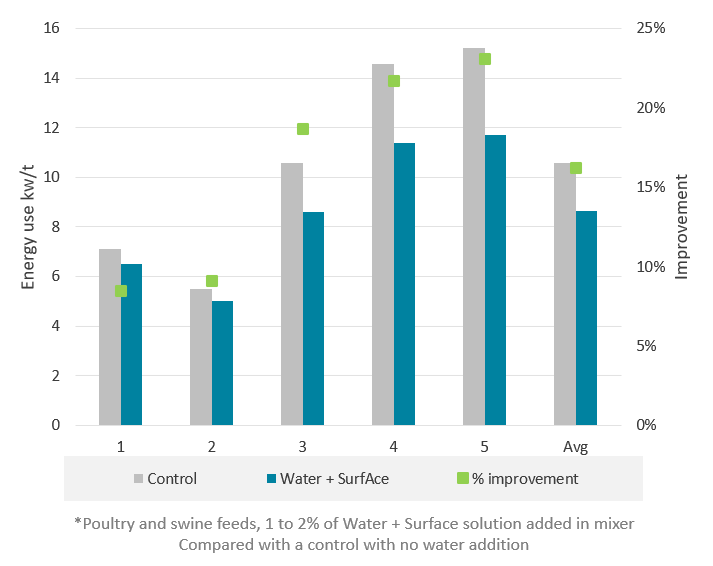
Simply adding water into the mixer does not give optimal results: Surfactants, on the other hand, improve moisture penetration into the feed particles and increase lubrication at pellet die point. By reducing the surface tension of water, surfactants enable the feed particles to absorb and distribute the moisture uniformly.

Improved moisture retention facilitates the starch gelatinization during mash conditioning and passing through the pellet die. This is important to make the pellet more durable and the feed more digestible. It also reduces friction and hence the energy required for the pelleting process (improving milling efficiency). At the same time, surfactants aid with pellet water retention, minimizing feed shrinkage without increasing water activity, thus curbing feed microbial growth.

What difference can an effective surfactant make?

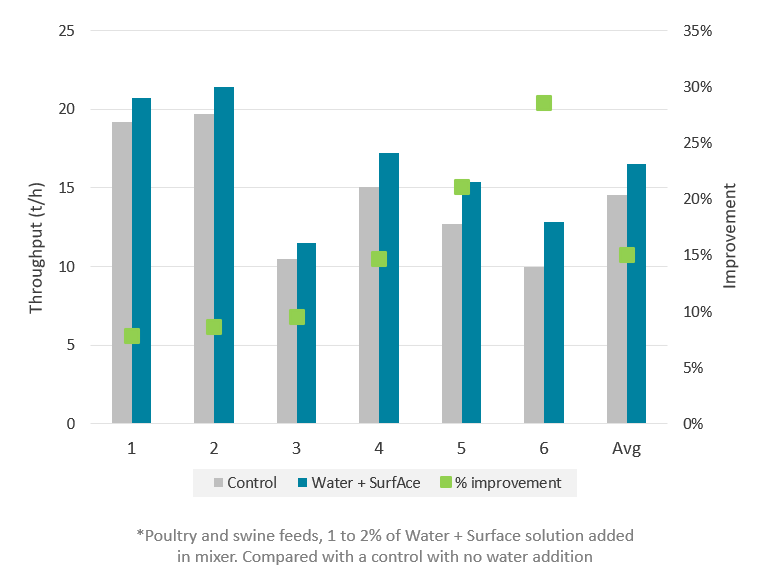
The effect of adding SURF•ACE to diets with different levels of fat was evaluated in more than 40 feed mills, with production capacities ranging from 5 to 20 tons per hour. SURF•ACE is added to water sprayed during mixing. This solution lubricates the mash feed, improves steam penetration and starch gelatinization, and thus reduces friction in the pellet die. The results show that, relative to pure water, the addition of SURF•ACE increases press throughout (t/h) by up to 25%.


Prioritize efficiency to compensate current challenges

Operating in a tight margin environment, feed mills always need to prioritize efficiency. The advantages of using SURF•ACE feed mill processing aid are clear: reduced energy consumption without compromising pellet quality; moisture optimization; and higher productivity.

During times of increasingly high ingredient and energy costs, it is even more important to utilize savings opportunities at every production stage.


How nutritionists can adjust feed formulation costs – and still keep all value

feed price increase

By Technical Team EW Nutrition


More than five months after the start of the war in Ukraine, we are facing severe challenges in many aspects of our daily lives. The livestock industry is not excepted: the conflict affects the availability and prices of grains, fertilizers, oil, and biofuel, with the latter two having a direct impact on freight rate and shipping time.

Livestock producers face challenging times and must be rational and creative to continue managing profitable operations.

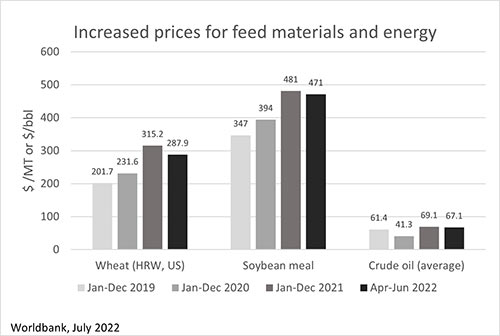
Increased prices for feed materials and energy 

Which strategies are available?

Maintaining performance and profitability during price hikes generally requests a combination of different nutritional strategies to, at least partially, compensate for the higher costs:

  • using alternative feed ingredients such as by-products (while considering their limitations in terms of inclusion and quality)
  • eliminating or reducing safety bands (especially to already used by-products)
  • revising the use of feed additives according to current challenges in feed ingredients and at farms
  • following on the previous one: strategic uses of enzymes, emulsifiers, and feed additives that may help the animals to improve their FCR.

By-products can partly compensate for high feed-ingredient prices

Over the last few decades, industrial and agricultural by-products from crops, vegetables, and fruit processing have been widely evaluated and used in livestock. As a result, many studies have been conducted to determine the nutritional composition of straws and residues from food manufacturing.Now more than ever, by-products are needed since more of the leading agricultural products will be taken to feed the human population instead of animals.

Agricultural by-products can be classified into various types: straws,  brans, midds, cakes, meals, and industry residues, among others. Their price is typically lower than traditional energy and protein sources, making them suitable alternative ingredients to potentially reduce the overall cost of the diet.

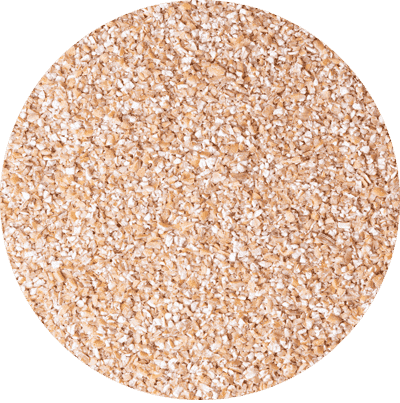
Wheat milling by-product

The use of by-products – to what must be paid attention?

To guarantee safety and effectiveness, just as with any other feedstuff, it is necessary to check the nutrient composition of the alternative ingredients using feed composition tables and laboratory analysis. Besides the composition and nutrient concentration, the availability of these nutrients and palatability are critical parameters to consider. The feed/animal producer, when purchasing by-products, should:

  • try to find his by-product sources close to the feed production site to reduce costs with logistics and transportation
  • collect and test samples right after the by-products are delivered
  • check if the feed mill is ready to handle and process those ingredients, especially when they are bulky or have flowability issues;
  • compare the difference in animal performance and cost per unit produced when using traditional grain-soybean meal diets vs. by-product ingredients.

Processing for improving by-products’ quality

The safety and nutritional availability of by-products can be improved by chemical, physical, and biological treatments. Physical processes, such as drying, grinding, peeling, pelleting, extruding, and expanding, increase surface area and can deactivate certain anti-nutritional factors. Biological processes include the use of enzymes and microbial fermentation to tackle anti-nutritional factors and increase the nutritional value and digestibility of by-products.

Be aware of the possible risks of by-products!

With all the economic benefits and positive impacts on animal performance, we must not lose sight of the possible risks and health issues that by-products might imply.

Mycotoxins can be a problem

Most agricultural by-products have a higher moisture content than traditional ingredients. High-fiber and high-moisture materials can quickly become contaminated by molds that produce mycotoxins, undermining animal performance or even leading to death (Juan et al., 2017; Peng et al., 2018).

Fusarium ssp. produce mycotoxins such as fumonisins, trichothecenes (DON, T-2 toxin) or zearalenone

Anti-nutritional factors negatively impact animal health

In addition, some agro-industrial by-products contain anti-nutritional factors (glycoalkaloids, tannins). These substances impair feed digestibility and affect animal performance (Jimenez-Moreno et al., 2019). Also, a high fiber content in the diet containing by-products limits the performance (Pereira et al., 2019).

Additives can help with cost reduction

Due to the increase in feed prices, it is also necessary to review the strategies for using feed additives in animal production. Enzymatic complexes or packages, mannanases, phytases, and xylanases, among others, might be a helpful option to maximize the yield of existing diets. For example, Edward et al. (2000) reviewed the benefits of using phytase for better phosphorus utilization in the diet (a raw material that also suffers from price increases since much of it is imported from China). However, the enzymes must be used properly. Nutritionists trying to create profitable formulations must check the availability of the substrate before including the enzyme in their formulation.

Other feed additives such as toxin binders reduce the exposure of animals to possible increased levels of mycotoxins. Gut health-improving additives such as pro/pre-biotics, phytomolecules, and MCFAs support gut health and performance, achieving similar levels as traditional diets.

These applications should be thoroughly evaluated as the return from their application may be interesting in increased by-products diets.

Using by-products in poultry means balancing several factors

In poultry feeds, using by-products to increase sustainability and cost-reduction is supported by ample research and practice, especially in feed for broilers and laying hens. Research focuses on finding the risks of the inclusion of various by-products and thus the levels at which their inclusion doesn’t hurt health and performance.

In summary, to use by-products in poultry diets, their cost, availability, nutritional composition, anti-nutritional factors, quality, as well as interaction and cost-effectiveness with feed additives (e.g., enzymes, toxin binders) must be considered to avoid or diminish the factors hindering animal health and performance.

Several factors must be considered when using by-products in poultry nutrition

DDGS are a valuable source of proteins – but limited inclusion

DDGS provide protein, energy, water-soluble vitamins, xanthophylls, and linoleic acid (Abd El-Hack et al., 2015). However, it also contains anti-nutritional factors such as non-starch polysaccharides (NSP) (Pedersen et al., 2014). A further disadvantage is their high danger of mycotoxin contamination (Schaafsma et al., 2009), even though Wang et al. (2007) and Damasceno (2020) indicate that up to 16% of DDGS can be included in broilers’ diets without negatively affecting health, performance, and meat characteristics.

Rice brans are one of the main available grain by-products

Rice brans constitute 10% of the paddy rice and thus represent a considerable global volume of the available grain by-products. As a feed ingredient, it is rich in protein, starch, fat, vitamins, and some trace minerals (Sanchez et al., 2019). Due to their susceptibility to oxidation (rancidity) and anti-nutritional factors such as phytase and trypsin inhibitors (Gallinger et al., 2004), the limit recommended for this by-product in poultry is around 10% (Hosseini et al., 2020; Sanchez et al., 2019).

Wheat by-products – optimally used with enzymes

Wheat by-products can also be a substitute for whole grains in poultry feeds; however, their NSP content can affect the viscosity of the digesta (Knudsen, 2014). When combined with enzymes (e.g., xylanase), wheat midds can be included in broiler and layer diets up to 30% without changes in performance (Abudabos, 2011; Salami et al., 2018). Dietary fiber has gained special attention due to its various beneficial effects on poultry. In this direction, moderate amounts of wheat bran – a source of insoluble fiber – have shown improved antioxidant status, gizzard development, intestinal digestive enzyme activities, and morphology in broilers (Shang et al., 2020).

By-products support pigs’ performance

When by-products are fed to pigs, swine nutritionists have reported that many of them can support pig growth and finishing performance and meat quality as well as immune response, milk yield, and milk quality in reproductive animals, among other productive parameters (Yang et al., 2021). For instance, Dong et al. (2019) concluded that, from a nutritional perspective, ingredients such as highland barley, buckwheat, glutinous broomcorn millet, non-glutinous broomcorn millet, and Chinese naked oat could potentially substitute corn in livestock feeding. Or as another example, Liu et al. (2019) suggest in their study that mulberry leaf can contribute to improvements in meat quality, with no adverse effects on the growth performance of finishing pigs. (Dong et al., 2019).

Pigs are susceptible to antinutritional factors

Especially pigs are susceptible to anti-nutritional factors

There are many different types of anti-nutritional factors that work in various ways. In swine feed, common anti-nutritional factors lower protein and amino acid digestibility and increase endogenous amino acid losses (Souffrant, 2001). This effect causes reductions in carcass yield for finishing pigs (Soto et al., 2019).

Options are available to compensate for the higher feed prices

Nutritionists have several options to optimize animal performance in the context of price increases. However, it is necessary to have a more holistic view of the business to know which of all the alternatives are the most suitable for each system. Understanding the strengths and weaknesses of each ingredient and feed additive and considering them in the light of literature and field data will yield the best understanding of how to use them effectively in successful animal production.


Stop endotoxins from decreasing animal performance

e coli shutterstock 347266496

By Marisabel CaballeroGlobal Technical Manager Poultry, and Sabria Regragui Mazili, Editor

Find out why endotoxemia threatens animal production and how intelligent toxin mitigation solution SOLIS MAX can support endotoxin management.

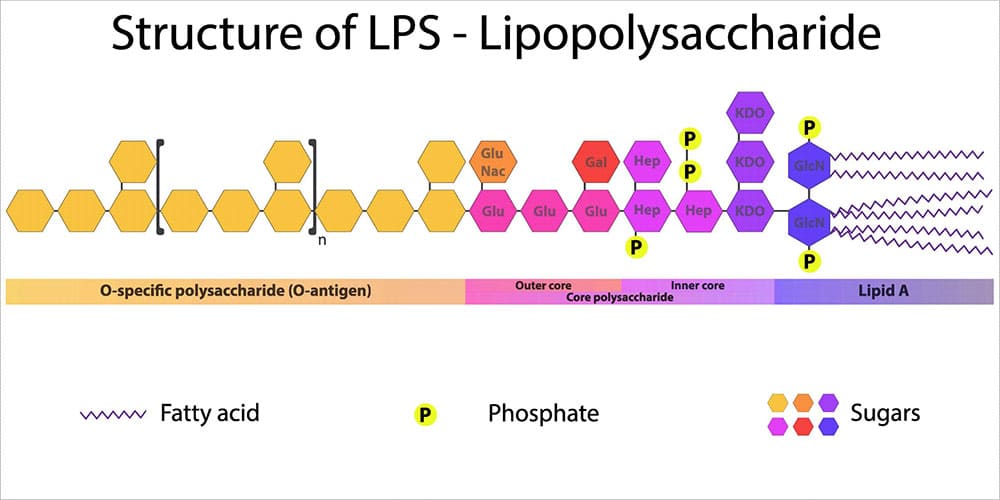
Figure 1: Structure of Lipopolysaccharide

The quick guide to endotoxins (LPS) and what to do about them

Lipopolysaccharides (LPS) are a constant challenge for animal production. LPS, which are also known as endotoxins, are the major building blocks of the outer walls of Gram-negative bacteria (see figure 1). Throughout its life cycle, a bacterium releases these molecules upon cell death and lysis. When endotoxins are released into the intestinal lumen of chickens or swine, or in the rumen of polygastric animals, they can cause serious damage to the animal’s health and performance by over-stimulating their immune system.

LPS may induces inflammation and fever, lowering feed intake, and redirecting nutritional resources to the immune response, which results in hindered animal performance.

Endotoxins depress animal performance

One of the biggest issues caused by endotoxemia is that animals reduce their feed intake and show a poor feed conversion rate (FCR). Why does this happen? The productive performance of farm animals (producing milk, eggs, or meat) requires nutrients. An animal also requires a certain baseline amount of nutrients for maintenance, that is, for all activities related to its survival.

As a result of inflammation, endotoxemia leads to a feverish state. Maintenance needs to continue; hence, the energy required for producing heat will be diverted from the nutrients usually spent on production of milk, eggs, meat, etc., and performance suffers. This is amplified because the immune reaction also requires resources (e.g., energy, amino acids, etc. to produce more immune cells).

The inflammation response can result in mitochondrial injury to the intestinal cells, which alter the cellular energy metabolism. This is reflected in changes to the levels in adenosine triphosphate (ATP), the energy “currency” of living cells. A study by Li et al. (2015) observed a respective reduction of 15% and 55% in the ATP levels of the jejunum and ileum of LPS-challenged broilers, compared to the unchallenged control group.

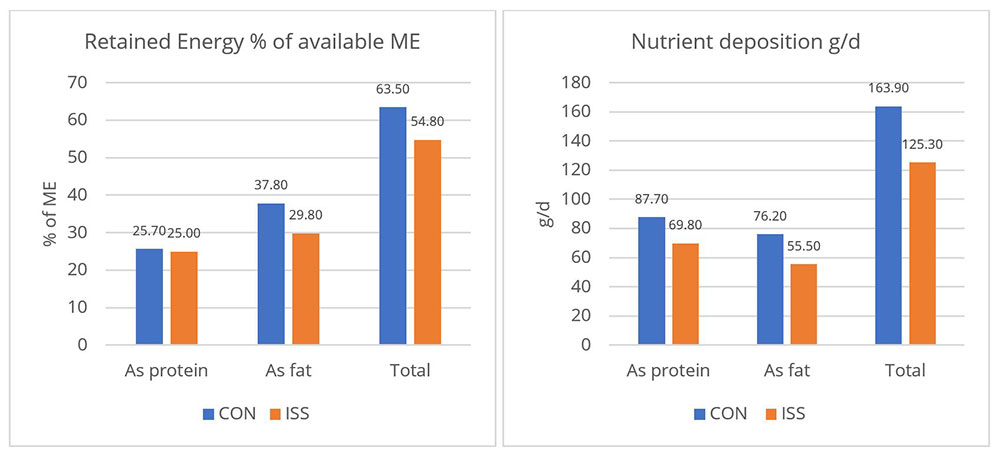
piglet study by Huntley, Nyachoti, and Patience (2017) found that LPS-challenged pigs retained 15% less of the available metabolizable energy and showed 25% less nutrient deposition (figure 2). These results illustrate how animal performance declines during endotoxemia.

  • Control treatment (CON) = Pigs fed by a basal diet
  • Immune system stimulation treatment (ISS) = Pigs given LPS (E. coli serotype 055:B5) injection

Figure 2: Retained Energy as % of ME intake and nutrient deposition of pigs in metabolic cages (adapted from Huntley, Nyachoti, and Patience, 2017)

A loss of energy retained due to a reduction in available metabolizable energy leads to losses in performance as the amount of energy available for muscle production and fat storage will be lower. Furthermore, the decrease in feed intake creates a further energy deficit concerning production needs.

Endotoxin tolerance

The repeated exposure to LPS leads to the production of anti-inflammatory cytokines, as a reaction of the body to prevent tissue damage due to the excessive inflammation. This immunosuppression during stress may lead to an increased risk of secondary infection and poor vaccination titers.

LPS tolerance, also known as CARS (compensatory anti-inflammatory response syndrome) essentially depresses the immune system to control its activity. This “regulation” can be extremely dangerous as an excessive depression of the immune system leaves the organism exposed to the actual pathogens.

The way forward: Natural endotoxin mitigation with SOLIS MAX

The quantity of Gram-negative bacteria in an animal intestine is considerable; therefore, the danger of immune system over-stimulation through endotoxins cannot be taken lightly. Stress factors – that are not uncommon in animal production – affect the microbiome (favoring gram-negative bacteria) and also decrease the intestinal barrier function, which leads to the passage of LPS into the bloodstream

Animals suffering from endotoxemia are subject to severe metabolic dysfunctions. If they do not perish from septic shock (and most of them do not), they are still likely to show performance losses. Moreover, they at great risk of immunosuppression caused by CARS, the immune system “overdrive” discussed above.

Fortunately, research shows that EW Nutrition’s SOLIS MAX effectively binds bacterial toxins, helping to prevent these scenarios.

In vitro trial shows SOLIS MAX’ effectiveness against bacterial endotoxins

Binding endotoxins in the gastrointestinal tract, especially during stress situations in animal production, can help to mitigate the negative impact of LPS on the animals. It reduces the endotoxins passing into the bloodstream and entering the organism.

SOLIS MAX is a synergistic combination of natural plant extracts, yeast cell walls, and natural clay minerals. An in vitro study conducted at a research facility in Germany evaluated its binding performance for LPS derived from E. coli.

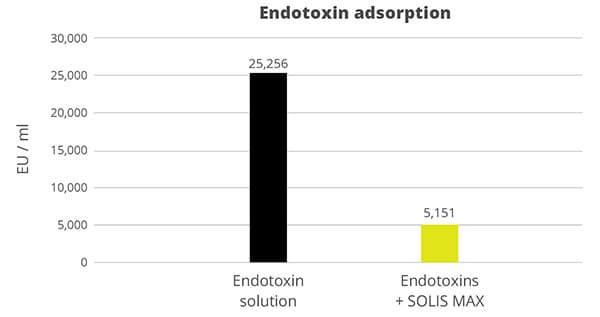
To test the efficacy of SOLIS MAX in binding endotoxins, 0.1% (w/v) of SOLIS MAX was resuspended in endotoxin-free water, with and without a challenge of 25,2568 EU/ml. After one hour, the solutions were centrifuged and the supernatants tested for LPS using Endo-LISA test kits.

The results show that 1 mg of SOLIS MAX adsorbs 20 endotoxin units (EU) of E. coli endotoxin, which corresponds – for this challenge – to an 80% adsorption rate (figure 3).

Figure 3: SOLIS MAX effectively adsorbs E. coli endotoxins

Endotoxin solution SOLIS MAX: Stabilize gut health, support performance

The detrimental impact of LPS can be mitigated by using a high-performance solution such as SOLIS MAX. To prevent negative health and performance outcomes for the animal it is important to stabilize the challenged intestinal barrier and to support the balance of the gut microbiome. Binding endotoxins before they can exert their damaging impact is the primary objective, which SOLIS MAX achieves through the intelligent interaction of natural plant extracts. This can be expected to yield positive results in terms of production levels and the prevention of secondary infections, preserving animal health and farms’ economic viability.


References

Adib-Conquy, Minou, and Jean-Marc Cavaillon. “Compensatory Anti-Inflammatory Response Syndrome.” Thrombosis and Haemostasis 101, no. 01 (2009): 36–47. https://doi.org/10.1160/th08-07-0421.

Huntley, Nichole F., C. Martin Nyachoti, and John F. Patience. “Immune System Stimulation Increases Nursery Pig Maintenance Energy Requirements.” Iowa State University Animal Industry Report 14, no. 1 (2017). https://doi.org/10.31274/ans_air-180814-344.

Li, Jiaolong, Yongqing Hou, Dan Yi, Jun Zhang, Lei Wang, Hongyi Qiu, Binying Ding, and Joshua Gong. “Effects of Tributyrin on Intestinal Energy Status, Antioxidative Capacity and Immune Response to Lipopolysaccharide Challenge in Broilers.” Asian-Australasian Journal of Animal Sciences 28, no. 12 (2015): 1784–93. https://doi.org/10.5713/ajas.15.0286.


Global mycotoxin report: Jan-June 2022 | Find the pain points

myco map 22

by  Marisabel Caballero and Vinil Samraj Padmini, EW Nutrition GmbH

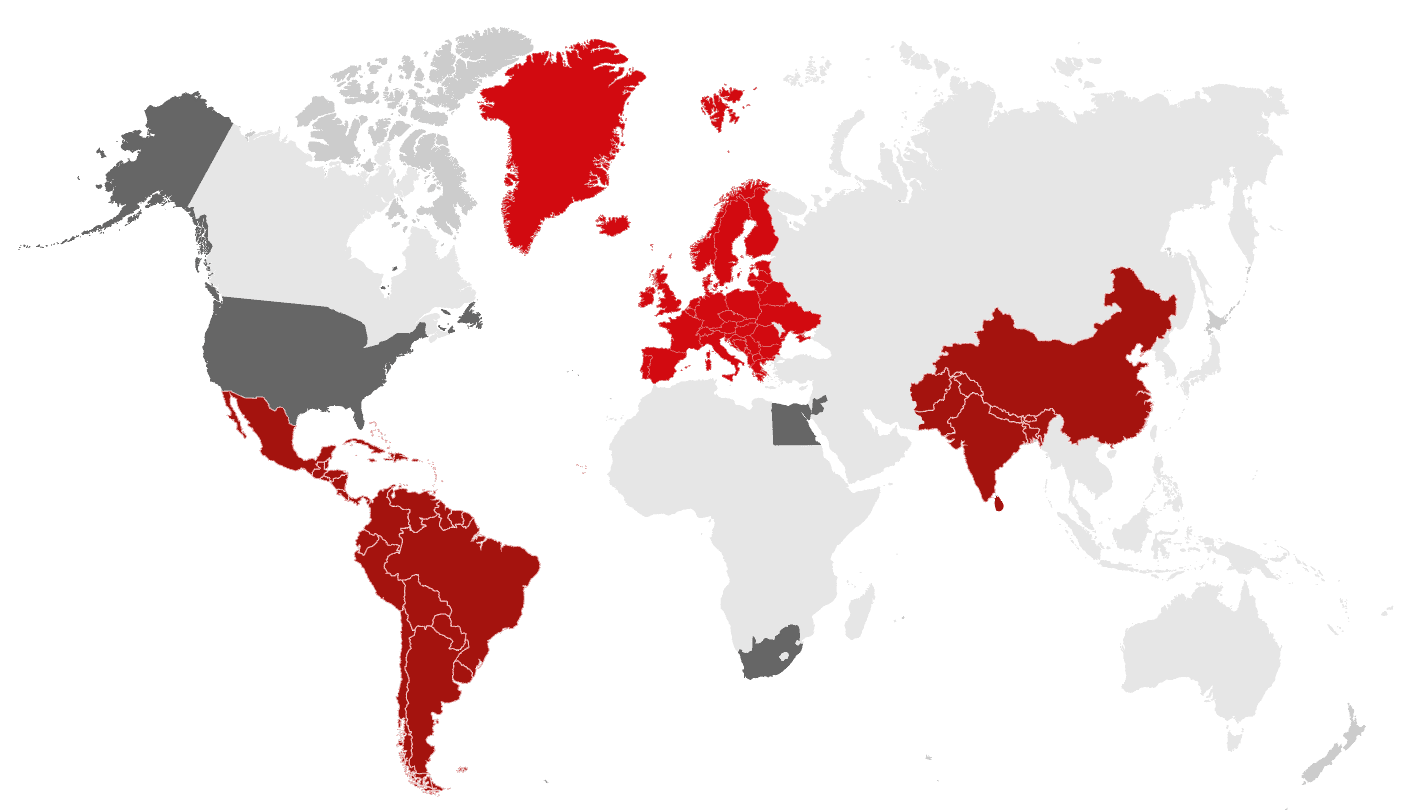
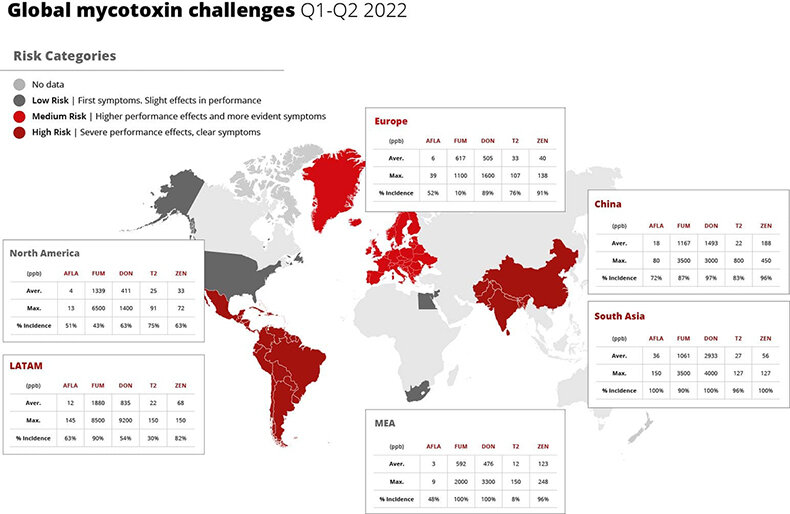
The pressure of climate change is taking a severe toll – not just on weather-dependent industries, but already on society in general. For feed and food, the impact is already dramatic. Extreme weather events, increased temperatures, and rising carbon dioxide levels are facilitating the growth of toxigenic fungi in crops, severely increasing the risk of mycotoxin contamination. Once feed is contaminated, animal health can be impacted, with chain reactions affecting productivity for animal farming, as well as, ultimately, the quality and availability of food.

*** Download the full report for an analysis of mycotoxin contamination risks around the world


Price hikes = more cereal byproducts in animal feed. What about mycotoxin risk?

animal feed

By Technical Team, EW Nutrition

Most grains used in feed are susceptible to mycotoxin contamination, causing severe economic losses all along feed value chains. As skyrocketing raw material prices force producers to include a higher proportion of economical cereal byproducts in the feed, the risks of mycotoxin contamination likely increase. In this article, we review why mycotoxins cause the damage they do – and how effective toxin-mitigating solutions prevent this damage.

Mycotoxin contamination of cereal byproducts requires solutions

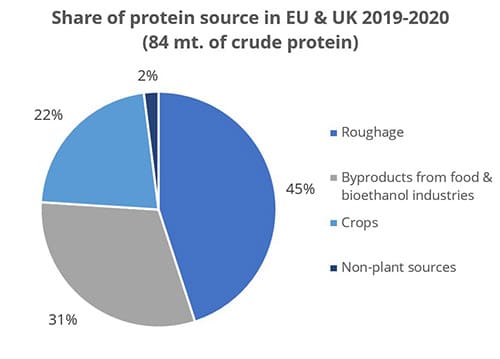
Cereal byproducts may become more important feed ingredients as grain prices increase. But also from a sustainability point of view and considering population growth, using cereal byproducts in animal feed makes  a lot of sense. Dried distiller’s grains with solubles (DDGS) are a good example of how byproducts from food processing industries can become high-quality animal feed.

Figure 1: Byproducts are a crucial protein source (data from FEFAC Feed & Food 2021 report)

Still, research on what happens to mycotoxins during food processing shows that mycotoxins are concentrated into fractions that are commonly used as animal feed (cf. Pinotti et al., 2016 + link to article IH+MC ). To safeguard animal health and performance when feeding lower-quality cereals, it is essential to monitor mycotoxin risks through regular testing and to use toxin-mitigating solutions.

Problematic effects of mycotoxins on the intestinal epithelium

Most mycotoxins are absorbed in the proximal part of the gastrointestinal tract. This absorption can be high, as in the case of aflatoxins (ca. 90%), but also very limited, as in the case of fumonisins (< 1%); moreover, it depends on the species. Importantly, a significant portion of unabsorbed toxins remains within the lumen of the gastrointestinal tract.

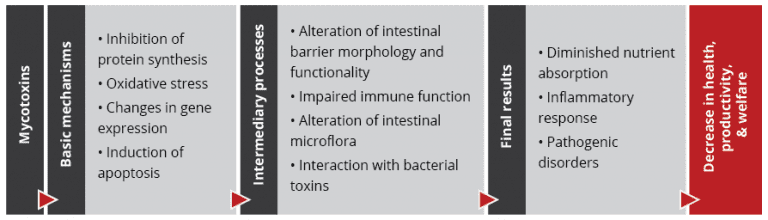
Importantly, studies based on realistic mycotoxin challenges (e.g., Burel et al., 2013) show that the mycotoxin levels necessary to trigger damaging processes are lower than the levels reported as safe by EFSA, the Food Safety Agency of the European Union. The ultimate consequences range from diminished nutrient absorption to inflammatory responses and pathogenic disorders in the animal (Figure 2).

Figure 2: Mycotoxins’ impact on the GIT and consequences for monogastric animals

  1.  Alteration of the intestinal barrier‘s morphology and functionality

    Several studies indicate that mycotoxins such as aflatoxin B1, DON, fumonisin B1, ochratoxin A, and T2, can increase the permeability of the intestinal epithelium of poultry and swine (e.g. Pinton & Oswald, 2014). This is mostly a consequence of the inhibition of protein synthesis.

    As a result, there is an increase in the passage of antigens into the bloodstream (e.g., bacteria, viruses, and toxins). This increases the animal’s susceptibility to infectious enteric diseases. Moreover, the damage that mycotoxins cause to the intestinal barrier entails that they are also being absorbed at a higher rate.

  2. Impaired immune function in the intestine

    The intestine is a very active immune site, where several immuno-regulatory mechanisms simultaneously defend the body from harmful agents. Immune cells are affected by mycotoxins through the initiation of apoptosis, the inhibition or stimulation of cytokines, and the induction of oxidative stress.

    For poultry production, one of the most severe enteric problems of bacterial origin is necrotic enteritis, which is caused by Clostridium perfringens toxins. Any agent capable of disrupting the gastrointestinal epithelium – e.g. mycotoxins such as DON, T2, and ochratoxin – promotes the development of necrotic enteritis.

  3. Alteration of the intestinal microflora

    Recent studies on the effect of various mycotoxins on the intestinal microbiota show that DON and other trichothecenes favor the colonization of coliform bacteria in pigs. DON and ochratoxin A also induce a greater invasion of Salmonella and their translocation to the bloodstream and vital organs in birds and pigs – even at non-cytotoxic concentrations.

    It is known that fumonisin B1 may induce changes in the balance of sphingolipids at the cellular level, including for gastrointestinal cells. This facilitates the adhesion of pathogenic bacteria, increases in their populations, and prolongs infections, as has been shown for the case of E. coli. The colonization of the intestine of food-producing animals by pathogenic strains of E. coli and Salmonella also poses a risk for human health.

  4. Interaction with bacterial toxins

    When mycotoxins induce changes in the intestinal microbiota, this can lead to an increase in the endotoxin concentration in the intestinal lumen. Endotoxins promote the release of several cytokines that induce an enhanced immune response, causing inflammation, thus reducing feed consumption and animal performance, damage to vital organs, sepsis, and death of the animals in some cases.

    The synergy between mycotoxins and endotoxins can result in an overstimulation of the immune system. The interaction between endotoxins and estrogenic agents such as zearalenone, for example, generates chronic inflammation and autoimmune disorders because immune cells have estrogen receptors, which are stimulated by the mycotoxin.

Increased mycotoxin risks through byproducts? Invest in mitigation solutions

To prevent the detrimental consequences of mycotoxins on animal health and performance, proactive solutions are needed that support the intestinal epithelium’s digestive and immune functionality and help maintain a balanced microbiome in the GIT. As the current market conditions will likely engender a long-term shift towards the inclusion of more cereal byproducts in animal diets, this becomes even more important.

Trial data shows that EW Nutrition’s toxin-mitigating solution SOLIS MAX provides effective protection against feedborne mycotoxins. The synergistic combination of ingredients in SOLIS MAX mycotoxins from damaging the animals’ gastrointestinal tract and entering the blood stream:

In-vitro study shows SOLIS MAX’ strong mitigation effects against wide range of mycotoxins

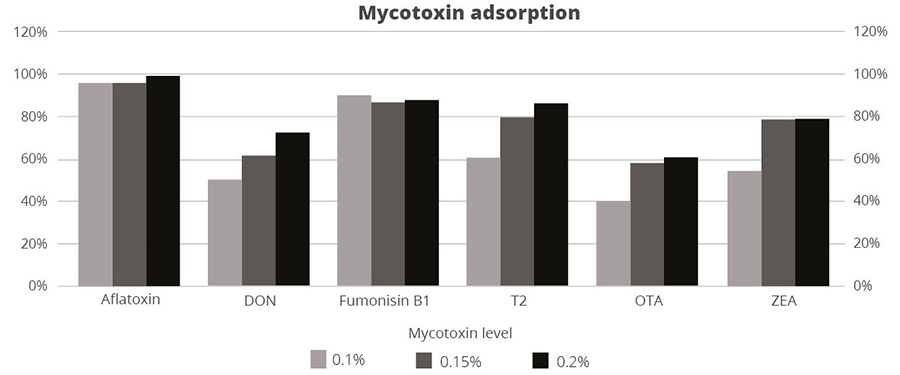
Animal feed is often contaminated with two or more mycotoxins, making it important for an anti-mycotoxin agent to be effective against a wide range of different mycotoxins. A dose response evaluation of SOLIS MAX was conducted a at an independent laboratory in Spain, for inclusion levels of 0.10%, 0.15%, and 0.20% (equivalent to 1 kg, 1.5 kb, and 2 kg per ton of feed). A phosphate buffer solution at pH 7 was prepared to simulate intestinal conditions in which a portion of the mycotoxins may be released from the binder (desorption).

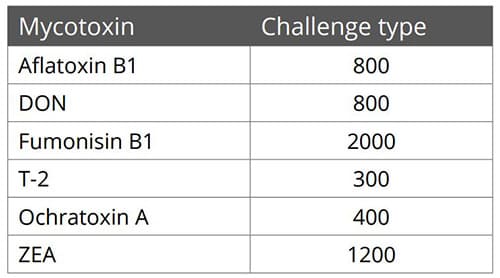
Each mycotoxin was tested separately by adding a challenge to buffer solutions, incubating for one hour at 41°C, to establish the base line (see table). At the same time a solution with the toxin challenge and SOLIS MAX was prepared, incubated, and analyzed for the residual mycotoxin. All analyses were carried out by high performance liquid chromatography (HPLC) with standard detectors.

Figure 3: SOLIS MAX adsorption capacity against different mycotoxins (%)

The results demonstrate that SOLIS MAX is a very effective solution against the most common mycotoxins found in raw materials and animal feed, showing clear dose-response effects.

Mycotoxin risk management for better animal feed

A healthy gastrointestinal tract is crucial to animals’ overall health: it ensures that nutrients are optimally absorbed, it provides effective protection against pathogens through its immune function, and it is key to maintaining a well-balanced microflora. Even at levels considered safe by the European Union, mycotoxins can compromise different intestinal functions, resulting in lower productivity and susceptibility to disease.

The globalized feed trade, which spreads mycotoxins beyond their geographical origin, climate change and raw material market pressures only escalates the problem. On top of rigorous testing, producers should mitigate unavoidable mycotoxin exposures through the use of solutions such as SOLIS MAX – for stronger animal health, welfare, and productivity.

References

Antonissen, Gunther, An Martel, Frank Pasmans, Richard Ducatelle, Elin Verbrugghe, Virginie Vandenbroucke, Shaoji Li, Freddy Haesebrouck, Filip Van Immerseel, and Siska Croubels. “The Impact of Fusarium Mycotoxins on Human and Animal Host Susceptibility to Infectious Diseases.” Toxins 6, no. 2 (January 28, 2014): 430–52. https://doi.org/10.3390/toxins6020430.

Burel, Christine, Mael Tanguy, Philippe Guerre, Eric Boilletot, Roland Cariolet, Marilyne Queguiner, Gilbert Postollec, et al. “Effect of Low Dose of Fumonisins on Pig Health: Immune Status, Intestinal Microbiota and Sensitivity to Salmonella.” Toxins 5, no. 4 (April 23, 2013): 841–64. https://doi.org/10.3390/toxins5040841.

Burton, Emily J., Dawn V. Scholey, and Peter E. Williams. “Use of Cereal Crops for Food and Fuel – Characterization of a Novel Bioethanol Coproduct for Use in Meat Poultry Diets.” Food and Energy Security 2, no. 3 (September 19, 2013): 197–206. https://doi.org/10.1002/fes3.30.

Ghareeb, Khaled, Wageha A. Awad, Josef Böhm, and Qendrim Zebeli. “Impacts of the Feed Contaminant Deoxynivalenol on the Intestine of Monogastric Animals: Poultry and Swine.” Journal of Applied Toxicology 35, no. 4 (October 28, 2014): 327–37. https://doi.org/10.1002/jat.3083.

Mani, V., T. E. Weber, L. H. Baumgard, and N. K. Gabler. “Growth and Development Symposium: Endotoxin, Inflammation, and Intestinal Function in livestock1,2.” Journal of Animal Science 90, no. 5 (May 1, 2012): 1452–65. https://doi.org/10.2527/jas.2011-4627.

Obremski, K. “The Effect of in Vivo Exposure to Zearalenone on Cytokine Secretion by Th1 and Th2 Lymphocytes in Porcine Peyer’s Patches after in Vitro Stimulation with LPS.” Polish Journal of Veterinary Sciences 17, no. 4 (2014): 625–32. https://doi.org/10.2478/pjvs-2014-0093.

Oswald, I. P., C. Desautels, J. Laffitte, S. Fournout, S. Y. Peres, M. Odin, P. Le Bars, J. Le Bars, and J. M. Fairbrother. “Mycotoxin Fumonisin B1 Increases Intestinal Colonization by Pathogenic Escherichia Coli in Pigs.” Applied and Environmental Microbiology 69, no. 10 (2003): 5870–74. https://doi.org/10.1128/aem.69.10.5870-5874.2003.

Pinotti, Luciano, Matteo Ottoboni, Carlotta Giromini, Vittorio Dell’Orto, and Federica Cheli. “Mycotoxin Contamination in the EU Feed Supply Chain: A Focus on Cereal Byproducts.” Toxins 8, no. 2 (February 15, 2016): 45. https://doi.org/10.3390/toxins8020045.

Pinton, Philippe, and Isabelle Oswald. “Effect of Deoxynivalenol and Other Type B Trichothecenes on the Intestine: A Review.” Toxins 6, no. 5 (May 21, 2014): 1615–43. https://doi.org/10.3390/toxins6051615.


The risk of using by-products as feed alternatives – and the solutions

feed milling byproduct

By Technical Team and Dr. Inge Heinzl, Editor, EW Nutrition

Consistently rising feed prices compel feed producers to resort to alternative feed ingredients. By-products of milling and ethanol distillation would be good options. The following article shows what should be paid attention to when using these feeds.

Factory for high-quality animal protein

Keeping high-quality animal protein affordable requires cost-efficient alternatives

For a high percentage of consumers, the price of food products is one of the most decisive purchase factors; however, quality and sustainable use of resources are also of high importance. So, to comply with market requirements, meat producers must find cost-efficient and sustainable sources of feed ingredients. Feed prices already increased during the COVID-19 pandemic. Shortage of workforce and high shipping costs led to discontinuity in the supply chain, long delivery times, and increased costs for certain raw materials. Due to the Ukrainian crisis, there is no improvement to be seen. Alternatives must be considered more vigorously to compensate for this limited feed supply.

Grain by-products are an option

The use of grain by-products occurring at milling or ethanol production can cover a part of animal nutritional demands. Additionally, it contributes to sustainable usage of the available sources, as the remains of the production of human consumables are put back into the food chain.

However, increasing levels of by-products in the feed also have their sticking points. The raw materials grains or corn are often contaminated with mycotoxins, impacting the quality of this kind of feed.

Milling processes reduce mycotoxins in food

Before the whole process of milling, the grains are sorted and cleaned. Kernels with extensive mold growth, broken kernels, fine materials, and dust are removed.

When it comes to reducing mycotoxins by sorting and cleaning, the results vary a lot. They are influenced by several factors, including the initial condition of the grains, the type and level of contamination, and the type and efficiency of the cleaning process (Pinotti et al., 2016). The cleaning process has been shown to remove from 5 to 80 % of DON and NIV, 5 to 40 % of ZON (Schaarschmidt & Fauhl-Hassek, 2018), and 50 to 60 % of T2/HT2 contamination in wheat (Pascale et al., 2011). Debranning, the mechanical process by which the outer layers of wheat grains are removed, further reduces mycotoxin content in wheat grain from 15 to 80% of the initial contamination (Aureli et al., 2007; Rios et al., 2009). However, neither the cleaning and debranning nor the milling process include a step that destroys mycotoxins.

In white flour for human consumption, mycotoxin levels typically range from 50 to 70% of the wheat grain (Cheli et al., 2013).

The milling of maize shows a reduction factor of about 4 for aflatoxins and about 10 for zearalenone from the grain to the final human products. Contrarily, concentration triplicates for both aflatoxins and zearalenone in the case of the by-products such as germs, bran, and animal flour.

Milling processes concentrate mycotoxins in animal-feed fractions

The milling and pre-milling processes reduce the content of mycotoxins in products for human consumption, but what about the parts removed and normally used in animal feeds? Several studies (Tibola et al., 2015; Hoffmans et al., 2022) indicate that the concentration of mycotoxins is higher in the wheat fractions intended for animal feeds such as bran, flour shorts screenings, and middlings. However, their level in feedstuffs is variable and affected by several factors such as the type of mycotoxins, the level and extent of fungal contamination, and the complexity of the cereal processing technology.

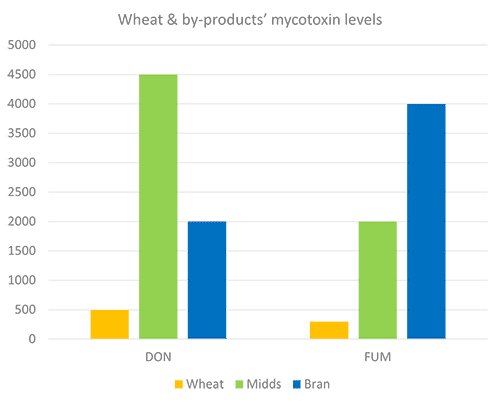
Compared to the concentration in wheat grain, these concentrations in by-products may be up to 800 % but more typically range from 150 % to 340 % (Cheli et al., 2013). EW Nutrition’s worldwide mycotoxin survey shows a similar trend (Figures 1 and 2), in which DON levels are nine times higher in wheat midds than wheat grains, and fumonisin is eight times higher in wheat bran.

Mycotoxins levels in grain and by-products bar graphs EW Nutrition's worldwide mycotoxin survey bar graphs

Figure 1 + 2: Mycotoxins levels in grain and by-products

Highest concentrations in germ and bran fraction

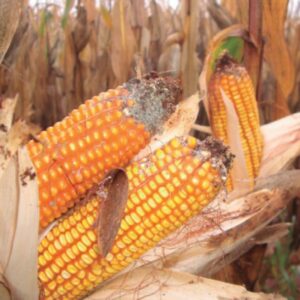
After corn milling, animal feed fractions such as germ and bran have a low yield ranging from 5 to 7 % and are mostly composed of the outer parts of the kernels; as a consequence, an important concentration of mycotoxins occurs in these fractions (Schollenberger et al., 2008). When taking corn grains as the base, the contamination of aflatoxins goes up to three times in corn germ and up to nine times in bran (Brera et al., 2006; Pietri et al., 2009). For fumonisins, a double concentration can be expected (Brera et al., 2004), and for zearalenone, up to four times (Brera et al., 2006). Recently, Park and collaborators (2018) evaluated the distribution of 12 mycotoxins during wet milling of corn and found higher concentrations in corn gluten feed and corn bran.

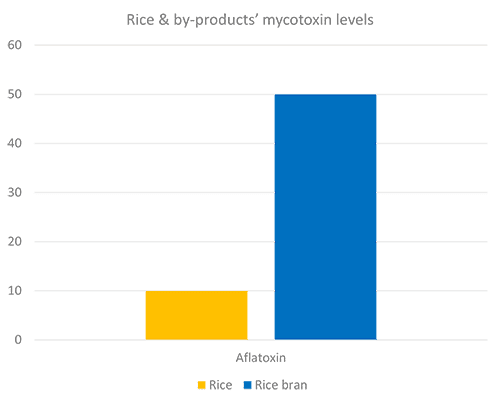
Milling is a crucial step in the post-production of rice, in which the husk and the bran layers are removed. Rice bran is a common ingredient for animal feeds, in which aflatoxin is a common contaminant. It is believed that most of the aflatoxin contamination in rice bran occurs due to non-optimal storage conditions (Takahashi et al., 1989); however, a concentration of the toxin during milling of stored paddy rice also occurs, and the levels can triplicate compared with the grains (Trucksess et al., 2011).

The concentration of mycotoxins in DDGS during the ethanol production

Fresh MaizeDestillers’ dried grains with solubles (DDGS), a by-product of ethanol production, is a valuable feed ingredient, particularly as a source of protein for ruminants and monogastric animals at a competitive price.
Also here, mycotoxin contamination raises concerns with regard to their use in animal feeds. Mycotoxins are not destroyed during the ethanol fermentation process or during the production of DDGS. Moreover, a concentration of DON, ZEA, and fumonisin from corn to DDGS of 2–3.5 times has been reported for industrial ethanol production (Bennett et al., 1981; Schaafsma et al., 2009; Bowers & Munkvold, 2014).

In summary, studies on the fate of mycotoxins during food processing have shown that mycotoxins are concentrated in the fractions commonly used as animal feed. Moreover, high variability in mycotoxin contamination of cereal by-products has been evidenced, representing barriers to an increased acceptance of several food by-products as feed ingredients.

Feed formulation: Consider the mycotoxin contamination in by-products

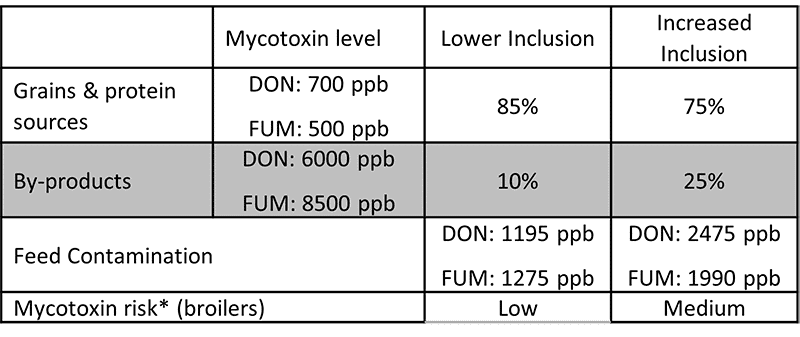
Higher inclusions of cereals have an impact on their safe use in feeds. To evaluate this impact, we can simulate two different scenarios with different inclusions of by-products:

Table 1: Different levels of by-products’ inclusion rates

*Risk Tool (masterrisktool.com)

In the first lower inclusion scenario, the risk for broilers in the starting phase considers the low inclusion of raw materials; the losses related to the contamination (without management) are mild. When increasing the levels of by-products, the risk category also increases. The losses are more important for the operation, ranging from gut barrier alterations with impaired production parameters to alterations in the immune response and increased susceptibility to disease.

Mycotoxins in by-products effective toxin risk management can help!

Given the pros of including cereal by-products in animal feeds, such as their saving potential and their link with sustainability of resources, their utilization is advisable; however, understanding how mycotoxin distribution and concentration change during grain processing is critical. Today’s knowledge is limited to a few mycotoxins in cereal milling.

Therefore, when considering using these by-products in the animal feed, we must bear in mind that:

  • modified mycotoxins and mycotoxin co-contamination can be present, contributing to additive/synergistic effects on animal health.
  • toxin risk management strategies, including analysis, risk evaluation, and risk mitigation must be pursued to prevent those undesired effects.

References:

Aureli, G., and M.G. D’Egidio. “Efficacy of Debranning on Lowering of Deoxynivalenol (DON) Level in Manufacturing Processes of Durum Wheat.” Tecnica Molit. 58 (2007): 729–33.

Bennett, G. A., A. A. Lagoda, O. L. Shotwell, and C. W. Hesseltine. “Utilization of Zearalenone- Contaminated Corn for Ethanol Production.” Journal of the American Oil Chemists’ Society 58, no. 11 (1981): 974–76. https://doi.org/10.1007/bf02659774.

Bowers, Erin, and Gary Munkvold. “Fumonisins in Conventional and Transgenic, Insect-Resistant Maize Intended for Fuel Ethanol Production: Implications for Fermentation Efficiency and DDGS Co-Product Quality.” Toxins 6, no. 9 (2014): 2804–25. https://doi.org/10.3390/toxins6092804.

Brera, Carlo, Carla Catano, Barbara de Santis, Francesca Debegnach, Marzia de Giacomo, Elena Pannunzi, and Marina Miraglia. “Effect of Industrial Processing on the Distribution of Aflatoxins and Zearalenone in Corn-Milling Fractions.” Journal of Agricultural and Food Chemistry 54, no. 14 (2006): 5014–19. https://doi.org/10.1021/jf060370s.

Brera,Carlo, Francesca, Debegnach, Silvana Grossi, and Marina Miraglia. “Effect of Industrial Processing on the Distribution of Fumonisin B1 in Dry Milling Corn Fractions.” Journal of Food Protection 67, no. 6 (2004): 1261–66. https://doi.org/10.4315/0362-028x-67.6.1261.

Cheli, Federica, Luciano Pinotti, Luciana Rossi, and Vittorio Dell’Orto. “Effect of Milling Procedures on Mycotoxin Distribution in Wheat Fractions: A Review.” LWT – Food Science and Technology 54, no. 2 (2013): 307–14. https://doi.org/10.1016/j.lwt.2013.05.040.

Park, Juhee, Dong-Ho Kim, Ji-Young Moon, Jin-Ah An, Young-Woo Kim, Soo-Hyun Chung, and Chan Lee. “Distribution Analysis of Twelve Mycotoxins in Corn and Corn-Derived Products by LC-MS/MS to Evaluate the Carry-over Ratio during Wet-Milling.” Toxins 10, no. 8 (2018): 319. https://doi.org/10.3390/toxins10080319.

Pascale, Michelangelo, Miriam Haidukowski, Veronica Maria Lattanzio, Marco Silvestri, Roberto Ranieri, and Angelo Visconti. “Distribution of T-2 and HT-2 Toxins in Milling Fractions of Durum Wheat.” Journal of Food Protection 74, no. 10 (2011): 1700–1707. https://doi.org/10.4315/0362-028x.jfp-11-149.

Pietri, A., M. Zanetti, and T. Bertuzzi. “Distribution of Aflatoxins and Fumonisins in Dry-Milled Maize Fractions.” Food Additives & Contaminants: Part A 26, no. 3 (2009): 372–80. https://doi.org/10.1080/02652030802441513.

Pinotti, Luciano, Matteo Ottoboni, Carlotta Giromini, Vittorio Dell’Orto, and Federica Cheli. “Mycotoxin Contamination in the EU Feed Supply Chain: A Focus on Cereal Byproducts.” Toxins 8, no. 2 (2016): 45. https://doi.org/10.3390/toxins8020045.

Ríos, G., L. Pinson-Gadais, J. Abecassis, N. Zakhia-Rozis, and V. Lullien-Pellerin. “Assessment of Dehulling Efficiency to Reduce Deoxynivalenol and Fusarium Level in Durum Wheat Grains.” Journal of Cereal Science 49, no. 3 (2009): 387–92. https://doi.org/10.1016/j.jcs.2009.01.003.

Schaafsma, Arthur W, Victor Limay-Rios, Diane E Paul, and J David Miller. “Mycotoxins in Fuel Ethanol Co-Products Derived from Maize: A Mass Balance for Deoxynivalenol.” Journal of the Science of Food and Agriculture 89, no. 9 (2009): 1574–80. https://doi.org/10.1002/jsfa.3626.

Schaarschmidt, Sara, and Carsten Fauhl-Hassek. “The Fate of Mycotoxins during the Processing of Wheat for Human Consumption.” Comprehensive Reviews in Food Science and Food Safety 17, no. 3 (2018): 556–93. https://doi.org/10.1111/1541-4337.12338.

Schollenberger, M., H.-M. Müller, M. Rüfle, S. Suchy, and W. Drochner. “Redistribution of 16FusariumToxins during Commercial Dry Milling of Maize.” Cereal Chemistry Journal 85, no. 4 (2008): 557–60. https://doi.org/10.1094/cchem-85-4-0557.

Takahashi, H., H. Yazaki, M. Manabe, S. Matsuura, and S. Kimura. “Distribution of Citrinin and Aflatoxins in Steamed Milled Rice Kernels Inoculated with Penicillium Citrinum and Aspergillus Flavus.” Mycotoxins 1990, no. 31 (1989): 49–53. https://doi.org/10.2520/myco1975.1990.49.

Trucksess, M.W., H.K. Abbas, C.M. Weaver, and W.T. Shier. “Distribution of Aflatoxins in Shelling and Milling Fractions of Naturally Contaminated Rice.” Food Additives & Contaminants: Part A 28, no. 8 (2011): 1076–82. https://doi.org/10.1080/19440049.2011.576441.


Exploding energy prices? Manage moisture to improve feed mill efficiency

shutterstock 1279230391 scaled

By Ivan Ilić, Global Manager Technical Product Applications, EW Nutrition


Modern large-scale feed mills operate extremely efficiently and have few variable costs that could be reduced to lower the total cost of the final feed (Stark, 2012). In light of worrying energy price hikes, feed producers, however, should reduce their electricity use per unit produced, to maintain profitability. Find out how optimizing the feed mill’s moisture management increases feed quality while decreasing the energy required to produce it.

Due to climatic challenges, variability in raw material quality, and technical constraints, it can be challenging for feed producers to stabilize the water content in compound feed across time, raw material batches or even different machinery.

Combined with high temperatures, high moisture in feed can favor the growth of molds. They spoil feed, depleting energy and nutrients and generating reactive oxygen species (ROS) that reduce feed palatability. Even worse, some molds release toxins harm animals’ health and performance. On the other hand, low moisture levels in feed has a negative impact on pellet durability, increasing fines, process loss, and energy consumption while decreasing pellet press yield (Moritz et al., 2002).

Animal food diet

What does feed moisture management have to do with a feed mill’s electricity consumption?

Moisture from raw materias can be lost during storage and processing. Silo aeration and enviroment conditions can contribute to moisture loss when the grains are stored at higher than optimal moisture levels (Angelovič, 2018). During feed processing, the intense friction of grinding results in heat and moisture from the grains is lost as vapor. As an optimal level of moisture is critical to ensure production output and feed quality, it must be added back to the system and adequately managed to keep or increase final feed quality.

For pelleted feeds, managing moisture is a two-step process:

  1. Adding moisture in the mixer. This ensures that the mash feed is enters the conditioning process at the right moisture level, facilitating the penetration of steam and increasing the efficiency of the process.
  2. Managing steam during conditioning. Steam added to the conditioner must be dry (meaning saturated with water droplets in suspension), and when this dry steam contacts the feed, it condenses and adds moisture.

However, simply adding water into the mixer does not give optimal results: Pure water does not completely bind to the feed; it mostly “sits on top” of the feed surface, increasing its water activity, and thus increasing the danger of microbial growth. Plus, a high proportion of pure water evaporates again when the feed is cooled.

Surfactants improve moisture retention

Surfactants change the way water behaves: by reducing the surface tension of water, they enable the feed particles to absorb the water and ensure that it is evenly distributed throughout the feed.

Improved moisture retention can:

  • facilitate the starch gelatinization during conditioning (important making the pellet more durable and the feed more digestible),
  • minimize feed shrinkage,
  • reduce friction and hence the energy required for the pellet die (improving milling efficiency), and
  • curb microbial growth by reducing water activity.

SURF•ACE: Improve throughput and reduce energy requirements

While surfactants contribute to mold control, feed producers also require the help of organic acids such as propionic acid (cf. Smith et al., 1983). The objectives are to optimize the moisture content in feed and to reduce its mold contamination. EW Nutrition’s SURF•ACETM feed mill processing aid combines organic acids and surfactants to achieve the objective of adding moisture without risking either the significant loss of moisture during cooling or the development of mold.

The effect of adding SURF•ACE to diets with different levels of fat was evaluated at more than 40 feed mills, with production capacities ranging from 5 to 20 tons per hour. SURF•ACE is added to water sprayed during mixing. This hydrating solution lubricates the mash feed, improves steam penetration and starch gelatinization, and reduces friction in the pellet dies. The results show that, relative to pure water, the addition of SURF•ACE increases press throughout (t/h) by between 5 and 25 %.

Trial results: SURF•ACE increases press yields while lowering energy consumption

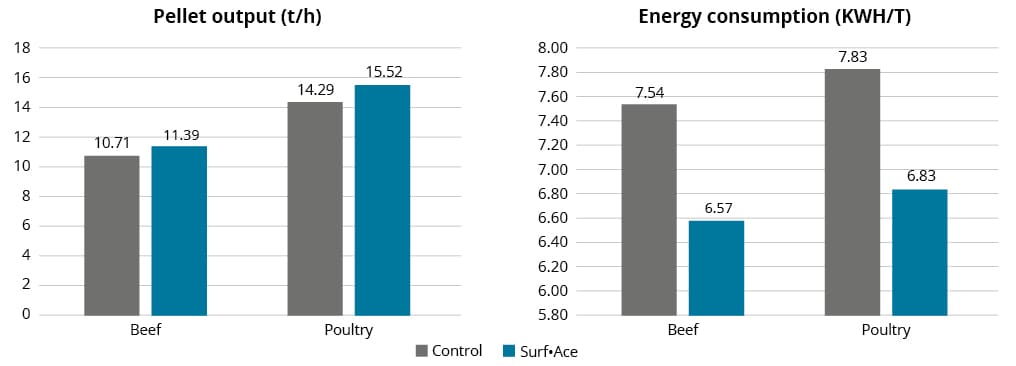
  • For a trial at a Turkish beef and poultry feed mill, the same feed was run through the pelletizer in two batches, one with a 1 % water and one with 1% water mixed with 200 g of SURF•ACE per ton of feed. Adding SURF•ACE resulted in higher pellet output (6% for beef; 9% for poutry) and reduced energy consumption (13% for both beef and poultry):

Art Sf Turkish Trial

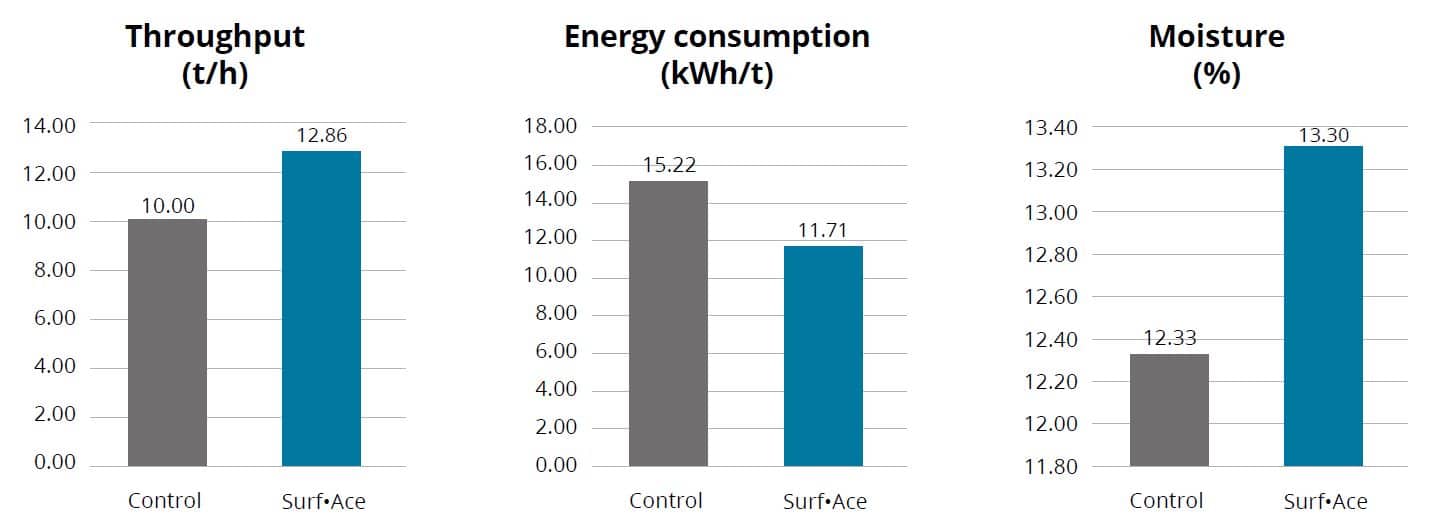
  • In Poland, another trial conducted at a commercial feed mill found that when SURF•ACE was added to 1% mixer-moisture, this lead to a 28.6 % higher feed throughput in the pellet press, 23 % lower energy consumption per unit produced during the pelleting process, and a nearly 1 %-point higher moisture content in finished feed. This resulted in higher profitability: based on the costs in Poland at the time of the trial, an ROI of 2.4:1 was achieved.

  • A recent trial at an Indian feed mill evaluated the difference between adding 1% moisture to produce crumble feed (control group) and upgrading the water with 200 g of SURF•ACE per ton. The addition of SURF•ACE reduced power consumption by 6% and improved throughput by 18%.

Feed mills must deal with rising energy costs head-on

Operating in a tight margin environment, feed mills always need to prioritize efficiency. The advantages of using SURF•ACE feed mill processing aid are clear: reduced energy consumption, better pellet quality, fewer fines, better PDI, moisture optimization, lower maintenance costs, and higher productivity (throughput). During times of increasingly high ingredient and energy costs, it is even more important to utilize savings opportunities at every production stage. Thanks to its dual surfactant and preservative effects, SURF•ACE enables feed mills to improve feed quality and increase throughput while lowering electricity use.

References

Angelovič, Marek, Koloman Krištof, Ján Jobbágy, Pavol Findura, and Milan Križan. “The effect of conditions and storage time on course of moisture and temperature of maize grains.” BIO Web Conferences 10 (2018): 02001. https://doi.org/10.1051/bioconf/20181002001

Moritz, J. S., K. J. Wilson, K. R. Cramer, R. S. Beyer, L. J. McKinney, W. B. Cavalcanti, and X. Mo. “Effect of Formulation Density, Moisture, and Surfactant on Feed Manufacturing, Pellet Quality, and Broiler Performance.” Journal of Applied Poultry Research 11, no. 2 (2002): 155–63. https://doi.org/10.1093/japr/11.2.155.

Smith, Philip A., Talmadge S. Nelson, Linda K. Kirby, Zelpha B. Johnson, and Joseph N. Beasley. “Influence of Temperature, Moisture, and Propionic Acid on Mold Growth and Toxin Production on Corn.” Poultry Science 62, no. 3 (1983): 419–23. https://doi.org/10.3382/ps.0620419.

Stark, Charles. “Feed manufacturing to lower feed cost”. Presentation at Allen D. Leman Swine Conference, Volume 39, 2012. https://conservancy.umn.edu/bitstream/handle/11299/139624/Stark.pdf?sequence=1


Piglet performance with fewer antimicrobials is possible

veterinarianholdingdryfoodingranulesinhandsandoffering

By Technical Team, EW Nutrition

A variety of stressors simultaneously occur at weaning, making this probably the most challenging period in pig production. During weaning, we commonly see altered gut development and gut microbiome, which increases piglets’ vulnerability to diseases. The most classic clinical symptom resulting from these stressors is the occurrence of post-weaning diarrhea. It is a sign that something went wrong, and piglet development and overall performance may be compromised (Guevarra et al. 2019).

Besides weaning, an unavoidable practice in pig production, the swine industry has been facing other changes. Among them, the increased pressure to reduce the use of antimicrobials stands out. Antimicrobials are often associated with improved piglet performance and health. Their usage has been reduced worldwide, however, due to the threat of antimicrobial resistance that affects not just animal health but also human health (Cardinal et al., 2019).

Reduce antimicrobials and post-weaning diarrhea: can piglet nutrition achieve both?

With these drastic changes for the piglets and the global swine industry, producers must find solutions to keep their farms profitable — especially from a nutritional perspective. Our last article presented two feed additives that can be part of an antibiotic-free concept for post-weaning piglets. This article will highlight a few essential nutritional strategies that swine producers and nutritionists must consider when formulating post-weaning feed without or with reduced amounts of antimicrobials.

Pigs

What makes weaning so stressful for piglets?

Producers, nutritionists, and veterinarians all agree that weaning is a tough time for piglets (Yu et al., 2019) and, therefore, a challenge to all those involved in the pig production chain. Although there is a global trend towards increasing weaning age, generally speaking, animals are still immature when going through the weaning process. They face several physiological, nutritional, and environmental changes (figure 1).

Healthy Piglets
Figure 1. Factors associated with weaning can compromise piglet well-being and performance

Most of these changes become “stressors” that trigger a cascade of reactions affecting the balance and morphology of the intestinal microbiome (figure 2). The outcome is a decrease in the piglets’ well-being and, in most cases, performance. We need to clearly understand how these stressors affect pigs to develop effective strategies against post-weaning growth impairments, especially when no antimicrobials are allowed.


Schematic diagram
Figure 2. Schematic diagram illustrating the effects of stress in weaned piglets (adapted from Jayaraman and Nyachoti, 2017)

Weaning support starts before weaning

The use of creep feed has been evaluated and even criticized for many years. Some operations are still reluctant to use such a feed due to its high cost and amount of labor on the farm, with manually providing feed and cleaning feeding trays. In addition, some questions have been raised regarding the ideal composition of the creep feed – how much complexity should we add to this special diet?

Therefore, the benefits of creep feed are under re-evaluation, not only considering piglet physiology per se, but also feed characteristics and different feeding programs. Recent studies have questioned highly complex creep feed formulations. Creep feed is being called “transition feed” (Molist, 2021) – i.e., that meal which is complementary to sows’ milk and not a replicate of it, helping piglets during the period of changing its main source of nutrients. We must, therefore, look at it as a way of making piglets familiar with solid feed, as highlighted by Mike Tokach during the 2020 KSU Swine Day. Dr. Tokach also mentioned that the presence of feeders in the lactation pen could stimulate the exploratory behaviors of the piglets. Combined, these practices can lead to a higher feed intake and performance during the nursery phase.

Towards a pragmatic stance on creep feed

Heo et al. (2018) evaluated three different creep feed types: a highly digestible creep feed, weaning feed as creep feed, and sow feed as creep feed until weaning. Piglets receiving the highly digestible creep had higher feed intake during the second to the last week pre-weaning (14 to 21 days of age) and higher ADG during the last week pre-weaning (21 to 28 days of age). This resulted in a trend for higher weaning weight. However, these benefits did not persist after weaning when all piglets received the weaning feed.

Guevarra et al. (2019) also suggested that the abrupt transition in piglet nutrition to a more complex nutrient source can influence shifts in the gut microbiota, impacting the absorptive capacity of the small intestine. Yang et al. (2016) evaluated 40 piglets from eight litters during the first week after weaning. They found that the change in diet during weaning reduced the proliferation of intestinal epithelial cells. This indicates that this period affects cellular macromolecule organization and localization, in addition to energy and protein metabolism. These results suggest that “similarity” in feed pre- and post-weaning may contribute more to the continuity of nutrient intake post-weaning than a highly complex-nutrient dense creep feed.

Nutritional strategies without antibiotics: focus on pig physiology

As mentioned, it is crucial to avoid a drastic drop in feed/nutrient intake after weaning compared to pre-weaning levels. In a classic study, Pluske et al. (1996) showed the importance of high intake levels on villus weight (used as a reference for gut health, cf. graph 1). Although not desirable, the reduction should be considered “normal” behavior.

Imagine these recently weaned piglets, facing all these stressors, having to figure out within this new group of peers when it is time to eat, where to find food, why water and food now come from two distinct sources… Therefore, management, feeding, water quality, and other aspects play important roles in post-weaning feed intake (figure 3).

Average villus height
Graph 1. Villus height following different levels of feed intake (M = maintenance) post-weaning (a.b.c bars with unlike superscript letters are different at P<0.05). (From Pluske et al., 1996.)

From a nutritional perspective, piglets at weaning experience a transition from milk (a high-fat, low-carbohydrate liquid) to a plant-based diet (a solid, low-fat, and high-carbohydrate diet) (Guevarra et al., 2019). Even when previously introduced to solid feed, it is still difficult for their enzymatic system to cope with grains and beans.

One of the consequences of the lower digestibility capacity is an increase of undigested nutrients. Harmful bacteria thrive and cause diarrhea, reducing even further an already compromised feed intake. This cycle must be broken with the support of formulations based on piglet physiology.

Post-weaning feed must support digestion and nutrient absorption, including the largest possible share possible of high-quality, digestible ingredients, with low anti-nutritional factors. High-performing feed also integrates functional amino acids, functional carbohydrates, and additives to support the intestinal mucosa and gut microbiome.

Supporting piglets with effective solutions

Figure 3. Supporting piglets with effective solutions

Crude protein – more of the same?

Levels of crude protein in piglet feed have been in the spotlight for quite some time. The topic can be very controversial where the exact percentage of crude protein in the final feed is concerned. Some nutritionists pragmatically recommend maximal levels of 20% in the weaner feed. Others go a bit lower, with some formulations reaching 17 to 18% total crude protein. Levels above 20% will incur high costs and may accentuate the growth of pathogenic bacteria due to a higher amount of undigested protein in the distal part of the small intestine (figure 4).

crude protein levels in piglet feed
Figure 4. The dynamics of crude protein levels in piglet feed

What is not open for discussion, however, is the quality of the protein used, in terms of:

  • digestibility,
  • the total amount of anti-nutritional factors, and
  • the correct supply of essential and non-essential amino acids (particularly lysine, methionine, threonine, tryptophane, isoleucine and valine).

The critical role of digestibility

High-digestibility ingredients for piglets need to deliver minimum 85% digestibility. In most cases, to reach high biological values (correlating to high digestibility), these ingredients typically undergo different processing steps, including heat, physical, and chemical treatments. Animal by-products (such as hydrolyzed mucosa, fish meal, spray-dried plasma) and processed vegetable sources (soy protein concentrate, extruded grains, potato protein) can be used in high amounts during this phase. They will notably reduce the total amount of undigested protein reaching the distal part of the intestine, with 2 main benefits:

  • Less substrate for pathogenic bacteria proliferation (and therefore lower incidence of diarrhea)
  • Lower nitrogen excretion to the environment


Animal Feeds

It is common knowledge that certain storage proteins from soybean meal (for instance, glycinin and B-conglycinin) can cause damage to piglets’ intestinal morphology and trigger the activation of the immune system. However, it is normal practice to introduce this ingredient to piglets around weaning so that the animals can develop a certain level of tolerance to such compounds (Tokach et al., 2003). In Europe, where most diets are wheat-barley based, soybean meal is included in levels varying from 3 to 9% in the first 2 diets, with gradual increases during the nursery phase.

Amino acids and protein: manage the balance

When the supply and balance between essential and non-essential amino acids is concerned, reducing total crude protein brings indeed complexity to the formulations. The concept of ideal amino acid should be expanded, ideally, to all 9 essential amino acids (lysine, methionine, tryptophan, threonine, valine, isoleucine, leucine, histidine, and phenylalanine). In most cases, formulations go up to the 5th or 6th limiting amino acid. Lawor et al. (2020) suggest 2 practical approaches to avoid deficiencies when formulating low-protein piglet feed:

  • Maintain a maximum total lysine to crude protein ratio in the diet of 7.1 to 7.4%
  • Do not exceed the SID lysine to crude protein ratio of 6.4%

Some conditionally essential amino acids (e.g. arginine, proline, and glutamine) also play critical roles in diets with reduced crude protein levels. Glutamine is especially interesting. When supplemented in the feed, it can be used as a source of energy by the intestinal epithelium and, therefore, prevent atrophy and support nutrient absorption, resulting in better growth post-weaning (Hanczakowska and Niwińska, 2013; Watford et al., 2015)

The importance of the buffer capacity of the feed – supporting the enzymatic system

Given the move towards antibiotic reduction, this topic is more relevant than ever to nutritionists worldwide. The acid-binding capacity (also known as buffering capacity) of the feed directly affects the capacity of the stomach to digest protein. Hence, buffer capacity is of utmost importance in antimicrobial-free diets as it influences the growth of pathogenic bacteria (Lawlor et al., 2005).

In short, the acid-binding capacity is the resistance of an ingredient or complete feed to pH change. For piglet feed/feed ingredients, it is normally measured by the acid-binding capacity at pH4 (ABC-4). A higher ABC-4 equates to a higher buffering capacity. Feed with a high ABC-4 would require large amounts of gastric acid for the pH of the stomach to reach 4 and below. As the post-weaned piglet has limitations on producing and secreting acid, the stomach pH would stay high and, thus, less favorable for protein digestion.

The recommendation is to have a complete feed based on single ingredients with low ABC-4 values and to use additives that further reduce the ABC-4 value (such as organic acids). According to Molist (2020), post-weaning feed must have an ABC-4 that is lower than 250-300 meq/kg.

Talking about fiber

Dietary fibers are also known for regulating intestinal health in both humans and animals. Chen et al. (2020), for example, examined the effects of dietary soluble fibers (inulin) and insoluble fibers (lignocellulose) in weaned piglet diets for four weeks. Results showed that combining those fibers can positively influence nutrient digestibility, gut microbiota composition, intestinal barrier functions, and growth performance (table 1 ).

Effects of dietary fiber supplementation on piglet growth performance
Table 1. Effects of dietary fiber supplementation on piglet growth performance (adapted from Chen et al., 2020)

How to reduce antimicrobials? Understand the roles of piglet physiology and nutrition

Swine producers might think that “How can I reduce antimicrobial use on my farm?” and “How can I improve the performance of piglets at weaning?” are two separate questions. However, that is not always the case. Answers based on a deep understanding of physiology and nutrition dynamics help piglets overcome the challenges encountered during weaning – and, thus, lessen the need for antimicrobial interventions.

In this article, we have explored the basic principles that are the basis for ensuring the performance and health of the post-weaning piglet. Although we do not have a singular solution for eliminating antimicrobials on our pig farms, we can count on a group of robust and integrated nutritional strategies. By integrating factors ranging from management to feed additives, these solutions can improve piglet health and performance throughout their lives.


To know more about Gut health products click here.