Mycotoxins affect intestinal health and productivity in broiler breeders
By Han Zhanqiang, Poultry Technical Manager, EWN China
Poultry meat accounts for more than one-third of global meat production. With increasing demand levels, the industry faces several challenges. Among them is the continuous supply of day-old chicks, which is affected by various issues. Mitigation strategies should be taken to ensure the supply of good quality day-old chicks to production farms.
Fast-growing broilers versus fit breeders
The poultry industry is challenged by the broiler-breeder paradox: on the one hand, fast-growing broilers are desirable for meat production. On the other hand, the parents of these broilers have the same genetic traits, but in order to be fit for reproduction, their body weight should be controlled. Thus, feed restriction programs, considering breeder nutritional requirements, are necessary to achieve breed standards for weight, uniformity, body structure, and reproductive system development, determining the success of day-old chick production.
Mycotoxins affect breeder productivity
During the rearing period, gut health problems such as coccidiosis, necrotic enteritis, and dysbiosis affect flocks. Also during the laying period, breeder flocks are also susceptible to disturbances in gut health, especially during stressful periods, leading to reduced egg production and an increase in off-spec eggs. One measure to restrain these challenges is the strict quality control of the feed. In this context, contamination with mycotoxins is an important topic. However, due to the nature of fungal contamination and limitations of sampling procedures, mycotoxins may not be detected or may be present at levels considered low and not risky.
Existing studies on mycotoxins in breeders indicate that mycotoxins can cause varying degrees of reduction in egg production and hatchability and are also associated with increased embryonic mortality. Recent studies have shown that low levels of mycotoxins interact with other stressors and may lead to reduced productivity. These losses are often mistaken for normal breeder lot variation. However, they cause economic losses far greater than normal flock-to-flock variability.
Mycotoxins impair the functionality of the gut
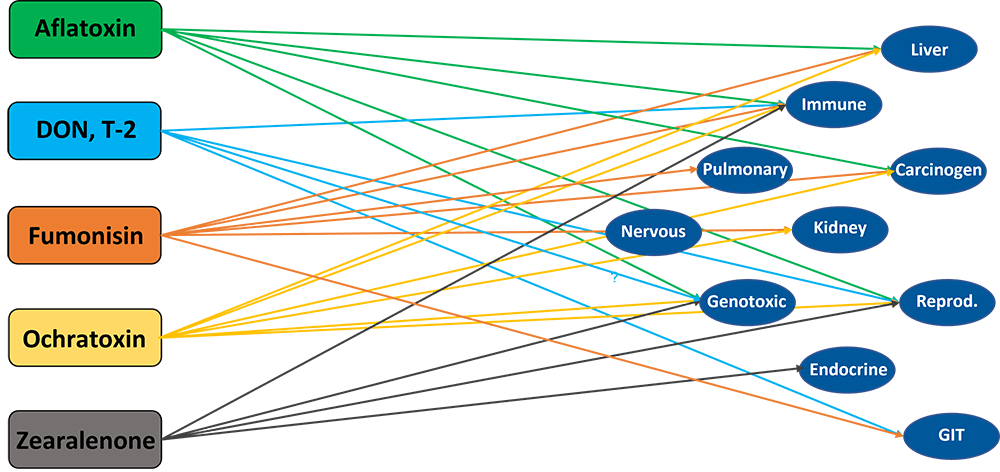
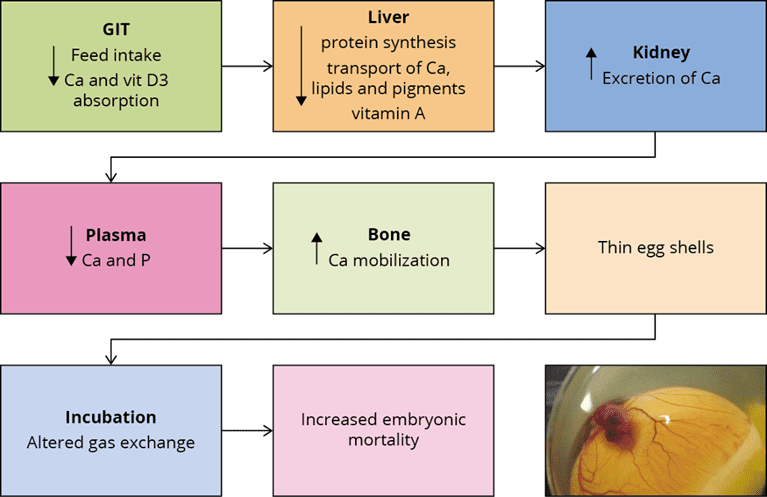
Low mycotoxin levels affect gut health. Individually and in combinations, mycotoxins such as DON, FUM, and T2 can impact gut functions such as digestion, absorption, permeability, immunity, and microbial balance. This is critical in feed-restricted flocks because it decreases body weight and uniformity, and in laying animals, egg production and egg quality can be reduced. Absorption of calcium and vitamin D3, which are critical for eggshell formation, depends on gut integrity and the efficiency of digestion and absorption. These factors can be adversely affected by even low mycotoxin levels: eggshells can become thin and brittle, thereby reducing hatching eggs and increasing early embryo mortality.
Prevention is the key to success in day-old chick production, therefore:
avoid the use of raw materials with known mycotoxin contamination.
use feed additives prophylactically, especially with anti-mycotoxin and antioxidant properties.
Prevention is an alternative approach to assure health and productivity in -many times unknown- mycotoxin challenges.
Figure 1: Effect of mycotoxins on eggshell quality and embryo death (Caballero, 2020)
University trial shows anti-mycotoxin product improving performance
A recent study by the University of Zagreb confirmed that long-term (13 weeks) exposure to feed contaminated with mycotoxins has an impact on egg production performance – a challenge that could be counteracted by using an anti-mycotoxin product.
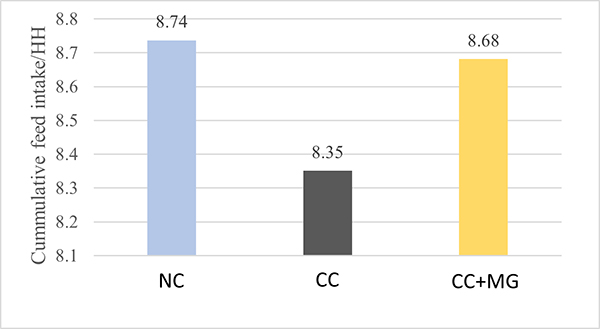
The negative control (NC) was offered feed without mycotoxins. In contrast, the challenged control (CC), as well as a third group, received feed contaminated with 200ppb of T2, 100ppb of DON, and 2500ppb of FMB1. To the feed of the third group, an anti-mycotoxin feed additive (Mastersorb Gold, EW Nutrition) was given on top (CC+MG).
Figure 2: Influence of mycotoxins on feed intake and the effect of the anti-mycotoxin product Mastersorb Gold
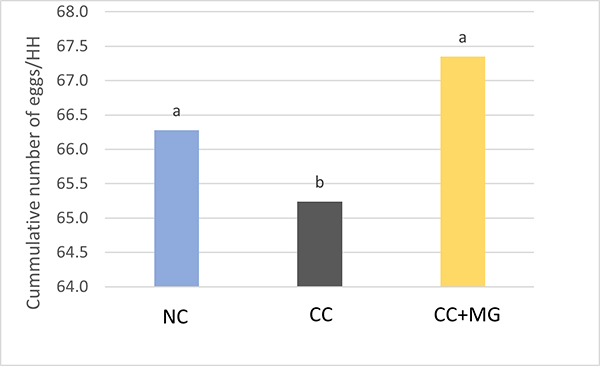
Figure 3: The effect of mycotoxins on the cumulative number of eggs and the compensating effect of Mastersorb Gold
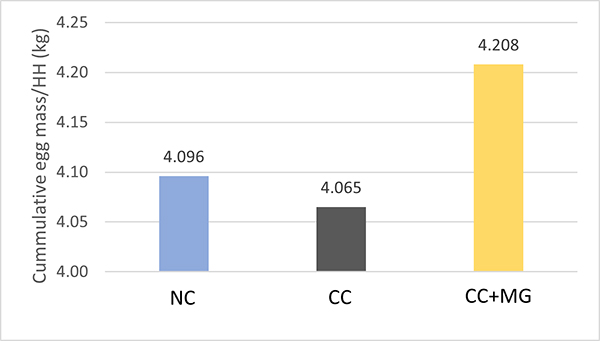
Figure 4: The impact of mycotoxins on the cumulative egg mass and the countereffect of Mastersorb Gold
As expected, the contaminated feed reduced feed intake, egg production, and egg weight (Fig. 2-4). Moreover, the liver and gut were affected which was evidenced in histopathological lesion scores of the organs: the control group had the lowest score, followed by the group fed Mastersorb Gold. The challenged group without any anti-mycotoxin product scored the highest.
Breeders are susceptible to mycotoxins and need our support
Broiler breeders and day-old chick production can be affected by long-term exposure to mycotoxins, which often exceeds the tolerance range of average flocks. To reduce or even prevent the potential impact of mycotoxins, a comprehensive management strategy is crucial. This includes responsible raw material procurement, storage, and feed processing leading to high feed quality, and the consideration of breeders’ nutrient demands. The inclusion of highly effective products to manage mycotoxin risk is an additional tool to maintain breeder performance.
Managing gut health – a key challenge in ABF broiler production
By Dr. Ajay Bhoyar, Global Technical Manager Poultry, EW Nutrition
Gut health is a critical challenge in antibiotics-free (ABF) production as it plays a vital role in the overall health and well-being of animals. Antibiotics have long been used as a means of preventing and treating diseases in animals, but their overuse has led to the development of antibiotic-resistant bacteria. As a result, many farmers and producers are shifting towards antibiotics-free production methods. This shift presents a significant challenge as maintaining gut health without antibiotics can be difficult. It is, however, not impossible.
One of the main challenges in antibiotics-free production is the prevention of bacterial infections in the gut. The gut microbiome plays a crucial role in the immune system and overall health of animals. When the balance of microbes in the gut is disrupted (dysbiosis), it can lead to poor nutrient absorption which subsequently results in reduced live bird performance including feed efficiency and weight gain in broiler chicken. In the absence of antibiotics, farmers and producers must rely on other methods to maintain a healthy gut microbiome.
Antibiotic reduction – a major global trend
The trend in recent years has been for poultry producers to reduce their use of antibiotics to promote public health and improve the sustainability of their operations. This has been driven by concerns about the development of antibiotic-resistant bacteria and the potential impact on human health, as well as by consumer demand for meat produced without antibiotics. Many countries now have regulations in place that limit the use of antibiotics in food and animal production.
Challenges to antibiotics-free poultry (ABF) production
Disease control. Antibiotic-free poultry production requires farmers to rely on alternative methods for controlling and preventing diseases, such as stepped-up biosecurity practices. This can be more labor-intensive and costly.
Higher mortality rates. Without antibiotics, poultry farmers may experience higher mortality rates due to disease outbreaks and other health issues. This can lead to financial losses for the farmer and a reduced supply of poultry products for consumers.
Feeding challenges. Antibiotic growth promotors (AGPs) are often used in feed to promote growth and prevent intestinal disease in poultry. Without AGPs, poultry producers can find alternative ways to ensure expected production performance.
Increased cost. Antibiotic-free poultry production can be more expensive than conventional production methods, as farmers must invest in additional housing, equipment, labor, etc.
Phasing out AGPs will likely lead to changes in the microbial profile of the intestinal tract. It is hoped that strategies such as infectious disease prevention programs and using non-antibiotic alternatives minimize possible negative consequences of antibiotic removal on poultry flocks (Yegani and Korver, 2008).
Gut health is key to overall health
A healthy gastrointestinal system is important for poultry to achieve its maximum production potential. Gut health in poultry refers to the overall well-being and functioning of the gastrointestinal tract in birds. This includes the balance of beneficial bacteria, the integrity of the gut lining, and the ability to digest and absorb nutrients. Gut health is important for maintaining the overall health and well-being of the birds. A healthy gut helps to improve feed efficiency, nutrient absorption, and the overall immunity of the birds.
The gut is host to more than 640 different species of bacteria and 20+ different hormones. It digests and absorbs the vast majority of nutrients and makes up for nearly a quarter of body energy expenditure. It is also the largest immune organ in the body (Kraehenbuhl and Neutra, 1992). Consequently, ‘gut health’ is highly complex and encompasses the macro and micro-structural integrity of the gut, the balance of the microflora, and the status of the immune system (Chot, 2009).
Poultry immunity is mediated by the gut
The gut is a critical component of the immune system, as it is the first line of defense against pathogens that enter the body through the digestive system. Chickens have a specialized immune system in the gut, known as gut-associated lymphoid tissue (GALT), which helps to identify and respond to potential pathogens. The GALT includes Peyer’s Patches, which are clusters of immune cells located in the gut wall, as well as the gut-associated lymphocytes (GALs) that are found throughout the gut. These immune cells are responsible for recognizing and responding to pathogens that enter the gut.
The gut-mediated immune response in chickens involves several different mechanisms, including the activation of immune cells, the production of antibodies, and the release of inflammatory mediators. The GALT and GALs play a crucial role in this response by identifying and responding to pathogens, as well as activating other immune cells to help fight off the infection.
The gut microbiome also plays a critical role in gut-mediated immunity in chickens. The gut microbiome is made up of a highly varied community of microorganisms, and these microorganisms can have a significant impact on the immune response. For example, certain beneficial bacteria can help to stimulate the immune response and protect the gut from pathogens.
Overall, the gut microbiome, GALT, and GALs all work together to create an environment that is hostile to pathogens while supporting the growth and health of beneficial microorganisms.
Dysbiosis/Dysbacteriosis impacts performance
Dysbiosis is an imbalance in the gut microbiota because of an intestinal disruption. Dysbacteriosis can lead to wet litter and caking issues. Prolonged contact with the caked litter can lead to pododermatitis (feet ulceration) and hock-burn, resulting in welfare issues as well as degradation of the carcass (Bailey, 2010). Apart from these issues, the major economic impact comes from reduced growth rates, FCR, and increased veterinary treatment costs. Coccidiosis infection and other enteric diseases can be aggravated when dysbiosis is prevalent. Generally, animals with dysbiosis have high concentrations of Clostridium that generate more toxins, leading to necrotic enteritis.
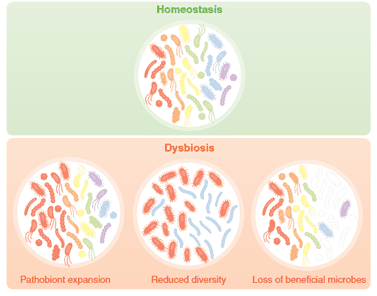
Fig.1: Dysbiosis – a result of challenging animal’s microbiome. Source: Charisse Petersen and June L. Round. 2014
It is believed that both non-infectious and infectious factors can play a role in dysbacteriosis (DeGussem, 2007). Any changes in feed and feed raw materials, as well as the physical quality of feed, influence the balance of the gut microbiota. There are some risk periods during poultry production when the bird will be challenged, for example during feed change, vaccination, handling, transportation, etc. During these periods, the gut microbiota can fluctuate and, in some cases, if management is sub-optimal, dysbacteriosis can occur.
Infectious agents that potentially play a role in dysbacteriosis include mycotoxins, Eimeria spp., Clostridium perfringens, and other bacteria producing toxic metabolites.
Factors affecting gut health
The factors affecting broiler gut health can be summarized as follows:
Feed and water quality: The form, type, and quality of feed provided to broilers can significantly impact their gut health. Consistent availability of cool and hygienic drinking water is crucial for optimum production performance.
Stress: Stressful conditions, such as high environmental temperatures or poor ventilation, can lead to an imbalance in the gut microbiome and an increased risk of disease.
Microbial exposure: Exposure to pathogens or other harmful bacteria can disrupt the gut microbiome and lead to gut health issues.
Immune system: A robust immune system is important for maintaining gut health, as it helps to prevent the overgrowth of harmful bacteria and promote the growth of beneficial bacteria.
Sanitation: Keeping the broiler environment clean and free of pathogens is crucial for maintaining gut health, as bacteria and other pathogens can easily spread and disrupt the gut microbiome.
Management practices: Proper management practices, such as proper feeding and watering, and litter management can help to maintain gut health and prevent gut-related issues.
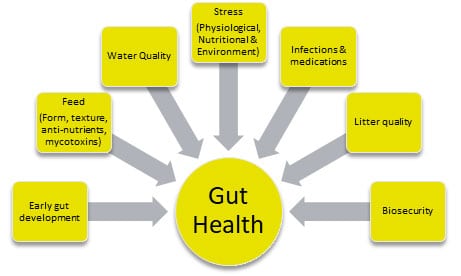
Fig. 2. Key factors affecting broilers’ gut health
Key approaches for managing gut health without antibiotics
Two key approaches for managing gut health in poultry without the use of antibiotics are outstandingly successful.
Proper nutrition and management practices
Ensuring the birds have access to clean water, high-quality feed, and a stress-free environment is crucial for ABF poultry production. A balanced diet in terms of protein, energy, and essential vitamins and minerals is essential for maintaining gut health.
The environment in which birds have kept plays a major role in maintaining gut health. Proper sanitation and ventilation, as well as the right temperature and humidity, are crucial to prevent the spread of disease and infection. There is no alternative to the strict implementation of stringent biosecurity measures to prevent the spread of disease.
Early detection and treatment of diseases can help to prevent them from becoming more serious problems affecting the profitability of ABF production. It is important to keep a close eye on birds for signs of disease, such as diarrhea, reduced water, and feed consumption.
Gut health-promoting feed additives
Another approach to maintaining gut health in antibiotics-free poultry production is using gut health-supporting feed additives. A variety of gut health-supporting feed additives including phytochemicals/essential oils, organic acids, probiotics, prebiotics, exogenous enzymes, etc. in combination or alone are used in animal production. Particularly, phytogenic feed additives (PFAs) have gained interest as cost-effective feed additives with already well-established effects on improving broiler chickens’ intestinal health.
Plant secondary metabolites and essential oils (generically called phytogenics, phytochemicals, or phytomolecules) are biologically active compounds that have recently garnered interest as feed additives in poultry production, due to their capacity to improve feed efficiency by enhancing the production of digestive secretions and nutrient absorption. This helps reduce the pathogenic load in the gut, exert antioxidant properties and decrease the microbial burden on the animal’s immune status (Abdelli et al. 2021).
Phytochemicals are naturally occurring compounds found in plants. Many phytomolecules have been found to have antimicrobial properties, meaning they can inhibit the growth or kill microorganisms such as bacteria, viruses, and fungi. Examples of phytomolecules with antimicrobial properties include compounds found in garlic, thyme, and tea tree oil. Essential oils (EOs) are raw plant extracts (flowers, leaves, roots, fruit, etc.) whereas phytomolecules are active ingredients of essential oils or other plant materials. A phytomolecule is clearly defined as one active compound. Essential oils (EOs) are important aromatic components of herbs and spices and are used as natural alternatives for replacing antibiotic growth promoters (AGPs) in poultry feed. The beneficial effects of EOs include appetite stimulation, improvement of enzyme secretion related to food digestion, and immune response activation (Krishan and Narang, 2014).
A wide variety of herbs and spices (thyme, oregano, cinnamon, rosemary, marjoram, yarrow, garlic, ginger, green tea, black cumin, and coriander, among others), as well as EOs (from thyme, oregano, cinnamon, garlic, anise, rosemary, citruses, clove, ginger), have been used in poultry, individually or mixed, for their potential application as AGP alternatives (Gadde et al., 2017).
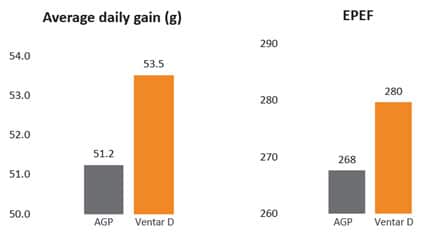
Fig. 3: Phytomolecule-based feed additive outperforms AGPs with improved broiler performance (42 Days field study)
One of the primary modes of action of EOs is related to their antimicrobial effects which allow for controlling potential pathogens (Mohammadi and Kim, 2018).
Phytomolecule blend
Clostridium perfringens
Enterococcus caecorum
Enterococcus hirae
Escherichia coli
Salmonella typhimurium
Staphylococcus aureus
Ventar D
1250
2500
5000
2500
5000
2500
Fig. 4: Effectivity of phytomolecule-based feed additive (Ventar D) against enteropathogenic bacteria (MIC value in PPM)
Phytomolecules have been shown to have anti-inflammatory properties. These compounds include flavonoids, polyphenols, carotenoids, and terpenes, among others. One of the ways in which phytomolecules exhibit anti-inflammatory effects is through their ability to inhibit the activity of pro-inflammatory enzymes and molecules. For example, polyphenols have been shown to inhibit the activity of nuclear factor-kappa B (NF-kB), a transcription factor that plays a key role in regulating inflammation.
Phytomolecules also have antioxidant properties, which can help to protect cells from damage caused by reactive oxygen species (ROS) and other reactive molecules that can contribute to inflammation. Plant extracts are also proposed to be used as antioxidants in animal feed, protecting animals from oxidative damage caused by free radicals. The presence of phenolic OH groups in thymol, carvacrol, and other plant extracts act as hydrogen donors to the peroxy radicals produced during the first step in lipid oxidation, thus retarding the hydroxyl peroxide formation (Farag et al., 1989, Djeridane et al., 2006). Thymol and carvacrol are reported to inhibit lipid peroxidation (Hashemipour et.al. 2013) and have strong antioxidant activity (Yanishlieva et al., 1999).
Overall, the anti-inflammatory effects of phytomolecules are thought to be due to a combination of their ability to inhibit the activity of pro-inflammatory enzymes and molecules, their antioxidant properties, and their ability to modulate the immune system. Plant extracts (i.e. carvacrol, cinnamaldehyde, eugenol. etc.) inhibit the production of pro-inflammatory cytokines and chemokines from endotoxin-stimulated immune cells and epithelial cells (Lang et al., 2004, Lee et al., 2005, Liu et al., 2020). It has been indicated that anti-inflammatory activities may be partially mediated by blocking the NF-κB activation pathway (Lee et al., 2005).
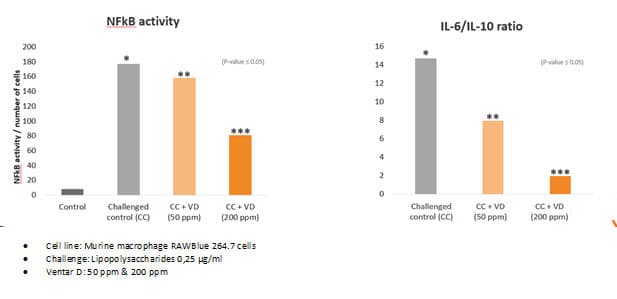
Fig. 5: Anti-inflammatory effect of phytomolecule-based feed additive (Ventar D) – the reduced activity of inflammatory cytokines
Proper protection of EOs/Phytomolecules is key to optimum results
Several phytogenic compounds have also been shown to be largely absorbed in the upper GIT, meaning that without proper protection, the majority would not reach the lower gut where they would exert their major functions (Abdelli et al. 2021). The benefits of supplementing the broiler diet with a mixture of encapsulated EOs were higher than the tested PFA in powdered, non-protected form (Hafeez et al. 2016). Novel delivery technologies have been developed to protect PFAs from the degradation and oxidation process during feed processing and storage, ease the handling, allow a slower release, and target the lower GIT (Starčević et al. 2014). The specific protection techniques used during the commercial production of an EO/phytomolecule blend are crucial in delivering on all the objectives with remarkable consistency.
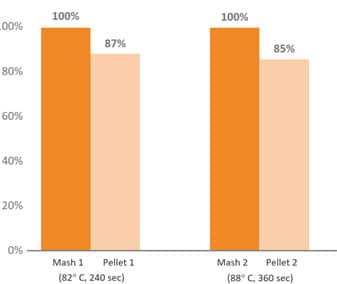
Fig. 6: Pelleting stability of phytomolecule – based feed additive (Ventar D) at high temperature and longer conditioning time
Phytomolecule blend optimizes production performance
Removal of antibiotics in poultry production can be challenging for controlling mortality and maintaining the production performance of the birds. Phytogenic feed additives have been shown toimprove production performance of chicken due to their antimicrobial, anti-inflammatory, antioxidant, and digestive properties. Possible mechanisms behind improved nutrient digestibility by phytogenic feed additives (PFAs) supplementation could be attributed to the ability of these feed additives to stimulate appetite, saliva secretion, intestinal mucus production, bile acid secretion, and activity of digestive enzymes such as trypsin and amylase as well as to positively affect the intestinal morphology (Oso et al. 2019). EOs are perceived as growth promoters in poultry diets, with strong antimicrobial and anticoccidial activities (Zahi et al., 2018). PFAs have positive effects on body weight gain and FCR in chickens (Khattak et al. 2014, Zhang et el. 2009).
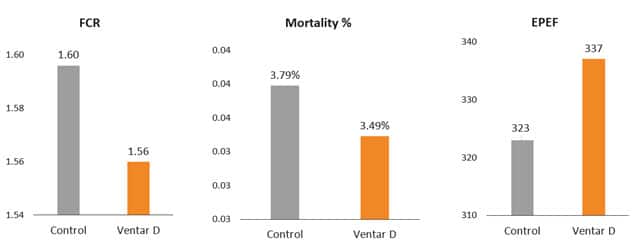
Fig. 7: Phytomolecule-based feed additive improved broiler FCR and mortality in field trial
Conclusion
In conclusion, managing gut health is a significant challenge in ABF broiler production that must be addressed to achieve optimal performance and welfare of the birds. The use of antibiotics as a preventative measure in broiler production has been widely used, but with the increasing demand for antibiotic-free products, alternative methods to maintain gut health must be implemented. These include using gut health-supporting feed additives, and proper management practices such as implementing biosecurity measures, maintaining optimal environmental conditions, providing adequate space and ventilation, and reducing stress. However, it is essential to note that there is no one-size-fits-all solution for gut health management in ABF broiler production. It is important to continuously monitor and assess their flock’s gut health and make adjustments as necessary. Additionally, research and development in this field should be encouraged to identify new and innovative ways to maintain gut health in ABF broiler production.
Overall, managing gut health is a critical challenge that requires a multi-faceted approach and ongoing monitoring and management. By implementing the appropriate strategies and utilizing new technologies, poultry operators can ensure the health and well-being of their flocks while meeting the growing demand for antibiotic-free products sustainably.
References:
Abdelli N, Solà-Oriol D, Pérez JF. Phytogenic Feed Additives in Poultry: Achievements, Prospective and Challenges. Animals (Basel). 2021 Dec 6;11(12):3471.
Bailey R. A. 2010. Intestinal microbiota and the pathogenesis of dysbacteriosis in broiler chickens. PhD thesis submitted to the University of East Anglia. Institute of Food Research, United Kingdom
Choct M. Managing gut health through nutrition. British Poultry Science Volume 50, Number 1 (January 2009), pp. 9—15.
De Gussem M, “Coccidiosis in Poultry: Review on Diagnosis, Control, Prevention and Interaction with Overall Gut Health,” Proceedings of the 16th European Symposium on Poultry Nutrition, Strasbourg, 26-30 August, 2007, pp. 253-261.H.J. Dorman, S.G. Deans. Antimicrobial agents from plants: antibacterial activity of plant volatile oils. J Appl Microbiol, 88 (2000), pp. 308-316
Djeridane A., M. Yousfi M, Nadjemi B, Boutassouna D., Stocker P., Vidal N. Antioxidant activity of some Algerian medicinal plants extracts containing phenolic compounds. Food Chem, 97 (2006), pp. 654-660
Farag R. S., Daw Z.Y., Hewedi F.M., El-Baroty G.S.A. Antimicrobial activity of some Egyptian spice essential oils. J Food Prot, 52 (1989), pp. 665-667
Gadde U., Kim W.H., Oh S.T., Lillehoj H.S. Alternatives to antibiotics for maximizing growth performance and feed efficiency in poultry: A review. Anim. Health Res. Rev. 2017;18:26–45.
Guo, F.C., Kwakkel, R.P., Williams, B.A., Li, W.K., Li, H.S., Luo, J.Y., Li, X.P., Wei, Y.X., Yan, Z.T. and Verstegen, M.W.A., 2004. Effects of mushroom and herb polysaccharides, as alternatives for an antibiotic, on growth performance of broilers. British Poultry Science, 45(5), pp.684-694.
Hafeez A., Männer K., Schieder C., Zentek J. Effect of supplementation of phytogenic feed additives (powdered vs. encapsulated) on performance and nutrient digestibility in broiler chickens. Poult. Sci. 2016;95:622–629.
Hammer K.A., Carson C.F., Riley T.V. Antimicrobial activity of essential oils and other plant extracts. J Appl Microbiol, 86 (1999), pp. 985-990
Hashemipour H, Kermanshahi H, Golian A, Veldkamp T. Effect of thymol and carvacrol feed supplementation on performance, antioxidant enzyme activities, fatty acid composition, digestive enzyme activities, and immune response in broiler chickens. Poultry Science. Volume 92. Issue 8. 2013, Pp 2059-2069,
Khattak F., Ronchi A., Castelli P., Sparks N. Effects of natural blend of essential oil on growth performance, blood biochemistry, cecal morphology, and carcass quality of broiler chickens. Poult. Sci. 2014;93:132–137
Kraehenbuhl, J.P. & Neutra, M.R. (1992) Molecular and cellular basis of immune protection of mucosal surfaces. Physiology Reviews, 72: 853–879.Krishan and Narang J. Adv. Vet. Anim. Res., 1(4): 156-162, December 2014
Lang A., Lahav M., Sakhnini E, Barshack I., Fidder H. H., Avidan B. Allicin inhibits spontaneous and TNF-alpha induced secretion of proinflammatory cytokines and chemokines from intestinal epithelial cells. Clin Nutr, 23 (2004), pp. 1199-1208
Lee S.H., Lee S.Y., Son D.J., Lee H., Yoo H.S., Song S. Inhibitory effect of 2′-hydroxycinnamaldehyde on nitric oxide production through inhibition of NF-kappa B activation in RAW 264.7 cells Biochem Pharmacol, 69 (2005), pp. 791-799
Liu, S., Song, M., Yun, W., Lee, J., Kim, H. and Cho, J., 2020. Effect of carvacrol essential oils on growth performance and intestinal barrier function in broilers with lipopolysaccharide challenge. Animal Production Science, 60(4), pp.545-552.
Mitsch, P., Zitterl-Eglseer, K., Köhler, B., Gabler, C., Losa, R. and Zimpernik, I., 2004. The effect of two different blends of essential oil components on the proliferation of Clostridium perfringens in the intestines of broiler chickens. Poultry science, 83(4), pp.669-675.
Mohammadi Gheisar M., Kim I.H. Phytobiotics in poultry and swine nutrition—A review. Ital. J. Anim. Sci. 2018;17:92–99.
Oso A.O., Suganthi R.U., Reddy G.B.M., Malik P.K., Thirumalaisamy G., Awachat V.B., Selvaraju S., Arangasamy A., Bhatta R. Effect of dietary supplementation with phytogenic blend on growth performance, apparent ileal digestibility of nutrients, intestinal morphology, and cecal microflora of broiler chickens. Poult. Sci. 2019;98:4755–4766
Oviedo-Rondón, Edgar O., et al. “Ileal and caecal microbial populations in broilers given specific essential oil blends and probiotics in two consecutive grow-outs.” Avian Biology Research 3.4 (2010): 157-169.
Petersen C. and June L. Round. Defining dysbiosis and its influence on host immunity and disease. Cellular Microbiology (2014)16(7), 1024–1033
Starčević K., Krstulović L., Brozić D., Maurić M., Stojević Z., Mikulec Ž., Bajić M., Mašek T. Production performance, meat composition and oxidative susceptibility in broiler chicken fed with different phenolic compounds. J. Sci. Food Agric. 2014;95:1172–1178.
Yanishlieva, N.V., Marinova, E.M., Gordon, M.H. and Raneva, V.G., 1999. Antioxidant activity and mechanism of action of thymol and carvacrol in two lipid systems. Food Chemistry, 64(1), pp.59-66.
Yegani, M. and Korver, D.R., 2008. Factors affecting intestinal health in poultry. Poultry science, 87(10), pp.2052-2063.
Zhai, H., H. Liu, Shikui Wang, Jinlong Wu and Anna-Maria Kluenter. “Potential of essential oils for poultry and pigs.” Animal Nutrition 4 (2018): 179 – 186.
Zhang G.F., Yang Z.B., Wang Y., Yang W.R., Jiang S.Z., Gai G.S. Effects of ginger root (Zingiber officinale) processed to different particle sizes on growth performance, antioxidant status, and serum metabolites of broiler chickens. Poult. Sci. 2009;88:2159–2166.
Xylanase solutions for broiler feed: Enzyme innovation finally hits the market
By Dr. Ajay Awati, Global Category Manager for Gut Health and Nutrition, EW Nutrition, and Dr. Howard Simmins, InSci Associates
After 30 years of stagnating solutions, in-feed xylanase innovation has finally arrived – with a complete focus on the needs of the broiler feed industry.
It has been over 30 years since xylanase was first introduced in broiler diets in Europe. In the meantime, it has been widely used worldwide with few, if any, major improvements. While the animal feed industry evolved in terms of production landscape, feed processing technologies and use of various by-products, xylanase enzyme technology did not keep pace. In fact, it did not evolve to meet customers’ changing needs and provide that much-needed flexibility of diet formulation for a commercial nutritionist. The wait is over: new in-feed xylanase technology is about to revolutionize broiler nutrition.
Why we need innovative xylanase enzymes for broiler production
Initially, in the 1980s, xylanase was leveraged from industries unrelated to animal production into the feed business. Gut viscosity had been a continuing problem in broiler chickens fed wheat-based diets. It led to an increased risk of enteric disease, generally reducing performance. Xylanase was shown to reduce gut viscosity in wheat-based feed by breaking down soluble arabinoxylans.
As a result, the birds grew as well as if they were fed a low-viscosity corn/soya diet. An additional benefit was lower disease risks from the reduced level of anti-nutritional factors (ANFs) and the multiple negative effects of viscosity in the intestine.
In addition to reducing viscosity, xylanase augments the release in the small intestine of nutrients from previously undigested feedstuffs. The outcome has been the use of an energy matrix value for xylanase, which essentially helps diets through least-cost formulation.
These effects account for the growth of xylanase use in the monogastric feed market. Today, the penetration is above 50%.
Limitations of existing xylanase solutions
Leveraging xylanases from other industries for viscosity reduction in poultry comes with a couple of distinct limitations:
Most broiler diets around the globe are based on a corn-soybean formulation, which contains far higher levels of insoluble arabinoxylans than soluble arabinoxylans. In such cases, viscosity is a relatively minor issue compared to the anti-nutritional effect of insoluble arabinoxylans.
The reduction of gut viscosity is less relevant in other poultry sectors, such as laying hens and turkeys.
Commercial xylanases would be required to break down insoluble NSPs in which substrate activity may be limited and difficult to predict. Fiber constituents of different cereal grains used in feed are highly variable. By- and co-products derived from cereals contain even more complex fiber components, altered further by the manner of processing that the raw material has undergone.
Additionally, poultry response is highly variable: For an individual bird, the effectiveness of xylanase depends on the enzyme’s interaction with feed in the gastrointestinal tract (GIT) of the animal, which varies depending on the species and the animal’s age. This may explain why xylanase penetration on the feed market is not as high as that of phytase.
GH10: the next-level xylanase for feed application
A xylanase for feed is required to provide multiple functionalities, of which four are essential:
Capacity to break down soluble and insoluble arabinoxylan across a range of typical feedstuffs
Rapid activity at optimal pH in the preferred section of the GIT
No inhibition in the presence of xylanase inhibitors
Comprehensive feed processing thermostability
The GH11 family of xylanases commonly used in feed does not offer these aggregated benefits. They successfully reduce soluble NSPs in wheat-based diets, hence lowering the viscosity level in the broiler GIT. However, they are less effective in the presence of insoluble NSPs in which the arabinoxylan backbone is more complex.
Why GH10 instead of GH11?
The explanation for this can be found in the 3-dimensional structure of the GH11 xylanase. The activity of GH11 xylanases requires 3 or 4 consecutive unsubstituted xylan monomers on the backbone to find an active site. That is why they are hindered by the presence of branches, or side chains, on arabinose backbones. Consequently, they are highly specific, favoring the particularly low-branching wheat backbone.
Xylanases from the GH10 family are entirely different. Although well known, they have not been used in feed yet. The GH10 xylanases require two or fewer consecutive unsubstituted xylan monomers on the backbone to find an active site. Therefore, they can act on xylose residues near branches. This results in both more and shorter xylo-oligomers than found with GH11 xylanases. In simple terms, the GH10 xylanases have a less deep cleft than the GH11 xylanases, providing greater catalytic versatility (Pollet 2010).
Significantly, this potentially allows a broader range of feedstuffs to be incorporated into the complete diet, including co- and by-products, while maintaining performance. Therefore, with GH10,higher levels of cheaper ingredients may be included, with a significant value proposition of further reducing feed costs.
GH10 xylanases generate a range of important prebiotics
As early as 1995, it was proposed that xylanase may affect microbial activity in the gastrointestinal tract through the provision of fermentable oligosaccharides and low molecular weight polysaccharides. These are produced from the hydrolysis of soluble and insoluble arabinoxylans in cereals.
A development of particular interest is that the GH10 xylanases break down the backbone of different fibre components into small xylooligosaccharides (XOS) and arabino-xylanoligosaccharides (AXOS). This action, research shows, has value in supporting the selective growth of fibre-degrading bacteria in the large intestine, conferring positive effects on the host’s health.
The most well-known probiotic strains belong to bifidobacteria and lactobacilli, which have quite different XOS and AXOS utilization systems. Bifidobacterium adolescentis has been shown to consume AXOS and XOS, whereas Lactobacillus brevis utilises only XOS. The outcome is that AXOS releases butyrate, the short-chain fatty acid, which can improve the host’s gut barrier function, as well as reduce Salmonella colonization in broilers. Alongside these health benefits, their presence may improve performance also by reducing FCR. (Courtin et al. 2008; Ribeiro et al. 2018)
As mentioned earlier, the GH10 xylanase requires only two consecutive unsubstituted xylan monomers to cleave the xylan main chain, whereas a GH11 xylanase requires 3 or 4 consecutive unsubstituted xylan monomers. Therefore, the number of potential AXOS and XOS oligomers is higher from the action of the GH10 xylanase. This results in a wider size range of oligomers. The range is valuable as the effect is spread across the large intestine, each oligomer having a different fermentation rate. Consequently, the large intestine’s microbial activity becomes saccharolytic, which potentially reduces the undesirable products of proteolytic degradation, such as phenols and cresols.
Prebiotic combinations will vary depending on the substrate available. However, there is more flexibility in breaking down insoluble NSPs across different feedstuffs using GH10 xylanase compared to GH-11 xylanase.
The future of xylanase: Reducing feed costs through flexible formulation
EW Nutrition’s GH10-based AXXESS XY xylanase, specifically developed for animal feed, has a wide-ranging activity across typical substrates, both in corn-soy and wheat-soy diets. It also allows for a greater proportion of cheaper ingredients, enabling increased flexibility in feedstuff choices and resulting in more stable feed pricing. The activity of the GH10 xylanase in producing oligomers from the breakdown of the arabinoxylan backbone also indicates that it can produce a greater number and diversity of valuable prebiotics that sustain the growth of fiber-degrading microbiota. Consequently, the metabolism of the large intestine is shifted from proteolytic to saccharolytic, which supports the animal’s general health.
The combination of these benefits from using this xylanase results in a bird with a balanced digestive system that is more robust in the face of environmental and health challenges, supporting better performance. Furthermore, this novel enzyme solution gives nutritionists a reliable tool to reduce feed costs by being flexible in diet formulation and opportunistic in using raw materials while maintaining consistency in animal performance. Especially in these times of supply problems and raw material price hikes, such advantages are invaluable.
The naturally thermostable AXXESS XY 1000G is the most advanced xylanase yet. It is a GH10 xylanase that delivers what the industry has been asking for: a fiber-degrading enzyme suited for all poultry feed.
References
Courtin, Christophe M, Katrien Swennen, Willem F Broekaert, Quirine Swennen, Johan Buyse, Eddy Decuypere, Christiaan W Michiels, Bart De Ketelaere, and Jan A Delcour. “Effects of Dietary Inclusion of Xylooligo- Saccharides, Arabinoxylooligosaccha- Rides and Soluble Arabinoxylan on the Microbial Composition of Caecal Contents of Chickens.” Journal of the Science of Food and Agriculture 88, no. 14 (2008): 2517–22. https://doi.org/10.1002/jsfa.3373.
Ribeiro, T., V. Cardoso, L.M.A. Ferreira, M.M.S. Lordelo, E. Coelho, A.S.P. Moreira, M.R.M. Domingues, M.A. Coimbra, M.R. Bedford, and C M Fontes. “Xylo-Oligosaccharides Display a Prebiotic Activity When Used to Supplement Wheat or Corn-Based Diets for Broilers.” Poultry Science 97, no. 12 (2018): 4330–41. https://doi.org/10.3382/ps/pey336.
Efficient microbiome modulation with phytomolecules
By Dr. Inge Heinzl, Editor, EW Nutrition
From day 1, young animals are confronted with the pathogens of their environment. Feed and feed ingredients also significantly increase exposure to microbes. This article will look closely at three critical bacteria in poultry production. The trials of phytomolecules-based products shared in this article prove the unique benefit of lowering harmful pathogens while simultaneously sparing health-promoting microbes. The targeted selection of the blend’s phytomolecules contributes to this distinctive mode of action.
E. coli can be valuable… and dangerous
E.coli are commensal bacteria that usually belong to the natural gut flora. However, there are several E. coli strains that, due to certain virulence factors, can cause disease. These bacteria are called avian pathogenic E. coli or APEC. The disease ‘Colibacillosis’ can occur in different forms:
Omphalitis – a noncontagious infection of the navel and/or yolk sac in young poultry
peritonitis – inflammatory response on “internal laying” (yolk material in the peritoneum)
salpingitis – inflammation of the oviduct
cellulitis – discoloration and thickening of the skin, inflammation of the subcutaneous tissues
synovitis – lameness with swollen joints
coligranuloma (Hjärre disease) – lesions similar to tuberculosis, not of economic importance
meningitis, and
septicemia or blood poisoning.
Since some of the E. coli strains can sometimes be transmitted vertically to offspring, it is crucial to keep the pathogenic pressure in the parent generation as low as possible (Mc Dougal, 2018).
Due to the, mostly in young chicks, common use of antibiotics, E. coli strains resistant to ß-lactam antibiotics (ESBL-producing E. coli) or fluoroquinolones (e.g., Enrofloxacin) have developed.
Clostridium perfringens: the cause of necrotic enteritis
Clostridium perfringens belong to the normal caecal flora. However, its overgrowth in the intestine is linked to necrotic enteritis, causing estimated losses of up to USD 6 billion yearly in global poultry production, which corresponds to USD 0.0625 per bird (Wade and Keyburn, 2015). Necrotic enteritis can occur in a clinical and a subclinical form.
In the case of clinical necrotic enteritis, the birds suffer from diarrhea resulting in wet litter and increased flock mortality of up to 1 % per day (Ducatelle and Van Immerseel, 2010). Mortality rates sometimes sum up to 50 % (Van der Sluis, 2013). If birds die without clinical signs, it may be peracute necrotic enteritis.
The subclinical version, however, is more critical. Due to the lack of symptoms, it often remains undetected and, therefore, not treated. Mainly through the impaired utilization of feed, representing 65-75 % of the total costs in broiler production, subclinical necrotic enteritis permanently impacts production efficiency (Heinzl et al., 2020).
Salmonella enterica: a zoonosis relevant for birds and humans
Most concerning in (non-typhoid) salmonellosis is that it can be transferred to humans. The transmission occurs via direct contact with an infected animal, consuming contaminated animal products such as meat or eggs, contact with infected vectors (insects or pets) or contaminated equipment, or cross-contamination in the kitchen. Frozen or raw chicken products, as well as the eggs, are frequent causes of animal-origin Salmonella infections in humans.
Salmonella is the more critical the younger the birds. If the hatching eggs already carry salmonellae, the hatchability dwindles. During their first weeks of life, infected chicks show higher mortality and systemic infections.
Adult animals usually do not die from salmonellosis; often, the infection remains unnoticed. During an acute salmonella outbreak, the animals might show weakness and diarrhea. They lose weight, resulting in decreased egg production in layers.
Trials with phytomolecules show promising results
To check if phytomolecules-based products can effectively influence gut flora, a product specially designed for gut health (Ventar D) was tested for its antimicrobial activity. Additionally, the extent to which the same blend impacted the beneficial bacteria, such as Lactobacilli, was evaluated.
Trial 1: phytomolecules act against E. coli and Salmonella enterica
The in vitro study using the agar dilution method was conducted at a German laboratory.
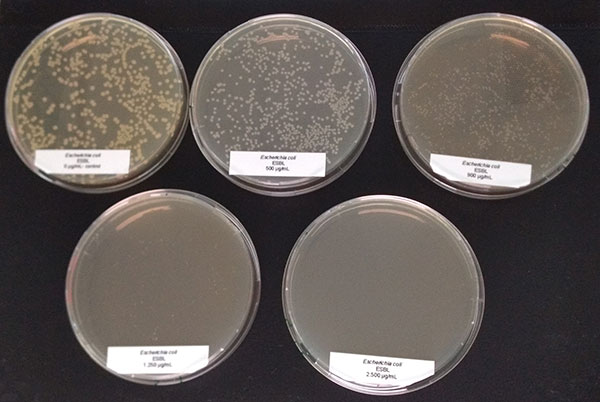
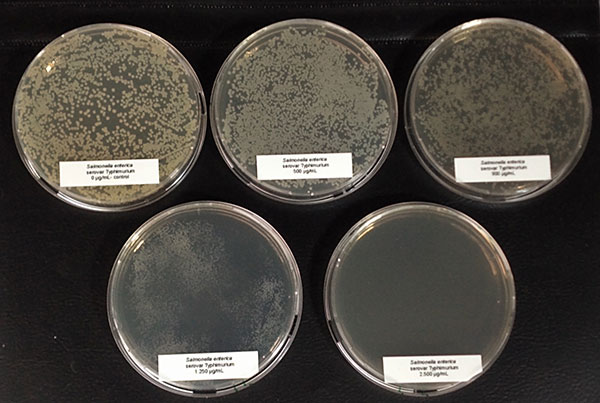
The bacteria (Salmonella typhimurium and ESBL-producing E. coli) stored at -80°C were reactivated by cultivating them on Agar Mueller Hinton overnight. After this incubation, some colonies were picked and suspended in 1 ml 0.9% NaCl solution. 100 µl of the suspension were pipetted and evenly spread (plate spread technique) on new Agar Mueller Hinton containing different concentrations of a phytomolecules-based product (Ventar D): 0 µg/mL – control; 500 µg/mL; 900 µg/mL; 1.250 µg/mL and 2.500 µg/mL. After 16-20 h incubation at 37°C, growth was evaluated. The results can be seen in pictures 1 and 2:
Figure 1: E. coli exposed to different concentrations of Ventar D (upper row from left to right: control 0 µg/ml, 500 µg/ml, 900 µg/ml; lower row from left to right: 1250 µg/ml and 2500 µg/ml)
E. coli colonies exposed to 900 µg/mL of Ventar D’s phytogenic formulation were smaller than the control colonies. At 1250 µg/mL, fewer colonies were detected, and at 2500 µg/mL, growth couldn’t be seen anymore.
The salmonella colonies showed a similar picture; however, the reduction could be seen from a concentration of 1.250 µg/ml of Ventar D onwards (picture 2).
Figure 2: Salmonella enterica exposed to different concentrations of Ventar D (upper row from left to right: control 0 µg/ml, 500 µg/ml, 900 µg/ml; lower row from left to right: 1250 µg/ml and 2500 µg/ml)
Trial 2: Phytomolecules inhibit Clostridium perfringens and spare Lactobacilli
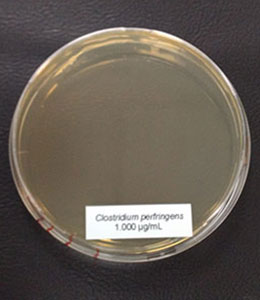
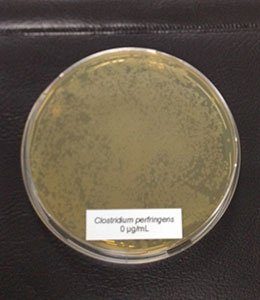
In this trial, the bacteria (Clostridium perfringens,Lactobacillus agilis S73, and Lactobacillus plantarum) were cultured under favorable conditions (RCM, 37°C, anaerobe for Clostr. perfr., and MRS, 37°C, 5 % CO2 for Lactobacilli) and exposed to different concentrations of Ventar D (0 µg/ml – control, 500 µg/ml, 750 µg/ml, and 1000 µg/ml).
The results are shown in figures 3a-d.
Figure 3a: control, 0 µg/ml
Figure 3b: 500 µg/ml
Figure 3c: 750 µg/ml
Figure 3d: 1000 µg/m
In the case of Clostridium perfringens, a significant reduction of colonies could already be observed at a concentration of 500 µg/ml of Ventar D. At 750 µg/ml, only a few colonies remained. At a Ventar D concentration of 1000 µg/ml, Clostridium perfringens could no longer grow.
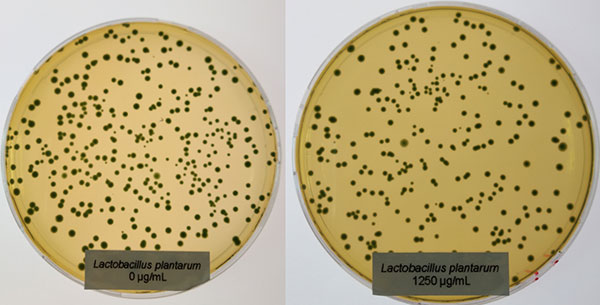
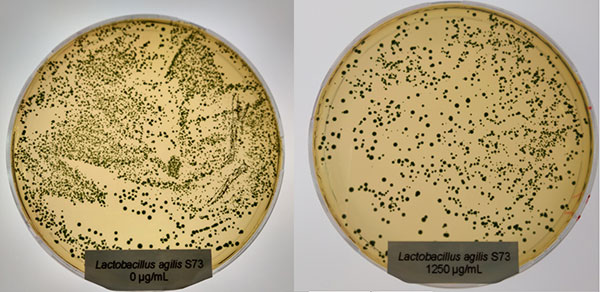
In contrast to Clostridium, the Lactobacilli showed a different picture: only at the higher concentration (1250 µg/ml of Ventar D), Lactobacillus plantarum and Lactobacillus agilis S73 showed a slight growth reduction (figures 4 and 5).
Figure 4: Lactobacillus plantarum exposed to 0 (left) and 1250 µg/ml (right) of Ventar D
Figure 5: Lactobacillus agilis S73 exposed to 0 (left) and 1250 µg/ml (right) of Ventar D
Improve gut health by positively influencing the intestinal flora
The experiments show that even at lower concentrations, phytomolecules impair the growth of harmful bacteria while sparing the beneficial ones. Phytomolecule-based products can be regarded as a valuable tool for controlling relevant pathogens in poultry and influencing the microflora composition in a positive way.
The resulting better gut health is the best precondition to reducing antibiotics in animal production.
Global mycotoxin report: Jan-June 2022 | Find the pain points
By Technical Team, EW Nutrition
The pressure of climate change is taking a severe toll – not just on weather-dependent industries, but already on society in general. For feed and food, the impact is already dramatic. Extreme weather events, increased temperatures, and rising carbon dioxide levels are facilitating the growth of toxigenic fungi in crops, severely increasing the risk of mycotoxin contamination. Once feed is contaminated, animal health can be impacted, with chain reactions affecting productivity for animal farming, as well as, ultimately, the quality and availability of food.
*** Download the full report for an analysis of mycotoxin contamination risks around the world
Improve health and productivity in breeders with phytomolecules
By Dr.Inge Heinzl, Editor, and Technical Team, EW Nutrition
Careful management of the breeders isa must to get their best reproductive efficiency. In today’s hatching egg production, factors such as stress, inflammation, body weight, and altered mating behaviorlead to decreased performance, meaning fewer hatchable eggs and, therefore, fewer day-old chicks per hen (Grandhaye, 2020). The use of antibiotics to increase performance in farm animals is no longer allowed in many countries, and, since it may lead to the development of resistance, it is also not recommended. So, also in breeders, alternatives are requested to maintain animal health, welfare, and a high level of performance.
Optimal gut health is the cornerstone for breeder performance
As the organ responsible for digestion of the incoming feed, the absorption of nutrients, and the defense of the organism against pathogens or toxins, a healthy gut is a pre-condition for optimal performance (Shini and Bryden, 2021). A healthy gut, according to Bailey (2018), has optimally developed gut tissues, a well-functioning gut immune system, and well-balanced gut microbiota. It shows efficient functionality in terms of digestion and absorption and protects the organism against harmful agents.
The gut directly or indirectly provides the elements for egg production
Efficient feed digestion and absorption of nutrients are essential for the breeder hen to obtain the “material” for maintenance, growth, and egg production. Gut health is crucial since dysbacteriosis and diarrhea, characteristics of gut health challenges, increase dirty eggs, creating favorable conditions for pathogens to enter the egg and infect the embryo.
Egg yolks consist of water (70%), proteins (10%), and lipids (20%). The yolk lipids are lipoproteins rich in triglycerides, built up in the liver and transported to the ovary. Cholesterol carried via lipoproteins to the egg yolk is also built up there, thus showing the importance of the liver in egg production. The gut plays a crucial role in protecting the liver from damage, constituting a barrier against harmful pathogens and toxins, potentially passing into the bloodstream and reaching this vital organ.
Phytomolecules support performance in different ways
Phytomolecules, are an excellent tool to support gut health and animal performance. Phytomolecules are plant-derived secondary metabolites that exert insect-attracting or defensive functions in the plant. They are used in their natural but also nature-identical forms in humans and animals to exert their digestive, immune-modulating, antimicrobial effects.
Phytomolecules support gut health by balancing the gut microbiome
Diverse examples can be found in the scientific literature, where phytomolecules improve the gut microbiome, resulting in better performance of layer and breeder hens. This support happens in two ways:
Promoting beneficial bacteria
Rabelo-Ruiz and co-workers (2021), asserted that adding garlic and onion extracts to the diet of layers led to more eggs with a bigger size, accompanied by an increase in Lactococci in the ileum and Lactobacilli in the cecum. Another example is provided by Park et al. (2016). When supplementing the diet of layers with a fermented phytogenic feed additive, egg production and weight raised with increasing dosage of the additive, and a higher number of Lactobacilli could be observed in the cecum.
Phytomolecules can promote the growth of certain beneficial bacteria and therefore act like prebiotics. As these changes took place in the lower gut, they assumed an improved digestibility of the feed.
Lowering pathogenic bacteria
In the study by Park et al. (2016) and in an in vitro study by Ghazanfari et al. (2019),E. coli in the cecum was reduced.
According to Burt (2007b), several essential oils / phytomolecules, amongst them, carvacrol, thymol, eugenol, and cinnamaldehyde, are effective against pathogens such as Listeria, Salmonella, E. coli, Shigella, and Staphylococcus. The hydrophobic essential oils can partition the lipids of the cell membranes. The resulting permeability of the membrane enables the leakage of cell content.
Changing virulence factors
Another mode of action is the change of virulence factors. Carvacrol, e.g., is known to decrease the motility of Campylobacter jejuni (Van Alphen et al., 2012); oregano and thyme oil reduced the motility of E. coli by inhibiting the synthesis of flagellin (Burt, 2007a). Vidanarachchi et al. (2005) mentioned that the hydrophobicity of microbes increases when some plant extracts are present, affecting their virulence characteristics. Also, the inhibition of defense measures such as efflux pumps in Gram-negative bacteria has been researched (Savoia, 2012).
Phytomolecules support gut health by improving digestion
For many years, phytomolecules have been studied and known for their digestive characteristics. In poultry and other animals, they influence feed digestion in two main ways.
Stimulating enzyme secretion
Platel and Srinivasan (2004) described different spices promoting not only the salivary flow, gastric juice and bile secretion but also the stimulation of the activity of enzymes such as pancreatic lipase, amylase, and proteases in rats. Hashemipour et al. (2013) saw the same effect in broilers supplemented with carvacrol and thymol in the diet. Research has also concluded on a higher nutrient digestibility: Hernandez et al. (2004) and Basmacioğlu Malayoğlu, 2010 noticed that supplementing plant extracts or essential oils improved apparent whole-tract and ileal digestibility of different nutrients.).
Maintaining gut integrity and enlarging the digestion area
An intact gut with a large area for digestion guarantees optimal utilization of nutrients. Different researchers found that adding plant extracts or essential oils (Khalaji et al., 2011; Ghazanfari et al., 2015; Chowdhury et al., 2018) promotes intestinal gut morphology, reflected in higher villi and deeper crypts, which might lead to higher nutrient absorption.
Concerning gut integrity, thymol and carvacrol showed protecting effects and mitigated gut lesions in broilers challenged with C. perfringens (Du et al., 2016). Probably, the lower pathogenic pressure due to the antimicrobial activity of phytogenic substances leads to minor damage to the gut wall and, in the end, to better absorption of the nutrients.
Phytomolecules mitigate the effects of stress
Environmental stress in breeders may decrease performance: the heat-stress-induced disruption of the tight junctions often leads to higher gut permeability, poor nutrient absorption, and higher electrolyte and water secretion (Abdelli, 2021). Sahin et al. (2010) achieved a linear improvement in egg production in quails when applying two doses of green tea catechin.
Cold-stressed layers also reacted positively to supplementation of oregano essential oil, improving egg production compared to a non-supplemented control (Migliorini, 2019).
Positive influence of phytomolecules results in higher performance
As described, phytomolecules improve gut health and support the animal in multiply ways, allowing better utilization of resources for growth and production. Literature provides many articles showing the promoting effects of these substances on the performance of layers or breeders, some of them summarized in Table 1.
Table 1: Benefits of phytomolecules in layers and breeders
Compounds
Reference
Main effects: Improved egg weight, egg mass, and higher hen-day-egg production
In-feed and in-water phytomolecules-based products show efficacy
Much of the research done with phytomolecules focuses on essential oils (with variable inclusions of the active compounds or on single plant extracts. EW Nutrition is a research-driven company proposing phytomolecule-based solutions for the animal production industry. These products combine selected, synergistically acting phytomolecules to achieve optimal results.
EW Nutrition has tested the combined use of
a microencapsulated blend of phytomolecules (Activo) for the feed and designed to maintain a good gut-health status during the whole life-cycle of the breeders, and
Activo Liquid, a liquid combination of phytomolecules and organic acids, which is conveniently applied on the farm via the waterline.
A trial conducted at the University of Central Queensland (Australia) showed that phytomolecules enhance beneficial bacteria such as Lactobacilli and, on the other hand, repress harmful bacteria such as Clostridium perfringens.
For the trial, caecal microbiota of layers was used. They were grown with and without Activo Liquid in vitro, and the changes in microbiota were monitored.
Result: The in vitro study clearly shows that Activo Liquid increases the number of lactobacilli and decreases clostridia and Enterococcus sp.
Cie Chart
Figure 1: Shifting intestinal balance with phytomolecules
2.Three field trials with Activo Liquid showed an increased laying rate in breeders
Many operations started testing phytomolecules in a farm-application-based program to reaffirm the gut health-improving activity of phytomolecules in broiler breeder performance. Especially the flexibility of assisting animals through the water for drinking during stress periods makes phytomolecules an optimal tool to support gut health.
Two broiler breeder farms in Thailand (TH1 and TH2) and one grandparent farm in India (IN) are good examples of the effectiveness of phytomolecules. On each farm, the birds were always divided into two groups. Besides the standard management, feed, and water, one group got 200 ml Activo Liquid per 1,000 L of water. The periods when the birds received Activo in the water differed:
TH1 & TH2: 5 days per week, during weeks 24 – 32
IN: 5 days per week, every third week from weeks 18 to 24 and every fourth week from 28 to 36
The trials lasted for 9 weeks (Thailand 1 and 2) and 30 weeks (India).
The results are shown in figure 2. The animals supplemented with Activo Liquid showed an up to 4.4 % higher laying rate and up to three more hatchable eggs per hen housed.
Figure 2+3: Results of three trials conducted In Asia concerning laying rate and hatchable eggs
3. Customers tell about lower breeder mortality and more DOCs due to phytomolecules
The benefits of a tailored phytomolecule program have been demonstrated in several broiler breeder operations worldwide. For example, a combination of the in-feed (Activo) and the in-water solution (Activo Liquid) was tested in the Middle East. For the study, 75,000 23-weeks-old broiler breeders were divided into groups: 4 houses with the program, and 6 houses served as control (standard feed and water). The program, tailored to customer needs, was designed as follows:
AC+AL group:
Activo 100 g/ton of feed during the whole trial (weeks 23-41) +
Activo Liquid 250 ml/1000 L water, four days per week, weeks 23-30.
As a result, the peak and average laying rates were higher for the flocks with the program, and laying persistency was also higher. This allowed for a significant difference of 3 total and 3.5 hatching eggs/hen housed at week 41. In both cases, an increase equivalent to 5 % compared to the control group (figure 4) could be observed.
Figure 4: Total eggs and hatching eggs per hen housed
As fertility and hatchability were similar for both groups, the 5 % increase in hatching eggs resulted in a 5 % higher number of day-old chicks per hen housed (figure 5).
Figure 5: Number of DOSs per hen housed
It must be mentioned that during the trial period, at 28 weeks of age, an NDV outbreak was diagnosed on the farm, which negatively impacted the overall results. However, this impact was reduced in the groups receiving the phytomolecule-based products, which also was reflected in a lower mortality rate (figure 6).
Figure 6: Cumulative mortality rate wk 41
4. Scientific trial shows that Activo can increase post-peak productivity in breeders
When thinking about the use of phytomolecules, most broiler breeder operations would like to consider scientific trial results in this type of animal. For EW Nutrition, it is crucial to accurately evaluate every product that reaches a market. Thus several scientific trials with broiler breeders have been performed. For one of them, Hubbard breeders (JA57 females with 80 M77 males) were divided into 2 treatments, having 5 replicate pens for each. The experiment started after the peak production period, at 34 weeks of age, and ended at week 62. To make the trial fair, the production data of 6 (pre-experimental) weeks was used to allocate the pens for each treatment, resulting in two (statistically) similar groups.
The control group was fed the standard mash diet. For the Activo group, 100g Activo/MT was added to the diet.
With Activo, breeders kept their high productivity after the peak, while the control group showed a steady decline from breed target values. During the experiment, Activo supplemented birds produced 3.6 more eggs than control birds (P=0.06) while consuming a similar amount of feed. As a result, a lower feed consumption per egg produced was achieved (169.9 vs. 173.6 g/egg, respectively).
As the dietary treatment did not influence hatchability, the 3.6 extra eggs resulted in 2.9 extra day-old chicks per hen during the post-peak period, showing a positive return.
Phytomolecules as gut health and performance promoters– antibiotics can be reduced!
With their gut health-promoting activity, phytomolecules support breeders to better utilize nutrients. They can be invested for maintenance and the production of hatchable eggs, obtaining good quality day-old chicks.
References
Abad, Paloma, Natalia Arroyo-Manzanares, Juan J. Ariza, Alberto Baños, and Ana M. García-Campaña. “Effect of Allium Extract Supplementation on Egg Quality, Productivity, and Intestinal Microbiota of Laying Hens.” Animals 11, no. 1 (2020): 41. https://doi.org/10.3390/ani11010041.
Abdel-Wareth, A.A.A., and J.D. Lohakare. “Effect of Dietary Supplementation of Peppermint on Performance, Egg Quality, and Serum Metabolic Profile of Hy-Line Brown Hens during the Late Laying Period.” Animal Feed Science and Technology 197 (2014): 114–20. https://doi.org/10.1016/j.anifeedsci.2014.07.007.
Abdel-Wareth, A.A.A., Z.S.H. Ismail, and K.-H. Südekum. “Effects of Thyme and Oregano on Performance and Egg Quality Characteristics of Laying Hens.” World’s Poultry Sci. Journal, Supplement, 69 (2013): 1–6.
Abdelli, Nedra, David Solà-Oriol, and José Francisco Pérez. “Phytogenic Feed Additives in Poultry: Achievements, Prospective and Challenges.” Animals 11, no. 12 (2021): 3471. https://doi.org/10.3390/ani11123471.
Abou-Elkhair, Reham, Shaimaa Selim, and Eman Hussein. “Effect of Supplementing Layer Hen Diet with Phytogenic Feed Additives on Laying Performance, Egg Quality, Egg Lipid Peroxidation and Blood Biochemical Constituents.” Animal Nutrition 4, no. 4 (2018): 394–400. https://doi.org/10.1016/j.aninu.2018.05.009.
Akbari, Mohsen, Mehran Torki, and Keyomars Kaviani. “Single and Combined Effects of Peppermint and Thyme Essential Oils on Productive Performance, Egg Quality Traits, and Blood Parameters of Laying Hens Reared under Cold Stress Condition (6.8 ± 3 °C).” International Journal of Biometeorology 60, no. 3 (2015): 447–54. https://doi.org/10.1007/s00484-015-1042-6.
Al-Harthi, M.A. “Responses of Laying Hens to Different Levels of Amoxicillin, Hot Pepper or Green Tea and Their Effects on Productive Performance, Egg Quality and Chemical Composition of Yolk and Blood Plasma Constituents.” Egypt. Poult. Sci. 24, no. IV (2004): 845–68.
Al-Yasiry, A.R.M., B. Kiczorowska, W. Samolińska, E. Kowalczuk-Vasilev, and D. Kowalczyk-Pecka. “The Effect of Boswellia Serrata Resin Diet Supplementation on Production, Hematological, Biochemical and Immunological Parameters in Broiler Chickens.” Animal 11, no. 11 (2017): 1890–98. https://doi.org/10.1017/s1751731117000817.
Ali, Akhtar, Eric N. Ponnampalam, Gamini Pushpakumara, Jeremy J. Cottrell, Hafiz A. Suleria, and Frank R. Dunshea. “Cinnamon: A Natural Feed Additive for Poultry Health and Production—a Review.” Animals 11, no. 7 (2021): 2026. https://doi.org/10.3390/ani11072026.
Bailey, Richard. “Maintaining Gut Health without Antibiotics.” Poultry World, April 19, 2021. https://www.poultryworld.net/health-nutrition/maintaining-gut-health-without-antibiotics/.
Basmacioğlu Malayoğlu, H., Ş. Baysal, Z. Misirlioğlu, M. Polat, H. Yilmaz, and N. Turan. “Effects of Oregano Essential Oil with or without Feed Enzymes on Growth Performance, Digestive Enzyme, Nutrient Digestibility, Lipid Metabolism and Immune Response of Broilers Fed on Wheat–Soybean Meal Diets.” British Poultry Science 51, no. 1 (2010): 67–80. https://doi.org/10.1080/00071660903573702.
Burt, Sara A., Ruurd van der Zee, Ad P. Koets, Anko M. de Graaff, Frans van Knapen, Wim Gaastra, Henk P. Haagsman, and Edwin J. Veldhuizen. “Carvacrol Induces Heat Shock Protein 60 and Inhibits Synthesis of Flagellin in Escherichia Coli O157:H7.” Applied and Environmental Microbiology 73, no. 14 (2007a): 4484–90. https://doi.org/10.1128/aem.00340-07.
Burt, Sara Ann. “Antibacterial Activity of Essential Oils: Potential Applications in Food.” Thesis, S. Burt, 2007b.
Bölükbasi, S. Canan, and M. Kuddusi Erhan. “Effect of Dietary Thyme (Thymus Vulgaris) on Laying Hens Performance and Escherichia Coli (E. Coli) Concentration in Feces.” International Journal of Natural and Engineering Sciences 1, no. 2 (2007): 55–58.
Chowdhury, Subrata, Guru Prasad Mandal, Amlan Kumar Patra, Pawan Kumar, Indranil Samanta, Saktipada Pradhan, and Arup Kumar Samanta. “Different Essential Oils in Diets of Broiler Chickens: 2. Gut Microbes and Morphology, Immune Response, and Some Blood Profile and Antioxidant Enzymes.” Animal Feed Science and Technology 236 (2018): 39–47. https://doi.org/10.1016/j.anifeedsci.2017.12.003.
Dilawar, Muhammad Ammar, Hong Seok Mun, Dhanushka Rathnayake, Eun Ju Yang, Ye Seul Seo, Hyeoung Seog Park, and Chul Ju Yang. “Egg Quality Parameters, Production Performance and Immunity of Laying Hens Supplemented with Plant Extracts.” Animals 11, no. 4 (2021): 975. https://doi.org/10.3390/ani11040975.
Du, Encun, Weiwei Wang, Liping Gan, Zhui Li, Shuangshuang Guo, and Yuming Guo. “Effects of Thymol and Carvacrol Supplementation on Intestinal Integrity and Immune Responses of Broiler Chickens Challenged with Clostridium Perfringens.” Journal of Animal Science and Biotechnology 7, no. 1 (2016). https://doi.org/10.1186/s40104-016-0079-7.
Franciosini, Maria Pia, Patrizia Casagrande-Proietti, Claudio Forte, Daniela Beghelli, Gabriele Acuti, Dario Zanichelli, Alessandro dal Bosco, Cesare Castellini, and Massimo Trabalza-Marinucci. “Effects of Oregano (Origanum Vulgarel.) and Rosemary (Rosmarinus Officinalis l.)Aqueous Extracts on Broiler Performance, Immune Function and Intestinal Microbial Population.” Journal of Applied Animal Research 44, no. 1 (2015): 474–79. https://doi.org/10.1080/09712119.2015.1091322.
Ghazanfari, S, Z Mohammadi, and M Adib Moradi. “Effects of Coriander Essential Oil on the Performance, Blood Characteristics, Intestinal Microbiota and Histological of Broilers.” Revista Brasileira de Ciência Avícola 17, no. 4 (2015): 419–26. https://doi.org/10.1590/1516-635×1704419-426.
Grandhaye, Jeremy, Veronique Douard, Ana Rodriguez-Mateos, Yifan Xu, Alex Cheok, Antonella Riva, Rodrigo Guabiraba, et al. “Microbiota Changes Due to Grape Seed Extract Diet Improved Intestinal Homeostasis and Decreased Fatness in Parental Broiler Hens.” Microorganisms 8, no. 8 (2020): 1141. https://doi.org/10.3390/microorganisms8081141.
Hashemipour, H., H. Kermanshahi, A. Golian, and T. Veldkamp. “Effect of Thymol and Carvacrol Feed Supplementation on Performance, Antioxidant Enzyme Activities, Fatty Acid Composition, Digestive Enzyme Activities, and Immune Response in Broiler Chickens.” Poultry Science 92, no. 8 (2013): 2059–69. https://doi.org/10.3382/ps.2012-02685.
Hernández, F., J. Madrid, V. García, J. Orengo, and M.D. Megías. “Influence of Two Plant Extracts on Broilers Performance, Digestibility, and Digestive Organ Size.” Poultry Science 83, no. 2 (2004): 169–74. https://doi.org/10.1093/ps/83.2.169.
Khalaji, S., M. Zaghari, K.H. Hatami, S. Hedari-Dastjerdi, L. Lotfi, and H. Nazarian. “Black Cumin Seeds, Artemisia Leaves (Artemisia Sieberi), and Camellia L. Plant Extract as Phytogenic Products in Broiler Diets and Their Effects on Performance, Blood Constituents, Immunity, and Cecal Microbial Population.” Poultry Science 90, no. 11 (2011): 2500–2510. https://doi.org/10.3382/ps.2011-01393.
Khan, Sohail Hassan, Muhammad Ashraf Anjum, Abida Parveen, Tabinda Khawaja, and Naeem Mehmood Ashraf. “Effects of Black Cumin Seed (Nigella Sativa) on Performance and Immune System in Newly Evolved Crossbred Laying Hens.” Veterinary Quarterly 33, no. 1 (2013): 13–19. https://doi.org/10.1080/01652176.2013.782119.
Kim, Duk Kyung, Hyun S. Lillehoj, Sung Hyen Lee, Erik P. Lillehoj, and David Bravo. “Improved Resistance to Eimeria Acervulina Infection in Chickens Due to Dietary Supplementation with Garlic Metabolites.” British Journal of Nutrition 109, no. 1 (2012): 76–88. https://doi.org/10.1017/s0007114512000530.
Kothari, Damini, Woo-Do Lee, Kai-Min Niu, and Soo-Ki Kim. “The Genus Allium as Poultry Feed Additive: A Review.” Animals 9, no. 12 (2019): 1032. https://doi.org/10.3390/ani9121032.
Lutful Kabir, S. M. “Avian Colibacillosis and Salmonellosis: A Closer Look at Epidemiology, Pathogenesis, Diagnosis, Control and Public Health Concerns.” International Journal of Environmental Research and Public Health 7, no. 1 (2010): 89–114. https://doi.org/10.3390/ijerph7010089.
Migliorini, Marcos J., Marcel M. Boiago, Lenita M. Stefani, Aline Zampar, Lenilson F. Roza, Mauricio Barreta, Alessandra Arno, et al. “Oregano Essential Oil in the Diet of Laying Hens in Winter Reduces Lipid Peroxidation in Yolks and Increases Shelf Life in Eggs.” Journal of Thermal Biology 85 (2019): 102409. https://doi.org/10.1016/j.jtherbio.2019.102409.
Mohiti-Asli, Maziar, and Moein Ghanaatparast-Rashti. “Comparison of the Effect of Two Phytogenic Compounds on Growth Performance and Immune Response of Broilers.” Journal of Applied Animal Research 45, no. 1 (2017): 603–8. https://doi.org/10.1080/09712119.2016.1243119.
Nadia, L.,, Radwan, R.A. Hassan, E.M. Qota, and H.M. Fayek. “Effect of Natural Antioxidant on Oxidative Stability of Eggs and Productive and Reproductive Performance of Laying Hens.” International Journal of Poultry Science 7, no. 2 (2008): 134–50. https://doi.org/10.3923/ijps.2008.134.150.
Park, Jae Hong, Tae Hwa Song, and Inho Kim. “Egg Production, Egg Quality, and Cecal Microbial Populations of Layers fed Diets Supplemented with Fermented Phytogenic Feed Additive.” TURKISH JOURNAL OF VETERINARY AND ANIMAL SCIENCES 40 (2016): 660–66. https://doi.org/10.3906/vet-1512-55.
Platel, Kalpana, and K. Srinivasan. “Digestive Stimulant Action of Spices: a Myth or Reality?” Indian J Med Res. 119, no. 5 (2004): 167–79.
Puvača, Nikola, Erinda Lika, Sonila Cocoli, Tana Shtylla Kika, Vojislava Bursić, Gorica Vuković, Mirela Tomaš Simin, Aleksandra Petrović, and Magdalena Cara. “Use of Tea Tree Essential Oil (Melaleuca Alternifolia) in Laying Hen’s Nutrition on Performance and Egg Fatty Acid Profile as a Promising Sustainable Organic Agricultural Tool.” Sustainability 12, no. 8 (2020): 3420. https://doi.org/10.3390/su12083420.
Rabelo-Ruiz, Miguel, Juan José Ariza-Romero, María Jesús Zurita-González, Antonio Manuel Martín-Platero, Alberto Baños, Mercedes Maqueda, Eva Valdivia, Manuel Martínez-Bueno, and Juan Manuel Peralta-Sánchez. “Allium-Based Phytobiotic Enhances Egg Production in Laying Hens through Microbial Composition Changes in Ileum and Cecum.” Animals 11, no. 2 (2021): 448. https://doi.org/10.3390/ani11020448.
Ren, Hao, Wilfried Vahjen, Temesgen Dadi, Eva-Maria Saliu, Farshad Goodarzi Boroojeni, and Jürgen Zentek. “Synergistic Effects of Probiotics and Phytobiotics on the Intestinal Microbiota in Young Broiler Chicken.” Microorganisms 7, no. 12 (2019): 684. https://doi.org/10.3390/microorganisms7120684.
Sahin, K., C. Orhan, M. Tuzcu, S. Ali, N. Sahin, and A. Hayirli. “Epigallocatechin-3-Gallate Prevents Lipid Peroxidation and Enhances Antioxidant Defense System via Modulating Hepatic Nuclear Transcription Factors in Heat-Stressed Quails.” Poultry Science 89, no. 10 (2010): 2251–58. https://doi.org/10.3382/ps.2010-00749.
Shini, S., and W. L. Bryden. “Probiotics and Gut Health: Linking Gut Homeostasis and Poultry Productivity.” Animal Production Science, 2021. https://doi.org/10.1071/an20701.
van Alphen, Lieke B., Sara A. Burt, Andreas K. Veenendaal, Nancy M. Bleumink-Pluym, and Jos P. van Putten. “The Natural Antimicrobial Carvacrol Inhibits Campylobacter Jejuni Motility and Infection of Epithelial Cells.” PLoS ONE 7, no. 9 (2012). https://doi.org/10.1371/journal.pone.0045343.
Vidanarachchi, J.K., L.L. Mikkelsen, I. Sims, P.A. Iji, and M. Choct. “Phytobiotics: Alternatives to Antibiotic Growth Promoters in Monogastric Animal Feeds.” Recent Advances in Animal Nutrition in Australia 15 (2005): 131–44.
Wang, Xiao-cui, Xiao-hong Wang, Jing Wang, Hao Wang, Hai-jun Zhang, Shu-geng Wu, and Guang-hai Qi. “Dietary Tea Polyphenol Supplementation Improved Egg Production Performance, Albumen Quality, and Magnum Morphology of Hy-Line Brown Hens during the Late Laying period1.” Journal of Animal Science 96, no. 1 (2018): 225–35. https://doi.org/10.1093/jas/skx007.
Zhu, Nianhua, Jun Wang, Longfei Yu, Qiman Zhang, Kai Chen, and Baosheng Liu. “Modulation of Growth Performance and Intestinal Microbiota in Chickens Fed Plant Extracts or Virginiamycin.” Frontiers in Microbiology 10 (2019). https://doi.org/10.3389/fmicb.2019.01333.
Natural pigmentation in poultry production: Why the right product makes all the difference
Poultry producers worldwide use natural carotenoids in feed formulations for laying hens and pigmented broilers. With European Union regulation restricting the use of apoester to 5 ppm in animal feed, it is more relevant than ever for poultry producers that safe, natural alternatives exist. Regulatory limits for natural xanthophylls, in contrast, are set at up to 80 ppm in complete feed.
At EW Nutrition, natural xanthophyll production is a specialized and standardized process that includes quality assurance at all stages, from planting to harvesting, extraction, and saponification. The outcome is uniform and very stable products that deliver consistent, reliable results.
How to choose and handle pigmentation products for maximum performance?
Choose a trusted pigment brand with verifiable quality controls and carotenoid handling expertise
Use commercially available products in their original, unopened bags
Use fresh products that are within their shelf-life period
Suspend products that do not fulfill pigmentation levels after opening (e.g., a level that is one third or more below the supplier specification indicates a damaged product)
Store products in closed and dark bags with little exposure to oxygen during storage
EW Nutrition’s Colortek Yellow B pigment for poultry contains ≥ 100 g/kg of natural yellow xanthophylls extracted from the marigold flower (Tagetes erecta spp.). It achieves consistent, uniform, and high-quality coloration for egg yolk and broiler skin, as attested by independent certifications FAMI QS, ISO 14000, and ISO 9001.
A trial was designed to compare the stability of natural Colortek Yellow B and a synthetic apoester product (Carophyll Yellow, DSM [Batch L 1954]) in a premix under challenge conditions (high level of choline chloride). As shown in Figure 1, Colortek Yellow B outperformed the apoester, offering superior stability.
Figure 1. Stability in vitamin mineral premix (12.5% choline chloride, closed bag, 30°C, 75% RH)
These results underscore that Colortek Yellow B offers the stability poultry producers require for a successful pigmentation program. As poultry producers adopt natural carotenoid alternatives, they can be assured that specialized and standardized production processes and strict quality controls guarantee these products’ reliable performance.
Salmonella in poultry: What are the most effective natural solutions?
By Dr. Inge Heinzl, Editor, EW Nutrition
Salmonella infection in poultry is a problem for the producer because of the performance losses of his flock. At the same time, products of salmonella-contaminated animals pose a severe risk to human health. In the USA, Salmonellosis in poultry is estimated to cost $ 11.6 billion each year (Wernicki et al., 2017) and more than € 3 billion in the EU (Ehuwa, 2021). As the use of antibiotics needs to be reduced to keep them effective, Salmonella control in poultry requires new solutions. This article shows how organic acids and phytomolecules can help to fight this problematic disease.
Salmonellosis: what it is, how it works, and why it’s such a problem
Salmonellosis is a zoonosis, meaning that it can be easily transferred from animals to humans. The transfer can occur via different routes:
Direct contact with an infected animal
Handling or consuming contaminated animal products such as eggs or raw meat from pigs, turkeys, and chicken
Contact with infected vectors (insects or pets) or contaminated equipment
Frozen or raw chicken products, as well as the eggs of backyard hens, are the most frequent causes of animal-mediated Salmonella infections in humans. The following graphic shows a clear relationship between the occurrence of Salmonella in layer flocks and the event of disease in humans:
(Source: Koutsoumanis et al., 2019)
The impact of Salmonella on poultry depends on the bird’s age
Within the poultry flock, there are two ways of spreading: the fecal-oral way (horizontal infection) or the infection of the progeny in the egg (vertical infection). The effects of the disease depend on the age of the birds: the younger the animals, the more severe the impact.
If the brood eggs already carry salmonellae, the hatchability dwindles. During their first month of life, infected chicks show ruffled downs and higher temperatures. Diarrhea leads to fluid losses and frequently to the chicks’ death.
Adult animals usually do not die from Salmonellosis; often, the infection remains unnoticed. During a substantial acute salmonella outbreak, the animals show weakness and diarrhea. They lose weight, resulting in decreased egg production in layers and worse growth performance in broilers. The birds need more water to compensate for the fluid losses, and their crowns and jowls appear pale.
Salmonella protects itself through an intelligent infection style
Salmonellae have developed a clever way to protect themselves. After they arrive in the gut, they attach to the epithelial cells and form small molecular “syringes” to inject divers substances into the gut cells (Type-3-injection system). These signaling substances make the gut cells bulge their membranes and enclose the bacterium. Finally, the manipulated gut cell absorbs the Salmonella, the host “allows” the bacterium to enter, and it can proliferate in the gut cells (Fischer, 2018).
When an antibiotic is attacking the bacterium, Salmonellae stop their cell division. Since many antibiotics are only effective against bacteria during cell division and growth, Salmonellae survive the attack by staying as dormant variants or persisters until the treatment stops (Fischer, 2018).
Salmonellae – a big “family”
The genus of Salmonella consists of more than 2600 serovars (Ranieri et al., 2015), of which less than 100 are relevant for humans (CDC, 2020). More than 1500 serovars belong to the Salmonella enterica subspecies that colonize the intestinal tract of warm-blooded animals. These serovars are responsible for 99 % of salmonella infections (Mendes Maciel et al., 2017). The main serovars relevant for poultry are S. Gallinarum and S. Pullorum, but also S. Enteritidis, Typhimurium, and in recent years, S. Kentucky, S. Heidelberg, S. Livingstone, and S. Mbandaka (Guillén et al., 2020).
(Source: Mkangara et al., 2020)
The zoonosis Salmonellosis must be controlled
Several Salmonella serovars are critical for animals and humans. Since more than 91,000 salmonellosis cases are reported for Europe and more than 1.35 million for the USA every year (EFSA, 2022; FDA, 2020), their spread must be prevented by all means. Governments have enacted some laws to curtail this disease. The EU, for example, implemented extended control programs for zoonotic diseases, with Salmonella set as a priority. These programs include the provision of scientific advice, targets for reducing Salmonella in poultry flocks, and restrictions on the trade of products from infected flocks.
For farmers and vets, this means the obligation to notify the occurrence of the disease to the authorities. Depending on the country, it also entails compulsory vaccination and the documentation of hygienic measures. In the EU, due to the risk of developing resistances, the EFSA recommends limiting the use of antimicrobials to individual cases, e.g., to prevent inordinate suffering of animals.
Prevention of Salmonella infection is the key
The best strategy for salmonella control is prevention based on three key points (Visscher, 2014):
Preventing the introduction of Salmonella into the farm/flock through effective hygiene measures
Preventing the spread of the pathogens within a flock/farm
Prophylactic measures to recover immune resistance of the animals against Salmonella infection
For this purpose, the following steps are requested/recommended:
1. Keeping the litter dry
The use of well-absorptive material such as wood shavings, straw pellets, or straw granulates and regular removal of the used litter is recommended. The animals must be controlled for diarrhea to avoid wet droppings. The water supply must be adequate; an excessive water supply wets the litter.
2. Providing a clean environment
To keep the poultry house clean, broken eggs and dead animals (potential sources of infection) must be removed. In general, the houses should be cleaned and disinfected before every restocking.
Clean feed and water are essential; therefore, feed should not be stored outside but be kept dry and protected from pests and rodents. The feeding of the animals should take place inside to avoid contamination by wild birds. Concerning the water for drinking, the flow rate must be high enough to provide the birds with sufficient water but not too high that the floor gets wet. The troughs must be clean from droppings.
3. Limiting contacts
To limit the spread of Salmonella, only a restricted number of persons can have access to the flocks. They must wear clothes, and instruments should be exclusively used for the respective poultry house.
Knowing the optimal growth conditions for Salmonella facilitates control
Salmonellae are a genus in the family of Enterobacteriaceae. They are gram-negative, rod-shaped (size: approx. 2 µm), glucose-fermenting facultative anaerobes that are motile due to peritrichous flagella. Since Salmonellae do not form spores, they can be easily destroyed by heating them to 60°C for 15-20 min (Forsythe, 2001), especially in food/feed with higher water content.
For the storage of food, Bell and Kyriakis (2002) found that most serovars of Salmonella will not grow at temperatures lower than 7°C and a pH lower than 4.5. Wessels et al. (2021) showed optimal growth conditions for Salmonella: temperatures between 5 and 46°C (optimum 38°C), a water activity of 0.94-0.99, and a pH of 3.8-9.5.
A high fat content in the feed or food increases the likelihood of infection with Salmonella because the fat protects the bacteria during the passage through the stomach. Doses of 10 to 100 Salmonella cells can already pose a severe risk (University of Georgia, 2015).
Natural alternatives to antibiotics: effective Salmonella control?
To reduce the incidence of Salmonella while simultaneously lowering the use of antibiotics in animal production, there are different possibilities. On the one hand, veterinary medicine offers vaccines. On the other hand, the feed industry provides additives that strengthen the immune system, improve gut health, or support the animals in another manner. Other than pro- and prebiotics, the main active ingredient categories for such additives are organic acids and phytomolecules.
Organic acids worsen the conditions for Salmonella
Already in ancient Egypt, the method of fermentation and the generated acids have been used for the conservation of food (Ohmomo et al., 2002). Nowadays, it is a standard tool to protect feed (silage) and food from spoilage. Also for animals, organic acids added to the feed or the water have proven helpful against pathogens. These modes of action can be combined against Salmonella: reducing the pathogen load in the feed to limit the intake of bacteria and fighting against these pathogens in the animal.
Organic acids reduce Salmonella in feed materials
In general, the antimicrobial activity of organic acids in feed is based on lowering the pH (Pearlin et al., 2019). pH-sensitive bacteria such as Salmonella minimize their proliferation at a pH <5. Additionally, the organic acids attack bacteria directly. The acid’s undissociated and more lipophilic form penetrates the bacterial cell membrane. At the neutral pH within the cell, the acid dissociates, releases protons, and lowers the pH, leading to the impediment of metabolic processes in the cell. The cell spends a lot of energy trying to get the pH back to neutral (Mroz et al., 2006). Additionally, the anions become toxic for the cell metabolites and disrupt the membrane (Russel, 1992).
What do organic acids do in the bird?
According to Hernández and co-workers (2006) and Thompson and Hinton (1997), the addition of organic acids to the feed does not change the pH in the various digestive tract segments. Still, literature shows a clear reduction of Salmonella in the gut or litter when using propionic or/and formic acid (McHan and Emmett, 1992; Hinton and Linton, 1988; Humphrey & Lanning, 1988). A likely mode of action is described by Van Immerseel et al. (2004). He asserts that SCFAs such as propionic and formic acid as well as MCFAs can inhibit Salmonella’s penetration of the intestinal epithelium and, therefore, can control these invasive phenotypes of Salmonella (S. Typhimurium and S. Enteritidis).
Different acids show different efficacy
Depending on the acid, the efficacy against Salmonella varies (see figure 3). Formic acid shows the highest effect, followed by fumaric acid. Then, lactic, butyric, and citric acid follow, showing lower efficacy.
Figure 3: Efficacy of different organic acids against Salmonella in feed
Trials prove the efficacy of organic acids
An in-vitro trial was conducted at a commercial research facility in the US to test the efficacy of Acidomix AFL, a liquid mixture of propionic and formic acid, against Salmonella. The bacterial strain used in these studies was nalidixic acid-resistant Salmonella typhimurium. The bacteria were maintained in broth cultures of tryptic soy broth.
They were added to 5 g of dry feed in a 50 ml tube to a final concentration of 40,000 CFU/g. Next, Acidomix AFL was added to the desired inclusion rate, and the samples were incubated at room temperature. After 18 to 72 hours of incubation, viable bacteria were counted using the plate count method.
Results: As shown in figure 4, the trial found that at an inclusion rate of 2.0 %, Salmonella inhibition was nearly 100 %. Already at a 0.4 % inclusion rate, Salmonella could be reduced by 45-60 %, showing a clear dose dependency.
Figure 4: Efficacy of Acidomix AFL (liquid) on Salmonella Typhimurium in dry feed
Phytomolecules combat Salmonella through complex modes of action
Plants produce phytogenic substances to protect themselves from molds, yeasts, and bacteria, among others. After several purification steps, these phytomolecules can be used to fight Salmonella in poultry. They work through different modes of action, from attacking the cell wall (terpenoids and phenols) to influencing the genetic material of the pathogenic cells or changing the whole morphology of the cell.
Due to the different modes of action, it was long thought that there would be no resistance development. Still, Khan et al. (2009) found some microorganisms such as multidrug-resistant E. coli, Klebsiella pneumoniae, S. aureus, Enterococcus faecalis, Pseudomonas aeruginosa, and Salmonella typhimurium can show a certain – perhaps natural – resistance to some components of herbal medicines.
Gram-negative bacteria such as Salmonella are usually less attackable by phytomolecules because the cell wall only allows small hydrophilic solutes to pass; however, phytomolecules are hydrophobic. However, mixing the phytomolecules with an emulsifier facilitates the invasion into the cell. Their efficacy depends on their chemical composition. It is also decisive if single substances or blends (possible positive or negative synergies) are used.
The best-clarified mode of action is the one of thymol and carvacrol, the major components of the oils of thyme and oregano. They can get into the bacterial membrane and disrupt its integrity. The permeability of the cell membrane for ions and other small molecules such as ATP increases, decreasing the electrochemical gradient above the cell membrane and the loss of energy equivalents.
Trials show the efficacy of phytomolecules against Salmonella
Two different phytogenic compositions were tested for their efficacy against Salmonella.
Trial 1: Blend of phytomolecules and organic acids shows best results in an in-vitro assay
To evaluate its potential as a tool for antibiotic reduction, a trial was conducted to test the antimicrobial properties of Activo Liquid, a mixture of selected phytomolecules and an organic acid designed for application in water. The laboratory test was carried out at the Veterinary Diagnosis Department of Kasetsart University in Thailand. Standardized suspensions [1×10⁴ CFU/ml] of three poultry-relevant Salmonella strains were incubated in LB medium, either without or with Activo Liquid. The tests were run at concentrations of 0.05%; 0.1%; 0.2% and 0.4%. After incubation at 37°C for 6-7 hours, serial dilutions of the cell suspensions were transferred onto LB agar plates and incubated for 18-22h at 37°C. Subsequently, colonies (CFU/ml) were determined.
Results: Activo Liquid was found to be growth-inhibiting to all Salmonella strains from a concentration of 0.1% onwards. At 0.2%, Activo Liquid already exhibited bactericidal efficacy against all tested Salmonella isolates, which was confirmed at a concentration of 0.4%.
Table 1: Inhibiting effect of Activo Liquid against three different Salmonella serovars
Trial 2: Blend of nature-identical phytomolecules inhibits Salmonella
On Mueller Hinton agar plates where Salmonella enterica were spread uniformly, small disks containing 0 (control, only methanol), 1, 5, and 10 µl of Ventar D were placed and incubated at 37 °C for 16 hours. The presence of clearing zones indicates antimicrobial activity.
Additionally, a motility test was performed in tubes with a motility test medium containing 0 (control) and 750 µL Ventar D. For this purpose, one colony of Salmonella enterica grown on the agar was stuck in the middle of the medium and incubated at 37 °C for 12-16 hours. Growth can be visualized through the formation of red color.
Result: Ventar D inhibited S. enterica in a dose-dependent manner. Clearing zones were visible within the lowest tested concentration. At its inhibitory concentration, Ventar D suppressed S. enterica motility (figures 5 and 6).
Figure 5: S. enterica motility test
Figure 6: Disk diffusion assay employing S. enterica
Let’s fight Salmonella through effective and sustainable natural tools
The zoonosis Salmonella generates high costs in the poultry industry. As Salmonellosis can be transferred to humans, it must be kept under control by all means. Antibiotics are one tool to fight Salmonella, but they have their “side effects”: they are no longer well respected by the consumer, and, even more critically, they create resistance. To help keep antibiotics effective, poultry producers seek to use effective but not resistance-creating natural solutions against Salmonella.
As shown with the reviewed trials, organic acids and phytomolecules are highly active against diverse Salmonella serovars. Accordingly, feed additives based on these active ingredients offer effective tools for controlling Salmonella in poultry while also contributing to the overarching aim of reducing antibiotic use in poultry production.
References
Bell, Chris, and Alec Kyriakides. Salmonella: A Practical Approach to the Organism and Its Control in Foods. Oxford: Blackwell Science, 2002.
Castro-Vargas, Rafael Enrique, María Paula Herrera-Sánchez, Roy Rodríguez-Hernández, and Iang Schroniltgen Rondón-Barragán. “Antibiotic Resistance in Salmonella Spp. Isolated from Poultry: A Global Overview.” October-2020 13, no. 10 (October 3, 2020): 2070–84. https://doi.org/10.14202/vetworld.2020.2070-2084.
CDC. “Serotypes and the Importance of Serotyping Salmonella.” Centers for Disease Control and Prevention, February 21, 2020. https://www.cdc.gov/salmonella/reportspubs/salmonella-atlas/serotyping-importance.html.
EFSA. “Salmonella.” European Food Safety Authority. Accessed February 1, 2022. https://www.efsa.europa.eu/en/topics/topic/salmonella.
Ehuwa, Olugbenga, Amit K. Jaiswal, and Swarna Jaiswal. “Salmonella, Food Safety and Food Handling Practices.” Foods 10, no. 5 (2021): 907. https://doi.org/10.3390/foods10050907.
FDA. “Get the Facts about Salmonella.” U.S. Food and Drug Administration, July 28, 2020. https://www.fda.gov/animal-veterinary/animal-health-literacy/get-facts-about-salmonella.
Fischer, Andreas. “Clever Infiziert – Die Tricks Der Bakterien.” HZI – Helmholtz Zentrum für Infektionsforschung, August 19, 2021. https://www.helmholtz-hzi.de/de/aktuelles/thema/clever-infiziert-die-tricks-der-bakterien/.
Forsythe, Steve J. The Microbiology of Safe Food. Hoboken, NJ: Wiley-Blackwell, 2020.
Gheisari, A.A., M. Heidari, R.K. Kermanshahi, M. Togani, and S. Saraeian. “Effect of Dietary Supplementation of Protected Organic …” WPSA, 2007. https://www.cabi.org/Uploads/animal-science/worlds-poultry-science-association/WPSA-france-2007/74.pdf.
Guillén, Silvia, María Marcén, Ignacio Álvarez, Pilar Mañas, and Guillermo Cebrián. “Stress Resistance of Emerging Poultry-Associated Salmonella Serovars.” International Journal of Food Microbiology 335 (2020): 108884. https://doi.org/10.1016/j.ijfoodmicro.2020.108884.
Hernández, F., V. García, J. Madrid, J. Orengo, P. Catalá, and M.D. Megías. “Effect of Formic Acid on Performance, Digestibility, Intestinal Histomorphology and Plasma Metabolite Levels of Broiler Chickens.” British Poultry Science 47, no. 1 (2006): 50–56. https://doi.org/10.1080/00071660500475574.
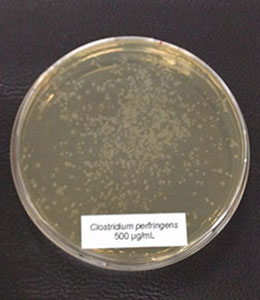
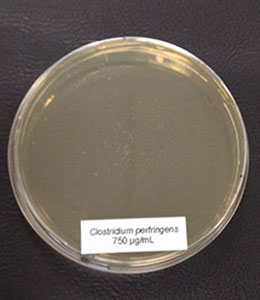
Hinton, M. “Antibacterial Activity of Short-Chain Fatty Acids.” The Veterinary Record 126 (n.d.): 416–21.
Hinton, M., and A. Linton. “Control of Salmonella Infections in Broiler Chickens by the Acid Treatment of Their Feed.” Veterinary Record 123, no. 16 (1988): 416–21. https://doi.org/10.1136/vr.123.16.416.
Humphrey, T. J., and D. G. Lanning. “The Vertical Transmission of Salmonellas and Formic Acid Treatment of Chicken Feed: A Possible Strategy for Control.” Epidemiology and Infection 100, no. 1 (1988): 43–49. https://doi.org/10.1017/s0950268800065547.
Khan, Rosina, Barira Islam, Mohd Akram, Shazi Shakil, Anis Ahmad Ahmad, S. Manazir Ali, Mashiatullah Siddiqui, and Asad Khan. “Antimicrobial Activity of Five Herbal Extracts against Multi Drug Resistant (MDR) Strains of Bacteria and Fungus of Clinical Origin.” Molecules 14, no. 2 (2009): 586–97. https://doi.org/10.3390/molecules14020586.
Koutsoumanis, Kostas, Ana Allende, Avelino Alvarez‐Ordóñez, Declan Bolton, Sara Bover‐Cid, Marianne Chemaly, Alessandra De Cesare, et al. “Salmonella Control in Poultry Flocks and Its Public Health Impact.” EFSA Journal 17, no. 2 (2019). https://doi.org/10.2903/j.efsa.2019.5596.
Maciel, Bianca Mendes, Rachel Passos Rezende, and Nammalwar Sriranganathan. “Salmonella Enterica: Latency.” Current Topics in Salmonella and Salmonellosis, 2017. https://doi.org/10.5772/67173.
McHan, Frank, and Emmett B. Shotts. “Effect of Feeding Selected Short-Chain Fatty Acids on the in Vivo Attachment of Salmonella Typhimurium in Chick Ceca.” Avian Diseases 36, no. 1 (1992): 139. https://doi.org/10.2307/1591728.
Mkangara, M. and M., R. Mwakapuja, J. Chilongola, P. Ndakidemi, E. Mbega, and M. Chacha. “Mechanisms for Salmonella Infection and Potential Management Options in Chicken.” The Journal of Animal & Plant Sciences 30, no. 2 (April 2, 2020): 259–79. https://doi.org/10.36899/japs.2020.2.0050.
Mroz, Z., S.-J. Koopmans, A. Bannink, K. Partanen, W. Krasucki, M. Øverland, and S. Radcliffe. “Chapter 4 Carboxylic Acids as Bioregulators and Gut Growth Promoters in Nonruminants.” Biology of Growing Animals, 2006, 81–133. https://doi.org/10.1016/s1877-1823(09)70091-8.
OHMOMO, Sadahiro, Osamu TANAKA, Hiroko K. KITAMOTO, and Yimin CAI. “Silage and Microbial Performance, Old Story but New Problems.” Japan Agricultural Research Quarterly: JARQ 36, no. 2 (2002): 59–71. https://doi.org/10.6090/jarq.36.59.
Ranieri, Matthew L., Chunlei Shi, Andrea I. Moreno Switt, Henk C. den Bakker, and Martin Wiedmann. “Comparison of Typing Methods with a New Procedure Based on Sequence Characterization for Salmonella Serovar Prediction.” Journal of Clinical Microbiology 51, no. 6 (2013): 1786–97. https://doi.org/10.1128/jcm.03201-12.
Russell, J.B. “Another Explanation for the Toxicity of Fermentation Acids at Low Ph: Anion Accumulation versus Uncoupling.” Journal of Applied Bacteriology 73, no. 5 (1992): 363–70. https://doi.org/10.1111/j.1365-2672.1992.tb04990.x.
Thompson, J. L., and M. Hinton. “Antibacterial Activity of Formic and Propionic Acids in the Diet of Hens on Salmonellas in the Crop.” British Poultry Science 38, no. 1 (1997): 59–65. https://doi.org/10.1080/00071669708417941.
USDA – United States Department of Agriculture – Research, Education & Economics Information System. University of Georgia, 2015. https://portal.nifa.usda.gov/web/crisprojectpages/0228031-effect-of-fat-content-on-the-survival-of-salmonella-in-food.html.
“USDA Launches New Effort to Reduce Salmonella Illnesses Linked to Poultry.” USDA, October 19, 2021. https://www.usda.gov/media/press-releases/2021/10/19/usda-launches-new-effort-reduce-salmonella-illnesses-linked-poultry.
Van Immerseel, F., J. B. Russell, M. D. Flythe, I. Gantois, L. Timbermont, F. Pasmans, F. Haesebrouck, and R. Ducatelle. “The Use of Organic Acids to Combatsalmonellain Poultry: A Mechanistic Explanation of the Efficacy.” Avian Pathology 35, no. 3 (2006): 182–88. https://doi.org/10.1080/03079450600711045.
Van Immerseel, Filip, Jeroen De Buck, Isabel De Smet, Frank Pasmans, Freddy Haesebrouck, and Richard Ducatelle. “Interactions of Butyric Acid– and Acetic Acid–Treated Salmonella with Chicken Primary Cecal Epithelial Cells in Vitro.” Avian Diseases 48, no. 2 (2004): 384–91. https://doi.org/10.1637/7094.
Visscher, C. “Über Das Futter Helfen – Den Salmonellen Das Leben Schwer Machen.” Bauernblatt Schleswig-Holstein + Hamburg 68/164, no. 51 (December 20, 2014): 66–68.
Wernicki, Andrzej, Anna Nowaczek, and Renata Urban-Chmiel. “Bacteriophage Therapy to Combat Bacterial Infections in Poultry.” Virology Journal 14, no. 1 (September 16, 2017). https://doi.org/10.1186/s12985-017-0849-7.
Wessels, Kirsten, Diane Rip, and Pieter Gouws. “Salmonella in Chicken Meat: Consumption, Outbreaks, Characteristics, Current Control Methods and the Potential of Bacteriophage Use.” Foods 10, no. 8 (2021): 1742. https://doi.org/10.3390/foods10081742.
Global mycotoxin challenges: 2021 report
By Technical Team, EW Nutrition
Climate around the globe has changed, increasing atmospheric temperatures and carbon dioxide levels. This change favors the growth of toxigenic fungi in crops and thus increases the risk of mycotoxin contamination. When contaminating feed, mycotoxins exert adverse effects in animals and could be transferred into products such as milk and eggs.
*** Please download the full article for detailed information
Click to see the full-size image
Mycotoxins: a worldwide challenge in 2021
Amongst naturally occurring mycotoxins, the five most important ones are aflatoxin, ochratoxin, deoxynivalenol, zearalenone, and fumonisin. Their incidence varies with the different climates, the prevalence of plant cultures, the occurrence of pests, and the handling of harvest and storage. Worldwide, farmers faced various and sometimes extremely high mycotoxin contamination in their feed materials in 2021. In the following, we show the major challenges in five main regions.
Asia faced high aflatoxin contamination
In Asia, high temperatures and humidity favor Aspergillus growth in grains. As a result, 95 % of the samples in South Asia and three-quarters of the samples in the China and the SEAP region (Indonesia, Philippines, Vietnam) showed aflatoxin contamination. The average contamination being higher than the threshold for all farm animals represents an increased risk for their health and performance.
In China and the SEAP region, also DON and T-2 were highly prevalent. Showing an incidence of more than 60%, they pose a severe risk when combined with aflatoxin.
Fumonisins afflicted the LATAM region
In Mexico, Central and South America, fumonisin contamination prevailed with an incidence of almost 90% at average levels that can be considered risky for swine and dairy. Together with incidence levels of around 60% found for DON and T2, fumonisin may act synergically in the animals, raising the risk for health and performance.
The Fusarium species linked to these mycotoxin contaminations occur in the grains on the field. Amongst others, insect damage, droughts during growing, and rain at silking favor their development.
Trichothecenes prevailed in North America
Contamination with trichothecenes (DON and T2) is the rule in the United States. The interaction of these mycotoxins is at least additive. The damage they cause to the gut opens the door to dysbiosis and disease, decreasing performance and profitability.
Also in this case, the responsible molds for the contamination are Fusarium species that develop when grains are in the field. As with fumonisins, the molds are favored by insect damage, moderate to warm temperatures and rainfall.
Fusarium toxins contaminated grain in the MEA region
Fusarium toxins such as Fumonisin, DON, and T2 prevail in the region of Egypt, Jordan, and South Africa. In combination, these mycotoxins have additive effects at the intestinal level, which increases the risk of dysbiosis in poultry.
A challenging year with long-term repercussions
Since mycotoxin contamination affects animal health, measures must be taken to provide the best protection. Besides improving agricultural practices in the field, smart in-feed solutions and mold inhibitors can be used in stored grain. These measures help producers preserve feed quality after a troubled year for crops around the world.
5 ways the liver keeps the avian body running
By Dr. Inge Heinzl, EW Nutrition
The liver is one of the most active organs within the avian body. Without the liver, the brain would not work, for example. Whenever glucose is not readily available for energy, the brain relies on ketone bodies provided by the liver. The liver also transforms and detoxifies substances foreign to the body (e.g., coccidiostats) and plays a role in immune defense. But how does the liver metabolism function exactly? Find out why it is so important to protect this crucial organ.
5 ways the liver keep the avian body running
The liver fulfills various essential functions. The avian liver:
Provides the ‘fuel’ for all organs
Supplies the body with essential substances
Acts as a storage organ
Is part of the immune defense
Supports the detoxification of the body
1. The liver provides the ‘fuel’ for organs
The brain, the muscle, the different organs of the body – all need energy to function. This fuel is provided by the liver. And it caters to different preferences, too: the different organs need different substances as fuel. The brain usually uses glucose and, in the case of necessity (hunger), ketone bodies. Skeletal muscles work with glucose and, if glucose is lacking, fatty acids for energy generation. Heart and liver gain energy through the ß-oxidation of fatty acids.
The liver adapts to different situations
After they arrive in the gut, most of the nutrients are transported from the small intestine via the portal vein to the liver. There, they are further processed. Regardless of the nutritional supply, the liver must continuously provide energy for the other organs. In the following, different situations of energy availability are described.
1. Just after feed intake
After feed intake, there is enough energy to be metabolized. Glucose then is further processed as follows:
Part of the glucose directly serves as ‘fuel’ for different organs
Another part is transformed into glycogen by the liver and stored in situ (glycogen is a storage substance that can be easy retransformed into glucose)
Some glucose is metabolized into acetyl coenzyme A (acetyl-CoA), which can be used to synthesize fatty acids. Fatty acids’ esterification with glycerol, in turn, results in the production of triglycerides. The liver can also synthesize triglycerides from lactate. The lactate comes from the muscles or the mucosa cells. In mammals, lipid tissue is the primary place for triglyceride synthesis. In contrast, in poultry, the “de novo lipogenesis” site is the liver (Stevens, 2004). These triglycerides are subsequently:
stored within the hepatocytes
transported as “very-low-density lipoproteins” (VLDLs), a water-soluble transport form, in the blood to other organs or the adipose tissue, or
used for energy generation or as an energy store in the other organs or adipose tissue.
Insulin is involved in these actions, promoting the synthesis of fatty acids out of carbohydrates as well as the synthesis of VLDLs.
Figure 1: The role of the liver in the fed state [Zaefarian et al., 2019, Hermier, 1997]
2. Between meals – the blood glucose level decreases
Some time has passed since the last feed intake; glucose has been transported from the blood to the cells. However, the organs continue to need energy, which has to be released continuously from the organs in which it is stored:
In the liver and the kidneys, the stored glycogen must be broken down into glucose, triggered by the hormone glucagon
In the skeletal muscles, glycogen is metabolized aerobically to CO2 and H2O or anaerobically to lactate
The liver uses lactate for gluconeogenesis, stimulated by free fatty acids released from the degradation of depot fat
Figure 2: The role of the liver in the state of decreasing energy [Braun and Sweazea, 2008; Sturkie, 2012; Stevens, 2004]
3. Starvation – reserves are depleted
If the glycogen reserve in the liver is depleted after some hours since the last feed intake, fatty acids are degraded to ketone bodies in the skeletal muscles. In parallel, protein degradation frees up glucogenic amino acids that the liver can use for gluconeogenesis. The lactate from the anaerobe degradation of glucose in the skeletal muscles and glycerol can also be used for gluconeogenesis. In mammals, pyruvate is the best substrate for gluconeogenesis; in poultry, it is lactate.
Gluconeogenesis also takes place in the kidneys. During starvation, 30% of the gluconeogenesis is done by the kidneys and 70% by the liver. Birds are generally able to sustain higher rates of gluconeogenesis than mammals (Stevens, 2004).
To meet the brain’s energy requirements, the liver transforms fatty acids into ketone bodies; they are the only source of energy the brain accepts besides glucose. Although the liver is the main site of ketone production, its ability to use them is limited.
During starvation, glycogen storage in the heart muscle increases. Glycogen levels in the heart muscle are usually relatively low (1.60-2.00 mg / g); in the case of starvation, these levels may triple within 48-92 hours (Hazelwood, 1976) – probably an effect of increased gluconeogenesis.
Figure 3: The role of the liver in the state of starvation [Frias-Soler et al., 2021; Braun and Sweazea, 2008; Sturkie, 2012]
The efficiency of glucose utilization changes
Depending on the catabolic pathway, the efficiency of glucose utilization varies considerably. Moreover, the age or development of the body is a decisive factor. Table 1 shows the variation in glucose utilization depending on age. In all cases, the efficiency of glucose utilization increases with age. However, the efficiency of lipogenesis increases most, which is one reason why older animals tend to get fat.
Table 1: Utilization of glucose for glycolysis (energy generation), glycogenesis (storage), and lipogenesis (storage) in gallus gallus, based on Scanes, 2015
Age (days)
Glucose utilization1 (as a percentage of plateau level)
Glycolysis2
Glycogenesis
Lipogenesis
Late embryo and day 0
13.3 ± 0
˂ 0.5
< 0.5
2
51.1 ± 6.4
10.0 ± 4.1
4.0 ± 1,0
4
85.4 ± 5.5
8.3 ± 0
36.8 ± 9.8
8
104.4 ± 4.6
7.6 ± 1.1
94.7 ± 14.7
12
84.5 ±10.5
34.8 ± 9.4
66.8 ± 10.4
16
120.8 ± 12.5
105.1 ± 24.5
144.2 ± 29.0
1Determined by utilization of [U _14 C] Glucose 2Plateau conversion to CO2: 1261 dpm/mg calculated from Goodridge (1968a) Bold data are at plateau
2. The liver supplies the body with essential substances
The liver is involved in many processes in the organism. It takes part in protein synthesis, provides the building blocks for metabolic processes, and, hence, is essential for the body’s smooth functioning.
The liver produces various proteins
The liver is an important organ for protein synthesis. Most of the plasma proteins (90%) such as albumins, globulins (γ-globulins excluded) are produced by the liver. The liver also synthesizes transport proteins (e. g. for copper, retinol, iron), coagulation factors, and non-essential amino acids. For this purpose, amino acids, arriving from the gut via the portal vein, are transformed through deamination and transamination (Dhawale, 2007).
Cholesterol is an essential building block for further processing
The liver produces cholesterol, a building block for the production of bile, steroid hormones, and vitamin D. Cholesterol is also an essential ingredient of the cell membrane.
As a bile producer, the liver plays a significant role in digestion. In the gut, the bile emulsifies the dietary fats into small droplets, which then can be absorbed via the gut cells (enterocytes) into the body. The bile is also a transport medium for waste products, through delivery into the gut lumen (detoxification function).
The liver plays a prominent role in egg production
In poultry, the composition of the egg depends on the liver. Egg yolks consist of water (70%), proteins (10%), and lipids (20%). The yolk lipids are lipoproteins rich in triglycerides, built up in the liver and transported as egg yolk-specific VLDLs (VLDLy) to the ovary. Also, cholesterol is transported via lipoproteins to the egg yolk.
3. The liver acts as a storage organ
The liver is a storage organ for blood and glycogen (energy metabolism). Also, minerals (sodium) and trace elements such as copper, manganese, fluor, iodine, selenium, chlorine, and iron are retained. The liver has the highest participation in the Mn metabolism, and iron is accumulated as ferritin.
Vitamin A is stored in the highest concentrations after the transformation of carotin. The liver also accumulates vitamins D, K, B1, B12, C, riboflavin, pantothenic acid, nicotinic acid, folic acid, and biotin (Dhawale, 2007).
4. The liver is part of the immune defense
The liver filters the blood and, in this way, removes microorganisms (e.g., those originating from the gastrointestinal tract), toxins, and aged erythrocytes. For its immunological tasks, the liver has different types of immune-competent cells at its disposal. The so-called Kupffer cells are liver-specific macrophages descending from monocytes and belonging to the specific immune defense. They represent 80-90% of all tissue macrophages (Hinghofer-Szalkay, 2021).
In a healthy liver, the Kupffer cells can eliminate about 95% of the bacteria arriving through the blood. The main task of these cells is to ingest the enemies, process them, and surface parts of them as antigenic material. Besides the phagocytosis of bacteria, Kupffer cells can also incorporate toxins, immune complexes, parts of cells, and viruses. They excrete cytokines, provoking the production of acute-phase proteins (e.g., fibrinogen), fending off tumor cells and regulating the function of other liver cells. With the help of the Kupffer cells, the liver transforms or completely degrades toxins ingested with the feed (e.g., mycotoxins) (Zaefarian, 2019).
5. The liver supports the detoxification of the body
One example is nitrogen, a product of the protein metabolism that must be excreted in an energy-intensive process via the liver and the kidneys. Ammonia and keto acids are formed by deamination. As ammonia has a toxic effect in birds, it is transformed to uric acid, transported to the kidneys, and excreted from there.
The liver is also responsible for at least the partial conjugation of already used hormones (transformation into water-soluble substances), which are then excreted via the bile. Furthermore, it assists in the degradation of red blood cells. The Kupffer cells in the liver phagocytize (“eat”) overaged red blood cells. Reusable substances such as iron are kept, the useless residual is degraded and excreted (Hinghofer-Szalkay, 2021).
Poultry producers have to do their best to protect the liver
The liver fulfills critical tasks for the body, such as detoxification, immune defense participation, and energy management.
For meat-producing animals, growth is a critical factor. The growth rate is determined by cell growth, which depends on the speed of cell division and the synthesis of protein in the liver and muscle cells. It furthermore depends on the production and secretion of growth-regulating hormones and related metabolism processes that also take place in the liver.
Thus, to keep animals in good health and maintain high growth performance,the protection of the liver should be a top priority for the producer.
References
Dhawale, Avinash. “The Liver: a Big Organ with a Big Role.” World Poultry 23, no. 10 (November 23, 2007): 34–36.
Grashorn, M. “Eiqualität.” Essay. In Legehuhnzucht Und Eiererzeugung: Empfehlungen für Die Praxis Spec. issue 322, Spec. issue 322:19–33. Braunschweig, Germany: Johann Heinrich von Thünen-Institut, Bundesforschungsinstitut für Ländliche Raüme, Wald und Fischerei, 2009.
Hinghofer-Szalkay, H. “Eigenschaften Und Aufgaben Hepatischer Nichtparenchymzellen.” Physiologie nicht-parenchymale Leberzellen Funktion. Accessed December 21, 2021. http://physiologie.cc/III.3.htm.
Scanes, C. G. “Carbohydrate Metabolism.” Essay. In Sturkie’s Avian Physiology; 6th Ed., 443. London: Academic Press/Elsevier, 2015.
Scanes, C. G., and Paul D. Sturkie. “Adipose Tissue and Lipid Metabolism.” Essay. In Sturkie’s Avian Physiology ; 6th Ed., 443. London: Academic Press/Elsevier, 2015.
Stevens, Lewis. “Carbohydrate and Intermediary Metabolism.” Essay. In Avian Biochemistry and Molecular Biology, 3rd ed., 29–36. Cambridge <<>>: Cambridge Univ. Press, 2004.
Zaefarian, Faegheh, Mohammad Abdollahi, Aaron Cowieson, and Velmurugu Ravindran. “Avian Liver: The Forgotten Organ.” Animals 9, no. 2 (2019): 63. https://doi.org/10.3390/ani9020063.