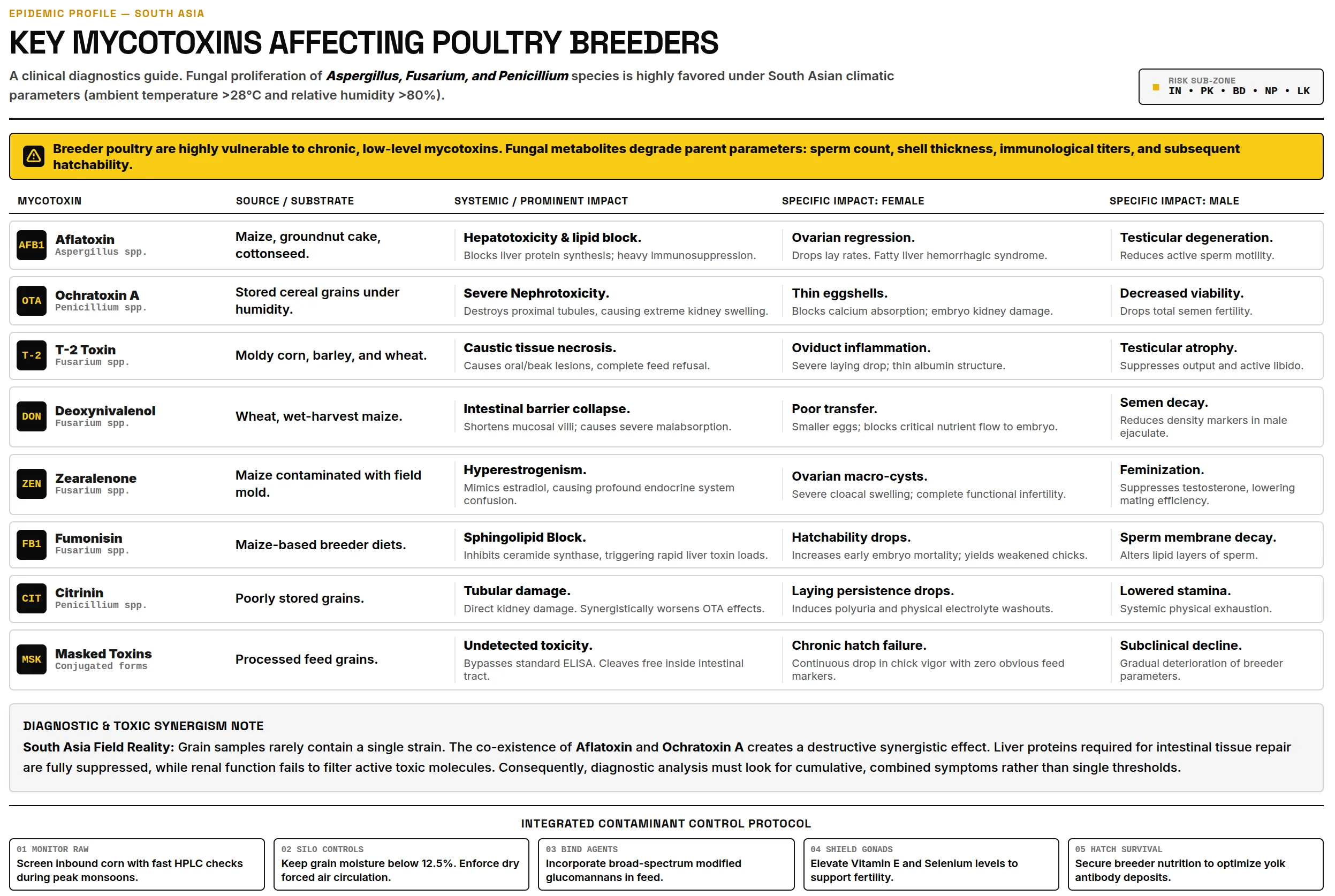
EU guidance values for key mycotoxins in animal feeds
By Marie Gallissot, Global Manager Feed Quality Solutions, EW Nutrition
EU guidance values for key mycotoxins in animal feeds
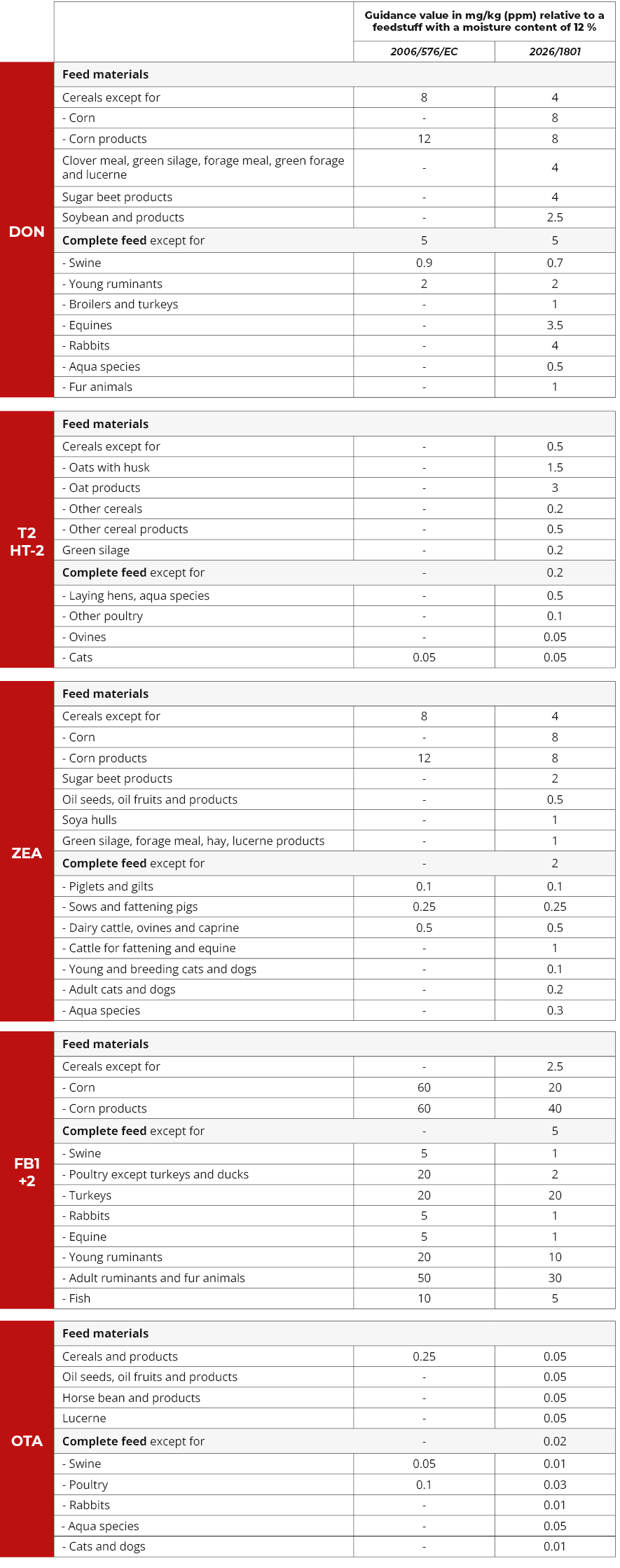
After years of discussions, and the publication by EFSA of several scientific opinions in the past 10 years, the new EC recommendation on the presence of deoxynivalenol (DON), zearalenone (ZEA), ochratoxin A (OTA), T-2 and HT-2 toxins (T-2/HT-2) and fumonisins (FB1+2) in feed is out!
EW Nutrition dissected the new recommendation – see below the summary of the key points.
2006 : first recommendation of mycotoxin levels in raw materials and feed destined to animal feed is published (2006/576/EC).
• Toxicity for animals is recognized, risk for humans (consuming animal products) is considered marginal
• T-2/HT-2 not considered, by lack of data and reliable analytical method. The EC is amended in 2013 (2013/637/EU) to provide guidance value for cat feed (considered most at risk)
• The need for more analysis (occurrence data), especially simultaneous analysis (for co-occurrence estimation) is stressed
• Values for cereals and their products are set as upper values, considering most tolerant species, and should be used carefully.
2026: 20 years of research have enriched the knowledge and risk understanding, so now much more complete recommendations are out.
• Switch from considering “toxic effects” to “animal health” > better consideration for sub-clinical toxicity
• Risk for humans no longer considered marginal
• Need for continuous monitoring still up to date
• New EFSA opinions fed the European commission for this new recommendation (mainly from 2017 to 2023, depending on the mycotoxin)
• Very new: the EC acknowledges the use of mitigation measures when the guidance values cannot be respected!
• Recommendation coming into effect July 1, 2027 (October 1, 2027 for some raw materials).
• Many more categories included: recommendations for aqua species, equines, rabbits; inclusion of soybean and oilseed feedstuffs, forages…
How can EW Nutrition help you?
We provide EU-approved proven mitigation strategies to secure your feed and animal performance, in a profitable way. Contact us to find the adequate solution for your situation.
With our team of experts, we support you in measuring, understanding and managing mycotoxin risk, for sustainable operations and production.
Hens support calves in their critical first phase of life
By Dr. Inge Heinzl, EW Nutrition
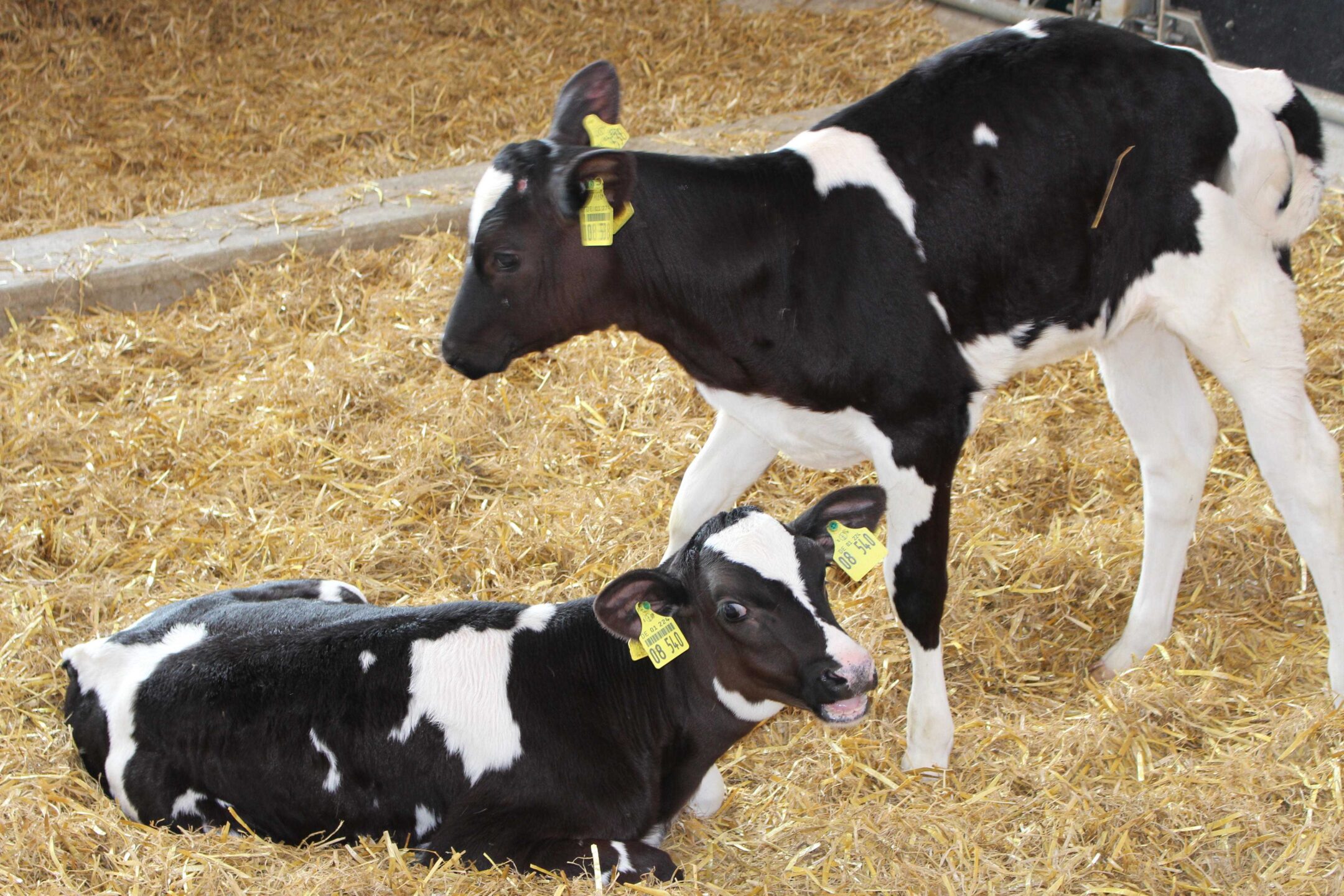
Calves are particularly susceptible to disease because ruminants have a multilayered placenta (placenta epitheliochorialis), and transplacental transfer of immunoglobulins is either absent or occurs only to a very limited extent. This means that the animals must build up their own defenses during the first weeks of life and depend on the immunological support provided by maternal colostrum. Its intake, therefore, is vital. Several studies evaluating the immunoglobulin Y (IgY) supply in calves have shown that not all calves have sufficient immunoglobulins to withstand disease challenges, especially diarrhea.
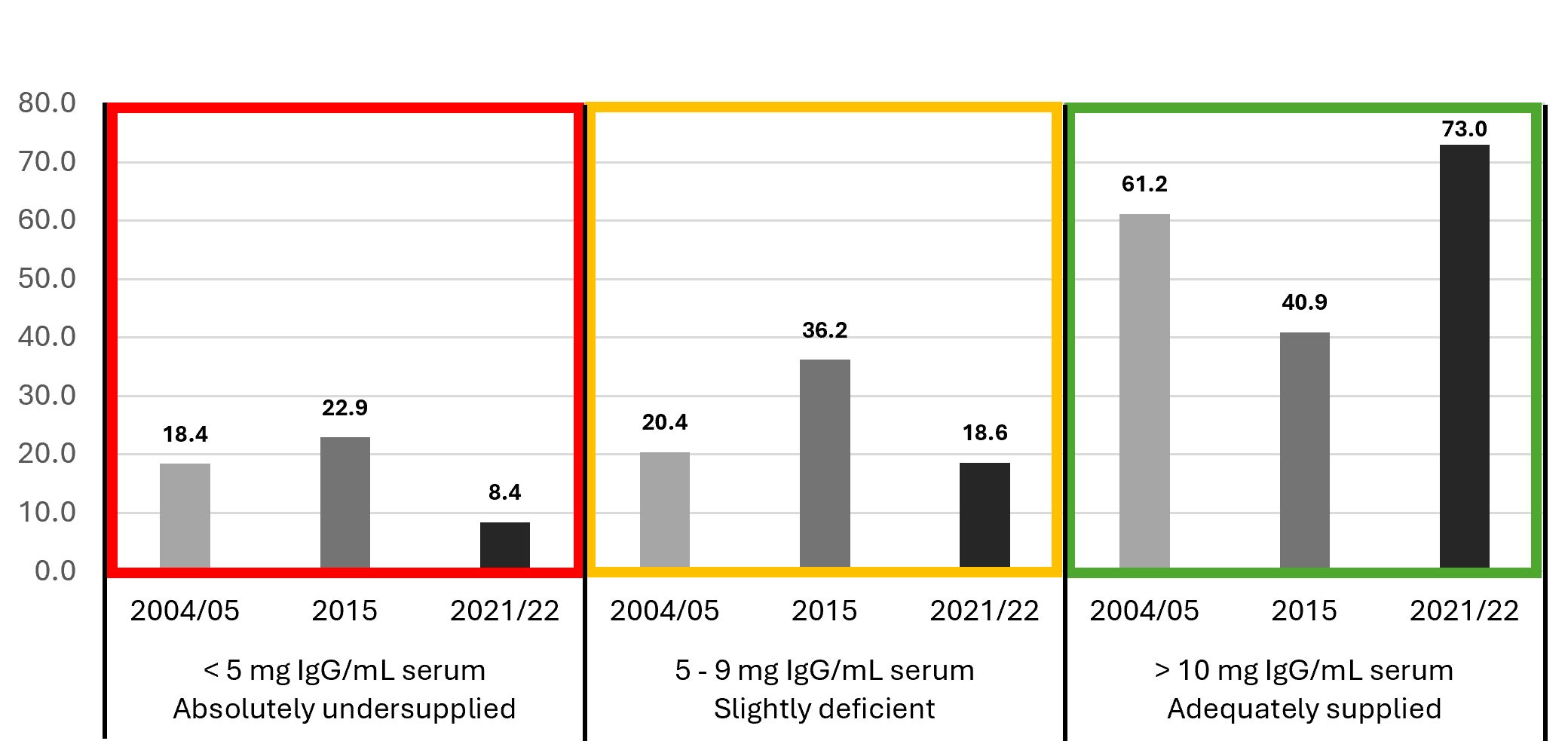
Insufficient intake of colostrum or colostrum with an inadequate content of relevant antibodies leads to failure of passive transfer in calves (Figure 1).
Figure 1: IgG supply of calves – Comparison 2004/05, 2015, and 2021/22 (2004/05: E.K. McMorran, 2006; 2015: K. Stemme et al., 2016; 2021/22: K. Stemme et al., 2022)
Old method – newly applied
To generally support young animals, and especially runts, it was common practice in “the good old days” to feed them raw chicken eggs. Back then, people may not have always known why, but it helped. Dr. Felix Klemperer (1893) provided the explanation. He discovered that chickens form antibodies against a wide variety of germs – not just chicken-relevant ones – they come into contact with and then transfer these antibodies into the egg.
Since, in the past, all animals were kept under one roof, chickens were also exposed to the diarrhea-causing pathogens of all animals living on the farm. Without becoming sick themselves, they formed immunoglobulins (IgY = immunoglobulins from the egg yolk) against these pathogens and transferred them to the egg – the only way to provide their offspring with an immunological head start.
Advantages of egg immunoglobulins: They work not only in birds but can also support mammals immunologically against diarrheal diseases (Yokoyama et al., 1992; Yokoyama et al., 1993; Ikemori et al., 1992; Kuroki et al., 1993; Kellner et al., 1994; Ehrhard et al., 1993; Kuroki, 1999), and they can be produced in high quantities without wounding or killing the hens.
Modern technology enables the provision of complementary dietary feeds containing egg immunoglobulins, supporting calves…and also other young animals suffering from failure of passive transfer (FPT) to overcome critical phases of life.
Egg immunoglobulins mainly act in the gut. There, they bind to pathogens such as E. coli, Cryptosporidia, rotaviruses, and coronaviruses.
Field trials prove the efficacy of egg immunoglobulins
Several trials were conducted in the field to evaluate the efficacy of egg immunoglobulins in calf rearing.
1. Lower number of treatments and decreased mortality rate
A trial conducted in the Netherlands with 300 veal calves (Holstein Friesian and Brown Swiss) examined the effect of egg immunoglobulins on the number of treatments and mortality rate. Both groups were fed standard milk replacer. The IgY group additionally received decreasing amounts of an IgY-containing product (Globigen Life Start).
Days 1-3: 16 g
Days 4-7: 8 g
Days 8-14: 4 g, and
Weeks 3-28: 0.4 g /animal/day.
Results:
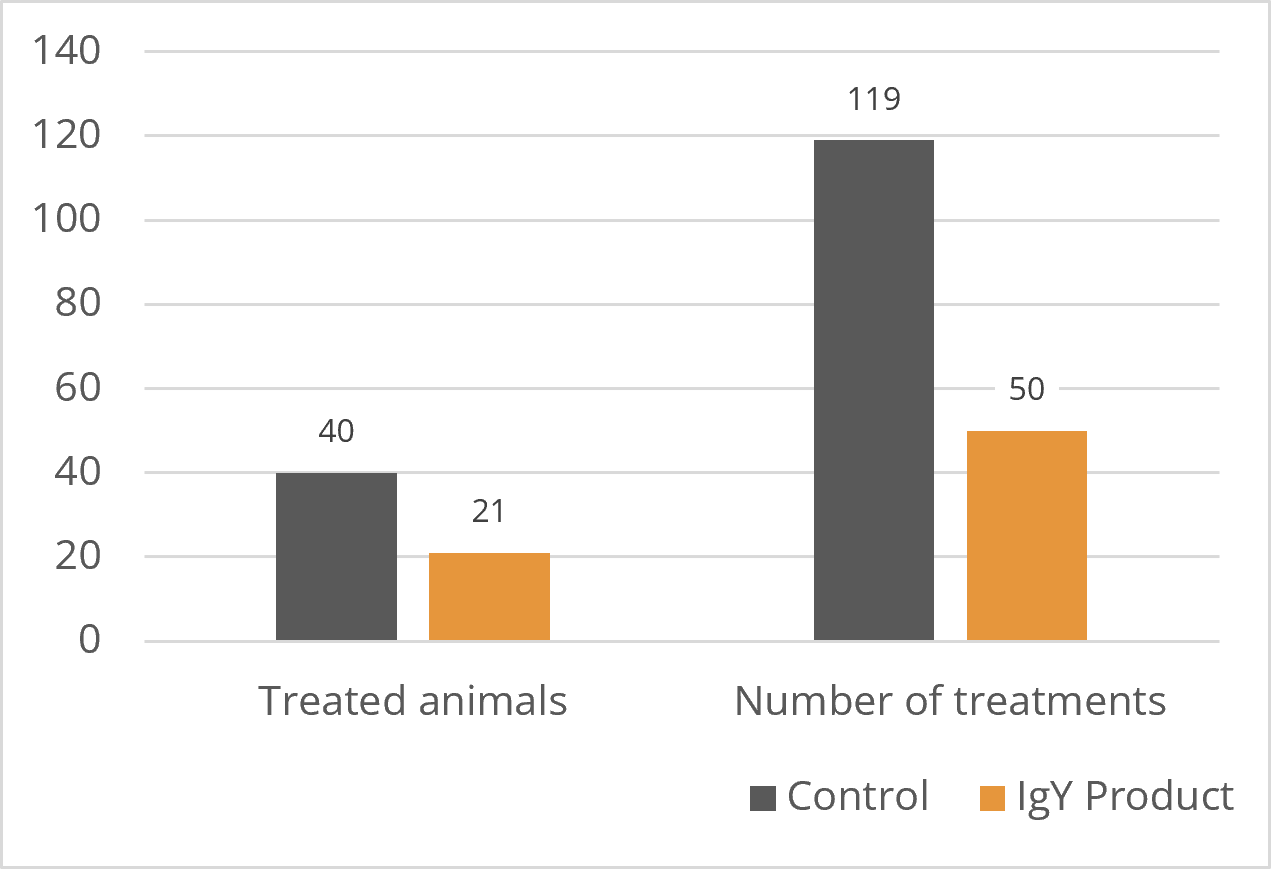
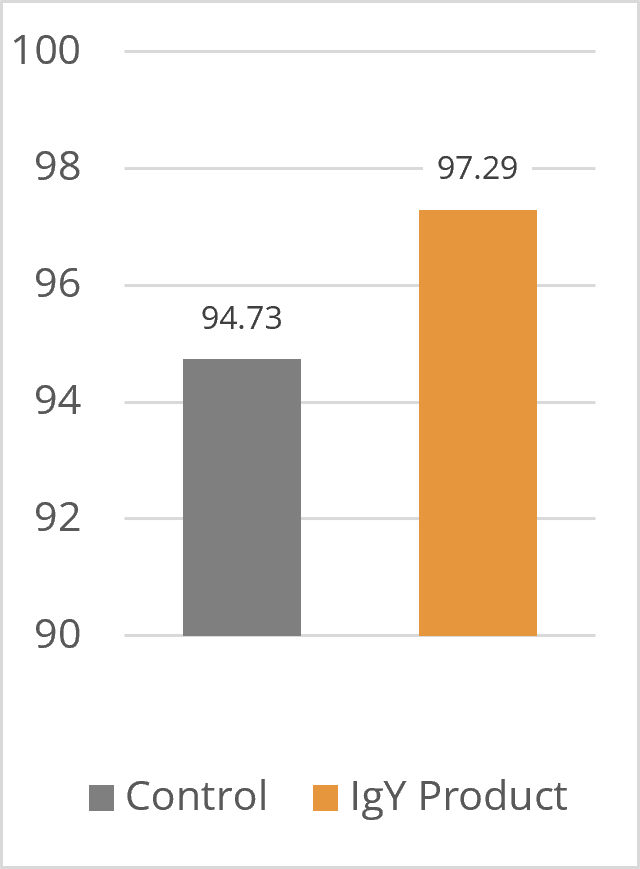
In the group fed the IgY product, nearly 50% fewer animals (21 vs. 40) required medical treatment, and the number of treatments also decreased significantly, from 119 in the control to 50 in the Globigen Life Start group. Better health status resulted in a 2.5% higher livability rate in the group receiving the IgY Product (97.29% vs. 94.73% in the control).
Figure 2: Treated animals and number of treatments (n)
Figure 3: Livability (%)
2. Improved weight development
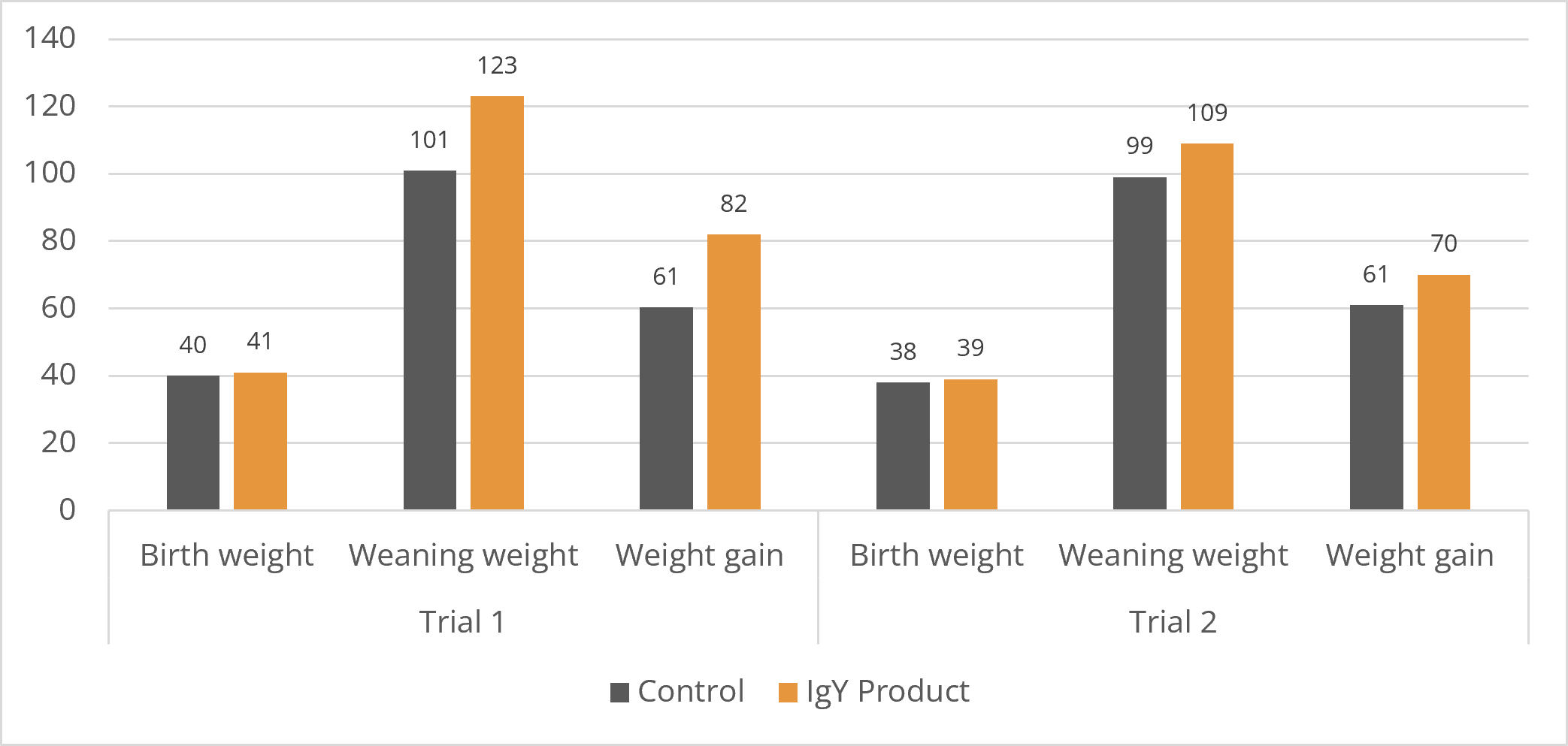
Two trials were conducted in Germany to evaluate the effect of an IgY-containing product (Globigen Life Start) on the weight development of calves. In both trials, the trial group was fed 4 g of Globigen Life Start/animal per day, in trial 1 on days 2 to 30 and in trial 2 from day 2 until weaning.
Results:
The trial results are presented in Figure 4.
FigureFigure 4: Weight development in calves with and without IgY Product
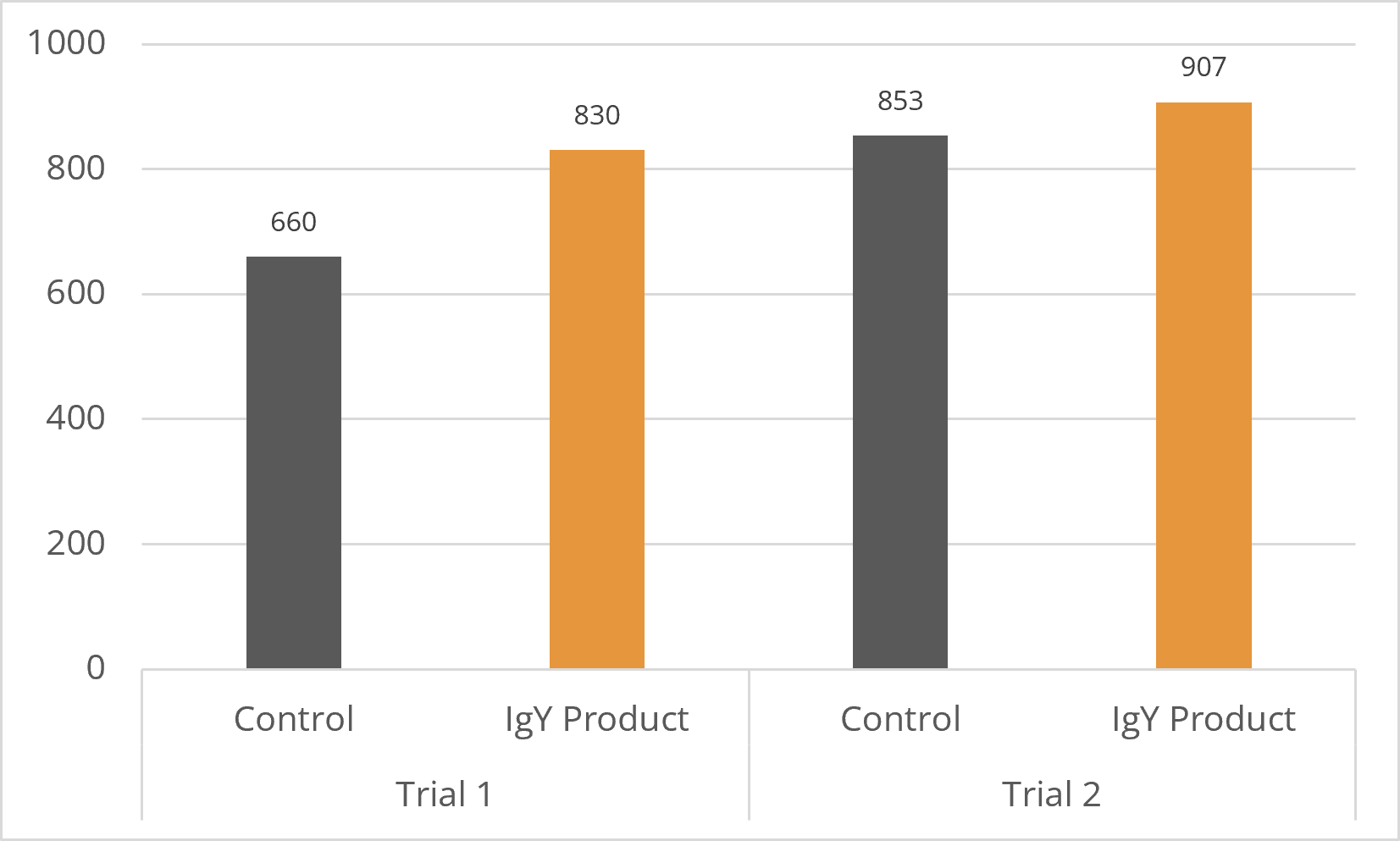
The IgY groups finished the trial with weaning weights more than 20 kg (trial 1) and 10 kg (trial 2) higher than their respective control groups, resulting in 9 kg and 21 kg higher weight gains, respectively. Daily gain is shown in Figure 5.
Figure 5: Daily gain with and without Globigen Life Start
Egg immunoglobulins improve animal health, welfare, and performance
Egg immunoglobulins support young animals such as calves during their first weeks of life by binding pathogens in the intestine. Reducing the pathogenic pressure has two positive consequences:
Decreased occurrence of diarrhea and
Fewer competitors for nutrients
The result, as shown in several trials, is fewer medical treatments, improved livability, and better performance, thereby reducing antibiotic use in calf rearing.
References:
Erhard, M.H., J. Kellner, J. Eichelberger, and U. Lösch. “Neue Möglichkeiten in Der Oralen Immunprophylaxe Der Neugeborenendiarrhoe Des Kalbes- Ein Feldversuch Mit Spezifischen Eiantikörpern.” Berl Münch Tierärztl Wochenschr 106 (1993): 383–87.
Ikemori, Yutaka, Masahiko Kuroki, Robert C. Peralta, Hideaki Yokoyama, and Yoshikatsu Kodama. “Protection of Neonatal Calves against Fatal Enteric Colibacillosis by Administration of Egg Yolk Powder from Hens Immunized with K99-Piliated Enterotoxigenic Escherichia Coli.” American Journal of Veterinary Research 53, no. 11 (November 1, 1992): 2005–8. https://doi.org/10.2460/ajvr.1992.53.11.2005.
Ikemori, Yutaka, Masahiko Kuroki, Robert C. Peralta, Hideaki Yokoyama, and Yoshikatsu Kodama. “Protection of Neonatal Calves against Fatal Enteric Colibacillosis by Administration of Egg Yolk Powder from Hens Immunized with K99-Piliated Enterotoxigenic Escherichia Coli.” American Journal of Veterinary Research 53, no. 11 (November 1, 1992): 2005–8. https://doi.org/10.2460/ajvr.1992.53.11.2005.
Kellner, J., M.H. Erhard, M. Renner, and U. Lösch. “Therapeutischer Einsatz Von Spezifischen Eiantikörpern Bei Saugferkeldurchfall – Ein Feldversuch.” Tierärztliche Umschau 49, no. 1 (January 1994): 31–34.
Klemperer, Felix. “Ueber Natürliche Immunität Und Ihre Verwerthung Für Die Immunisirungstherapie.” Archiv für Experimentelle Pathologie und Pharmakologie 31, no. 4–5 (June 1893): 356–82. https://doi.org/10.1007/bf01832882.
Kuroki, M. “Oral Passive Immunization Using Chicken Egg Yolk Immunoglobulins against Bovine Rotavirus and Coronavirus Infections.” Recent Res. Devel. Virol. 1 (1999): 95–106.
Kuroki, Masahiko, Yutaka Ikemori, Hideaki Yokoyama, Robert C. Peralta, Faustino C. Icatlo, and Yoshikatsu Kodama. “Passive Protection against Bovine Rotavirus-Induced Diarrhea in Murine Model by Specific Immunoglobulins from Chicken Egg Yolk.” Veterinary Microbiology 37, no. 1–2 (October 1993): 135–46. https://doi.org/10.1016/0378-1135(93)90188-d.
McMorran, Elizabeth Kay. “Bundesweite Untersuchung Zur Kolostralen Versorgung von Neugeborenen Kälbern von Elizabeth Kay McMorran.” Bundesweite Untersuchung Zur Kolostralen Versorgung von Neugeborenen Kälbern von Elizabeth Kay McMorran. Dissertation, LMU, 2006.
Stemme, K., E. Rauch, N. Franz, S. Reese, and M. Erhard. “11. Berlin-Brandenburgischer Rindertag.” In Das Gesunde Kalb – Eine Deutschlandweite Erhebung Zur Kolostralversorgung Neugeborener Kälber, 41–42. Berlin: Cuvillier, n.d.
Stemme, K., M. Erhard, D. Klaus-Halla, S. Reese, and E. Rauch. “DVG-Vet-Congress – Fachgruppenübergreifende Buiatrik-Tagung,” 49–53. Berlin: DVG e.V., 2022.
Yokoyama, H, R C Peralta, R Diaz, S Sendo, Y Ikemori, and Y Kodama. “Passive Protective Effect of Chicken Egg Yolk Immunoglobulins against Experimental Enterotoxigenic Escherichia Coli Infection in Neonatal Piglets.” Infection and Immunity 60, no. 3 (March 1992): 998–1007. https://doi.org/10.1128/iai.60.3.998-1007.1992.
Yokoyama, Hideaki, Robert C. Peralta, Kouji Umeda, Tomomi Hashi, Faustino C. Icatlo, Masahiko Kuroki, Yutaka Ikemori, and Yoshikatsu Kodama. “Prevention of Fatal Salmonellosis in Neonatal Calves, Using Orally Administered Chicken Egg Yolk Salmonella-Specific Antibodies.” American Journal of Veterinary Research 59, no. 4 (April 1, 1998): 416–20. https://doi.org/10.2460/ajvr.1998.59.04.416.
Yokoyama, Hideaki, Robert C. Peralta, Sadako Sendo, Yutaka Ikemori, and Yoshikatsu Kodama. “Detection of Passage and Absorption of Chicken Egg Yolk Immunoglobulins in the Gastrointestinal Tract of Pigs by Use of Enzyme-Linked Immunosorbent Assay and Fluorescent Antibody Testing.” American Journal of Veterinary Research 54, no. 6 (June 1, 1993): 867–72. https://doi.org/10.2460/ajvr.1993.54.06.867.
Mycotoxins and Gut Integrity: Strengthening the Intestinal Barrier to Secure Performance
By Elise Nacer-Khodja, Toxin Solution Product Manager EW Nutrition
The gut under siege: understanding the direct assault on epithelial integrity
The gastrointestinal tract (GIT) is the primary site of interaction between animals and ingested mycotoxins, playing a pivotal role in the absorption and oral bioavailability of these contaminants. While high-dose clinical mycotoxicosis is rare in modern production, the chronic ingestion of low to moderate levels triggers a cascade of metabolic, physiological, and immunological disorders. The intestinal epithelium, a single layer of cells, is the animal’s most critical interface, functioning simultaneously as a nutrient harvester and a frontline barrier against pathogens and toxins.
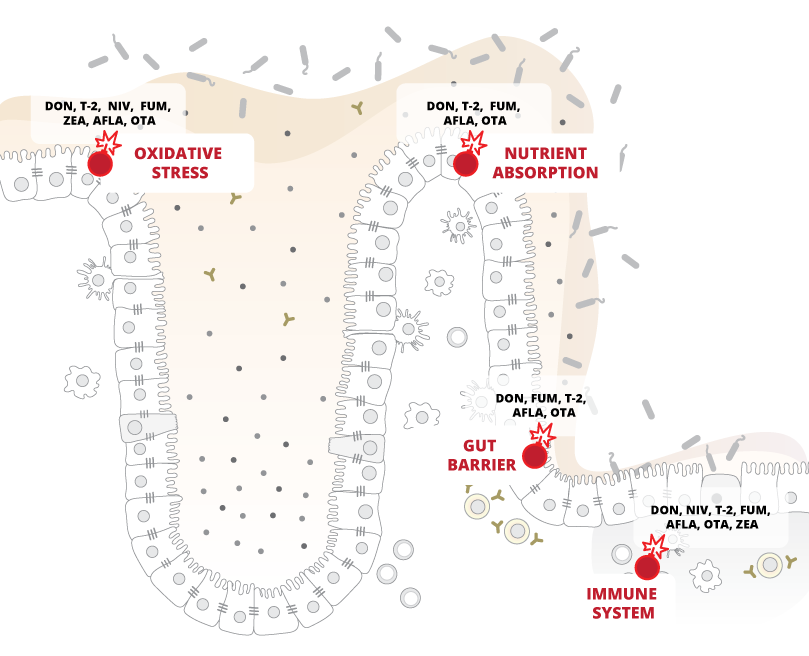
Mycotoxins, specifically trichothecenes like deoxynivalenol (DON), and fumonisins (FB1), but also aflatoxins (AFLA) and ochratoxins (OTA) directly sabotage this barrier. They downregulate the mRNA expression of tight junction proteins, compromise cell viability, and degrade the protective mucus layer. Beyond this structural damage, mycotoxins induce a pro-inflammatory cytokine response and disrupt the gut microbiota. These alterations do more than just damage the gut; they increase susceptibility to secondary infections such as coccidiosis, necrotic enteritis, salmonellosis and many others.
Protecting the gastrointestinal tract from mycotoxins becomes an essential pillar for health and performance because GIT is not just an organ for digestion; it is the largest immune organ in the body. When its integrity is compromised, the animal’s entire biological priority shifts from growth to defense, leading to hidden performance losses that are often only noticed at the end of the production cycle.
Figure 01 – Impact of mycotoxins on different functions of the GIT
Beyond physical damage: the catalyst for antibiotic resistance
Recent research highlights a critical link between mycotoxins and the global rise of antimicrobial resistance (AMR). While the misuse of drugs is the primary driver of AMR, toxins such as deoxynivalenol (DON) act as potent environmental catalysts. DON significantly disrupts the microbial balance of the gut, providing a survival advantage to bacteria carrying resistance genes. Furthermore, mycotoxins have been shown to activate specific bacterial resistance genes and accelerate horizontal gene transfer, allowing resistant strains to spread more rapidly through the microbiota. Bacteria employ molecular defense mechanisms against mycotoxins (such as efflux pumps and detoxification enzymes) that are similar to those used against antibiotics. This cross-resistance not only weakens therapeutic effectiveness but also creates a systemic “One Health” challenge.
From gut porosity to hepatic stress
In a study led by EW Nutrition in a research center in 2025, the oral exposure to 2 ppm of DON and 5 ppm of Fumonisin B1 from day 11 to 42 of 480 broiler chickens (Ross 308) acted as a direct assault on their intestinal and hepatic functions. Specifically:
Intestinal porosity was increased: a significant downregulation of the tight junction protein ZO-1 (p<0.001) expression was observed, compromising gut integrity.
Systemic leakage was revealed: an increased level of serum E. coli lipopolysaccharide (LPS), indicated that pathogens bypassed the degraded epithelial barrier.
Hepatic damage was observed: severe hepatocellular necrosis, fibrosis, and a massive upregulation of IL-6 (inflammatory interleukin) and NOX-4 (marker of oxidative stress) was measured in the liver.
The liver is the primary metabolic hub for birds. By forcing the liver to deal with an influx of intestinal pathogens and oxidative damage, mycotoxins divert energy away from muscle protein synthesis. This redirection of resources is a primary driver of poor feed conversion rates, even when the animals do not show obvious signs of illness.
Economic consequences: the true cost of a compromised barrier
The biological sabotage detailed in the EW Nutrition trial translates directly into technical failure and heavy economic losses. The exposure to DON and FB1 significantly hindered performance during the growing-finishing period:
Feed efficiency: The Feed Conversion Ratio (FCR) increased by 5 points (3%, p<0.01) from 11 to 42 days,
Growth inhibition: At 42 days, challenged birds weighed 67g less (2.5%) than the control group,
Productivity drop: The European Production Efficiency Factor (EPEF) decreased by 7% (p<0.01),
Mortality: mortality rates more than doubled, jumping from 2.50% in the control group to 6.67% in the challenged group.
For the producer, this resulted in an average loss of 0.18€ per head. In a large-scale commercial operation, these “sub-clinical” losses can represent tens of thousands of euros in lost revenue per house, largely driven by the indirect effects of gut leakage and liver stress.
Research led by Kolawole (2025) suggests that poultry producers lose $0.30 per broiler chicken due to subclinical mycotoxin exposure. By damaging gut health and weakening immune responses, these toxins reduce feed efficiency and trigger “hidden” financial leaks. Even when contamination appears low, the cumulative impact on profitability remains severe.
Securing gut barrier: a shield for profitability
To counteract these effects, the trial evaluated the capacity of EW Nutrition toxin risk solution to mitigate these mycotoxin-induced damage. The results showed that the inclusion of this solution acted as a definitive shield for the animals:
Restored gut integrity: EW Nutrition solution significantly improved the gut condition, reducing inflammation and restoring the intestinal barrier,
Reduced lesions: mucosal ulceration and lesion scores were greatly reduced compared to the challenged group,
Liver protection: supplementation returned the hepatic markers IL-6 and NOX-4 to control levels, effectively neutralizing the metabolic burden and oxidative stress on the liver.
Most importantly, this biological protection translated into a full recovery of animal performance. Birds receiving the supplementation reached higher body weights (2,782g vs 2,686g in the challenge group) and mortality was halved. Overall, groups treated with EW Nutrition toxin risk solution showed the highest productivity, with an EPEF 5% to 11% higher than their respective controls.
Conclusion
Effective mycotoxin management requires a multi-layered approach. While general biosecurity measures and raw material monitoring are essential to reduce initial exposure, they are rarely enough to eliminate the risk entirely in commercial environments. This study demonstrates that even moderate levels of toxins can trigger systemic metabolic stress and gut failure. Therefore, in addition to standard preventive measures, the use of EW Nutrition’s advanced solutions, such as Solis Max 2.0, represents a highly effective lever.
With a Return on Investment (ROI) of 5:1, EW Nutrition’s approach proves that protecting the intestinal epithelium and the liver is a fundamental technical and economic requirement. By ensuring nutrients are used for growth rather than inflammation, producers can secure the profitability and health of the broiler cycle, even under significant mycotoxin challenges.
References available upon request.
Phytase and Xylanase in Poultry and Swine Nutrition: Complementary and Potentially Synergistic Effects Beyond Nutrient Release
Author: Ajay Bhoyar, Senior Global Technical Manager, EW Nutrition
Why strategic use of xylanase in addition to phytase matters
Modern poultry and swine diets rely heavily on plant-derived ingredients such as corn, wheat, barley, soybean meal, rice bran, sunflower meal, and various co-products based on regional availability. While these ingredients provide valuable nutrients, some may also contain anti-nutritional factors in varying amounts that limit nutrient utilization.
Two of the most important anti-nutritional factors are phytate (phytic acid), the primary storage form of phosphorus in plants, and arabinoxylans, the major non-starch polysaccharides (NSP) found in cereals. Phytate reduces the availability of phosphorus and can bind proteins, amino acids, minerals, and digestive enzymes, whereas arabinoxylans can increase digesta viscosity and physically entrap nutrients within plant cell walls (Ravindran and Son 2011; Selle and Ravindran 2007).
Traditionally, phytase was viewed primarily as a phosphorus-releasing enzyme and xylanase as a carbohydrase targeting arabinoxylans. However, contemporary research has demonstrated that both enzymes exert effects beyond their primary substrates. High-dose phytase programs can substantially reduce phytate’s anti-nutritional effects through extensive de-phytinization of the diet, while xylanase can stimulate fiber fermentation and beneficial microbial activity through the production of xylo-oligosaccharides (XOS) and arabinoxylo-oligosaccharides (AXOS). These expanded functional roles have renewed interest in combined phytase-xylanase strategies in poultry and swine nutrition (Cowieson, Wilcock, and Bedford 2011; Moita and Kim 2022).
Understanding the Individual Roles of Phytase and Xylanase
Phytase: Unlocking Phytate-Bound Nutrients
Phytase (myo-inositol hexakisphosphate phosphohydrolase) catalyzes the stepwise removal of phosphate from phytic acid or its salt phytate. The removal of the phosphate group starts with a fully phosphorylated phytic acid (IP6), followed by penta- (IP5), tetra- (IP4), tri- (IP3), di- and mono-esters of inositol in descending order of preference. The stepwise hydrolysis results in the release of phosphorus and reduces the anti-nutritional effects of phytate (Wyss et al. 1999 and Yu et al. 2012). Beyond phosphorus release, phytase improves the availability of calcium, amino acids, energy, and trace minerals by reducing phytate-protein and phytate-mineral complexes (Adeola and Cowieson 2011; Dersjant-Li et al. 2015).
Research over the past two decades has consistently demonstrated that phytase supplementation:
Improves phosphorus digestibility and retention.
Reduces the requirement for inorganic phosphate supplementation.
Enhances amino acid and energy utilization.
Improves growth performanc and feed efficiency.
Reduces phosphorus excretion and environmental loading (Dersjant-Li et al. 2015; Moita and Kim 2022).
Higher phytase inclusion rates (super-dosing) can further increase phytate destruction and myo-inositol generation, creating so-called extra-phosphoric benefits that extend beyond phosphorus release (Cowieson et al. 2011; Dersjant-Li et al. 2015).
Xylanase: Breaking Down Cell Wall Barriers
Xylanase hydrolyzes arabinoxylans and other xylan-containing NSPs. In cereal-based diets, arabinoxylans can increase intestinal viscosity and encapsulate nutrients, reducing nutrient accessibility (Bedford and Cowieson 2020; Ravindran 2013).
By degrading arabinoxylans, xylanase:
Reduces digesta viscosity.
Improves nutrient diffusion and enzyme-substrate interaction.
Releases nutrients trapped within cell wall structures.
Enhances metabolizable energy utilization.
Generates arabino xylo-oligosaccharides (AXOS) and xylo-oligosaccharides (XOS), which may support beneficial microbial populations and short-chain fatty acid production (Courtin et al. 2008; Kiarie et al. 2013). These effects contribute to improved feed efficiency, gut health, and nutrient digestibility in both poultry and pigs (Ravindran and Son 2011).
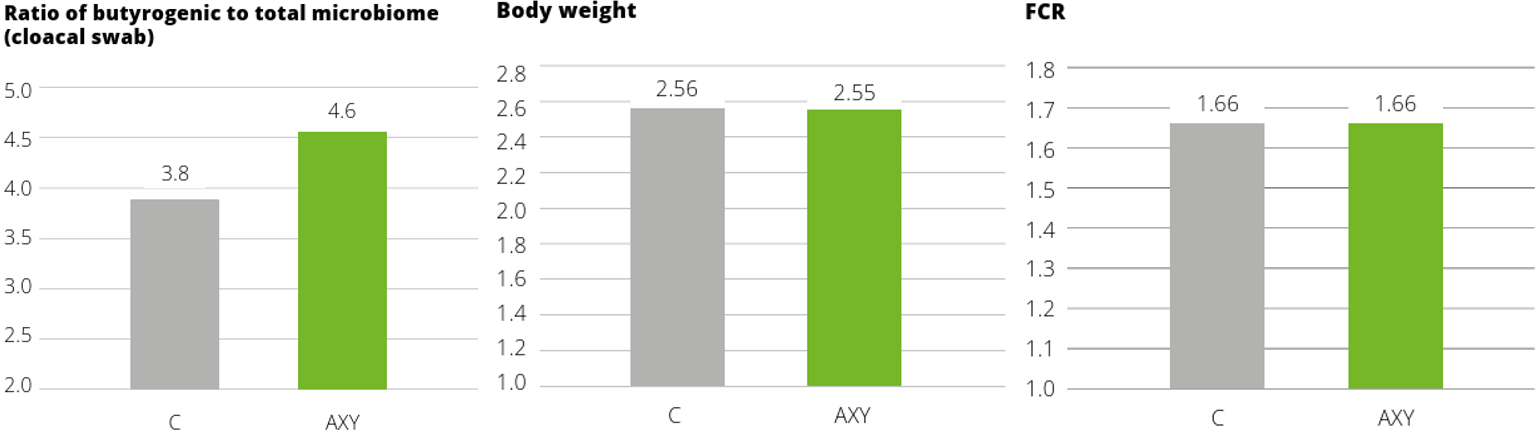
In a broiler study (corn-soy-rice diets), Axxess XY resulted in about 20% improvement in the butyrogenic to the total microbiome ratio, while maintaining performance in terms of body weight and FCR in the reduced energy diets (Fig.1).
Fig.1: Axxess XY in broiler corn-soy-based diets resulted in a higher butyrogenic microbial population, while maintaining performance in reduced energy diets.
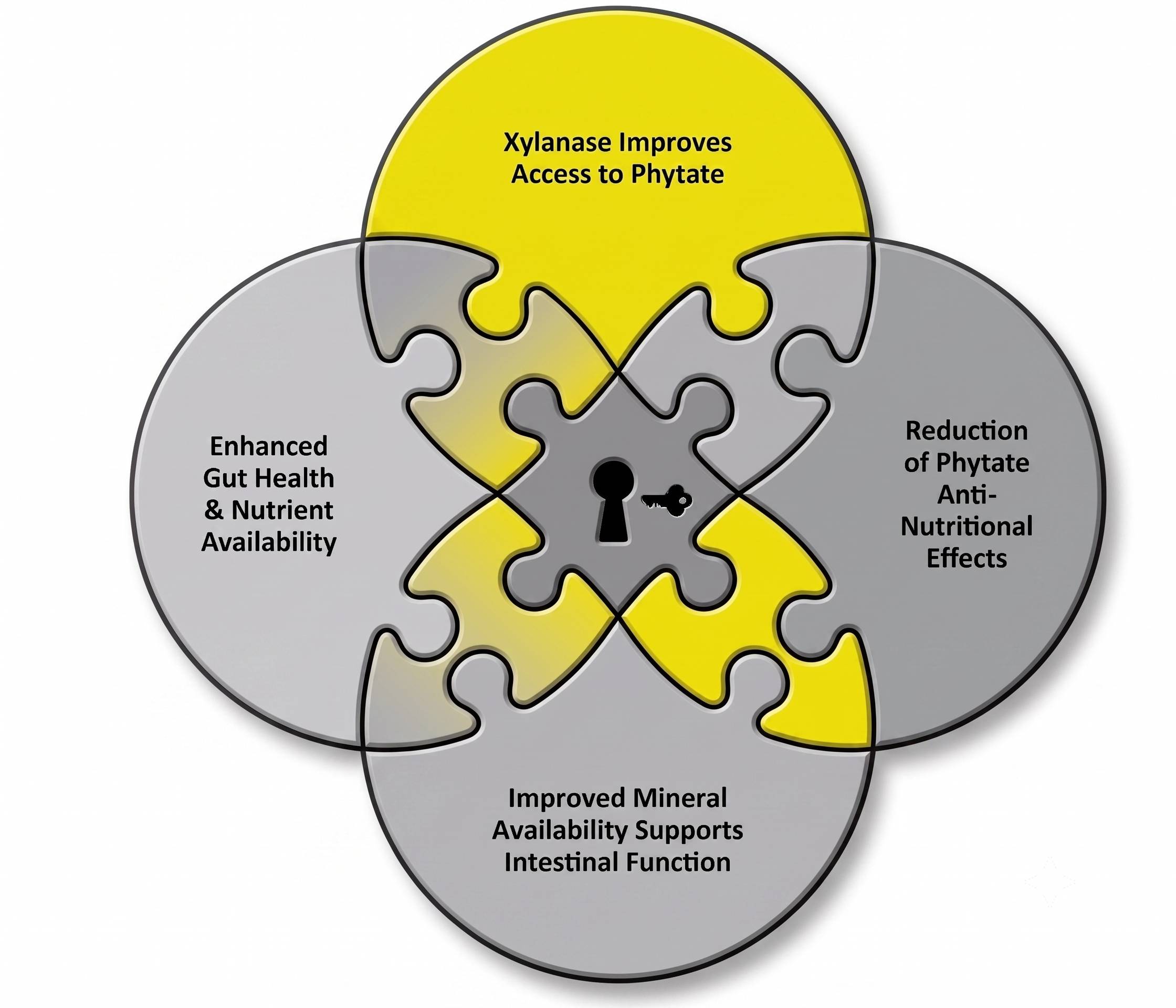
The biological relationship between phytase and xylanase can be viewed as a sequential removal of nutritional barriers.
First, xylanase degrades cell-wall arabinoxylans, reducing nutrient encapsulation and improving access to intracellular nutrients, including phytate. Second, phytase hydrolyzes the newly accessible phytate, reducing its anti-nutritional effects and releasing phosphorus, minerals, amino acids, and myo-inositol. Third, the reduction in phytate-protein and phytate-mineral complexes improves digestive efficiency and may enhance the utilization of nutrients liberated through NSP degradation (Cowieson and Adeola 2005; Dersjant-Li et al. 2015)
Simultaneously, xylanase-generated XOS and AXOS may stimulate microbial fermentation, while phytase reduces phytate-mediated disruption of digestion and intestinal physiology. These complementary mechanisms create opportunities for additive or synergistic responses, particularly in diets rich in both phytate and NSP.
Mechanisms Underpinning Complementary and Synergistic Responses
1. Xylanase Improves Access to Phytate
A substantial portion of dietary phytate is physically associated with plant cell structures. By degrading cell walls and reducing encapsulation, xylanase can increase exposure of phytate molecules to phytase activity. This improves the likelihood of phytate hydrolysis occurring earlier and more completely during digestion (Cowieson and Adeola 2005; Bedford and Cowieson 2020).
In practical terms, xylanase opens cell wall structure and helps expose nutrients that phytase can then liberate.
2. Reduction of Phytate Anti-Nutritional Effects
Phytate binds proteins, amino acids, minerals, and endogenous digestive enzymes. When phytase degrades phytate:
Protein-mineral-phytate complexes are reduced.
Digestive enzymes operate more effectively.
Nutrients released by xylanase become more accessible and usable.
Consequently, phytase may enhance the nutritional response obtained from NSP degradation (Adeola and Cowieson 2011; Dersjant-Li et al. 2015).
3. Improved Mineral Availability Supports Intestinal Function
Phytase increases the availability of phosphorus, calcium, zinc, and other minerals. Adequate mineral nutrition supports epithelial integrity, enzyme activity, skeletal development, and immune competence, thereby improving the animal’s ability to utilize nutrients released through xylanase activity (Dersjant-Li et al. 2015; Moita and Kim 2022).
4. Enhanced Gut Health and Nutrient Availability
Emerging evidence suggests that both enzymes exert functional effects beyond nutrient release.
Phytase has been associated with improved intestinal morphology, reduced anti-nutritional pressure from phytate, and enhanced nutrient utilization (Adeola and Cowieson 2011).
Xylanase has been associated with reduced intestinal viscosity, increased production of fermentable oligosaccharides, enhanced populations of beneficial bacteria, and greater short-chain fatty acid production (Courtin et al. 2008; Kiarie et al. 2013).
When combined, these effects may support a more resilient gastrointestinal ecosystem, particularly in young broilers and nursery pigs (Moita and Kim 2022).
Evidence of phytase and xylanase synergy in monogastric animals
A comprehensive review by Moita and Kim (2022) concluded that phytase and xylanase consistently improve nutrient digestibility and growth performance in both nursery pigs and broiler chickens. Importantly, the authors also highlighted emerging evidence that both enzymes may positively influence intestinal health, oxidative status, and microbial ecology, indicating that their benefits extend beyond simple nutrient release.
In poultry, phytase super-dosing programs have repeatedly demonstrated benefits beyond phosphorus release, while xylanase supplementation has been associated with improvements in energy utilization, gut health, and microbial fermentation. In swine, phytase improves phosphorus and calcium digestibility and reduces phytate-associated anti-nutritional effects, while xylanase contributes to improved utilization of cereal fiber fractions and supports intestinal function. Together, these mechanisms support the use of combined enzyme strategies in modern precision nutrition programs
Evidence in Broilers
Broilers represent one of the best-documented examples of multi-enzyme benefits.
Numerous studies have shown independent improvements from phytase and xylanase supplementation in average daily gain, feed conversion ratio, phosphorus digestibility, amino acid digestibility, metabolizable energy, and bone mineralization (Ravindran 2013; Adeola and Cowieson 2011).
From a mechanistic perspective:
Xylanase opens cell-wall structures.
More intracellular phytate becomes accessible.
Phytase hydrolyzes phytate more effectively.
Greater quantities of phosphorus, amino acids, and energy become available.
The resulting response is often greater than would be expected from either enzyme alone (Cowieson and Adeola 2005).
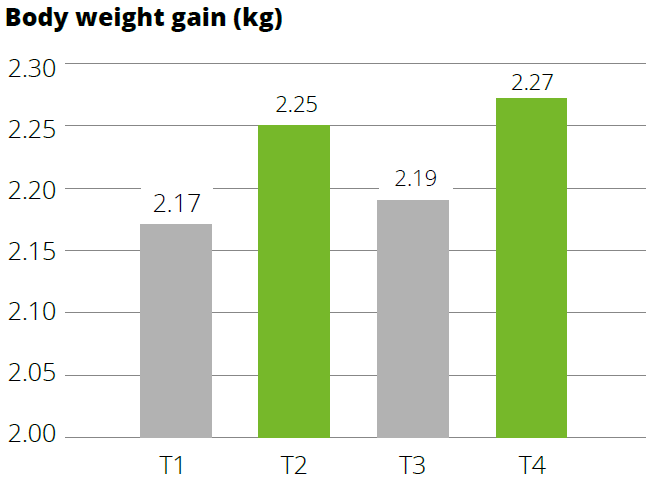
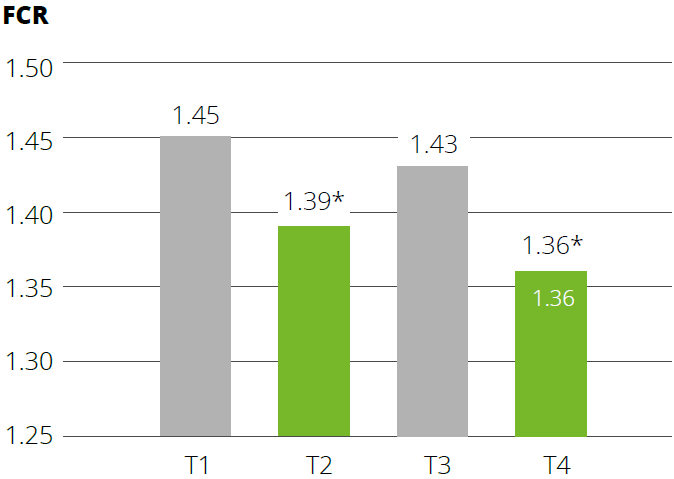
The beneficial effects of Axxess XY, a novel xylanase, even with phytase superdosing (5000 FTU/g at 150 g/ton dose), were observed in a broiler trial with corn-soy-rice and rapeseed meal-based diets pelleted at 85 °C for 60 sec. In this study, Axxess XY improved broiler performance compared to the control group (Fig.2) through its ability to break down both soluble and insoluble arabinoxylans, even with varying levels of broken rice alongside corn and soy and improves the digestion and utilization of nutrients.
Fig.2: Axxess XY improved broiler body weight and FCR with Phytase superdose
T1: Control low (corn, soy diet with low inclusion of rice), T2: T1 + Axxess XY – 100 ADXU/Kg of feed, T3: Control High (corn, soy diet with high inclusion of rice), T4: T3 + Axxess XY – 100 ADXU/Kg of feed
Evidence in Laying Hens
Taylor et al. (2018) evaluated phytase and xylanase supplementation in wheat-barley-based layer diets and reported increased hen-day egg production, improved phosphorus digestibility, enhanced phytate degradation, and greater myo-inositol generation with increasing phytase inclusion.
Interestingly, xylanase improved feed efficiency when phytase was included at 300 FTU/kg, suggesting a functional interaction between the two enzymes (Taylor et al. 2018).
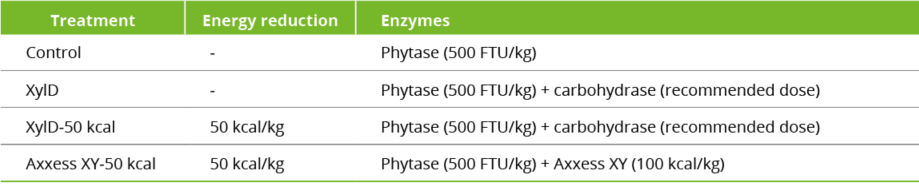
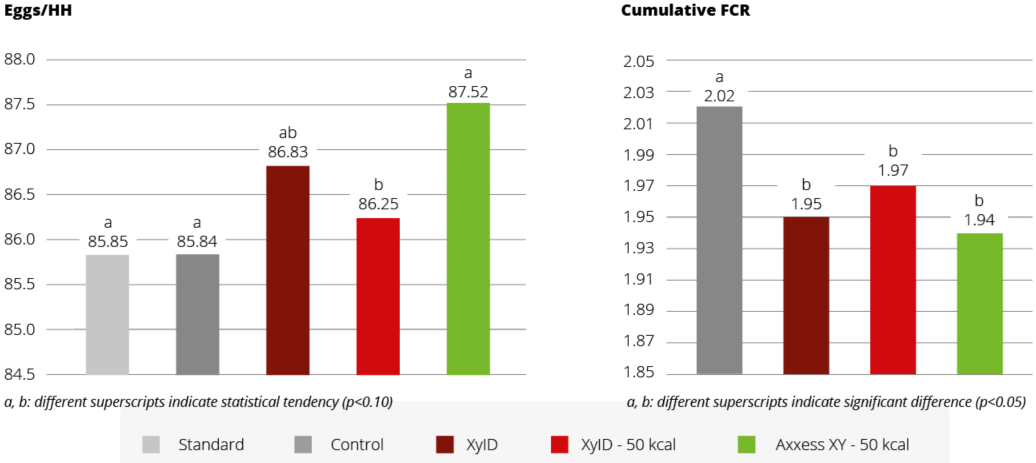
A commercial laying hen study with 23-week-old HyLine W-80 laying hens indicated that the inclusion of Axxess XY, a novel bacterial xylanase in the diet, and a reduction of 50 kcal/kg improved laying hen performance (Fig.3). All the diets in this study were supplemented with 500 FTU/kg phytase.
Fig.3: Axxess XY improved commercial layer performance in reduced energy corn-soy based diets.
For commercial layer operations, these findings suggest opportunities for:
Improve phosphorus utilization.
Support egg output and feed efficiency.
Reduce reliance on inorganic phosphate sources.
Lower nutrient excretion.
Evidence in Nursery and Growing Pigs
Historically, responses to NSP-degrading enzymes in pigs were considered less dramatic than in poultry because pigs possess a longer digestive tract and greater fermentative capacity (Ravindran and Son 2011).
However, recent research has demonstrated substantial benefits from both phytase and xylanase, particularly in nursery pigs. Phytase supplementation has been associated with improved phosphorus and calcium digestibility, enhanced growth performance, increased myo-inositol availability, and favorable modulation of intestinal microbiota (Moita and Kim 2022).
Similarly, xylanase supplementation has been associated with improved nutrient digestibility, enhanced fiber utilization, and beneficial shifts in gut microbial populations (Moita and Kim 2022).
The review by Moita and Kim (2022) concluded that phytase and xylanase contribute not only to nutrient digestibility and growth performance but also to improved intestinal health and microbiome function in nursery pigs and broiler chickens.
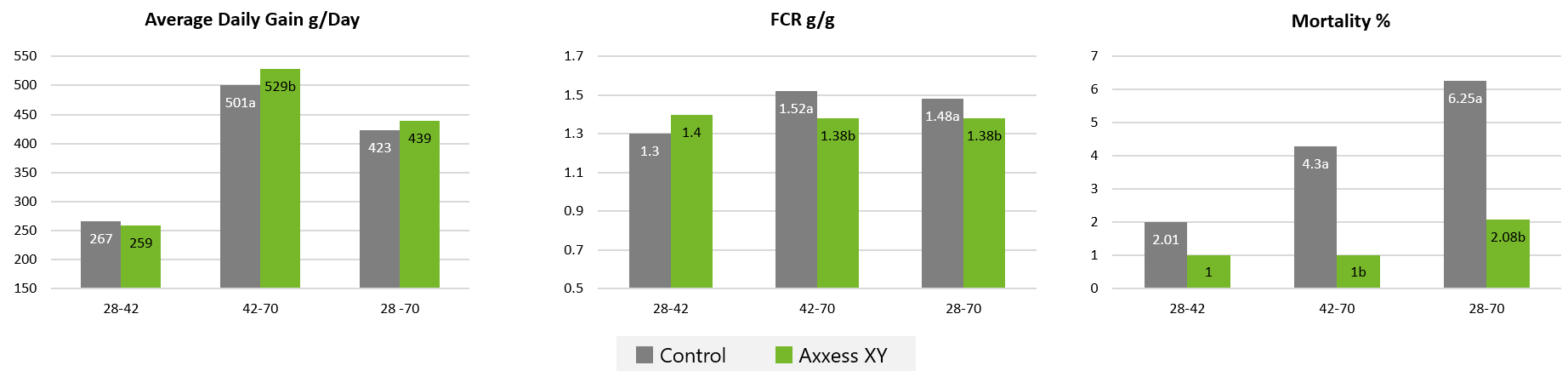
EW Nutrition trial results (Fig.4) demonstrated that piglets receiving Axxess XY showed a 14-point improvement in FCR between 43 and 70 days of age, resulting in a 10-point improvement in overall FCR compared to the control group. Higher average daily gain (ADG) during days 28–70 resulted in slightly higher overall daily weight gain at the end of the trial. Moreover, mortality was 4 percentage points lower in the Axxess XY group (2.08%) than in the control group (6.25%). Throughout the trial, piglets supplemented with Axxess XY demonstrated higher daily gain in the second phase and lower feed intake throughout the study, resulting in improved FCR. Additionally, mortality was lower in the Axxess XY group. All diets were supplemented with standard phytase at 500 FTU/kg.
Fig.4: Axxess XY improved piglet performance with phytase in the background
Practical Applications
The strongest justification for combining phytase and xylanase occurs when diets contain:
Alternative raw materials and by-products.
Reduced phosphorus specifications.
Reduced energy formulations.
Young animals with immature digestive capacity (Ravindran and Son 2011; Ravindran 2013).
Under these conditions, the combination often delivers greater economic value than either enzyme alone.
Economic and Sustainability Benefits
The combined use of phytase and xylanase can contribute to lower feed costs through matrix application, reduced inorganic phosphorus inclusion, improved feed conversion, and greater ingredient flexibility (Bedford and Cowieson 2020).
From an environmental perspective, improved nutrient digestibility translates into lower phosphorus and nutrient excretion, helping producers reduce the environmental footprint of poultry and swine production (Ravindran and Son 2011; Moita and Kim 2022).
Conclusion
Phytase and xylanase address different but interconnected anti-nutritional constraints in poultry and swine diets. Xylanase reduces cell-wall barriers and nutrient encapsulation, while phytase hydrolyzes phytate and releases phosphorus, essential minerals, amino acids, and energy.
The available evidence supports a predominantly complementary relationship between these enzymes, with synergistic responses frequently observed when nutrient accessibility limits phytase activity or when phytate constrains the utilization of nutrients released through NSP degradation.
For broilers, laying hens, and nursery pigs, the combination can improve nutrient digestibility, feed efficiency, gut function, mineral utilization, and sustainability outcomes. As feed formulations increasingly incorporate alternative ingredients and tighter nutrient specifications, the strategic use of phytase and xylanase together will remain a cornerstone of precision nutrition.
References:
Adeola, O., and A. J. Cowieson. 2011. “Opportunities and Challenges in Using Exogenous Enzymes to Improve Nonruminant Animal Production.” Journal of Animal Science 89 (10): 3189–3218.
Bedford, M. R., and A. J. Cowieson. 2020. “Matrix Values for Exogenous Enzymes and Their Application in the Real World.” Journal of Applied Poultry Research 29 (1): 15–22.
Courtin, C. M., W. F. Broekaert, K. Swennen, O. Lescroart, O. Onagbesan, J. Buyse, E. Decuypere, and J. A. Delcour. 2008. “Dietary Inclusion of Wheat Bran Arabinoxylooligosaccharides Induces Beneficial Nutritional Effects in Chickens.” Cereal Chemistry 85: 607–613.
Cowieson, A. J., and O. Adeola. 2005. “Carbohydrase, Protease and Phytase Have an Additive Beneficial Effect in Nutritionally Marginal Diets for Broiler Chicks.” Poultry Science 84: 1860–1867.
Cowieson, A. J., P. Wilcock, and M. R. Bedford. 2011. “Super-Dosing Effects of Phytase in Poultry and Other Monogastrics.” World’s Poultry Science Journal 67 (2): 225–236.
Dersjant-Li, Y., A. Awati, H. Schulze, and G. Partridge. 2015. “Phytase in Non-Ruminant Animal Nutrition: A Critical Review on Phytase Activities in the Gastrointestinal Tract and Influencing Factors.” Journal of the Science of Food and Agriculture 95 (5): 878–896.
Lei, X. G., J. D. Weaver, E. Mullaney, A. H. Ullah, and M. J. Azain. 2013. “Phytase, a New Life for an ‘Old’ Enzyme.” Annual Review of Animal Biosciences 1: 283–309.
Moita, V. H. C., and S. W. Kim. 2022. “Nutritional and Functional Roles of Phytase and Xylanase Enhancing the Intestinal Health and Growth of Nursery Pigs and Broiler Chickens.” Animals 12 (23): 3322.
Ravindran, V. 2013. “Feed Enzymes: The Science, Practice and Metabolic Realities.” In Feed Enzymes, edited by M. R. Bedford and G. G. Partridge. Wallingford, UK: CAB International.
Ravindran, V., and J.-H. Son. 2011. “Feed Enzyme Technology: Present Status and Future Developments.” Recent Patents on Food, Nutrition and Agriculture 3 (2): 102–109.
Taylor, A. E., M. R. Bedford, S. C. Pace, and H. M. Miller. 2018. “The Effects of Phytase and Xylanase Supplementation on Performance and Egg Quality in Laying Hens.” British Poultry Science 59 (5): 554–561.
Wyss, M., R. Brugger, A. Kronenberger, R. Rémy, R. Fimbel, G. Oesterhelt, et al. 1999. “Biochemical Characterization of Fungal Phytases (Myo-Inositol Hexakisphosphate Phosphohydrolase): Catalytic Properties.” Applied and Environmental Microbiology 65 (2): 367–373.
Yu, S., A. Cowieson, C. Gilbert, P. Plumstead, and S. Dalsgaard. 2012. “Interactions of Phytate and Myo-Inositol Phosphate Esters (IP1–5), Including IP5 Isomers, with Dietary Protein and Iron and Inhibition of Pepsin.” Journal of Animal Science 90 (6): 1824–1832.
El Nino is back, and it could break records
What could a possible super El Nino mean for weather, crops, and livestock through 2026 and 2027?
El Nino is the warm phase of a natural climate cycle in the Pacific Ocean called the El Nino-Southern Oscillation, or ENSO. The cycle has three states: El Nino (warm), La Nina (cool), and neutral (in between).
In a normal year, steady trade winds blow east to west across the equatorial Pacific, pushing warm surface water toward Asia and Australia. During El Nino, those winds weaken. Warm water sloshes back toward the eastern Pacific and the coast of South America, releasing heat into the atmosphere. That extra heat shifts the path of the jet streams, the high-altitude air currents that steer storms. The result is a global reshuffling of where rain falls and where it does not, and the pattern can last a year or more.
The current event followed an unusually fast handoff from La Nina. NOAA officially declared El Nino on June 11, 2026, when it issued an El Nino Advisory, and forecasters expect the event to keep strengthening into the Northern Hemisphere winter, when El Nino is typically at its peak.
How strong, and how likely
Forecasters are unusually confident this time. NOAA’s Climate Prediction Center puts the odds of a very strong event during the November 2026 to January 2027 peak at about 63 percent. Strength is measured by how far sea surface temperatures in a key central Pacific zone rise above their long-term average; NOAA now tracks this with the Relative Oceanic Nino Index (RONI), which adjusts for broad tropical warming. NOAA classifies an event as very strong, the level some meteorologists informally call a super El Nino, when that figure exceeds 2.0 degrees Celsius. A very strong event would rank among the largest in the record going back to 1950. Note: The WMO cautions that terms like super El Nino are not official designations and can overstate a still-uncertain forecast.
The European Centre for Medium-Range Weather Forecasts (ECMWF) is more aggressive still. Its central projection has central Pacific sea surface temperatures climbing to roughly 3ºC above average by December, with some model runs exceeding 4ºC. If even the central figure verifies, the event would surpass the two joint record holders: 2015-16, which peaked near 2.6ºC, and 1997-98, near 2.4ºC.
The probabilities forecasters are citing:
About 63 percent chance of a very strong event at the winter peak (NOAA Climate Prediction Center).
An 80 percent chance that El Nino conditions emerge during June to August 2026, rising to near or above 90 percent through September to December (World Meteorological Organization, June 2 alert).
An ECMWF central scenario near 3ºC above average, with high-end model runs above 4 degrees.
A late shift in the trade winds could still soften the peak, and a stronger event makes big impacts more likely without guaranteeing them. Human-caused warming also appears to be making the swings between El Nino and La Nina faster, which may push this event into territory with no clean historical match.
Likely weather impacts, region by region
El Nino does not bring the same weather everywhere. Its effect is a redistribution of heat and moisture, and what it means on the ground depends heavily on the region and the local crop calendar.
Atlantic hurricanes: El Nino usually increases wind shear over the Atlantic, which tends to suppress tropical storm formation. That often means fewer high-impact storms reaching the US Gulf Coast and Southeast.
United States winter: A persistent El Nino favors milder northern temperatures, fewer severe Arctic cold outbreaks, and a wetter, more active storm track across the southern states.
Europe: The rapidly developing strong El Niño is already amplifying extreme summer heatwaves across Western and Central Europe. For the upcoming autumn and winter of 2026–27, a “super” El Niño is projected to increase the likelihood of a disrupted polar vortex, potentially flipping historical patterns to bring warmer-than-normal conditions that build into spring 2027.
Southern Africa: The main concern is the 2026-27 rainy season, which starts around October 2026. This region historically sees below-average rainfall during El Nino, raising the risk of drought, water stress, and reduced grazing.
Latin America: Forecasts point to severe dryness across Central America, the Caribbean, and Colombia, alongside above-average rainfall in parts of Bolivia, Ecuador, and Peru.
Asia: A drier-than-normal monsoon across parts of South and Southeast Asia is a recurring El Nino feature, though week-to-week variation is large.
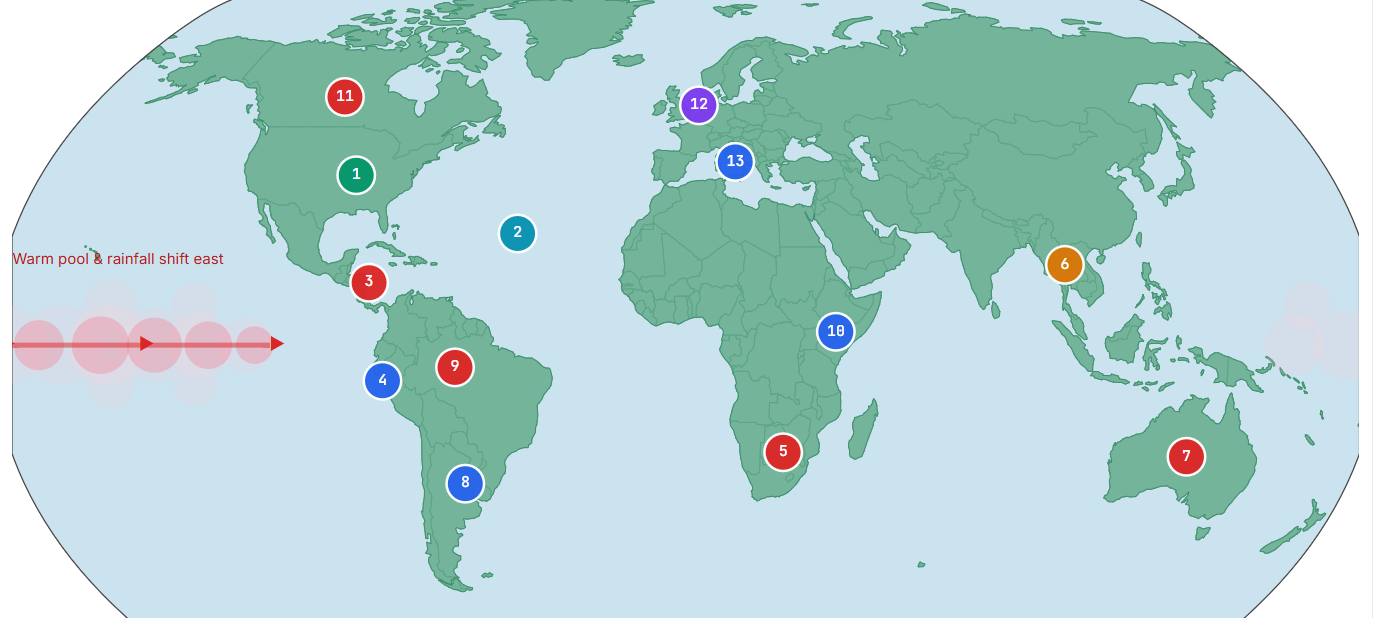
El Niño 2026–27Expected Regional Effects
A map of the climate shifts a strengthening El Niño tends to drive across agriculture, livestock
and severe-weather risk. Tropical and trade-wind teleconnections are well established; mid-latitude
effects - including Europe - are weaker and less certain, and are flagged accordingly.
ENSO status (mid-2026): NOAA's Climate Prediction Center placed the system under an
El Niño Advisory in June 2026 - El Niño conditions are present and are expected to strengthen
into the Northern Hemisphere winter of 2026–27. The Niño-3.4 index reached about +0.9 °C in May and
climbed above +1.5 °C by mid-June; the IRI/CPC model plume favours a strong, and quite possibly
very strong event (Niño-3.4 ≥ +2 °C) around its late-2026 peak. WMO and ECMWF seasonal
guidance concur that a significant event is the base case, while cautioning that exact peak intensity
remains uncertain.
During El Niño the equatorial trade winds weaken and the Pacific warm pool migrates eastward (shown in red), pulling tropical rainfall with it and rerouting the jet streams that carry these effects worldwide.
Confidence reflects how robust the El Niño signal is for each region:● High - consistent across events & models● Moderate - typical but variable● Low - weak signal, easily overridden
Regional impact details
Numbers correspond to the map markers.
Reading Europe correctly. El Niño's influence on European weather is indirect and largely
mediated by the North Atlantic Oscillation, so it is much weaker and less reliable than its tropical
teleconnections. The signals shown are tendencies that shift the odds, not deterministic forecasts -
and in any given season the NAO can override them entirely.
Expected regional effects of the 2026-27 El Nino. Effects are probabilistic and depend on local crop calendars.
What this means for agriculture
The agricultural picture is genuinely mixed. The headline risk is not a single bad harvest but the chance that a super El Nino hits several major crop regions at the same time, straining global food supply chains into 2027.
The potential upside
In the US Corn Belt, the transition from La Nina to El Nino skews cautiously positive. Wetter conditions across the southern US can ease drought, help winter wheat get established, and revive pastureland, with some forecasters expecting above-trend yields. However, a favorable ENSO state does not override local weather; it is a tilt in the odds, not a guarantee.
The potential downside
An active subtropical jet stream can swing between heavy rain and dry spells, raising the risk of waterlogged fields and localized flooding.
In Southern Africa, where the rainy season aligns badly with the forecast peak, the exposure is real: South Africa’s maize harvest fell about 22% to 12.9 million tons during the mild 2023-24 drought, and dropped far further in the severe 2015-16 event. The EU’s research bodies have repeatedly warned of reduced yields in parts of Angola, Mozambique, southern Madagascar, and Tanzania during El Nino, and of dryness threatening maize and rice across Central America and the Caribbean. Combined with elevated fuel and fertilizer costs, this raises the prospect of food price pressure through 2026 and 2027.
What this means for livestock
Livestock systems are exposed through two channels: direct heat and water stress on the animals themselves, and indirect pressure through feed costs and pasture availability.
Dairy cattle are the most heat-sensitive. Sustained heat stress cuts feed intake and milk output and degrades milk quality, because cows divert energy toward cooling themselves and eat less. A 2023 meta-analysis in the Journal of Dairy Science found heat stress lowered dry matter intake by 19.3 percent and energy-corrected milk by 17.9 percent, with reviews reporting yield losses above 20 percent at high temperature-humidity index. Higher-producing cows are the most vulnerable, since milk production itself generates metabolic heat.
Beef cattle eat less during extreme heat, which slows weight gain and reduces production efficiency.
Poultry and swine operations face higher feed costs and greater vulnerability to temperature extremes, all of which compress margins and increase health concerns and feed mycotoxin risks.
Pasture and rangeland in drought-exposed regions, especially Southern Africa and coastal Angola, face reduced forage and elevated risk of livestock losses in the 2026-27 season.
There is a partial offset in the Northern Hemisphere. A persistent El Nino winter that suppresses severe Arctic cold outbreaks across the northern US could reduce cold-stress disruptions to livestock operations and ease winter energy demand.
The bottom line
El Nino has arrived and has a real chance, around 63 percent, of becoming one of the strongest events on record. For agriculture and livestock, the most likely outcome is heightened volatility rather than uniform loss: a cautiously favorable US row-crop year set against drought risk in Southern Africa, Central America, and parts of Asia, with heat and feed-cost pressure squeezing dairy and intensive livestock margins worldwide. Because the impacts hinge on local crop calendars and on wind shifts that are still unfolding, the practical move is to treat current outlooks as an early-warning signal and update planning as shorter-range forecasts firm up.
Chen, L., Thorup, V.M. and Kudahl, A.B. (2024) ‘Effects of heat stress on feed intake, milk yield, milk composition, and feed efficiency in dairy cows: a meta-analysis’, Journal of Dairy Science, 107(5), pp. 3207–3218. Available at: https://www.journalofdairyscience.org/article/S0022-0302(23)01212-2/fulltext.
Environmental Stress and Mycotoxins in Breeders: Hidden Losses in Fertility, Egg Quality & Chick Output
Author: Dr. Vaibhav Gawande, Feed Safety and Toxin Control Specialist – South Asia, EW Nutrition
In Tropical countries like India, Bangladesh & Sri Lanka, high temperatures and humidity significantly increase the risk of mycotoxin contamination in animal feed. FAO surveys report mycotoxin contamination in over 70% of cereals and oilseeds used for animal feed, making them a major threat to poultry health and productivity.
The problem becomes particularly severe during the summer & monsoon when:
The new maize crop with high moisture enters the market
Drying is often inadequate
Feed mill humidity remains high
The Science of Mycotoxins & Environmental Risk
Summer temperatures (28–38°C) and high humidity promote fungal growth and mycotoxin production in feed ingredients.
Freshly harvested “new maize” often enters feed mills with unsafe moisture levels (13–15%), exceeding the safe storage limit of 11–12%.
High-moisture grain undergoes self-heating during storage, creating ideal conditions for fungal proliferation.
Poor aeration, condensation, insect damage, and humid storage environments further accelerate contamination.
Common summer mycotoxins include Aflatoxins, Ochratoxins, and T-2 toxins, which may develop during both pre- and post-harvest stages.
Although pelleting and heat treatment may destroy molds, mycotoxins are generally heat-stable and remain toxic to poultry.
Regional Case Studies: South Asia
India
Coastal Humidity Crisis – Andhra Pradesh, Telangana, Tamil Nadu, Odisha & West Bengal
Pre-monsoon humidity promotes Aspergillus flavus growth in stored maize.
Aflatoxin contamination commonly reduces shell quality and egg production.
Fatty Liver Hemorrhagic Syndrome (FLHS) is frequently observed.
Short-Storage Trap – Punjab & Haryana
Wet maize stored during summer heat retains internal moisture, favoring T-2 toxin and Ochratoxin formation.
Broilers commonly show oral lesions, feed refusal, and poor FCR.
Mixed Toxin Challenge – Maharashtra
Co-contamination with Aflatoxin and Fumonisin is common.
Combined toxicity causes immunosuppression, poor vaccine response, and increased mortality during disease outbreaks.
Bangladesh
High Humidity Feed Risk
Persistent humidity and post-flood harvesting increase moisture retention in maize and rice by-products.
Aflatoxin frequently co-occurs with Ochratoxin A.
Causes immunosuppression, uneven flock uniformity, and poor hatchability in breeders.
Sri Lanka
Tropical Storage Challenge
Tropical coastal humidity and prolonged ingredient storage favor fungal proliferation.
Aflatoxin and Fumonisin commonly develop during humid transit and storage.
Causes thin shells, liver damage, and poor FCR.
Nepal
Mountain Moisture Variability
Humid Terai grains stored in cool hill regions favor mixed mycotoxin contamination.
Aflatoxins commonly co-occur with DON and Zearalenone.
DON causes feed refusal, while Zearalenone induces prolapse and false layers.
Mycotoxins and High Temperature Humidity Index (THI): Synergistic effects on poultry health, immunity & productivity
The Immunological “Blackout”
Aflatoxins, Trichothecenes, and Ochratoxins inhibit protein synthesis, reducing the formation of antibodies and immune cells.
Mycotoxins cause atrophy of immune organs (bursa of Fabricius, thymus, and spleen)
Macrophage activity and phagocytosis are reduced, weakening bacterial clearance.
Cytokine signaling is disrupted, delaying immune activation against infections.
Enhanced oxidative stress: Mycotoxins increase the occurrence of reactive oxygen species (ROS), and heat stress weakens antioxidant defenses, resulting in severe cellular and liver damage.
Oxidative stress caused by aflatoxins and trichothecenes leads to immune cell apoptosis and tissue damage.
Gut Health & Barrier Damage
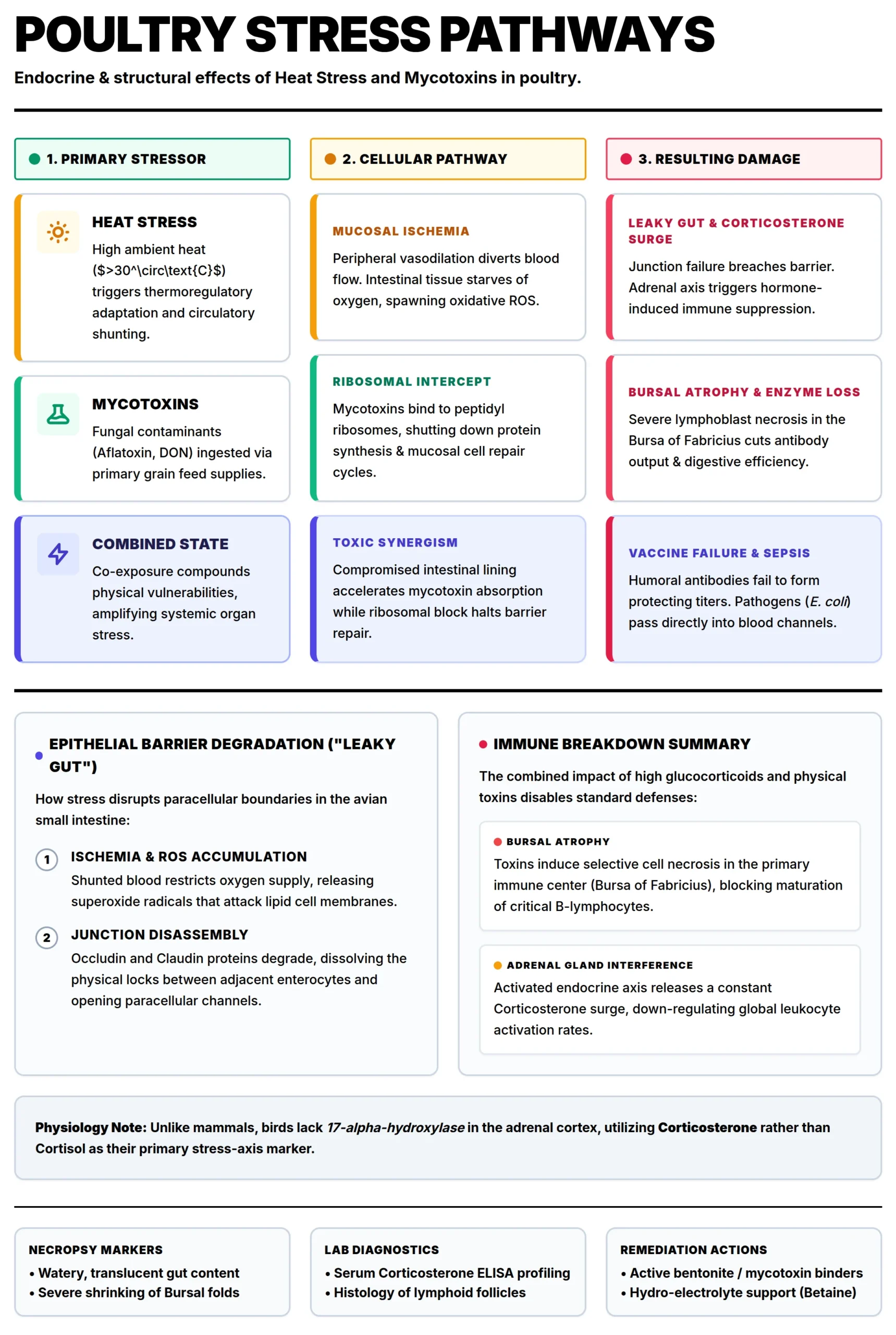
The gut is the first line of defense. Mycotoxins and heat stress act like a “chemical and physical abrasive” on the intestinal lining.
Villi Destruction: T-2 and Aflatoxins cause necrosis (cell death) of the intestinal villi. This reduces the surface area for nutrient absorption, leading to poor FCR.
The “Leaky Gut” Phenomenon: Heat stress causes blood to be diverted from the internal organs to the skin for cooling (vasodilation). As a result, the gut receives less oxygen, causing the tight junctions (the “glue” between intestinal cells) to break down and become permeable. Mycotoxins also have a direct effect, inhibiting tight junctions proteins.
Pathogen Entry: Mycotoxins further erode the protective mucus layer. With the “gates” (tight junctions) open and the “walls” (mucus) gone, bacteria can freely enter the bloodstream.
Disease Susceptibility
Because the immune system is “blind” and the gut is “leaky,” the bird becomes a target for opportunistic infections.
Secondary Bacterial Infections: Normal gut bacteria like E. coli and Salmonella transition from harmless to fatal, causing systemic septicemia.
Viral Synergism: Small viral loads, such as Inclusion Body Hepatitis (IBH) that a healthy bird would normally survive, become highly fatal.
Coccidiosis Flare-ups: Damaged gut linings are more easily colonized by Eimeria, making standard anti-coccidial programs less effective.
Vaccine Failure:
Mycotoxins suppress B-cell and T-cell maturation, reducing vaccine effectiveness.
Low immunoglobulin (IgG, IgA, IgM) production results in poor antibody titers.
Maternal toxin exposure reduces immunity transfer to chicks, increasing early-age disease vulnerability.
Figure 1: How mycotoxins and heat stress cause damage in poultry
Breeder Reproductive Dysfunction and Transgenerational Effects of Mycotoxins
In breeder operations, mycotoxins represent a catastrophic economic threat because they are vertically transmitted. Unlike commercial layers, where the loss is limited to the individual bird’s production, breeder contamination compromises the viability of the entire next generation.
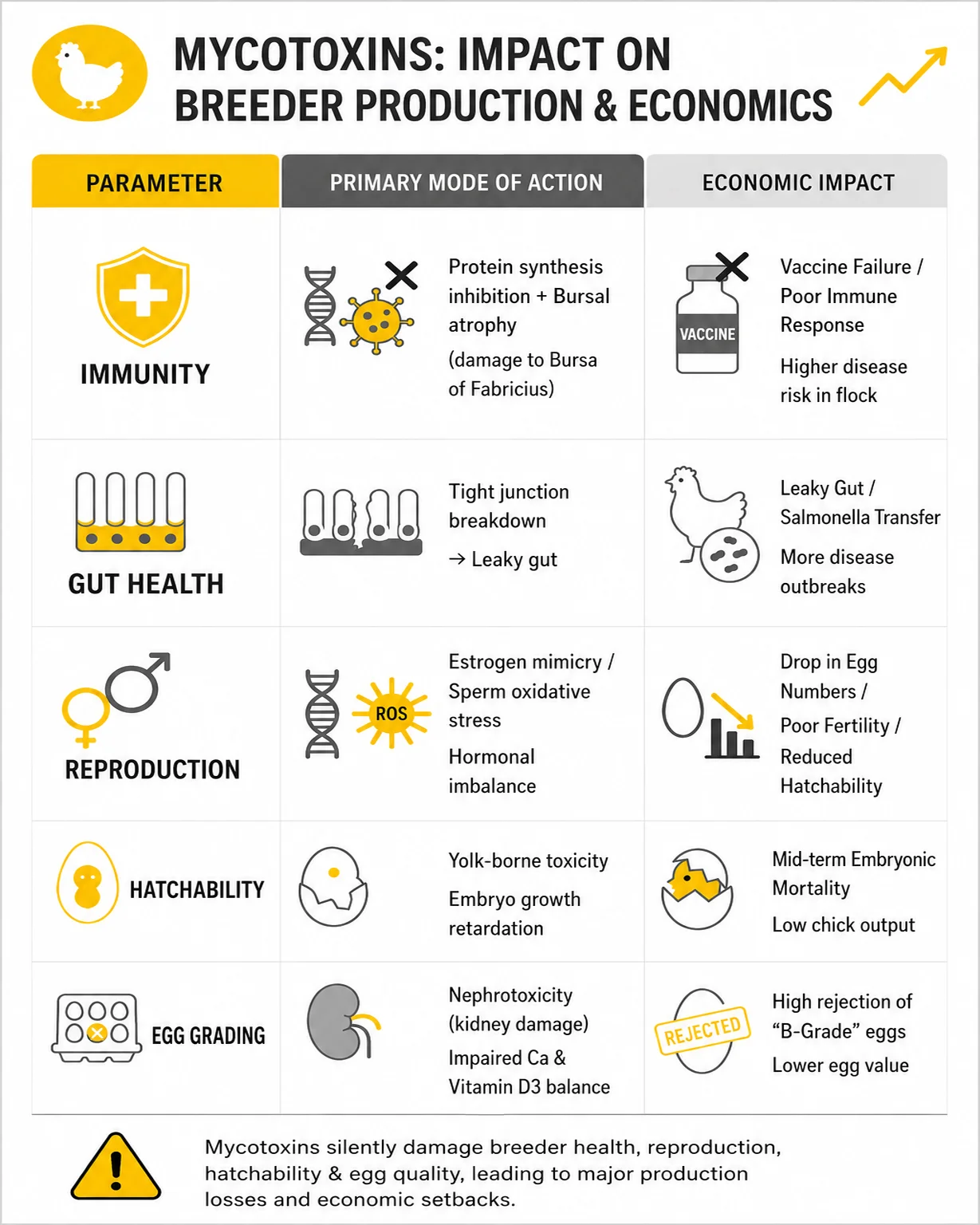
1. Impact on the Reproductive Systems (Male & Female)
Mycotoxins hit both sides of the fertility equation, often exacerbated by summer heat.
Female Reproductive System
Mode of action: Mycotoxins (especially Zearalenone) mimic estrogen. This disrupts the hypothalamic-pituitary-ovarian axis.
Impact: inflammation of the oviduct, cystic ovaries, and reduced synthesis of yolk precursors in the liver, resulting in a sharp drop in egg production and poor internal egg quality.
Male Fertility
Mode of action: Toxins like T-2 and Aflatoxin induce oxidative stress that damages the phospholipid membrane of sperm cells.
Impact: Under heat stress, rooster semen quality already declines; mycotoxins accelerate this by reducing sperm motility, concentration, and increasing morphological abnormalities. This leads to a massive spike in infertility rates.
2. Hatchability & Embryonic Mortality
For breeders, mycotoxins represent a “generational loss” via vertical transmission.
Mode of action (the yolk bridge): Some mycotoxins are highly lipophilic. As the liver assembles the yolk, it deposits toxins directly into the egg.
The “three-wave” mortality:
Early (Days 1–7): Toxins interfere with mitosis (cell division), leading to early deaths often mistaken for “infertility.”
Mid-Term (Days 8–18): As the embryo begins intensive absorption of the toxic yolk, its developing liver and kidneys are compromised. This is the classic “Toxin Fingerprint.”
Late (Days 19–21): Ochratoxins impair the embryo’s ability to mobilize calcium from the eggshell. As a result, the chick becomes too weak to pip and dies fully developed inside the shell (“dead-in-shell”).
3. Chick Quality, Grading, and Settability
The “Chick Quality” starts in the breeder’s gut and kidney health.
Mode of action (nutrient malabsorption): Mycotoxins reduce pancreatic lipase and bile salts. This prevents the mother from absorbing fat-soluble vitamins (A, D, E, K) and pigments. They also lead to lower intestinal adsorption due to a reduced absorption area and lower transporter efficacy.
Impact on chick quality:
“Pale Bird Syndrome”: Chicks lack vital carotenoids for early-stage defense.
Skeletal weakness: Interference with Vitamin D3 metabolism results in weak legs and “rubbery beaks” in Day-Old-Chicks (DOCs).
High first week mortality (FWM): Chicks hatch immunosuppressed, leading to high mortality during the first week.
Impact on egg grading & settability: Mycotoxins (Ochratoxin) are nephrotoxic, damaging the kidneys and disrupting the blood calcium-carbonate balance. This leads to “Sandpaper” shells, misshapen eggs, and a 5–10% drop in the number of settable eggs fit for the incubator.
Figure 2: The impact of mycotoxins on breeder production and economics
Pro tip for breeders: In summers, high-moisture new maize triggers a mycotoxin surge that synergistically destroys the breeder’s kidneys and shell gland, crippling egg settability. A 5% spike in “Dead-in-Shell” embryos during breakout analysis is a definitive indicator of feed toxicity rather than incubator failure.
Integrated Mycotoxin Mitigation Strategies for Poultry Production
To pursue an effective mycotoxin mitigation strategy, it is essential first to identify which mycotoxins are relevant to a given region before implementing measures.
Strict moisture control: Reject any maize arriving with >14% moisture.
Rapid screening: Perform rapid mycotoxin screening before unloading raw materials.
Mechanical grain driers: To maintain a safe storage moisture level (<12%)
2. Feed Plant & Storage Hygiene
First-In, First-Out (FIFO): Ensure strict inventory rotation to prevent “pockets” of old, moldy feed from contaminating new batches.
Frequently clean silos and elevators: High temperature and humidity cause moisture condensation on silo walls, leading to localized mold growth.
Antifungal Treatment: Use buffered organic acids (propionic and formic acid) to limit mold proliferation in feed.
3. Broad-Spectrum binders:
Bentonites (for Aflatoxins) and Yeast Cell Walls: These components help bind pathogenic bacteria like E. coli that capitalize on the “leaky gut” caused by toxins and heat stress.
4. Physiological & Gut Health Support
Water acidification: Lower the drinking water pH to 4.5–5.5. This prevents bacterial blooms in the water lines when birds increase water intake by 3 times during heat stress.
Liver & kidney tonics: Supplemental hepatic (milk thistle/silymarin) and renal support to help the bird metabolize and export toxins more efficiently.
Metabolite supplementation: Use 25-hydroxyvitamin D3 in breeder diets to bypass the liver/kidney damage and ensure shell quality remains intact.
Antioxidant boost: Increase levels of Vitamin E, C, and Selenium to counter the oxidative stress caused by the heat-toxin synergy.
5. Monitoring & Diagnostics
Hatchery breakout analysis: Monitor “dead-in-shell” embryos. A spike in mid-term mortality is an immediate indicator that the breeder feed toxin binder needs a dosage increase.
Frequent lab testing: Mycotoxin testing at least weekly during the new maize transition to identify the specific toxin profile.
Solutions are available to support toxin risk management
In the challenging climate where high-moisture “new maize” and summer humidity create a complex cocktail of mycotoxins, endotoxins, and pesticide residues, traditional, single-ingredient binders often fall short. Modern poultry production requires a proactive solution that does more than just “bind”; it must protect the bird’s internal integrity.
Solis Max – The effective myco- and endotoxin solution for sustained profitability
Solis Max is engineered to meet customers’ demand for an effective solution, offering a multi-pronged defense mechanism that targets the root causes of performance collapse. Solis Max uses a synergistic blend of five key components to ensure the flock’s safety.
Trials prove the effectiveness of Solis Max
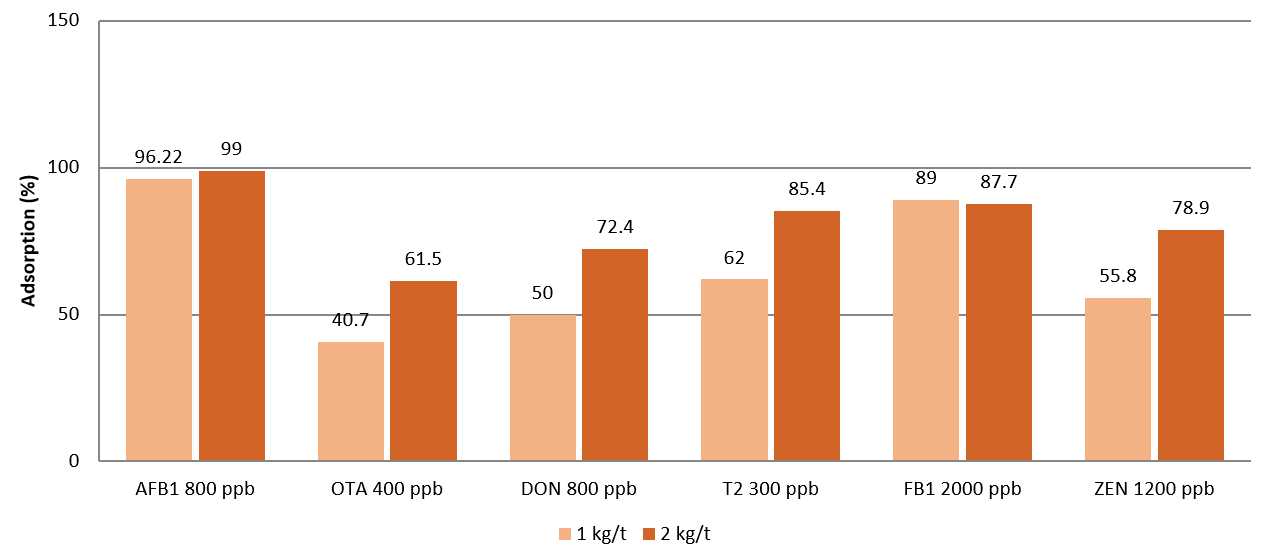
Solis Max shows dose-dependent adsorbing capacity against multiple mycotoxins:
Figure 4: Mycotoxin Binding Capacity Of Solis Max
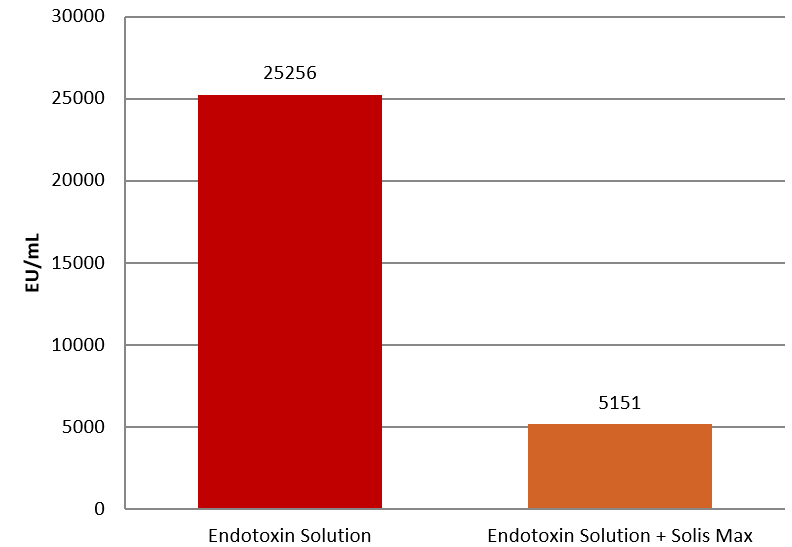
SOLIS MAX shows endotoxin adsorbing capacity – 1mg of SOLIS MAX absorbs 20 endotoxin units (EU) of E. coli endotoxin (80% adsorption rate):
Figure 5: Endotoxin Binding Capacity Of Solis Max
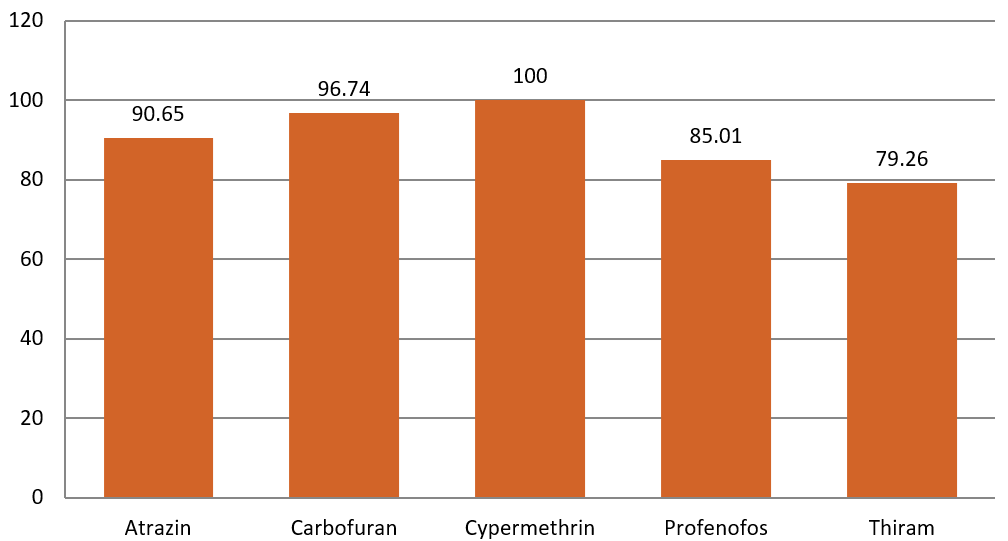
Solis Max demonstrates high pesticide binding efficiency across multiple compounds:
Figure 6: Pesticide Net Binding Capacity Of Solis Max (%)
Conclusion:
The convergence of a high Temperature–Humidity Index (THI) and mycotoxicosis represents a critical, multisystem challenge in poultry production, precipitating severe pathology across the hepatic, renal, and gastrointestinal systems. In breeding operations, this crisis exhibits a transgenerational impact: lipophilic mycotoxins are vertically transmitted to the yolk, inducing mid-term embryonic mortality and compromising post-hatch progeny immunity.
Mitigation demands stringent control of raw material moisture alongside advanced, broad-spectrum interventions. Utilizing an advanced multi-pronged solution like Solis Max counters this synergy by providing physicochemical adsorption and targeted organ protection. By neutralizing the concurrent threats of mycotoxins, endotoxins, and pesticides, it preserves cellular integrity, mitigates systemic pathology, and maintains optimal performance under extreme environmental stress.
References available upon request.
Mycotoxins & Poultry Egg Quality in Southeast Asia
Tran Si Trung, PhD EWN SEAP – Regional Technical Manager for Toxin Risk Management
1. Introduction
The global egg market is experiencing steady and robust growth, playing a vital role in food security and animal protein nutrition. According to reports from RaboResearch and the World Egg Organization, global egg production has more than doubled, rising from 46 million tonnes in 1995 to approximately 99 million tonnes in 2025. By 2035, the market is projected to expand by a further 22%, with an annual growth rate of approximately 2.0%. Asia leads with more than 64% of global output, with China and India being the largest producing countries. The global egg market value was estimated at USD 352 billion in 2025 and is expected to reach USD 585 billion by 2033, representing a CAGR of approximately 6.6%. This growth is driven by urbanization, rising incomes, demand for high-quality protein, and the widespread use of eggs in the processed food industry.
In Vietnam, the poultry industry has expanded rapidly and become one of the pillars of the agricultural sector. In 2023, poultry egg production reached approximately 19.22 billion eggs. In 2024, this figure exceeded 20 billion eggs, with chicken eggs accounting for the dominant share. Per-capita egg consumption rose from 108 eggs per year in 2017 to approximately 185–190 eggs per year in 2024, though this remains below the average of many other countries (300–350 eggs). In the near term, despite limited exports, domestic consumption is fairly stable, and the sector has the potential to achieve a value of USD 3 billion. Alongside these opportunities, the industry also faces challenges such as occasional local oversupply, price volatility, disease outbreaks, and food quality and safety issues. Among these, mycotoxins can be regarded as one of the most silent yet serious threats to egg quality and consumer health.
The principal mycotoxins include aflatoxins (AFs), ochratoxin A (OTA), zearalenone (ZEN), deoxynivalenol (DON), fumonisins (FBs), and T-2 toxin. These compounds form in feed raw materials — including maize, wheat, soybean, groundnut, and other oil seeds — under field stress conditions or during storage under inadequate conditions. In the tropical humid climates of Vietnam and much of Southeast Asia, the risk of natural contamination is particularly elevated. Mycotoxins not only reduce livestock productivity (organ damage, immune suppression, etc.) but also directly affect egg quality, nutritional value, and toxin residue levels in eggs, thereby impacting both the economic value of the product and consumer health.
2. Key Aspects of Egg Quality
Egg quality is typically assessed across multiple dimensions: external appearance (clean, intact shell, uniform shape and color), internal quality (albumen height, yolk color, Haugh unit score), nutritional value (high protein ~12–13%, lipids, vitamins A/D/E, carotenoids, choline, lutein), and food safety (freedom from microbiological contamination, antibiotic residues, mycotoxin residues, and heavy metals).
Key technical parameters include: egg weight and grade (AA, A, B); shell thickness and strength; Haugh unit (reflecting albumen freshness); yolk color (Roche scale or DSM Yolk Fan); air cell size; and absence of blood spots (meat spots). High quality ensures commercial value, shelf life, and nutritional benefit to the consumer.
Each of these quality dimensions (shell integrity, albumen height, yolk color, and residue status) is, to varying degrees, susceptible to mycotoxin insult, as the following section demonstrates.
3. Adverse Effects of Mycotoxins on Egg Quality and Value
Mycotoxins cause harm through multiple mechanisms: hepato-renal toxicity, hormonal disruption, oxidative stress, intestinal damage (reduced nutrient absorption), immune and enzyme suppression. Effects are often evident at relatively low concentrations (20–500 ppb depending on the toxin type) and are amplified when multiple mycotoxins are present simultaneously. Field surveys across Asia consistently demonstrate that co-contamination, the presence of two or more mycotoxins in a single feed ingredient or complete diet, is the norm rather than the exception, particularly in maize-based diets during wet-season harvests. Effective risk management must therefore address the full toxin spectrum rather than individual contaminants in isolation.
Mycotoxin
Main Feed Substrates
Primary Mechanism(s)
Key Effects on Egg Quality
Aflatoxins (AFs/AFB1)
Maize, groundnut, soybean, cottonseed
Hepatotoxicity; oxidative stress; Ca & Zn absorption inhibition
↓ Feed intake (oral lesions); ↓ Haugh unit (especially combined with DON); ↓ eggshell quality
Table 1. Overview of principal mycotoxins, their main feed substrates, primary mechanisms of action, and key effects on poultry egg quality.
3.1. Reduced Laying Performance
AFs and OTA can reduce laying rate by 5–10% at field-relevant dietary concentrations, with greater reductions reported under conditions of more severe or prolonged contamination. ZEN, acting as a potent estrogen mimic, disrupts the hypothalamic-pituitary-gonadal (HPG) axis, reducing FSH, LH, and progesterone levels, thereby impairing follicular development and ovarian function. DON and FBs cause intestinal inflammation and reduced nutrient absorption. T-2 toxin can cause ulcerative lesions of the oral mucosa or gizzard, thereby reducing feed intake or impairing gizzard motility and feed digestion.
3.2. Impact on Eggshell Quality
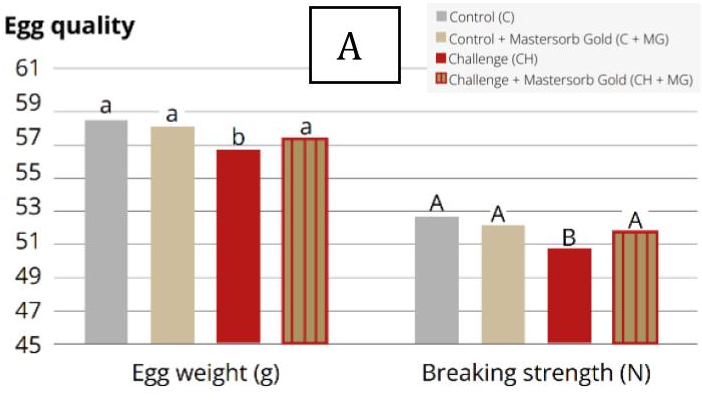
Mycotoxins in general can reduce eggshell thickness and strength by inhibiting calcium absorption, vitamin D3 utilization, and carbonic anhydrase activity (zinc-dependent). In particular, AFs may induce secondary zinc deficiency through liver damage. OTA has been associated with increased incidence of cracked, thin, misshapen, and urate-spotted eggs. Experimental studies have shown that DON can reduce eggshell breaking strength by 10–15% under controlled conditions.
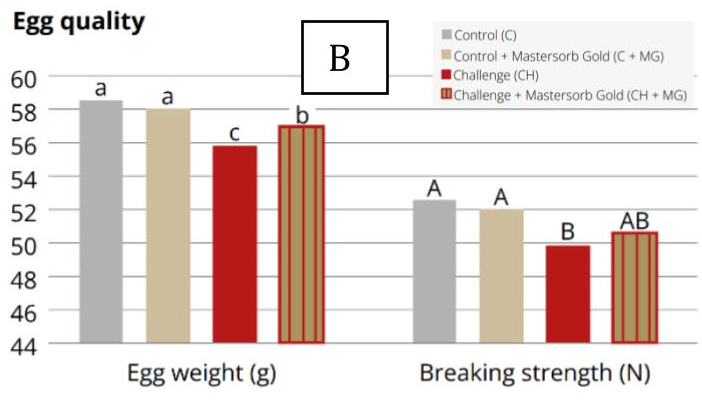
Figure 1. Egg quality parameters of laying hens challenged with (A) 100 ppb AFB1 & 9,000 ppb fumonisins and (B) 1,400 ppb DON & 300 ppb T-2 toxin, with and without in-feed Mastersorb Gold. Significant differences (p<0.05) indicated by lowercase letters; statistical tendencies (p<0.1) by uppercase letters.
3.3. Impact on Internal Egg Quality
Research conducted at Kasetsart University (Thailand) demonstrates that DON and T-2 toxin can reduce albumen height and Haugh unit scores at relatively low dietary concentrations (Tables 2 and 3). Additionally, experimental data indicate that DON can impair yolk carotenoid content and yolk color score, diminishing both antioxidant value and visual appeal, at dietary concentrations as low as 2,500 ppb.
Table 2. Egg quality parameters of laying hens challenged with 100 ppb AFB1 & 9,000 ppb FB1, with and without in-feed Mastersorb Gold.
Table 3. Egg quality parameters of laying hens challenged with 1,400 ppb DON & 300 ppb T-2 toxin, with and without in-feed Mastersorb Gold.
3.4. Residues and Food Safety
After mycotoxins are absorbed, the host begins detoxification and excretion processes, while organ damage simultaneously occurs. Detoxification is primarily carried out by the liver, and accumulation occurs mainly in the liver and kidneys. However, accumulation in other tissues, including meat and eggs, has also been documented. AFB1 and its liver-derived metabolites, including AFM1, have been detected in eggs at transfer rates of approximately 0.05% of the dietary AFB1 intake; OTA transfers at ~0.15%; T-2 at ~0.10%; while DON, FB1, and ZEN transfer at lower rates.
3.5. Economic and Indirect Impacts
While ZEN is considered to have limited impact on commercial broiler performance, the situation is markedly different for breeder flocks. Acting primarily through its active hepatic metabolite α-zearalenol (α-ZOL), which has a higher affinity for estrogen receptors than the parent compound, ZEN may reduce fertility (impaired semen quality in roosters) and hatchability (increased embryo mortality, reduced chick quality at hatch). More broadly, mycotoxins negatively affect animal health, growth performance, and egg quality, leading to increased culling and veterinary costs, as well as lower selling prices for substandard eggs. As a concrete example, with Vietnam producing more than 20 billion eggs per year, even a 1–2% reduction in productivity or egg quality could translate into losses of tens of millions of USD annually – a scale of impact applicable across every major egg-producing nation in the region.
4. Key Considerations for Mycotoxin Risk Management
Managing mycotoxin risks requires an increasingly comprehensive and integrated approach. The “3F – from Feedmill, Farm to Fork” process is an integrated management framework developed by EW Nutrition in the region to prevent, trace, and mitigate mycotoxin-related risks for poultry producers and egg manufacturers.
4.1. Prevention at Source (Feedmill)
Upon raw material intake: conduct sensory inspection, then perform proper sampling and test for mycotoxins using rapid test strips or ELISA.
Storage: pay close attention to ambient relative humidity and temperature in warehouses/silos, as these two factors directly influence the moisture content and water activity (Aw) of stored materials, creating favorable conditions for the growth of Aspergillus spp. and/or Penicillium spp. (mold species capable of producing mycotoxins such as AFs, OTA, citrinin, patulin, etc. during storage). As practical targets: keep grain moisture below 14% for maize and wheat (below 10% for groundnut meal); Aspergillus spp. can proliferate at Aw ≥ 0.80, while Penicillium spp. remain active at Aw ≥ 0.78; maintaining Aw below these thresholds is the single most effective storage intervention.
Finished feed samples from each batch must be properly collected and analyzed for multiple mycotoxins using ELISA or chromatographic methods (HPLC, LC-MS/MS, etc.). Retained samples should be stored under cool, dry conditions for a minimum of two weeks to enable analysis and traceability in the event of a subsequent incident.
Periodically inspect hygiene of storage facilities and equipment (e.g., mixer, cooler, feed transport trucks from feedmill to farm).
Develop preventive strategies against the adverse effects of mycotoxins on the health and performance of commercial laying hens, including supplementation with broad-spectrum solutions (Mastersorb Gold, etc.) adsorbing a diverse range of toxins and providing antioxidant support to mitigate oxidative stress.
4.2. Prevention at Farm Level
Establish a routine hygiene monitoring program for housing facilities, particularly feed storage areas/silos and associated equipment (e.g., automated feeders, egg and manure conveyors, etc.).
Feed samples from each batch at the farm level should also be properly collected and retained (under cool, dry conditions) for a minimum of two weeks for analysis and traceability should any subsequent issue arise.
When animal health or performance issues arise and mycotoxicosis is suspected, in complement to analyzing retained feed samples, the analysis of mycotoxin residues in Dried Blood Spots (DBS), a technique developed by EW Nutrition and its partner, can be a valuable complementary measurement to make a diagnosis.
4.3. Food Safety at the Table (Fork)
Vietnamese Standard TCVN 1858:2018 stipulates that commercial chicken eggs must be clean, uncracked, undistorted, and free from spoilage; air cell depth must not exceed 6 mm (depending on grade); yolk must not be visibly off-center; and no off-odors are permitted. Eggs are graded based on both external and internal quality criteria. Additionally, Circular 34/2012/TT-BNNPTNT and food safety and hygiene regulations require traceability, Salmonella control, and monitoring of specific residues. The national technical regulation QCVN 01-190:2020/BNNPTNT on animal feed sets maximum limits for mycotoxins in feed raw materials. While Vietnam serves as a concrete example, analogous frameworks are in place across Southeast and South Asia, with many producers also referencing the Codex Alimentarius maximum levels for aflatoxins in food (4 µg/kg total AFs; 2 µg/kg AFB1) and EU feed maximum limits as de facto benchmarks for export-oriented operations.
According to the International Agency for Research on Cancer (IARC), AFB1 is classified as a Group 1 carcinogen (carcinogenic to humans), while OTA, AFM1, and FB1 are classified as Group 2B (possibly carcinogenic to humans). It is of particular concern that these mycotoxins are also highly heat-stable, they are not destroyed by cooking or standard food processing temperatures. Consequently, their residues in eggs represent an important aspect to be monitored and controlled before eggs reach the consumer’s table.
5. Conclusion
Mycotoxins are a critical factor affecting egg quality across all dimensions – external appearance, internal quality, food safety, and economic value. In the context of Vietnam’s egg industry, and the broader dynamic growth of egg production across Southeast and South Asia, moving toward modernization and export competitiveness, mycotoxin control is not merely a loss-reduction measure, but a strategy for sustainable competitive advantage. The sector requires close collaboration among feed manufacturers, poultry and egg producers, regulatory authorities, and scientific researchers to turn these challenges into opportunities for development.
In line with this broader direction, EW Nutrition has developed and is actively supporting the implementation of the integrated 3F Management Process (from Feedmill, Farm to Fork), grounded in scientific evidence and technology, to help protect poultry flocks, enhance egg quality, and ensure consumer safety across the region.
About the Author
Dr. Tran Si Trung holds PhD degrees in Food Safety & Quality in France and serves as Regional Technical Manager for Toxin Risk Management at EW Nutrition, Southeast Asia and Pacific. He specializes in mycotoxin risk assessment and feed quality management. For further information or technical inquiries, please contact EW Nutrition Vietnam.
Ionophores: An Overlooked Risk for the Spread of Medically Relevant Antibiotic Resistance
Author: Dr. Inge Heinzl, Editor EW Nutrition
Antibiotic resistance is one of the biggest threats to global health today. When bacteria become resistant to antibiotics, infections that were once easily treatable can become deadly. For decades, the discussion surrounding the causes of antimicrobial resistance (AMR) has primarily focused on the misuse of antibiotics in human medicine and agriculture. But some antibiotics have escaped critical scrutiny—until now.
Ionophores, a special group of antibiotics
Ionophores are a group of antibiotics used as feed additives in ruminants and pigs as growth promoters and in poultry as anticoccidials since the early 1970s (Chapman et al., 2010). They are among the most widely used classes of antibiotics in animal production. In the US, e.g., more than 4 million kilograms were sold in 2016 (Wong, 2019).
Unlike many other antibiotics, ionophores are not used in human medicine because of their toxicity. For this reason, regulators have often assumed that ionophores pose little to no threat to human health. In North America, for example, ionophores are officially classified as having low or no importance for human medicine, which means their use is less strictly regulated than antibiotics that are directly relevant for human health.
However, new scientific findings challenge this assumption. A research team led by Asalia Ibrahim (2025) has provided compelling evidence that the use of ionophores in agriculture may indirectly contribute to the spread of resistance to antibiotics crucial for treating human infections.
What did the researchers discover?
The researchers focused on two specific genes, narA and narB, transporters which enable Enterococcus faecium to resist ionophores like narasin, salinomycin, and maduramicin. Initially, these genes were found in bacteria isolated from Swedish broiler chickens AND on the same plasmid as vancomycin resistance genes (Nilsson et al., 2012). More recent studies have identified the NarA and NarB genes in other countries as well, raising questions about their global distribution and their connection to resistance to medically important antibiotics.
To investigate, Asalia Ibrahim (2025) analyzed publicly available genome data from the NCBI Pathogens database, a massive resource that collects bacterial genome sequences from around the world. They identified more than 2,400 bacterial isolates from 51 countries that carry both narA and narB. The bacteria were found in various host animals, including poultry, swine, and cattle, but also in humans. Alarmingly, over 500 of the samples containing these resistance genes came from human sources!
Why is this a problem?
The core concern is that these ionophore resistance genes do not exist in isolation. Instead, they are often genetically linked with other resistance genes that protect bacteria from antibiotics that are critical for human medicine.
This can happen in two ways:
Cross-resistance, where a single gene provides resistance to multiple drugs at once. In this case, it appears unlikely because ionophores belong to a class (polyether antibiotics) that is not used for humans.
Co-selection occurs when different resistance genes sit close together on the same piece of genetic material (like a plasmid) or in the same bacterial genome. If one gene is selected because the antibiotic it resists is used, then the other genes hitch a ride and spread too.
The researchers found clear evidence for co-selection. Many narAB-carrying bacteria also contained resistance genes for vancomycin, a last-resort antibiotic (Nilsson et al., 2012), erythromycin, tetracycline (Pikkemaat et al., 2022), and other antibiotics. On average, each narAB isolate carried more than 10 additional resistance determinants, including both resistance genes and mutations.
The link is not just theoretical. When the Norwegian poultry industry stopped using narasin in 2016, the levels of vancomycin-resistant Enterococcus dropped significantly (Simm et al., 2019). This real-world example suggests that the use of ionophores can indeed help maintain resistance to medically relevant antibiotics in animal populations, potentially allowing these bacteria to enter the food chain and reach humans.
What does this mean for food safety and public health?
The study’s findings highlight how actions taken in agriculture can have far-reaching effects on human health. Suppose bacteria carrying narAB genes also carry resistance to life-saving human antibiotics. In that case, the routine use of ionophores in animal feed can indirectly contribute to maintaining a reservoir of resistant genes. These bacteria can spread from animals to humans through direct contact, contaminated meat, or environmental exposure.
This raises questions about the long-held belief that ionophores are risk-free. In reality, they might be acting as a hidden driver for the maintenance and spread of resistance genes that severely limit our treatment options in human medicine.
What should be done?
The researchers argue that ionophores need to be reevaluated within the broader framework of the “One Health” approach, which recognizes that the health of people, animals, and ecosystems are deeply interconnected. Simply because ionophores are not used in hospitals does not mean they are harmless to human health.
Possible steps could include:
Stricter monitoring of ionophore use in livestock.
Better surveillance of resistance genes like narA and narB in both animal and human bacterial isolates.
Considering limits or alternatives to routine ionophore use in industrial farming.
More research to understand how these resistance genes move between bacteria, species, and environments.
The bottom line
Ionophores play a crucial role in intensive animal production worldwide, helping to maintain the health and productivity of animals. But this convenience comes at a potential cost. The research of Ibrahim et al. (2025) serves as a clear reminder that the use of antibiotics—whether for humans or animals—can have unintended consequences for global health.
Prudent, science-based management of all antibiotics is crucial to slowing the spread of antimicrobial resistance and preserving the effectiveness of life-saving drugs for future generations.
References
Chapman, H.D., T.K. Jeffers, and R.B. Williams. “Forty Years of Monensin for the Control of Coccidiosis in Poultry.” Poultry Science 89, no. 9 (September 2010): 1788–1801. https://doi.org/10.3382/ps.2010-00931.
Ibrahim, Asalia, Jason Au, and Alex Wong. “The Ionophore Resistance Genes narA and narB Are Geographically Widespread and Linked to Resistance to Medically Important Antibiotics.” mSphere, June 17, 2025. https://doi.org/10.1128/msphere.00243-25.
Nilsson, O., C. Greko, B. Bengtsson, and S. Englund. “Genetic Diversity among VRE Isolates from Swedish Broilers with the Coincidental Finding of Transferrable Decreased Susceptibility to Narasin.” Journal of Applied Microbiology 112, no. 4 (March 5, 2012): 716–22. https://doi.org/10.1111/j.1365-2672.2012.05254.x.
Pikkemaat, M.G., M. Rapallini, J.H.M. Stassen, M. Alewijn, and B.A. Wullings. “Ionophore Resistance and Potential Risk of Ionophore Driven Co-Selection of Clinically Relevant Antimicrobial Resistance in Poultry.” Food Safety Report, Wageningen, 2022. https://doi.org/10.18174/565488.
Simm, Roger, Jannice Schau Slettemeås, Madelaine Norström, Katharine R. Dean, Magne Kaldhusdal, and Anne Margrete Urdahl. “Significant Reduction of Vancomycin Resistant E. Faecium in the Norwegian Broiler Population Coincided with Measures Taken by the Broiler Industry to Reduce Antimicrobial Resistant Bacteria.” PLOS ONE 14, no. 12 (December 12, 2019). https://doi.org/10.1371/journal.pone.0226101.
Wong, Alex. “Unknown Risk on the Farm: Does Agricultural Use of Ionophores Contribute to the Burden of Antimicrobial Resistance?” mSphere 4, no. 5 (October 30, 2019). https://doi.org/10.1128/msphere.00433-19.
Methane must be reduced – What about rumen performance?
Authors: Valentina Mayorga, Predrag Persak, and Inge Heinzl, EW Nutrition
Every day, dairy cows convert large amounts of feed into milk, but part of that valuable energy is inevitably lost in the form of methane produced during rumen fermentation. This gas not only represents a metabolic inefficiency for the animal but has also become one of the most discussed environmental impacts. Some organizations, such as the Institute for European Environmental Policy (IEEP), state that livestock production in the European Union accounts for approximately 65% of agricultural greenhouse gas (GHG) emissions (Hart et al., 2025). A very high number! As sustainability requirements and pressure from policymakers, processors, and consumers intensify, the dairy industry faces a critical challenge: reducing methane emissions while maintaining rumen health, fermentation efficiency, and productive performance.
Can feed additives master this difficult task?
In response to this challenge, a variety of feed additives and nutritional strategies have been developed to mitigate methane emissions in ruminants. However, methane mitigation must be approached carefully. Some products aim to suppress specific microbial pathways involved in methane formation, potentially altering rumen fermentation dynamics if not properly balanced.
One of the key mechanisms involved in methane mitigation is the redirection of hydrogen within the rumen. During ruminal fermentation, hydrogen produced by microbial activity can follow different metabolic pathways:
1. Traditionally, a significant portion of this hydrogen is utilized by methanogenic archaea to produce methane
2. However, hydrogen can also be incorporated into alternative pathways, particularly the formation of propionate. When rumen fermentation shifts toward propionate production, less hydrogen becomes available for methanogenesis, resulting in lower methane emissions. This process, often referred to as hydrogen redirection, enables methane reduction without suppressing overall microbial fermentation.
Among the nutritional approaches explored, plant-derived compounds, such as essential oils, have gained increasing attention for their ability to modulate rumen microbial populations. With essential oils, it is possible to influence specific groups of microorganisms involved in rumen fermentation, but also in methane production.
Many methanogens, e.g., are closely associated with rumen protozoa; therefore, reducing protozoal populations may indirectly decrease methane formation while maintaining normal fermentation processes.
Activo Premium trial gives reason for hope
Activo Premium, a blend of carefully selected essential oils, has been evaluated for its effects on rumen fermentation and methane production under controlled experimental conditions.
Trial Design:
Ingredients
g/kg DM
Chopped Tifton hay
500
Ground maize
325
Soybean meal
172
Chemical composition
% in DM
Organic matter
91.8
Crude protein
13.2
Neutral detergent fiber
59.4
The study was conducted at the CENA (University of São Paulo). Nine rumen-cannulated Santa Inês sheep (55 ± 3.7 kg of BW) were divided into three groups and randomly distributed in a 3×3 Latin square design for three consecutive periods of 37 days each.
At the beginning of each trial period, all sheep were fed ad libitum a basal diet without additives for 15 days. After this period, the animals were distributed to three different groups:
Group 1: Control (basal diet without additives) Group 2: Basal diet with 200 mg product/kg DM Group 3: Basal diet with 400 mg product/kg DM.
The sheep were fed experimental diets twice daily in equal portions and had free access to fresh water.
Results:
Experimental results showed a significant reduction in protozoa from day 7 after the first application and in methane production.
Figure 1: Decreasing levels of protozoa with increasing dosage of Activo Premium
Figure 2: Decreasing methane production due to the application of Activo Premium
Furthermore, propionate levels increased. The shift in SCFA towards propionic acid indicates that hydrogen, which methanogenic bacteria would have otherwise used for methane production, can now be used by rumen bacteria to produce bacterial protein, which then can serve as a nutrient for the sheep.
Figure 3: Shift of SCFA towards propionate with increasing dosage of Activo Premium
Phytomolecules are an optimal tool for methane reduction
Reducing greenhouse gas emissions has become a global responsibility to protect the future of our planet. Among agricultural sources, methane production from ruminants is considered one of the major contributors to greenhouse gas emissions. Therefore, effective nutritional strategies are increasingly important for sustainable livestock production. Phytomolecules-based products, such as Activo Premium, represent a promising approach to reducing methane formation by modulating rumen fermentation while maintaining animal productivity. This offers benefits for both farmers and the environment.
Rapetti, L., & Colombini, S. (n.d.). Evaluation of the effects of a blend of essential oils (named ACTIVO PREMIUM) on in vivo rumen microbiota and in vitro fermentation profile: Final report of the experimental trial. Università degli Studi di Milano, Department of Agricultural and Environmental Sciences.
Shifting Consumer Preferences in Dairy: The Higher Demand for High-Protein Milk in the GLP-1 Era
Author: Valentina Mayorga and Inge Heinzl, EW Nutrition
Today, the dairy market is undergoing a remarkable transformation. Demand is no longer focused solely on volume or fat content, but rather on a specific component: protein. But why is protein suddenly at the center of consumer attention? Recent estimates indicate that approximately one in eight adults (12%) in the United States is currently using a GLP-1 medication such as Ozempic or Wegovy for weight loss or chronic disease management (Lacsamana, 2025). By significantly reducing appetite and overall caloric intake, these medications may increase the risk of muscle mass loss in the absence of adequate nutritional planning, particularly when protein intake is insufficient.
Humans and animals compete for high-protein products
For this reason, consumers are increasingly seeking high-quality protein sources, particularly those rich in whey protein, known for its high biological value and rapid digestibility. However, this shift in consumer demand also creates a new challenge for the feed industry. Whey protein, traditionally used by feed mills as a highly digestible ingredient for young animals, is increasingly being diverted to human nutrition markets, creating direct competition for this valuable protein source. Either way, dairy consumption is growing, but not uniformly across all categories. The increase is concentrated in products with lower fat content and higher protein density, such as cottage cheese, premium Greek yogurt, and whey-protein-enriched milk beverages. The protein market is accelerating, and in an industry that rewards adaptation, standing still is simply another way of moving backward.
This shift in what consumers care about raises a key question for dairy farmers: how can they increase milk protein content through farm nutrition practices? Improving milk protein content isn’t just about putting more protein into the diet. It needs a balanced nutritional approach that supports rumen function, promotes microbial protein synthesis, and maintains overall metabolic function. With the right feed mix, farms can better meet consumers’ changing tastes.
Increase milk protein with higher energy intake
Milk protein synthesis is primarily driven by energy intake, particularly fermentable energy. When cows consume more metabolizable energy (ME), rumen microbial activity increases, leading to greater microbial protein synthesis. Since microbial protein represents the main source of metabolizable amino acids absorbed in the small intestine, improving rumen efficiency directly supports higher milk protein production. Research has shown that increasing concentrate intake is associated with increases in milk protein concentration, with a response of approximately +0.06 percentage units per additional 10 MJ of ME intake per day. This response occurs because higher energy intake increases dry matter intake, improves nitrogen utilization, enhances microbial growth, and ultimately increases the supply of metabolizable protein to the mammary gland. Importantly, the source of energy matters. Energy derived from fermentable carbohydrates, particularly starch and sugars, is far more effective at stimulating microbial protein synthesis than energy derived from fat.
Starch plays a crucial role
Among fermentable carbohydrates, starch plays a central role in increasing milk protein concentration. When starch in the diet increases, rumen fermentation produces more propionate. Propionate is absorbed and converted in the liver into glucose through gluconeogenesis. Glucose is essential for lactose synthesis in the mammary gland, and lactose regulates milk volume through osmotic pressure. At the same time, improved energy status enhances microbial protein synthesis, increasing the availability of amino acids for casein production. This makes increasing dietary starch one of the most influential nutritional strategies for enhancing milk protein concentration.
Replacing grass silage with forages higher in starch and sugars, such as maize silage or fodder beet, can increase total energy intake, milk yield, and milk protein concentration. However, starch must be carefully balanced with adequate fiber. Excessively low fiber levels can reduce rumen pH, leading to acidosis, decreased feed intake, milk fat depression, and compromised animal health. Therefore, the objective is not simply high starch inclusion but rather high fermentable energy within a stable rumen environment, supported by sufficient physically effective fiber.
Effective protein strategies coordinate the supply of fermentable energy and degradable protein
Feeding more crude protein alone does not increase milk protein concentration. If degradable protein exceeds the availability of fermentable energy, excess nitrogen is converted into urea, reducing nitrogen efficiency and increasing milk urea nitrogen (MUN) without improving milk protein yield. Instead, effective protein strategies involve synchronizing rumen-degradable protein (RDP) with fermentable carbohydrates to maximize microbial growth, while also providing adequate rumen-undegradable protein (RUP) to supply metabolizable amino acids directly to the intestine. Precision supplementation of limiting amino acids, particularly methionine between 2.4-2.5% and lysine between 7.2-7.5% of metabolizable protein (MP), ensures a crucial 3:1 ratio, supporting casein synthesis in the mammary gland and improving true milk protein yield.
Feeding is one thing, genetics is another
Under optimized nutritional management, realistic improvements in milk protein concentration can be achieved. In Holstein cows, which typically average around 3.1% protein, levels can increase to approximately 3.3–3.5%. In Jersey cows, which average around 3.9%, protein concentration may increase to approximately 4.1–4.3% with well-balanced diets and excellent management. Increases beyond these ranges generally require genetic selection in addition to nutritional adjustments.
Higher protein production is possible…up to a certain degree
High-starch diets often increase milk protein while potentially lowering milk fat percentage. This occurs because increased propionate production is associated with reduced acetate formation, and acetate is the primary precursor for milk fat synthesis. For consumers seeking dairy products with higher protein and lower fat content (particularly individuals aiming to preserve muscle mass while reducing caloric intake), this shift in milk composition may align with emerging market demands. However, excessive starch without adequate fiber can negatively impact rumen health, emphasizing the importance of nutritional balance.
References
Chamberlain, A. T., and J. M. Wilkinson. Feeding the dairy cow. Mountwood House: Chalcombe Publications, 2011.