Diarrhea? Egg powder to the rescue
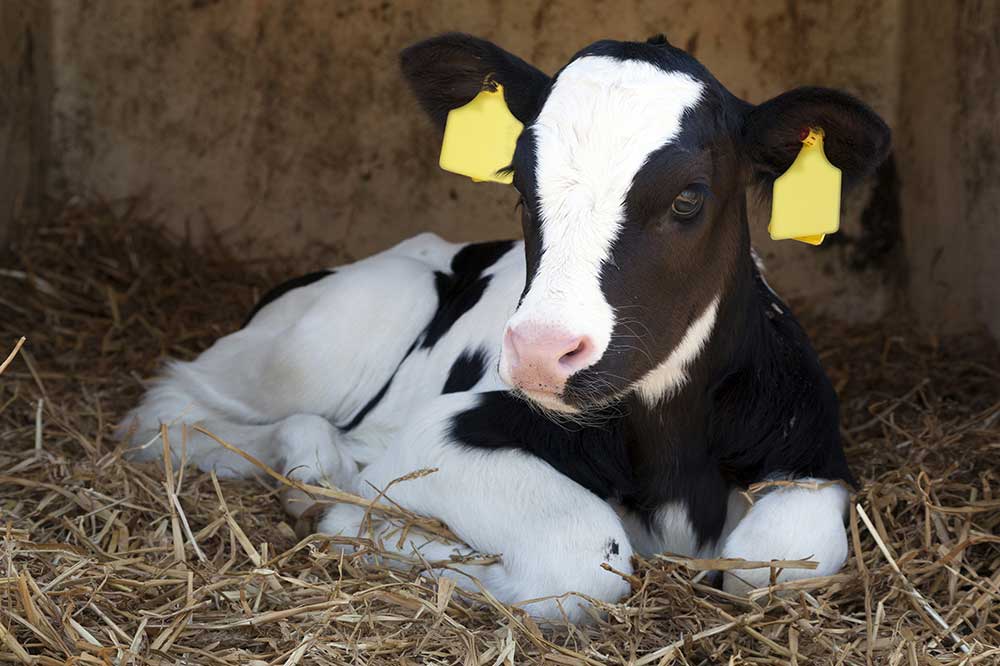
Calf lying Stable Fotolia 84943524 XL

Another tool to reduce the use of antibiotics is the use of immunoglobulins from eggs.
Trials showed that this product is effective to support a calf’s start in life and also to offer support when challenged by various forms of diarrhoea.

The main cause for calf losses during the first two weeks of life is diarrhea. In general diarrhoea is characterised by more liquid being secreted than that being resorbed. However, diarrhoea is not a disease, but actually only a symptom. Diarrhea has a protective function for the animal, because the higher liquid volume in the gut increases motility and pathogens and toxins are excreted faster. Diarrhoea can occur for several reasons. It can be caused by incorrect nutrition, but also by pathogens such as bacteria, viruses and protozoa.

Bacteria in the gut
E. coli belong to the normal gut flora of humans and animals and can be mainly found in the colon. Only a fraction of the serotypes causes diseases. The pathogenicity of E.coli is linked to virulence factors. Decisive virulence factors are for example the fimbria used for the attachment to the gut wall and the bacteria’s ability to produce toxins.

Salmonella in general plays a secondary role in calf diarrhea, however, salmonellosis in cattle is a notifiable disease. Disease due to Clostridia is amongst the most expensive one in cattle farming globally. In herbivores, clostridia are part of the normal gastro-intestinal flora, only a few types can cause serious disease. In calves, Clostridium perfringens occurs with the different types A, C, and D. Rotaviruses are the most common viral pathogens causing diarrhoea in calves and lambs. They are mainly found at the age of 5 to 14 days. Coronaviruses normally attack calves at the age of 5 to 21 days. Cryptosporidium parvum is a protozoa and presumed to be the most common pathogen causing diarrhoea (prevalence up to more than 60 %) in calves.

Undigested feed and incorrect use of antibiotics
Plant raw materials (mainly soy products) are partly used in milk replacers as protein sources. These products contain carbohydrates, that cannot be digested by calves which can lead to diarrhea. The transition from milk to milk replacer can also be a reason.

An early application of tetracyclines and neomycin to young calves can lead to a change in the villi, malabsorption and therefore to slight diarrhoea. Longer therapies using high dosages of antibiotics can also lead to a bacterial superinfection of the gut. The problem is that in a disease situation, antibiotics are often used incorrectly. The use of antibiotics only makes sense when there is a bacterial diarrhea and not due to viruses, protozoa or poor feed management. To keep the use of antibiotics as low as possible, alternatives need to be considered.

Egg powder to add immunoglobulins
In order to achieve optimal results in calf rearing two approaches are possible. Firstly, the prophylaxis approach. This is the method of choice as diarrhoea can mostly be prevented. Therefore, it is necessary to supply the calf with the best possible equipment. As antibodies are one crucial but limiting factor in the colostrum of the “modern” cow, this gap needs to be minimised.  A study conducted in Germany in 2015 demonstrated that more than 50% of the new-born calves had a deficiency of immunoglobulins in the blood. Only 41% of the calves showed an adequate concentration of antibodies in the blood (>10 mg IgG/ml blood serum). Immunoglobulins contained in hen eggs (IgY) can partly compensate for poor colostrum quality and serve as a care package for young animals. A trial was conducted with an egg powder product* on a dairy farm (800 cows) in Brandenburg, Germany. In total 39 new-born calves were observed until weaning (65th day of life). Before birth, the calves were already divided into control and trial group according to the lactation number of their mother cow. All calves were fed the same and received four litres of colostrum with ≥ 50 mg IgG /ml on the first day of life.

Control (n=20):            no additional supplementation
Trial group (n=19):      day 1 – 5: 100 g of the egg powder product per animal per day mixed into the colostrum or milk.

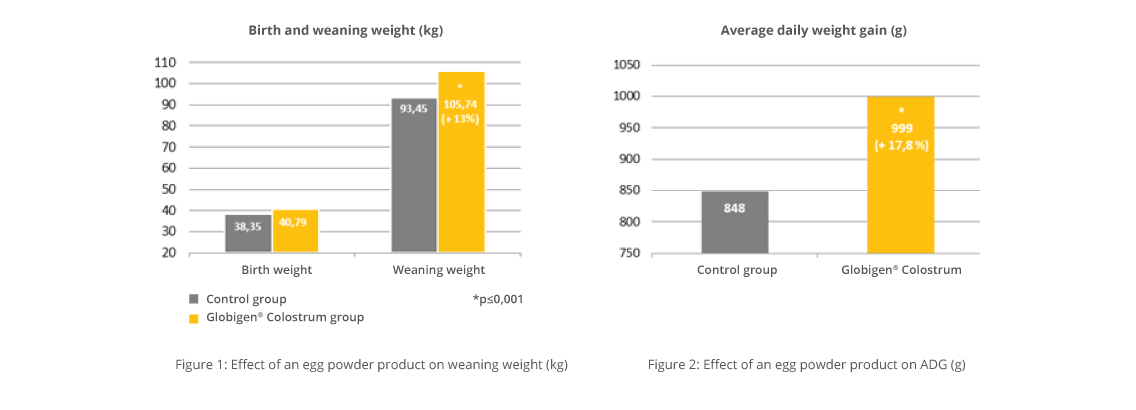
It was shown that the calves in the trial group showed a significantly higher (13%) weaning weight (105.74 kg compared to 93.45 kg in the control group) and 18%  higher average daily gain (999 g compared to 848 g in the control group) (Figure 1 and Figure 2).
Support during acute diarrhea
When diarrhea occurs, the calf has to be treated. So the second approach is to find the best and quickest solution. It is not always necessary to use antibiotics, as they do not work against virus or protozoa. Egg antibodies can be an answer when combined with electrolytes as the following trial shows. On a dairy farm (550 cows) in Germany a feeding trial with a product based on egg powder and electrolytes** was conducted from December 2017 to May 2018. Two groups of calves were used. Before birth the animals were allocated into the two groups according to the calving plan and were examined from day one until weaning (77th day of life). All calves suffering from diarrhea (38 in total, 17 in the control and 21 in the trial group) were treated as follows:

Control (n=17):            Application of electrolytes
Trial group (n=21):      50 g of the egg powder and electrolytes product twice daily, stirred into the milk replacer until diarrhea stopped.

If the diarrhea did not stop or even got worse, the animals were treated with antibiotics. It was shown that in the control group the antibiotic treatment necessary was nearly twice as long as needed in the trial group (Figure 3). This means also that nearly twice the amount of antibiotics were used. This leads to the conclusion that calves in the trial group had an improved health status compared to calves in the control group. A further result from the improved health status was an increase in performance in the trial group (Figure 4).
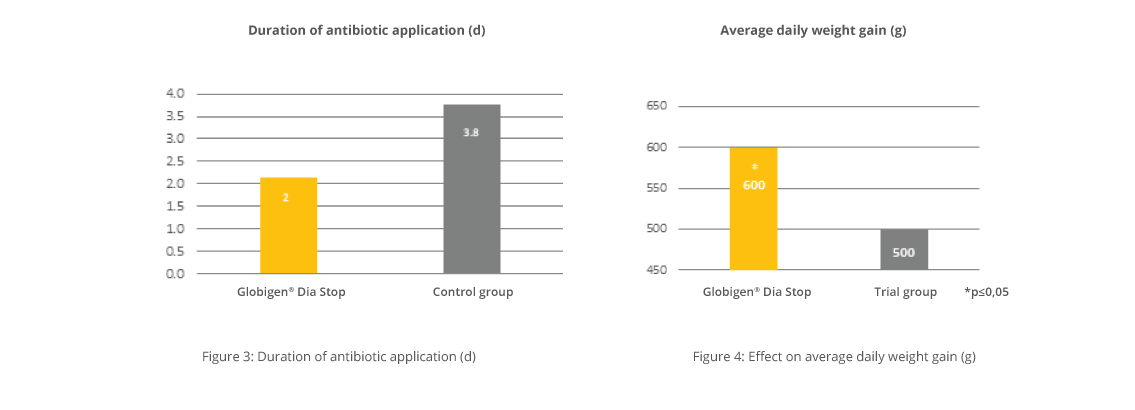
The average daily weight gain of the trial group was 20% higher than in the control (600 vs. 500 g per day) leading to a significantly higher weaning weight (87.8 kg) than in the control (80.7 kg).

By Dr. Inge Heinzl, Editor EW Nutrition
Published in Dairy Global (Online and Printed), 10/2018


Mycotoxin interactions: An obstacle to risk assessment

healthy chicks

In animal feed, multi-mycotoxin contamination is found quite frequently and seems to be the rule rather than the exception in practical diets. Here is a quick overview of the known interactions.

What are the most common mycotoxins in feed?

Mycotoxins represent an exceptional challenge for feed and animal producers: they are produced by common molds, occur in a great variety and number, are sporadic or heterogeneous in their distribution, and their effects on farm animals are seldom recognized as mycotoxicosis. Among hundreds of known mycotoxins, aflatoxins, mainly produced by Aspergillus species, ochratoxin A, produced by Aspergillus and Penicillium species, as well as fumonisins, trichothecenes (especially DON and T-2 toxin) and zearalenone, primarily produced by many Fusarium species stand out as the most common contaminants.

Consequences of mycotoxin contamination

Ingestion of these mycotoxins may cause an acute toxicity or chronic disorders, depending on the concentration and duration of exposure. In farm animals, this might manifest as decreased performance, feed refusal, poor feed conversion, reduced body weight gain, immune suppression, reproductive disorders, and residues in animal food products.

Due to their frequent occurrence and their severe toxic properties, many countries appointed legal regulations or guidance for the major mycotoxins to protect animals and human consumers. The current regulations are typically very specific in terms of animal species and even for the production stage considering that mycotoxins affect for example poultry in a different way than cattle and broilers in a different way than breeders or laying hens. The threshold and/or guidance values for each species, however, were determined based on toxicological data from studies investigating a monoexposure leaving out the possibility of any combined effects of mycotoxins.

Multi-contamination: the rule, not the exception

If we were able to ensure that the animals were exposed to only one mycotoxin at a time, following the regulatory guidelines would allow us to protect our animals in most of the cases. Several worldwide surveys show, however, that mycotoxin multicontamination of animal feed is found very frequently* and seems to be the rule rather than the exception in practical diets. The concurrent appearance of mycotoxins in feed can be explained as follows: each mold species has the capacity to produce a number of mycotoxins simultaneously. Each species, in turn, may infest several raw materials leaving behind one or more toxic residue. In the end, a complete diet is made up of various raw materials with individual mycotoxin loads resulting in a multitude of toxic challenges for the animals.

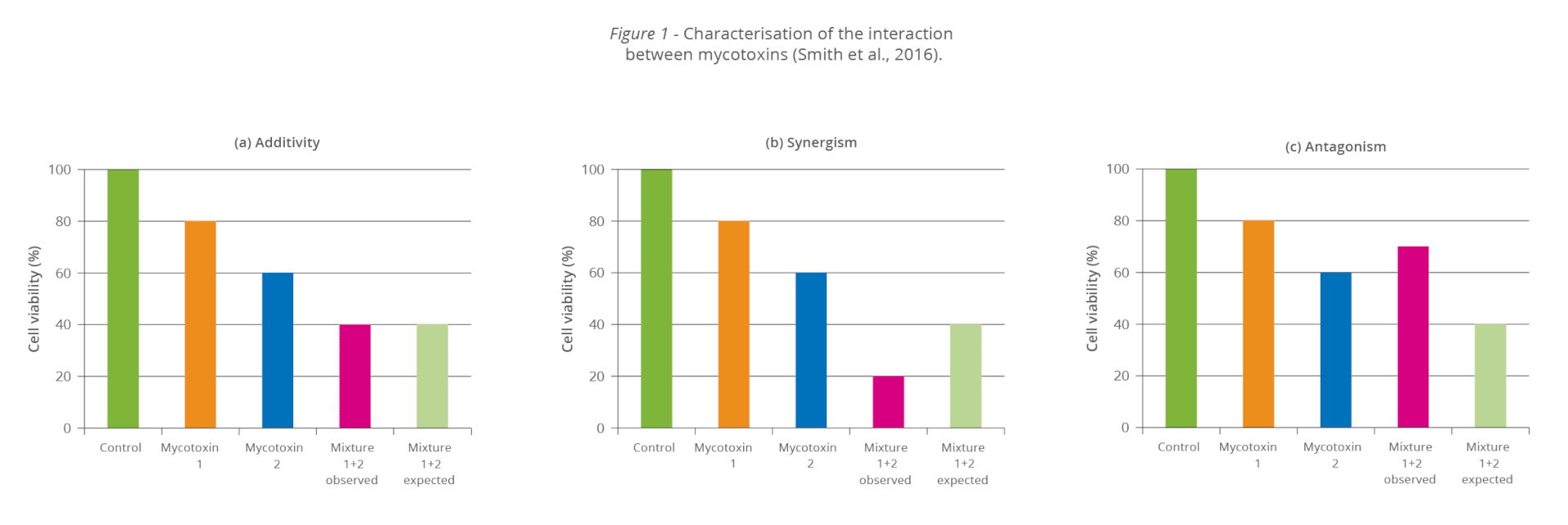
Several researchers showed that the effects observed during multiple mycotoxin exposure can differ greatly from the effects observed in animals exposed to a single mycotoxin, indicating that the simultaneous presence of mycotoxins may be more toxic than predicted from the mycotoxins alone. This is because mycotoxins interact with each other. The interactions can be classified into three main different categories: antagonistic, additive, and synergistic.

Types of mycotoxin interactions

Additivity occurs when the effect of the combination equals the expected sum of the individual effects of the two toxins (Figure 1a).
Synergistic interactions of two mycotoxins lead to a greater effect of the mycotoxin combination than would be expected from the sum of their individual effects (Figure 1b). A special form of synergy, sometimes called potentiation, occurs when one or both of the mycotoxins do not induce effects whereas the combination induces a significant effect.
When the effect of the mycotoxin combination is lower than expected from the sum of their individual effects, antagonism can be observed (Figure 1c). In general, most of the mycotoxin mixtures lead to additive or synergistic effects, highlighting a significant threat to animal health and being the major reason that impedes risk assessment. Synergistic actions may occur when the single mycotoxins of a mixture act at different stages of the same mechanism, e.g. T-2 increases ROS production while AFB1 decreases its clearance when the presence of one mycotoxin increases the absorption of another or decreases its metabolic degradation.

Be aware of contaminations

Given their complex interactions, the toxicity of combinations of mycotoxins cannot merely be predicted based upon their individual toxicities. Knowing that even low levels of mycotoxin combinations can harm animal productivity, health, and welfare, it is useful for feed and animal producers to be aware of present contaminations, to be able to link them to the risk they pose for the animal and consequently take actions before the problems appear in the field.

*References are available on request.

By Technical Team, EW Nutrition
Published on ALL ABOUT FEED | Reprint 2018.


Using milk thistle to reduce liver damage from mycotoxins

shutterstock 1181537152 aspergillus mycotoxins website
Mycotoxins not only reduce animal performance, but they also cause significant liver damage.
The seeds of the herb plant milk thistle contain a mixture of flavonolignans known as silymarin and can help in reducing liver damage when animals get in contact with mycotoxin contaminated feed.
Mycotoxins are a constant problem in cereals causing economic losses to the global animal industry. Mycotoxins are produced by filamentous fungi varying widely in their chemical and biological characteristics and effects on animals. Among the various mycotoxins, aflatoxins, and more specifically aflatoxin B1, is one of the most problematic because it affects maize, one of the major staple ingredients in animal diets worldwide. Of course, in nature, mycotoxins mostly occur in combinations, but even with singly contaminated ingredients, the nature of animal feeds leads to the concurrent presence of multiple mycotoxins, coming from the different ingredients. The separation of mycotoxins in polar and non-polar, however, simplifies their management. For example, aflatoxins (polar) are easily addressed by the inclusion of an adsorbent (like bentonite, for example). The same ingredient adsorbs not only aflatoxins, but also other mycotoxins, like zearalenone, ochratoxin A, and T-2 toxin, albeit at reduced efficiency.
Products limited to work in gut
Certainly, anti-mycotoxin agents are effective only while the feed is being digested, that is, while the feed remains in the lumen of the gastrointestinal tract. Anti-mycotoxin agents are not absorbed by the animal, whereas non-adsorbed mycotoxins are; leading to the need for further detoxification within the organism. Parts of mycotoxins might enter the organism despite the use of an anti-mycotoxin agent in feed due to the fact that no product is 100% effective, not all mycotoxins are affected similarly by a single product, non-polar mycotoxins might not be inactivated if only a polar agent is used, and vice versa and lastly, high contamination might render the normal dosage inadequate. This is often seen as being the most common cause, In other words, part of mycotoxins in the feed can still enter the animal. The exact effects on animal health and performance will depend, of course, on the initial contamination levels in the feed and on the constitution of the liver.
Mycotoxins and liver damage
Even short-term exposure to mycotoxins suffices to cause significant liver damage and loss of performance. In a study (Meissonnier, 2007), pigs were given 385, 867, or 1807 μg aflatoxin B1/kg feed for four weeks. Pigs receiving the highest level of aflatoxin developed clear signs of aflatoxicosis: hepatic dysfunction and decrease in weight gain. Also, the pigs exposed to the lower levels of mycotoxins showed clear signs of impaired metabolism and biotransformation. Additionally, mycotoxins and particularly aflatoxins inhibit the major hepatic biotransformation enzymes. This has significant consequences in veterinary medication applications as animals become unable to clear medications from their system – and of course, other toxins.
Read Using milk thistle to reduce liver damage from mycotoxins the full article
ALL ABOUT FEED, Volume 23, No. 3, 2015