The lessons of 2025 for poultry and feed producers

by Ilinca Anghelescu, Global Director Marketing & Communications, EW Nutrition

2025 was a year defined by four converging forces for the global feed and animal production industry: an unprecedented HPAI crisis that cost American consumers alone $14.5 billion extra in egg expenditures; historic record corn production driving feed ingredient prices lower; a highly disruptive US tariff regime that reshuffled global trade flows for soybeans, corn, chicken, and pork; and accelerating regulatory pressure on antimicrobial use across Europe and globally.

The strategic imperatives from 2025 are clear: biosecurity investment is no longer optional, ingredient price volatility demands agile procurement strategies, trade compliance is a weekly operational concern, and antibiotic-free production transitions require credible, phased plans now.

KEY METRIC: Global chicken meat production reached approximately 105 million MT in 2025 (+2%), even as egg production suffered severely. The global feed market is valued at $542 billion in 2025, growing at 3.3% CAGR. Corn hit record production of 17 billion bushels in the US alone – the highest since 1936 in terms of harvested area.

DOWNLOAD THE REPORT HERE.

CHAPTER 1: HPAI & DISEASE LANDSCAPE 


1.1  The Ongoing H5N1 Crisis – Scale & Impact

The H5N1 clade 2.3.4.4b strain of Highly Pathogenic Avian Influenza (HPAI) continued to dominate animal health headlines in 2025. Since its reemergence in February 2022, the US outbreak alone has resulted in the confirmed loss of over 175 million birds across 1,700+ flocks – the costliest poultry disease event in recorded history.


Metric Data Point Source
Total US birds affected (2022–2025) 175+ million USDA APHIS, May 2025
US flocks confirmed positive 1,704+ USDA APHIS, May 2025
Proportion of affected birds: layers 75% USDA / Congressional Research Service
US egg layer flock deficit vs. 2022 –8% fewer birds CoBank / USDA
Consumer egg overspend (May 2024–Apr 2025) $14.5 billion extra Innovate Animal Ag analysis
Peak US retail egg price $6.23/dozen (March 2025) BLS / USDA
HPAI-related US taxpayer response costs $1.8 billion+ Innovate Animal Ag
Global HPAI mammal outbreaks (2024) 1,022 (vs. 459 in 2023) WOAH 2025
Countries self-declaring HPAI freedom (May 2025) 25 WOAH


1.2  2025-Specific Developments

United States: Early-Year Severity, Policy Response

The first six weeks of 2025 saw 28 million layers depopulated – the worst start to any calendar year on record. Ohio, Indiana, and Missouri bore the brunt. The USDA launched a five-pronged approach in February 2025 including:

  • Gold-standard biosecurity assessments (948 completed Jan 20–June 26)
  • Indemnity increase from $7 to $17 per lost layer hen
  • Importation of 26+ million dozen shell eggs from Brazil, Honduras, Mexico, Turkey, and South Korea
  • Removal of select regulatory burdens to accelerate flock repopulation
  • $793 million in HPAI research proposals received in response to USDA Innovation Grand Challenge


  Price Manipulation Investigation: In April 2025, the DOJ Antitrust Division launched an investigation into the largest US egg producer after it reported a 247% increase in quarterly net income. Egg producers and retailers face ongoing scrutiny over whether crisis pricing exceeded what supply constraints warranted.


Brazil: First Commercial HPAI Outbreak – May 2025

On May 15, 2025, Brazil – the world’s largest poultry exporter, responsible for nearly 30% of global exports – confirmed its first-ever commercial HPAI case at a breeder facility in Montenegro, Rio Grande do Sul (17,000 birds). This was a watershed event for global poultry trade.


Consequence Detail
China (#1 buyer of Brazilian chicken) suspended imports Trade suspended as of May 2025; Chinese delegation visited RS in Sept 2025 to assess resumption
Brazil’s monthly poultry exports declined Exports fell 12.9% to $655 million; volume down 14.4% to 363,100 MT (May)
UAE replaced China as Brazil’s top buyer First time China dropped from #1 buyer since 2019
WOAH new 10-year global HPAI strategy launched Prevention and Control of HPAI (2024–2033), February 2025
Regionalized trade bans helped contain damage Bans limited to affected regions, not all of Brazil


Europe: Persistent Pressure

HPAI continued to circulate widely in European poultry and wild bird populations. Key 2025 events include recurrence in Australia (February), ongoing outbreaks in Germany, Hungary, Netherlands, UK, and France, and the first confirmed domestic cat HPAI death in the Netherlands (H5N1, November 2025).

CRITICAL RISK: HPAI is now classified as enzootic (endemic) in wild birds across North America by the CDC. The virus circulates year-round in wildlife reservoirs, making seasonal recurrence in commercial flocks a structural, not episodic, risk. US egg producers are 8% below their 2022 flock baseline.


1.3  Other Priority Diseases in 2025

Disease Region/Status Operational Impact
Avian Metapneumovirus (AMPV) USA – significant in turkey sector Reduced breeder egg production; compounded HPAI losses; estimated 18.7M turkeys affected alongside HPAI in 2025
Salmonella (all serovars) EU-wide – statistically significant increase trend 2020–2024 per EFSA/ECDC joint report, March 2025 AMR pressure in broilers and layers; genomic surveillance being mandated by EU
Newcastle Disease (NCD) Brazil – outbreak July 2024, RS state First commercial NCD in Brazil since 2006; adds biosecurity burden on top of HPAI protocols
H5N1 in Dairy Cattle (USA) Ongoing – cross-species spread to 50+ US states Cattle-to-poultry transmission confirmed; biosecurity interfaces between dairy and poultry operations must be reviewed
HPAI – Antarctica First confirmed case March 2024 (South Polar Skua) Indicates virus reached every continent; unprecedented in poultry disease history


CHAPTER 2: GLOBAL POULTRY PRODUCTION 


2.1  Global Output – 2025 Performance

Despite HPAI disruptions, global chicken meat production grew approximately 2% in 2025 to around 105 million MT (ready-to-cook), driven by demand resilience and lower feed costs for broiler production. Total global poultry meat (including turkey, duck, and others) is forecast to exceed 152 million MT for 2025, per FAO Food Outlook June 2025.


Country / Region 2025 Production Forecast (MT) Year-on-Year Change Key Driver
USA – Broilers 21.7 million MT +1.4% vs. 2024 Strong hatchery data; lower feed costs; HPAI minimal in broilers
China 15.3 million MT Positive growth Rising domestic demand; pork sector recovery stabilizing
Brazil 15.1 million MT Positive growth (despite HPAI) Export demand; improved margins; population-driven domestic growth
European Union Slight increase Modest growth Domestic demand; reduced Ukrainian imports
USA – Turkey Decline –2.5% vs. –6.35% prior year HPAI + AMPV pressure; wholesale prices +40% YoY
Global Total (chicken) ~105 million MT +2% Affordability vs. beef; consumer demand in developing markets


OECD-FAO 10-Year Outlook (2025–2034)

The OECD-FAO Agricultural Outlook 2025–2034, released in July 2025, projects global poultry meat production will grow by over 19% to 173.4 million MT by 2034 compared to the 2022–24 average. Poultry will account for the majority of additional meat consumption globally, driven by:

  • Affordability relative to beef and pork, especially in price-sensitive emerging markets
  • Population and income growth in Southeast Asia, South Asia, and Sub-Saharan Africa
  • Rapid urbanization and expansion of Quick Service Restaurant (QSR) chains
  • Superior feed conversion ratio (FCR) and lower greenhouse gas emissions per kg of protein

STRATEGIC NOTE: In high-income countries, per capita poultry consumption growth is flattening as consumers focus increasingly on welfare, environment, and health attributes. Growth opportunity is almost entirely in middle-income markets. Product premiumization (antibiotic-free, cage-free, organic) is the North American and European story.


2.2  Egg Production – Crisis Sector

Egg production was the sector hardest hit by HPAI globally. In the US, 75% of all HPAI-affected birds were table-egg layers, despite layers comprising less than 4% of the total poultry population. This structural vulnerability reflects longer flock lifespans and, increasingly, cage-free housing adoption.


Indicator 2025 Data
US retail egg price peak $6.23/dozen (March 2025)
US retail egg price decline from peak –27% by June 2025 (wholesale –64%)
US retail egg price (January 2025) $4.95/dozen – 96% higher than January 2024
USDA full-year 2025 egg price forecast +41.1% vs. 2024 average
% of US laying flock in cage-free systems ~40% (120+ million birds)
Global hen egg production (2023 baseline) 91 million tonnes (~1.7 trillion eggs)
Global egg trade volume (2024) Nearly doubled from prior years


  Cage-Free Transition & Disease Vulnerability: Some analysts link cage-free housing to higher HPAI susceptibility. Regardless of epidemiological debate, the US cage-free market is now structurally undersupplied relative to corporate commitments made in 2014–2017. Producers face a squeeze: comply with welfare commitments while managing disease risk.


CHAPTER 3: FEED INGREDIENT MARKETS 


3.1  Grain & Oilseed Prices – 2025 Summary

From a feed cost perspective, 2025 was broadly favorable for livestock and poultry producers. Record US corn production and generally adequate global grain and oilseed supplies put downward pressure on the major feed commodities, offering partial relief from the margin pressure of recent years.


Commodity 2025 Price Direction Key 2025 Data Implication for Feed
Corn (US) DOWN –3.9% (3rd consecutive annual decline) Record US crop: 17.0 billion bu; yield 186.5 bu/acre – record; harvested area highest since 1936 Favorable for poultry/swine FCR cost; season avg ~$4.15/bu projected
Soybean Meal DOWN –4.3% (3rd consecutive decline) Prices at lowest since early 2016 at one point; large South American supply weighing on markets Significant reduction in diet protein cost; amino acid supplementation cost-competitive
Soybeans UP slightly +3.3% After 22.9% collapse in 2024; still well below historical peaks; US acreage declining Bean oil +20.8% (energy diet component); meal-to-bean ratio remains attractive for crushers
Wheat (Chicago) DOWN –4.3% (4th consecutive year) Abundant global supply; Russia/Argentina record crops; increased feed use Wheat competing with corn in feed formulations globally – inclusion rising in EU/Asia diets
Soybean Oil UP +20.8% Driven by biofuel demand (US 45Z renewable fuel credits) Energy ingredient cost pressure; may affect fat inclusion rates in formulations


PROCUREMENT SIGNAL: The US/China trade tensions created windows of soybean buying opportunity as prices swung on trade deal news. China agreed to purchase US soybeans in late 2025 as part of a limited trade deal, causing a price uptick. Procurement teams should monitor US-China negotiations as a lead indicator for soybean pricing in 2026.


3.2  Global Feed Market Overview

Metric 2025 Data
Global animal feed market value $542.36 billion
CAGR (2026–2034) 3.3%
Largest feed segment by additive type Amino acids (33.6% share)
Largest feed segment by species Poultry (dominant share)
Asia Pacific regional status Dominant region (largest market)
Top feed ingredient challenge Fluctuating prices for corn, SBM – still key risk for margin management


3.3  Key Ingredient Trends to Watch

Fertilizer Cost Relief

Fertilizer prices have declined significantly from their 2022 peak. A basket of N, P, and K fertilizers averaged $437/tonne in May 2025, down from the $815/tonne peak in April 2022, per FAO Food Outlook. This benefits grain production economics and should support adequate grain supplies into 2026.


Soybean Oil Competition: Biodiesel vs. Feed

US soybean oil demand from renewable fuel programs (the 45Z credit) competed directly with feed-grade fat supplies, pushing soy oil prices up 20.8% in 2025. Feed mills formulating with added fats should evaluate alternative lipid sources. Poultry fat and palm olein remain cost-competitive in some markets.


Alternative Proteins: Insect Meal, DDGS, Algae

While adoption remains limited in volume, regulatory acceptance of insect meal in EU poultry diets continues to expand. Dried Distillers Grains with Solubles (DDGS) remain a strategically important co-product, particularly in the US and EU. Feed formulators should have up-to-date matrix values and be prepared to use them when corn prices favor inclusions.


  Tariff Risk for Feed Inputs: US feed manufacturers faced effective tariff rates averaging 12%+ on key agricultural inputs from China and other countries in 2025, including herbicides, pesticides, and some micro-ingredient precursors. Amino acid supplies (predominantly Chinese-origin lysine, methionine, threonine) faced added cost and supply uncertainty.


CHAPTER 4: TRADE POLICY DISRUPTIONS 


4.1  The 2025 US Tariff Regime – Agricultural Impact

The Trump administration’s tariff policies beginning January 20, 2025, represented the most significant disruption to global agricultural trade in decades. The three largest US agricultural export markets – Mexico ($30.3B in 2024), Canada ($28.3B), and China ($24.7B) – were all targeted, triggering retaliatory measures that hit feed, grain, poultry, and pork exports.


Country US Tariff (2025) Retaliation on US Agriculture Key Products Impacted for Feed/Poultry Industry
China Reached 145% (paused to 30% via May 2025 truce) 15% on chicken, corn, wheat; 10% on soybeans, sorghum, pork – applied from March 2025 Chinese poultry buyers shifted away from US; US corn/soy export disruption; amino acid supply chain uncertainty
Canada 25–35% (escalated to 35% in Aug) 25% on US dairy, poultry, meat products ($21B) Canada imports ~45% of US poultry exports; feed grain flows affected
Mexico 25–30% (USMCA-compliant goods largely exempted) Retaliatory tariffs threatened on agricultural goods Mexico is #1 market for US turkey exports; ongoing uncertainty
EU 14% (paused under negotiations) Planned retaliation announced April 2025 Potential impact on US soy meal exports; EU feed ingredient costs


CHINA TRADE DEAL (MAY 2025): A 90-day tariff truce agreed May 12, 2025 reduced US tariffs on Chinese goods from 145% to 30%, and China’s tariffs on US products from 125% to 10%. China agreed to purchase US soybeans. No permanent deal was signed. The limited agreement provided short-term stability but medium-term uncertainty remains.


4.2  Impact on US Agricultural Trade Flows

Product Trade Flow Change (2025) Implication
Corn exports UP >20% YoY Record US production driving export competitiveness despite tariff uncertainty
Soybean exports DOWN – China shifted to South America Brazil and Argentina taking larger share of Chinese soy imports
US chicken exports Maintained overall (6.8B USD) Despite China restrictions, other markets (Middle East, Mexico) absorbed volume
US turkey exports At risk – 10% of production exported; Mexico = 65% of turkey exports HPAI + AMPV supply squeeze threatened export volumes at peak holiday season
Brazil chicken exports Down 12.9% month of May impact; year-end positive HPAI disruption in May/June; recovery in H2 2025 after regionalization
US egg imports (temporary) 26M dozen shell eggs imported Emergency imports from Brazil, Honduras, Turkey, South Korea, Mexico to fill supply gap


4.3  Strategic Trade Lessons

  • Supply chain diversification is no longer a luxury: concentration of US soy exports to China created a single-point-of-failure vulnerability that became fully exposed in 2025.
  • Regionalized disease zoning is a trade-preserving tool: Brazil’s rapid implementation of regionalized HPAI bans (rather than country-wide) preserved most of its export access; this is the model the industry should support with regulators globally.
  • USMCA dependency is real: 70% of US corn, 60% of soybeans, 45% of poultry exports go to Mexico, Canada, China – the same three countries targeted by 2025 tariffs.
  • US government announced $12B in emergency farm compensation in 2025, repeating the pattern from Trump’s first term – indicating persistent trade disruption risk.


CHAPTER 5: REGULATORY CHANGES 


5.1  EU: Feed & Food Safety Legislation Simplification

In 2025, the European Commission proposed a package to streamline EU food and feed safety legislation while maintaining high health standards. The initiative, announced mid-2025, is intended to boost competitiveness of EU producers by reducing regulatory complexity – a direct response to competitive concerns vs. non-EU producers.


5.2  EFSA 2025 Guidance on Microorganisms

On September 24, 2025, EFSA’s Scientific Committee adopted new harmonized guidance on the characterization of microorganisms in the food chain. This is a landmark shift with major implications for feed additive manufacturers, probiotics suppliers, and novel food applicants.


Key Element Operational Implication
Whole Genome Sequencing (WGS) now mandatory for strain-level ID of all bacteria, yeasts, fungi, viruses in applications All existing microbial feed additive dossiers must be reviewed; WGS data cannot be more than 2 years old at time of submission
Genomics-first approach to AMR assessment Any AMR gene hit in curated databases triggers mandatory case-by-case assessment; significantly raises the regulatory bar for probiotics and fermentation products
Replaces multiple previous guidance documents Companies must align R&D, QC, and regulatory documentation to new unified standard immediately
GM microorganisms: clearer differentiation Products ‘produced by GMO’ now distinguished from ‘GMO active agents’ – critical for enzyme and probiotic positioning
Non-compliance = application rejection risk Early non-alignment causes ‘clock-stops’ or formal rejection at EFSA suitability check stage


5.3  Antimicrobial Resistance (AMR) – Regulatory Pressure

AMR remains the defining long-term regulatory risk for the animal feed and production industry. Key 2025 actions:


  • EFSA/ECDC Joint Report (March 2025): Highlighted persistently high resistance to critical antimicrobials in poultry, especially Campylobacter and Salmonella, with ‘statistically significant increasing trend 2020–2024.’ This directly fuels EU legislative pressure.
  • EU Regulation 2019/6 (Veterinary Medicines) – Article 118: Banning import of animal products containing antimicrobials used for growth promotion. Application delayed to 2026, raising questions about enforcement timelines – and competitive fairness regarding imports from countries still allowing AGPs.
  • EU AMR Implementation Decision 2023: New harmonized monitoring requirements for AMR in zoonotic and indicator bacteria from food-producing animals – effective January 1, 2025. All EU Member States now required to collect and report standardized AMR surveillance data.
  • WOAH 10-Year HPAI Strategy (2024–2033): Promotes surveillance, vaccination programs, and timely reporting as cornerstones of international HPAI management.


BOTTOM LINE ON AMR: The regulatory trajectory is clear and irreversible – sub-therapeutic antibiotic use for growth promotion is being eliminated globally. The timeline varies by region (already banned in EU since 2006; US voluntary approach from 2017; global WHO action plan). Companies that have already invested in transition are ahead; those that have not face increasing compliance risk and market access restrictions.


5.4  US Regulatory Developments

Action Status / Detail
USDA Five-Pronged HPAI Response Plan (Feb 2025) Biosecurity assessments, indemnity increases, import flexibility, vaccine research funding, regulatory burden removal
HPAI Innovation Grand Challenge $793M in proposals received (417 submissions); awards expected by fall 2025; covers prevention, vaccines, therapeutics
DOJ Antitrust Investigation – Egg Producers Launched April 2025; examining price-fixing allegations amid 247% profit increase by largest producer
Meat & Poultry Special Investigator Act (S.1312) Proposed creation of Office of Special Investigator for Competition Matters within USDA – pending
Food Security & Farm Protection Act (S.1326) Would prohibit states from imposing certain standards on preharvest agricultural production sold in interstate commerce – relevant to cage-free mandates


CHAPTER 6: FEED ADDITIVE & NUTRITION STRATEGIES 


PRECISION NUTRITION SIGNAL: The industry’s shift to reduced crude protein (CP) diets, precisely supplemented with industrial amino acids (L-Lys, DL-Met, L-Thr, L-Trp, L-Val) remained the dominant reformulation strategy in 2025. Lower CP diets reduce feed cost, lower N excretion (environmental benefit), and reduce substrate for pathogenic bacteria. With amino acid prices remaining favorable, there are few economic arguments for maintaining high CP diets.

6.1  The Post-AGP Transition: Where the Industry Stands

The antibiotic-free (ABF) production movement accelerated further in 2025. With the EU ban on AGPs in place since 2006 and the US moving toward voluntary phase-out, the entire industry is in active transition. The key challenge: AGP removal creates enteric health gaps that must be addressed with alternative tools. Without effective management, removal of AGPs leads to increased necrotic enteritis, Campylobacter colonization, and poorer FCR.


6.2  Heat Stress – A Growing Production Challenge

Climate-related heat stress was a highlighted research and production topic in 2025. Modern high-performance broiler genetics have been selectively bred for rapid growth under thermoneutral conditions. Heat stress impairs feed intake, FCR, immunity, meat quality, and reproduction. Management strategies:

  • Dietary electrolyte balance adjustment (increase K, Na, reduce Cl where appropriate)
  • Vitamin C and E supplementation at heat stress periods
  • Betaine inclusion as an osmolyte; reduces supplemental methionine requirement under heat stress
  • Feed schedule adjustment (limit feeding during hottest hours; early morning/evening feeding)
  • Housing design investment: tunnel ventilation, evaporative cooling, adequate air velocity


6.3  In Ovo Technology

In ovo vaccination and nutrition delivery continued to advance in 2025. Key developments include high-throughput systems (3,000 eggs/hour at 99% accuracy) for in ovo vaccination and nutritional interventions. Early-life gut programming through in ovo delivery of probiotics, nutrients, and vaccine antigens is becoming an increasingly important hatchery-level biosecurity and performance tool.


CHAPTER 7: MARKET TRENDS & CONSUMER SHIFTS 


7.1  Poultry Gaining Share vs. Other Proteins

Elevated beef prices throughout 2025 – driven by tight US cattle supply (herd at decades-long lows) and high demand – continued to push consumers toward poultry as a cost-effective protein. This dynamic is a structural tailwind for the broiler industry globally.


Market Dynamic Detail
US broiler net cash farm income 2025 +27% YoY – livestock sector outperforms crop side
Global poultry market value (2025) $316.77 billion; projected $433.98B by 2034 (CAGR 3.56%)
Global poultry export growth 2025 +1.8% to 16.9 million MT
Supermarkets poultry market share 42.1% of poultry distribution (2024)
Online poultry retail growth rate CAGR 11.4% (fastest growing channel)
Italy – poultry share of total meat consumed >44% in 2025
FAO Meat Price Index – poultry Decreased in 2025 from mid-2024 high (broiler ample supply)


7.2  Cage-Free & Animal Welfare Commitments

The cage-free transition is structurally undersupplied in the US. Corporate commitments made in 2014–2017 implied a need for 220 million cage-free layers by 2025–26. Current production is well below that target. This creates both a market opportunity (premium pricing) and a risk (HPAI vulnerability concerns in cage-free systems). Producers must balance welfare compliance with biosecurity protocols.


7.3  Antibiotic-Free, Organic, and Specialty Products

Consumer and corporate buyer demand for ABF, No Antibiotics Ever (NAE), organic, and pasture-raised products continued to grow in premium markets in 2025. The pasture-raised egg segment reported 30% annual growth rates despite high price points. For integrated producers, this requires dedicated production lines with separate management protocols, supply chain segregation, and robust documentation systems.


7.4  Sustainability Pressure

Feed manufacturers and integrators are under growing pressure from retail and foodservice customers, NGOs, and regulators to demonstrate reduced environmental footprint. Key metrics under scrutiny:

  • GHG emissions per kg of chicken meat produced (Scope 1, 2, and 3)
  • Deforestation-free supply chains for soy (EU Deforestation Regulation – EUDR)
  • Feed conversion ratio improvement as a sustainability lever
  • Nitrogen and phosphorus excretion reduction (enzyme use, reduced CP diets, phytase)
  • Water use per unit of animal protein produced


EUDR NOTE: The EU Deforestation Regulation requires companies to ensure that soy used in feed does not originate from recently deforested land. Implementation deadlines have been debated, but traceability requirements for soy origin – particularly from Brazil – are operationally significant for EU feed manufacturers and importers.


CHAPTER 8: STRATEGIC LESSONS & ACTION PRIORITIES 


8.1  Summary: Top 10 Lessons of 2025


# Lesson Key Data Point
1 HPAI is now a permanent structural risk, not a cyclical one. Biosecurity investment must be treated as core capital expenditure. CDC: H5N1 now enzootic in North American wild birds; US flock 8% below 2022 baseline
2 Egg production is structurally more vulnerable than broiler production – different biosecurity and business continuity protocols are required. 75% of HPAI losses = layers; broilers grew 1.4% in 2025
3 Vaccination for HPAI is the central unresolved debate of the decade – expect DIVA strategies to become standard within 3–5 years as industry and regulators align. 417 vaccine/research proposals submitted to USDA Grand Challenge
4 Trade concentration is a strategic vulnerability. Diversify export markets actively; do not allow 70%+ of any product to go to one trading bloc. China + Mexico + Canada = 70% of US corn exports; 60% of soy; 45% of poultry
5 Grain prices are favorable NOW – lock in contracts and assess forward pricing opportunities while corn and SBM are at multi-year lows. Corn -3.9% in 2025; SBM -4.3%; both 3rd consecutive annual decline
6 AMR regulations are accelerating everywhere. Transitioning to ABF production is no longer a ‘maybe’ but a ‘when’ – plan now. EU: AMR in poultry ‘persistently high’ per EFSA/ECDC March 2025 report
7 EFSA’s 2025 WGS guidance fundamentally changes the cost and timeline of getting microbial feed additives authorized in the EU. WGS now mandatory for all microbial characterizations; legacy dossiers need revision
8 Amino acids and precision nutrition remain the most cost-effective tool for diet optimization: lower CP, better FCR, lower N excretion, reduced enteric pathogen substrate. Amino acids = 33.6% of global feed additive market by value
9 Brazil’s HPAI outbreak demonstrated both the vulnerability of global trade and the effectiveness of regionalized response protocols. Brazil exports fell 12.9% in May but year-end positive; China temporarily banned; UAE stepped up
10 Climate/heat stress is an underappreciated production risk that compounds disease susceptibility and reduces performance in high-performing genetics. IPCC: global surface temperature +0.9°C since mid-20th century; impacts on poultry FCR, immunity, mortality increasing


8.2  Action Priority Matrix for Management Teams


Priority Area Immediate Actions (0–6 months) Medium-Term (6–18 months)
HPAI Biosecurity Complete USDA-style biosecurity assessments; audit wild bird access; upgrade water and air biosecurity; train all staff Evaluate in-house monitoring technology; develop scenario plans for flock loss; build supplier contingency agreements
Feed Ingredient Procurement Lock in corn and SBM forward contracts at current low prices; audit mycotoxin levels in incoming grain batches Diversify supplier base; develop cost-switching matrices for corn/wheat/sorghum substitution as prices change
AMR / ABF Transition Audit current antibiotic use protocols; identify critical intervention points where antibiotics can be replaced Pilot ABF production line with full additive support program (organic acids, probiotics, phytogenics, prebiotics)
Regulatory Compliance (EU) Review all microbial feed additive dossiers against EFSA 2025 WGS guidance; identify gaps requiring new data Update all submission dossiers; ensure AMR surveillance data matches new 2025 EU requirements
Trade Policy Monitoring Assign responsibility for tracking tariff changes weekly; map top 5 export customers and their import restrictions Develop export market diversification plan; qualify 2+ alternative markets for each key product
Cage-Free / Welfare Review corporate cage-free commitments vs. current supply; align with customer timelines Design biosecurity protocols specific to cage-free environments; review insurance and contingency planning


8.3  Key Indicators to Monitor in 2026

  • HPAI detection frequency in fall-winter 2025–26 migration season – predictor of next egg price cycle
  • USDA HPAI vaccine grand challenge awards – signals timeline for commercial vaccine availability
  • EU feed safety simplification package progress – potential relief on additive authorization timelines
  • EUDR deforestation enforcement timeline – soy traceability compliance clock
  • Brazil HPAI market re-entry for China – recovery of the world’s #1 poultry export relationship
  • US corn/soy 2026 planting intentions (March) – USDA Prospective Plantings report is the key 2026 procurement signal


2025 demonstrated that the feed and animal production industry operates in an environment of simultaneous, compounding risks – biological, geopolitical, regulatory, and climatic. The companies that performed best were those with robust biosecurity infrastructure, agile procurement teams, clear AMR transition roadmaps, and diversified market exposure. There is no single silver bullet. Systematic risk management, not reactive crisis response, is the competitive differentiator going forward.


  KEY SOURCES & REFERENCES 


This article draws on data and analysis from the following sources:

Organization Document / Resource Referenced
USDA APHIS / FAS HPAI flocks data (2025); Livestock & Poultry World Markets (Dec 2025); WASDE reports; Five-Pronged HPAI Strategy
FAO Food Outlook June 2025; OECD-FAO Agricultural Outlook 2025–2034; FAO Meat Price Index
OECD OECD-FAO Agricultural Outlook 2025–2034 (July 2025)
WOAH HPAI Report #68 (Feb 2025); State of World Animal Health 2025; HPAI 10-Year Strategy 2024–2033
EFSA / ECDC Joint AMR Report (March 2025); 2025 QPS updated list; EFSA 2025 Guidance on Microorganisms (Nov 2025)
PAHO / WHO Epidemiological Update H5N1 in the Americas (Jan 2025)
US Congressional Research Service HPAI Outbreak 2022–Present (April 2025); Egg Prices and HPAI (May 2025); 2025 Tariff Actions
American Farm Bureau Federation Retaliatory Tariffs Report (March 2025); Turkey Market Intel (Oct 2025)
CoBank / NAMA AgriFood Policy Update (Oct 2025); Farm Income Forecasts 2025
WATTPoultry.com HPAI 2025 Layer Roundup; Broiler Production Outlook; Demand Drives Poultry to New Highs (2025)
The Poultry Site Weekly Global Protein Digest; HPAI Global Spread (2025)
AviNews Global Poultry Meat Output 151.4M Tons 2025 (Dec 2025)
Innovate Animal Ag HPAI Supply Constraints Cost Americans $14.5B (2025)
DTN / PF Grain Futures 2025 Annual Review (Jan 2026)
USDA ERS Corn & Other Feed Grains Outlook (2025–26 WASDE updates)
Frontiers in Veterinary Science Phytogenic feed additives – gut health modulation (Aug 2025); Antibiotic alternatives – One Health (Jul 2025)


Europe – Disease Outbreak Report Summary, 6-12 November 2025

Reporting Period: November 6-12, 2025

Extracted Data by Disease Category

1. ASF in Domestic Pigs

Country Number of Outbreaks
Romania 15
Moldova 1
TOTAL 16

2. ASF in Wild Boar

Country Number of Outbreaks
Bulgaria 32
Germany 25
Estonia 8
Croatia 14
Hungary 8
Italy 7
Latvia 21
Lithuania 4
Poland 4
Romania 12
North Macedonia 1
TOTAL 136

3. HPAI (NON-P) in Captive Birds / H5N1

Country Number of Outbreaks
Bulgaria 1
Czech Republic 2
Germany 4
France 3
Netherlands 1
TOTAL 11

4. HPAI (NON-P) in Wild Birds / H5 (N untyped)

Country Number of Outbreaks
Norway 1
TOTAL 1

5. HPAI (NON-P) in Wild Birds / H5N1

Country Number of Outbreaks
Austria 8
Belgium 4
Germany 462
Denmark 15
Spain 16
Finland 3
France 25
Ireland 1
Italy 1
Lithuania 1
Luxembourg 8
Latvia 3
Netherlands 22
Poland 2
Slovakia 1
Slovenia 2
Sweden 5
Switzerland 1
Norway 1
Ukraine 1
TOTAL 581

6. High Pathogenicity Avian Influenza Viruses (Poultry) (Inf. with) / H5N1

Country Number of Outbreaks
Bulgaria 1
Czech Republic 3
Germany 26
France 7
Hungary 1
Ireland 1
Italy 2
Netherlands 3
Poland 3
Sweden 2
United Kingdom (Northern Ireland) 2
TOTAL 51

Summary Statistics

Disease Category Total Outbreaks
ASF in Domestic Pigs 16
ASF in Wild Boar 136
HPAI(NON-P) in Captive Birds / H5N1 11
HPAI(NON-P) in Wild Birds / H5 (N untyped) 1
HPAI(NON-P) in Wild Birds / H5N1 581
High Pathogenicity Avian Influenza Viruses (Poultry) / H5N1 51


HPAI (NON-P) – High Pathogenicity Avian Influenza in Non-Poultry

This designation refers to HPAI infections occurring in birds that are NOT commercial poultry:

Captive Birds:

  • Birds kept in zoos, aviaries, wildlife centers, or as pets
  • Examples from report: Indian Peafowl, Muscovy Duck
  • These are non-commercial birds under human care

Wild Birds:

  • Free-living birds in natural habitats
  • Examples from report: Mallard, Mute Swan, Common Crane, Grey Heron, Greylag Goose, Herring Gull, Eurasian buzzard, Whooper Swan, Common pheasant

Subtype Nomenclature

H5N1:

  • H5 = Hemagglutinin protein type 5
  • N1 = Neuraminidase protein type 1
  • Full virus identification with both surface proteins characterized
  • The most prevalent highly pathogenic strain globally

H5 (N untyped):

  • Only hemagglutinin type identified (H5)
  • Neuraminidase type not yet determined through laboratory testing
  • Preliminary identification pending complete characterization

HPAI in Poultry (Inf. with):

Refers to infections in commercial poultry operations:

  • Chickens, turkeys, ducks, geese raised for meat or eggs
  • High impact on food security and international trade
  • Triggers specific control measures including culling

Why These Classifications Matter:

  1. Epidemiological Tracking: Wild birds serve as natural reservoirs and spread virus through migration routes
  2. Risk Assessment: Different species require different control strategies
  3. Trade Implications: HPAI in commercial poultry directly affects international trade regulations
  4. Public Health Monitoring: Tracking which strains affect which species helps assess zoonotic (animal-to-human) transmission risk
  5. Control Measures:
    • Commercial poultry can be culled and vaccinated
    • Wild birds require surveillance and monitoring
    • Captive birds need biosecurity measures

Geographic Distribution Highlights

ASF:

  • Wild boar outbreaks (136) vastly outnumber domestic pig outbreaks (16)
  • Germany had the most wild boar cases (25), Romania had most domestic pig cases (15)
  • Concentrated in Eastern and Central Europe

HPAI:

  • Germany dominated with 462 wild bird outbreaks and 26 poultry outbreaks
  • Wild bird outbreaks (581) significantly exceeded poultry outbreaks (51)
  • Widespread across Europe, indicating active transmission

Data Source: ADIS (Animal Disease Information System) Weekly Notification Created: November 14, 2025

Header image photo credit: Cynthia Goldsmith Content Providers: CDC/ Courtesy of Cynthia Goldsmith; Jacqueline Katz; Sherif R. Zaki
This media comes from the Centers for Disease Control and Prevention’s Public Health Image Library (PHIL), with identification number #1841


EU Agricultural Outlook 2024-2035: Projected Trends and Challenges

by Ilinca Anghelescu, Global Director Marketing & Communications, EW Nutrition

The European Union (EU) agricultural sector is confronted with challenges and uncertainties stemming from the geopolitical risks, extreme weather events, and evolving market demand. The EU Agricultural Outlook 2024-2035, published last month, highlights the anticipated trends, challenges, and opportunities facing the sector over the medium term, given several considerations likely shaping the future.

Initial considerations for EU agricultural trends

Macroeconomic context

The EU’s real GDP growth is expected to stabilize, contributing to a stable economic environment for agriculture. Inflation rates are projected to return to the European Central Bank’s target of 2% by 2025. Exchange rates will see the Euro slightly appreciating against the US dollar, and Brent crude oil prices are anticipated to stabilize in real terms at approximately $102 per barrel by 2035.

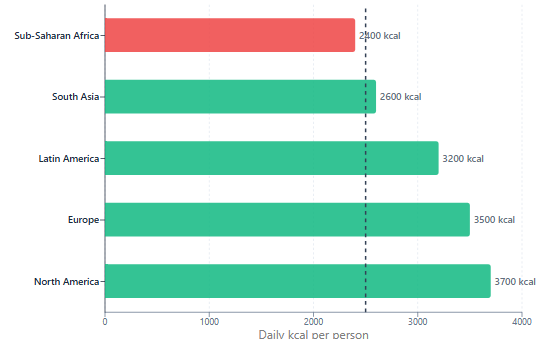
However, despite optimistic declarations in the recent past, we have not solved world hunger. Population growth in lower-income parts of the world is leading to an unequal distribution and, after an initial dip, the number of people going to bed hungry is expected to rise again. Moreover, in the next ten years some improvements are foreseen but no massive changes are expected in the percentage of food groups and calories available per capita.

Number Of People Undernourished

Climate change impact

Climate change is reshaping EU agriculture by affecting critical natural resources such as water and soil. Agroclimatic zones are shifting northwards, with implications for crop cultivation patterns. For example, regions traditionally suitable for wheat may increasingly shift focus to other crops better adapted to new climate conditions.

Consumer demand

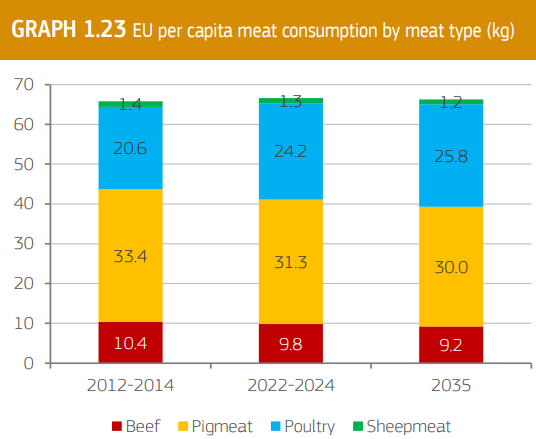
Consumer awareness of sustainability is driving significant shifts in dietary preferences in the EU. The demand for plant proteins like pulses is increasing, while meat consumption, particularly beef and pork, is declining due to environmental and health concerns. Conversely, demand for fortified and functional dairy products is on the rise.

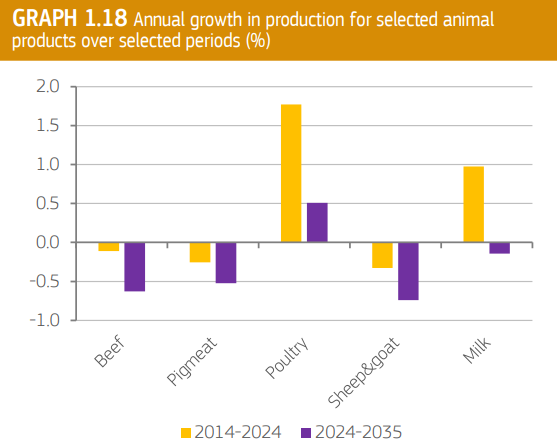
Growth For Selected Animal Products

What are the projected agricultural trends in 2024-2035?

Arable crops

  • Land use: While the total agricultural land in the EU remains stable, a shift in crop focus is anticipated. Land allocated for cereals and rapeseed is expected to decline, making way for soya beans and pulses due to reduced feed demand and policy incentives for plant proteins.
  • Cereals: Production of cereals, including wheat, maize, and barley, is forecast to stabilize with minor yield increases due to advancements in precision farming and digitalization. Wheat production is set to recover after an expected dip in 2024.

Dairy Sector

  • Milk production: Although milk yields are projected to increase due to improved genetics and farming practices, the decline in the dairy cow herd will result in a slight overall reduction in milk production by 2035.
  • Dairy products: The production of cheese and whey will grow steadily, driven by domestic and international demand. Conversely, the consumption of drinking milk is expected to decline, while demand for fortified and functional dairy products grows.

Meat Sector

  • Beef and veal: Beef production is expected to decrease by 10%, with the EU cow herd shrinking by 3.2 million head by 2035. This decline is attributed to sustainability concerns, high production costs, and changing consumer preferences. Beef consumption is also projected to decline, driven by high prices and a preference for plant-based alternativesBeef And Veal Market Balance.
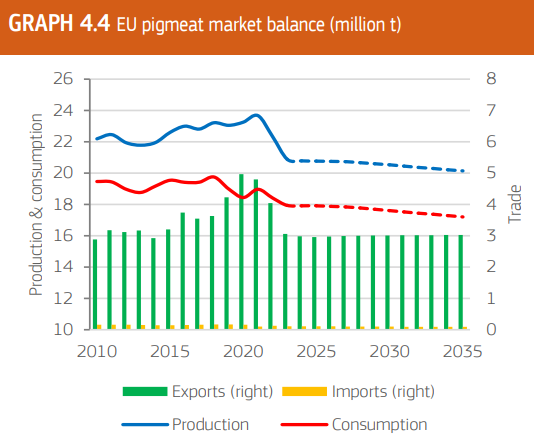
  • Pig meat: The sector faces a projected annual production decline of 0.9%, equating to a reduction of nearly 2 million tons compared to 2021-2023 levels. This trend is largely influenced by concerns over sustainability and a declining preference for fatty meats.Pig Meat Market Balance
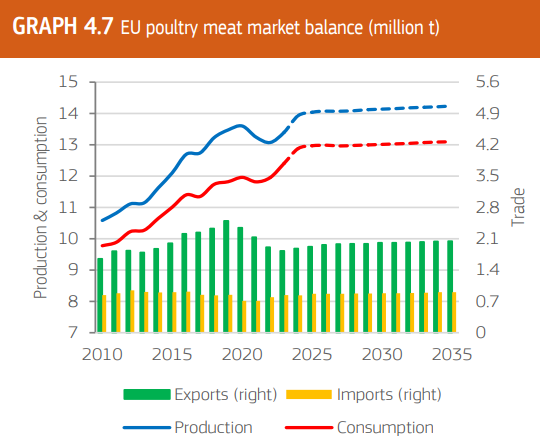
  • Poultry: In contrast, poultry production is forecast to increase due to its healthier image, lower cost, and minimal cultural or religious constraints. However, the growth rate will be slower than in the previous decade.Poultry Meat Market Balance

Meat Per Capita

Upcoming challenges in agriculture

Climate Resilience

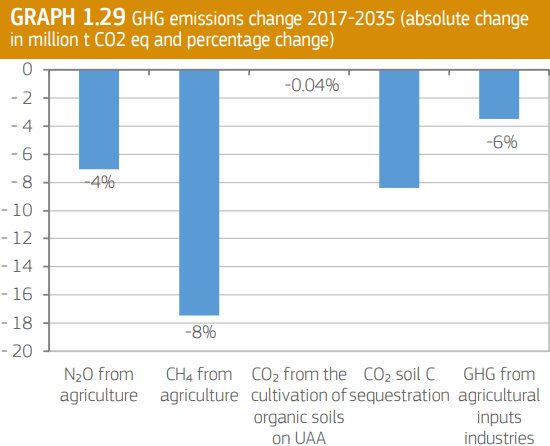
The increasing frequency of extreme weather events requires investments in resilient farming practices. Adoption of precision farming and crop diversification is critical to mitigate climate impacts. However, if existing policies are further implemented, greenhouse gas emissions are expected to see a significant decline.

GHG Emissions Change

Policy Frameworks

The Common Agricultural Policy (CAP) plays a pivotal role in steering the sector toward sustainability. However, farmers face challenges in adapting to stricter environmental regulations and securing sufficient funding for transitions. The recent Mercosur agreement has already stirred dissent in EU countries that fear unfettered competition without similar policy regulations.

Market Dynamics

Global trade tensions and competition in agricultural markets pose significant risks. While the EU remains a net exporter, dependence on imports for certain crops, such as soya beans, highlights vulnerabilities in supply chains.

In a weather-shock scenario for the EU feed supply chain, the report highlights that increased feed prices would drive up retail meat prices by 10% for poultry and pork producers, and 5% for beef and veal producers. The increase would be less abrupt for retail prices, rising by 3% for pork, and 4% for poultry meat. Producers need to be mindful of the absorbed costs of these potential shocks.

Conclusion

The EU agricultural sector must continue to balance productivity, sustainability, and consumer preferences. While advancements in technology and policy frameworks offer pathways to resilience, addressing challenges such as climate change and market dynamics will be critical to achieving long-term goals.


The ongoing battle with food poisoning: A pressing public health concern

By Dr. Inge Heinzl

Globally, unsafe food leads to 600 million cases of foodborne illnesses each year, resulting in 420,000 deaths, with 40% of these deaths occurring among children under 5 years of age. Especially for immunocompromised elderly and children, the pathogens can be dangerous.

In 2019, 27 European Union (EU) member states reported a total of 5,175 foodborne outbreaks, leading to 49,463 cases of illness, 3,859 hospitalizations, and 60 deaths. This year, e.g., salmonella-contaminated arugula from Italy caused 98 cases in Germany, 16 in Austria, and 23 in Denmark (Whitworth, 2024).

In the United States, the E. coli outbreak recently reported by 13 states and linked to McDonald’s is just one of the foodborne disease incidents this year. Several salmonella infections have also spread nationwide, with pathogens detected in various foods, including eggs, cucumbers, fresh basil, and charcuterie meats (CDC, 2024 LINK).

Symptoms of foodborne diseases may vary

The most common symptoms of food poisoning include stomach pain or cramps together with diarrhea and vomiting, nausea, and probably fever. In severe cases, diarrhea can get bloody and/or last more than 3 days. Fever (temperature over 38°C within the body) can occur, and vomiting can get so severe that the sick person cannot keep liquids inside and suffers from dehydration.

E. coli contamination, particularly from pathogenic strains like E. coli O157:H7, can pose serious health risks to consumers. It has been associated with symptoms ranging from mild gastrointestinal distress to severe conditions like hemolytic uremic syndrome (HUS), which can lead to kidney failure.

Possible sources of contamination

Usually, food is not sterile. It contains beneficial microorganisms such as lactic acid bacteria or cultured molds, but also unwanted ones such as E. coli or salmonella. The crucial point is the proliferation of the harmful ones. Food poisoning is often the result of poor hygiene or wrong processing. Here are some possible causes of getting a foodborne disease.

  1. Undercooked meat products or eggs: Undercooked meat and eggs are primary sources of, e.g., E. coli or salmonella. If these foodstuffs are not cooked to a high enough internal temperature (meat: 70 – 80°C for at least 10 min.), the bacteria can survive and pose risks to consumers. High-speed cooking processes, standard in fast-food restaurants, can lead to unevenly cooked food, increasing the risk of contamination. However, the more probable origins of food poisoning are
  2. Raw vegetables and fresh produce: Leafy greens and other raw vegetables are increasingly associated with E. coli outbreaks. Contamination often occurs during harvesting, processing, or transportation. When vegetables are served raw, such as in salads, the pathogens present might not be eliminated, which can lead to consumer exposure.
  3. Cross-contamination in preparation areas: E. coli can spread easily in food preparation areas if strict separation between raw and cooked foods is not maintained. For example, if raw beef juices come into contact with salad ingredients or utensils, the risk of cross-contamination increases significantly.
  4. Cross-contamination in the slaughterhouse: If infected animals are slaughtered together with healthy animals, the meat of the healthy ones can be contaminated with the juices of the ill ones.
  5. Inadequate supplier protocols and traceability: The complex supply chains used by fast-food companies often involve multiple suppliers across various locations. A lack of strict hygiene and safety practices among suppliers can introduce contaminated food into the restaurant chain’s supply, leading to potential outbreaks.

Countermeasures to protect consumers

To prevent future E. coli outbreaks, implementing a range of countermeasures in food-providing businesses such as restaurants, fast-food chains, and suppliers, focusing on safe food handling, better biosecurity, and improved oversight throughout the supply chain, is vital. Food safety is broader than that, however. It has a critical role in ensuring that food stays safe at every stage of the food chain – from production to harvest, processing, storage, distribution, all the way to preparation and consumption.

  1. Enhanced Cooking Standards and Temperature Monitoring: Ensuring meat is cooked to a safe internal temperature is crucial.
  2. Routine Microbial Testing of High-Risk Foods: Routine microbial testing, particularly of high-risk items like ground beef and fresh produce, can detect E. coli contamination before the food reaches consumers. Testing can be carried out at the supplier level and within restaurants. In cases where contamination is detected, affected products can be removed from circulation promptly, minimizing the risk to customers.
  3. Separation of Raw and Cooked Food Handling Areas: Cross-contamination can be reduced by establishing dedicated areas and utensils for handling raw and cooked foods. For instance, separate workspaces for salad preparation and burger assembly can prevent contact between potentially contaminated raw ingredients and ready-to-eat items. Staff training on the importance of these practices is essential to their successful implementation.
  4. Supplier Standards and Transparent Audits: Supplier chains must ensure that suppliers adhere to strict food safety protocols, including regular sanitation and testing practices. Supplier audits conducted by independent third parties can help verify compliance and identify any gaps in food safety practices. Transparency in these audits can also build consumer trust, as customers are more likely to feel reassured when they know safety checks are in place.
  5. Implementation of High-Pressure Processing (HPP): High-pressure processing (HPP) effectively reduces bacterial contamination in foods without using heat, which can be particularly beneficial for items like fresh produce that are often served raw. HPP uses high levels of pressure to kill pathogens, including E. coli. However, as HPP provokes changes in the structure of vegetable cell walls, it is unsuitable for salads and other leafy greens.
  6. Enhanced Employee Training on Hygiene Practices: Proper hygiene practices are fundamental in preventing contamination. Employees must wash their hands frequently, especially after handling raw foods. Fast-food chains should provide thorough training on proper food safety protocols, including how to handle food items safely and maintain a clean working environment.
  7. Crisis Response Protocols and Traceability Systems: In the event of an outbreak, rapid response is critical. Fast-food companies should have crisis protocols in place that include steps for immediate product recalls, customer notifications, and investigation procedures. Improved traceability systems can also allow companies to track the source of contamination quickly, limiting the spread and reducing the impact on consumers.
  8. Preventing infections with harmful enteropathogens already in the animal: To get “clean” animals arriving at the slaughterhouse, already the farmer must aspire to prevent/treat infections of the animals with pathogens possibly provoking foodborne diseases. For this purpose, the farmer can resort to vaccines and feed supplements supporting gut health, both for prevention and on medicine such as antibiotics when treatment is needed.

A path forward: Strengthening food safety standards

This new E. coli outbreak in the fast-food industry highlights the ongoing challenges of maintaining food safety standards at all food preparation and distribution stages. By implementing stricter cooking standards, enhancing biosecurity measures, enforcing supplier compliance, and improving traceability, fast-food chains like McDonald’s can significantly reduce the risk of E. coli contamination. Ultimately, consumer protection depends on a multifaceted approach that integrates strong hygiene practices, supplier oversight, and advanced technology in food safety. Through these measures, companies can work to restore consumer confidence, minimize health risks, and set a standard for food safety across the industry.


EU publishes Short-term Outlook for Agricultural Markets (Autumn 2024)

The EU’s Short-term Outlook for Agricultural Markets (Autumn 2024) reveals significant challenges in agriculture, with adverse weather, geopolitical instability, and fluctuating trade conditions impacting production. The report identifies declining cereal and oilseed outputs, particularly for soft wheat and maize. Meanwhile, milk production is expected to remain stable despite a shrinking cow herd, and the meat sector shows mixed trends, with poultry production rising but pigmeat and beef facing structural challenges.

EU’s Short-term Outlook for Autumn 2024 highlights the following key findings collectively shaping EU agricultural markets:

  1. Weather conditions: Severe drought in Southern and Eastern Europe and excess rainfall in Northwestern regions have reduced cereal and oilseed yields.
  2. Energy and input costs: Inflation is stabilizing but remains high, with elevated prices for inputs like fertilizers and energy.
  3. Geopolitical tensions: The ongoing war in Ukraine and trade disputes are disrupting supply chains and impacting exports.
  4. Global demand: While global agricultural demand is recovering, trade flows face disruptions due to regulatory changes and volatile market conditions.

EU Consumer Price Inflation

Price Transmission

Weather Synthesis

Cereals

The EU cereal production in 2024/25 is projected at 260.9 million tons, approximately 7% below the 5-year average. This marks the lowest production in the past decade, driven by unfavorable weather conditions, including excessive rain in Northwestern Europe, which impacted planting, particularly for soft wheat, and drought in Southern and Eastern regions, severely affecting maize yields. Production of soft wheat and maize is expected to decline year-on-year by 9.5% and 4%, respectively. On the other hand, barley and durum wheat production are increasing by about 6% and 3%, respectively, compared to the previous year.

EU cereal exports are projected to decline by 22% year-on-year due to reduced production and quality issues. At the same time, domestic demand remains relatively stable, with animal feed consumption holding steady as livestock production stagnates. In terms of prices, cereal prices fell throughout 2024, pressuring farmers’ cash flow, which could hinder their ability to afford inputs such as fertilizers in the coming year.

Milk and Dairy Products

Change Of Dairy Exports Etc

The EU milk market is expected to see relatively stable supply, despite a continuously shrinking cow herd. Milk yields have increased, compensating for the herd’s decline. Milk prices are forecast to stabilize after a period of volatility in the past few years, remaining above historical averages, and input costs for farmers, such as feed and energy, are showing signs of stabilizing, allowing for a potential improvement in farmer margins.

Despite the stability in milk supply, demand for dairy products continues to show mixed trends, influenced by shifts in consumer preferences and trade dynamics. The balance of milk supply and prices could provide an opportunity for dairy farmers to recover some profitability after several challenging years.

In the dairy products sector, cheese and butter continue to dominate EU production, with butter production projected to rise slightly in 2024, driven by stable milk supplies and strong domestic demand. The demand for butter in the global market remains relatively strong, although competition is rising.

Cheese production is also expected to remain stable, reflecting a balance between domestic and export markets. The cheese sector has seen steady growth over the years, supported by increasing consumer demand for premium and specialty cheeses. The demand for skimmed milk powder (SMP) and whole milk powder (WMP) is projected to remain subdued due to fluctuating global demand, particularly from key markets such as China, although some growth is expected in non-European markets.

Meat Products

The meat sector in the EU remains a mixed picture, with structural changes and external factors shaping production and trade in 2024.

Beef and Veal: Beef production continues to face structural decline due to a shrinking herd size, with the sector stabilizing but at lower levels of production. The demand for EU beef remains relatively high, and exports are increasing, but domestic production is likely to remain constrained by environmental and economic pressures. Additionally, the number of animals has been declining consistently, reflecting longer-term trends within the EU beef industry.

Pigmeat: The EU pigmeat sector is facing diverse challenges, with some countries recovering from production setbacks, while others struggle with ongoing disease outbreaks and economic issues. The overall EU pigmeat production is expected to decline slightly, and exports have become less competitive, particularly with reduced demand from key markets such as China. However, opportunities exist in other Asian countries, where EU exporters are gaining ground. Domestically, consumption is forecast to decrease slightly, reflecting shifting consumer preferences toward plant-based alternatives and poultry.

Change Of Pigmeat Production

Poultry: Poultry production is expected to rise, driven by strong domestic demand and favorable export conditions. The EU poultry sector has shown resilience, with increasing production and exports, despite higher input costs. Poultry remains a preferred source of protein for consumers, especially as prices for other meats rise. The sector continues to grow in competitiveness on the international stage, with exports expected to increase in 2024 despite the challenges posed by higher EU prices.

Change Of Poultry Production

Sheep and Goat Meat: Production of sheep and goat meat continues to decline due to the structural reduction of flocks across the EU. High EU prices have made sheep and goat meat less competitive on the global market, reducing export opportunities. Domestically, consumption remains stable but at lower levels than other meat types. The ongoing structural decline in the sector highlights long-term challenges related to animal health, productivity, and market competitiveness.

Volatility and challenges persist

The report highlights the ongoing challenges faced by the cereals, dairy, and meat sectors. Weather conditions and global trade dynamics are shaping the future of EU agriculture, with many sectors grappling with production declines and shifting market demands. Despite these challenges, opportunities exist for some areas of growth, particularly in dairy and poultry, where rising consumer demand and stable supply conditions offer optimism for the future.


Sustainable livestock farming: Progress since 1950

by Ilinca Anghelescu, Global Director Marketing Communications, EW Nutrition

Summary

  • Global GHG Emissions and Agriculture:
    • Agriculture-related emissions account for 31% of global anthropogenic emissions, with a growing share coming from food-related activities outside traditional farming, such as processing and transportation.
    • This represents a significant decrease from the 1950s when agriculture contributed to 58% of global emissions, a decrease largely due to the increased use of fossil fuels.
  • Population Growth and Emissions:
    • The global population has increased by 220% since 1950, leading to a threefold increase in agri-food emissions, now totaling 9-10 billion metric tons of CO2-equivalent annually.
  • Meat Production Growth:
    • Meat production has seen a 690% increase since 1950, driven by population growth, economic development, urbanization, technological advancements, and intensification of livestock production.
    • Technological improvements have significantly increased livestock yield, including higher carcass weights, improved feed efficiency, and greater output per animal.
  • Feed Conversion Ratio (FCR) as a Sustainability Metric:
    • FCR, which measures the efficiency of feed conversion into body mass, has improved dramatically for poultry, pigs, and cattle since the 1950s.
    • Improved FCR contributes to more efficient resource use, reduced environmental impact, better animal welfare, and economic viability.
  • Livestock Emissions and Land Use:
    • Livestock-related emissions have increased by 14% since 2000, with a significant portion coming from enteric fermentation in ruminants and land use changes.
    • Pasture and grazing land have expanded slightly, while the land for feed crops has increased substantially due to intensified livestock production.
  • Food Loss and Its Impact on Sustainability:
    • Food loss, occurring primarily before the consumer stage, remains stable at around 13%. Reducing food loss is critical for improving food security, economic efficiency, and minimizing the environmental footprint of livestock production.
  • Future Strategies for Sustainability:
    • The article emphasizes the need for ongoing investment in technology, optimization of feed efficiency, sustainable land use, and improved methods for tracking and reducing emissions to ensure the future sustainability of livestock farming.


As the global demand for animal products continues to rise, so do various claims about the impact of agriculture on greenhouse gas emissions. A study commissioned by the United Nations’ Food and Agriculture Organization (FAO) concluded that, according to the most recent data, agri-food system emissions totaled 16.5 billion metric tons of CO2 equivalent, representing 31% of global anthropogenic emissions.

Of these 31%, the most important trend highlighted by FAO was the “increasingly important role of food-related emissions generated outside of agricultural land, in pre- and post-production processes along food supply chains”. The food supply chain (food processing, packaging, transport, household consumption and waste disposal) is thus set to become the top GHG emitter, above farming and land use.

How bad is 31%?

While 31% is a large figure, even this estimate represents a significant decrease from the 1950s, when agri-food emissions constituted approximately 58% of total anthropogenic emissions: “From 1850 until around 1950, anthropogenic CO2 emissions were mainly (>50%) from land use, land-use change and forestry”, states the latest IPCC report.

Anthropogenic Emissions SourcesFigure 1. Source: IPCC AR6 Report, 2023. LULUCF = Land Use, Land-Use Change and Forestry

As the IPCC graph in Figure 1 indicates, the percentage decrease is mostly due to the rising prevalence of oil and coal in CO2 emissions over the recent decades, as shown in Figure 2 below.

Annual greenhouse gas (GHG) emissions worldwide from 1990 to 2022, by sector (in million metric tons of carbon dioxide equivalent)

Annual GHG Emissions By SectorFigure 2. Source: Statista

Total population and agri-food emission changes, 1950 – today

The global population increased by approximately 220%, from 2.5 billion in 1950 to 8 billion in 2023. In the meantime, estimates suggest that, in the 1950s, agri-food systems were responsible for approximately 2-3 billion metric tons of CO2-equivalent (CO2e) emissions per year. This figure includes emissions from livestock, rice paddies, fertilizer use, and land-use change (e.g., deforestation for agriculture).

Assessments generally agree that today’s agri-food systems contribute approximately 9-10 billion metric tons of CO2e annually, a threefold increase from 1950. This includes emissions from agriculture (e.g., livestock, crop production), food processing, transportation, and land-use changes.

This increase is consistent with FAO’s new findings, of food chain climbing to the top of agri-food emitters.

But where did these increased emissions come from?

A look at the graph below gives us an indication: world poverty rate decreased massively between 1950 and today. While COVID brought a setback, the historical data would clearly indicate a correlation between the increased output in agri-food systems and the decreased rate of poverty.

World Poverty
Figure 3. Source: World Bank

How did poverty rates decline so steeply? The reasons lie, to a large extent, in technological innovation, especially in genetics and farm management, and in the increased apport of plentiful and affordable meat protein to the world. The numbers below build an image of an industry that produces better, more, and cheaper.

Global meat production: 1950 vs. Present

Then…

In 1950, the estimated total meat production was of approximately 45 million metric tons.

Key Producers: The United States, Europe, and the Soviet Union were the primary producers of meat.
Types of Meat: Production was largely dominated by beef and pork, with poultry being less significant.

…and now

Now, the total meat production lies somewhere around 357 million metric tons (as of recent data from FAO)., representing a 53% increase from 2000 and a staggering 690% increase from 1950.

Key Producers: Major producers include China, the United States, Brazil, and the European Union.
Types of Meat: Significant increases in poultry production, with pork remaining a leading source of meat, especially in Asia. Beef production has also increased, but at a slower rate than poultry and pork.

Factors contributing to increased meat production

Population Growth: The world population has grown from approximately 2.5 billion in 1950 to over 8 billion today, driving increased demand for meat.

Economic Growth and Urbanization: Rising incomes and urbanization have led to shifts in economic power and dietary preferences, with more people consuming higher quantities of meat, especially in developing countries.

Technological Advancements: Improvements in animal breeding, feed efficiency, and production systems have increased the efficiency and output of meat production.

Intensification of Livestock Production: The shift from extensive to intensive livestock production systems has allowed for higher meat yields per animal.

Global Trade: Expansion of global trade in meat and meat products has facilitated the growth of production in countries with comparative advantages in livestock farming.

Livestock yield increase, 1950 to the present

The increase in livestock yield for cattle, pigs, and chickens between 1950 and the present has been significant due to advances in breeding, nutrition, management practices, and technology.

Beef

1950s

  • Average Carcass Weight: In the 1950s, the average carcass weight of beef cattle was about 200 to 250 kilograms (440 to 550 pounds).
  • Dressing Percentage: The dressing percentage (the proportion of live weight that becomes carcass) was typically around 50-55%.

Present Day

  • Average Carcass Weight: Today, the average carcass weight of beef cattle is approximately 300 to 400 kilograms (660 to 880 pounds).
  • Dressing Percentage: The dressing percentage has improved to about 60-65%.

Increase in Beef Cattle Yield

  • Increase in Carcass Weight: The average carcass weight has increased by about 100 to 150 kilograms (220 to 330 pounds) per animal.
  • Improved Dressing Percentage: The dressing percentage has increased by about 5-10 percentage points, meaning a greater proportion of the live weight is converted into meat.

Dairy

1950s

  • Average Milk Yield per Cow: Approximately 2,000 to 3,000 liters per year, depending on the region.

Present Day

  • Average Milk Yield per Cow: Approximately 8,000 to 10,000 liters per year globally, with some countries like the United States achieving even higher averages of 10,000 to 12,000 liters per year.

Increase in Milk Yield:: Milk yield per cow has increased about 4-5 times due to genetic selection, improved nutrition, technological advancements, and better herd management.

Chickens (Layers)

1950s

  • Average Egg Production per Hen: In the 1950s, a typical laying hen produced about 150 to 200 eggs per year.

Present Day

  • Average Egg Production per Hen: Today, a typical laying hen produces approximately 280 to 320 eggs per year, with some high-performing breeds producing even more.

Increase in Egg Yield: The average egg production per hen has increased by approximately 130 to 170 eggs per year.

Chickens (Broilers)

1950s

  • Average Yield per Bird: In the 1950s, broiler chickens typically reached a market weight of about 1.5 to 2 kilograms (3.3 to 4.4 pounds) over a growth period of 10 to 12 weeks.

Present Day

  • Average Yield per Bird: Today, broiler chickens reach a market weight of about 2.5 to 3 kilograms (5.5 to 6.6 pounds) in just 5 to 7 weeks.

Increase in Yield: The average weight of a broiler chicken has increased by approximately 1 to 1.5 kilograms (2.2 to 3.3 pounds) per bird. Additionally, the time to reach market weight has been nearly halved.

Factors contributing to yield increases

Genetic Improvement:

  • Selective Breeding: Focused breeding programs have developed chicken strains with rapid growth rates and high feed efficiency, significantly increasing meat yield.

Nutrition:

  • Optimized Feed: Advances in poultry nutrition have led to feed formulations that promote faster growth and better health, using balanced diets rich in energy, protein, and essential nutrients.

Management Practices:

  • Housing and Environment: Improved housing conditions, including temperature and humidity control, have reduced stress and disease, enhancing growth rates.

Technological Advancements:

  • Automation: Automation in feeding, watering, and waste management has improved efficiency and bird health.
  • Health Monitoring: Advances in health monitoring and veterinary care have reduced mortality rates and supported faster growth.

Feed Conversion Efficiency:

  • Improved Feed Conversion Ratios (FCR): The amount of feed required to produce a unit of meat has decreased significantly, making production more efficient.

Why Feed Conversion Ratio is a sustainability metric

Feed Conversion Ratio (FCR) is a critical metric in livestock production that measures the efficiency with which animals convert feed into body mass. It is expressed as the amount of feed required to produce a unit of meat, milk, or eggs. Advances in nutrition and precision feeding allow producers to tailor diets that optimize FCR, reducing waste and improving nutrient uptake. Also, breeding programs focused on improving FCR can lead to livestock that naturally convert feed more efficiently, supporting long-term sustainability.

Poultry (Broilers): From the 1950s, improved from approximately 4.75 kg/kg to 1.7 kg/kg.

Pigs: From the 1950s, improved from about 4.5 kg/kg to 2.75 kg/kg.

Cattle (Beef): From the 1950s, improved from around 7.5 kg/kg to 6.0 kg/kg.

FCR ChangeFigure 4. Evolution of FCR from 1950

FCR is crucial for livestock sustainability for several reasons, as shown below.

1. Resource efficiency

Feed Costs: Feed is one of the largest operational costs in livestock production. A lower FCR means less feed is needed to produce the same amount of animal product, reducing costs and improving profitability.

Land Use: Efficient feed conversion reduces the demand for land needed to grow feed crops, helping to preserve natural ecosystems and decrease deforestation pressures.

Water Use: Producing less feed per unit of animal product reduces the water needed for crop irrigation, which is crucial in regions facing water scarcity.

2. Environmental impact

Greenhouse Gas Emissions: Livestock production is a significant source of greenhouse gases (GHGs), particularly methane from ruminants and nitrous oxide from manure management. Improved FCR means fewer animals are needed to meet production goals, reducing total emissions.

Nutrient Runoff: Efficient feed use minimizes excess nutrients that can lead to water pollution through runoff and eutrophication of aquatic ecosystems.

3. Animal welfare

Health and Growth: Optimizing FCR often involves improving animal health and growth rates, which can lead to better welfare outcomes. Healthy animals grow more efficiently and are less susceptible to disease.

4. Economic viability

Competitiveness: Lowering FCR improves the economic viability of livestock operations by reducing input costs and increasing competitiveness in the global market.

Food Security: Efficient livestock systems contribute to food security by maximizing the output of animal protein relative to the input of resources.

Improving FCR is essential for achieving sustainability in livestock production. It leads to more efficient resource use, reduced environmental impact, enhanced economic viability, and supports the well-being of animals. As global demand for animal products continues to rise, optimizing FCR will be crucial in balancing production with the need to protect and preserve natural resources.

“The eight warmest years on record since 1961 (and in fact since the beginning of observations in 1880) are all within the eight-year period of 2015–2022. Europe is the region where the temperature change has been the highest in 2022 (and also for most of the 2000–2022 period), with 2.23 °C, followed by Asia (1.75 °C), the Americas (1.05 °C), Africa (1.01 °C) and Oceania (0.8 °C). The average temperature change in the 2010s was 1.25 °C, compared to 0.96 °C in the 2000s.”
FAOSTAT 2023

Livestock emissions

Livestock emissions can be direct (farm-gate) or indirect (land use). Pre- and post-production emissions are considered separately, since they refer to emissions from manufacturing, processing, packaging, transport, retail, household consumption, and waste disposal.

GHG Emissions
Figure 5. Source: FAO

Farm-gate emissions

Global farm-gate emissions (related to the production of crops and livestock) grew by 14% between 2000 and 2021, to 7.8 Gt CO2 eq, see below. 53% come from livestock-related activities, and the emissions from enteric fermentation generated in the digestive system of ruminant livestock were alone responsible for 37 percent of agricultural emissions (FAOSTAT 2023).

World Farm Gate GHG Emissions By Activity
Figure 6. Source: FAO

Land use for livestock

Land use emissions contribute a large share to agricultural emissions overall, especially through deforestation (~74% of land-use GHG emissions). The numbers have declined in recent years, to a total of 21% reduction between 2000 and 2018.

The other side of the coin is represented by the increased land usage for livestock, either directly for grazing or indirectly for feed crops.

1. Pasture and grazing land

1950: Approximately 3.2 billion hectares (7.9 billion acres) were used as permanent pastures.

Present: The area has increased to around 3.5 billion hectares (8.6 billion acres).

Change: An increase of about 0.3 billion hectares (0.7 billion acres).

2. Land for Feed Crops

1950: The land area dedicated to growing feed crops (such as corn and soy) was significantly less than today due to lower livestock production intensities and smaller scale operations. Feed crops likely accounted for about 200-250 million hectares of the cropland, although figures are evidently difficult to estimate.

Present: Of the approx. 5 billion hectares of land globally used for agriculture, about 1.5 billion hectares are dedicated to cropland.

The increase in cropland hectares is a direct consequence of the intensification of demand for livestock production. To keep these numbers in check, it is essential that producers strive to use as little feed as possible for as much meat yield as possible – and this directly relates to a key metric of the feed additive industry: Feed Conversion Ratio, mentioned above.

The role of food loss in livestock sustainability

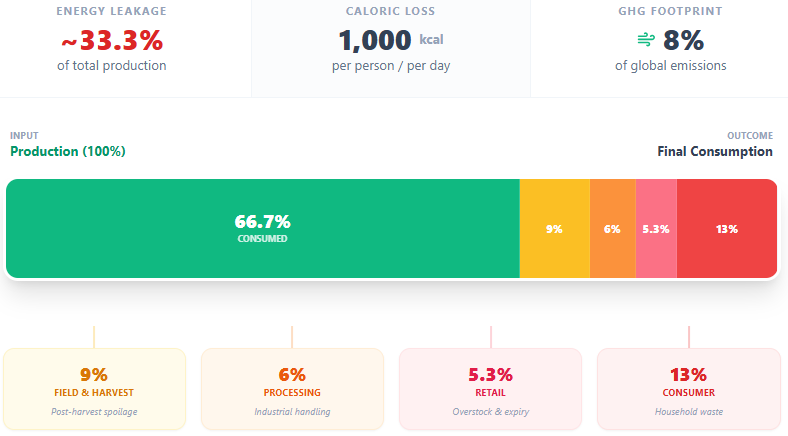
The Food and Agriculture Organization (FAO) of the United Nations defines food loss as the decrease in quantity or quality of food resulting from decisions and actions by food suppliers in the chain, excluding retail, food service providers, and consumers. Food loss specifically refers to food that gets spilled, spoiled, or lost before it reaches the consumer stage, primarily taking place during production, post-harvest, processing, and distribution stages.

Food loss is currently estimated to be relatively stable over the last decades, at around 13%.

Key aspects of food loss

  1. Stages of Food Loss:
    • Production: Losses that occur during agricultural production, including damage by pests or diseases and inefficiencies in harvesting techniques.
    • Post-Harvest Handling and Storage: Losses that happen due to inadequate storage facilities, poor handling practices, and lack of proper cooling or processing facilities.
    • Processing: Losses during the processing stage, which may include inefficient processing techniques, contamination, or mechanical damage.
    • Distribution: Losses that occur during transportation and distribution due to poor infrastructure, inadequate packaging, and logistical inefficiencies.
  2. Quality and Quantity:
    • Quality Loss: Refers to the reduction in the quality of food, affecting its nutritional value, taste, or safety, which may not necessarily reduce its quantity.
    • Quantity Loss: Refers to the actual reduction in the amount of food available for consumption due to physical losses.
  3. Exclusions:
    • Retail and Consumer Level: Food loss does not include food waste at the retail or consumer levels, which is categorized as food waste. Food waste refers to the discarding of food that is still fit for consumption by retailers or consumers.

Importance of reducing food loss

Every step along the production chain, each action taken to preserve feed, increase yield, ensure stable and high meat quality, can contribute to reducing food loss and ensuring that animal protein production stays sustainable and feeds the world more efficiently.

  • Food Security: Reducing food loss can help improve food availability and access, particularly in regions where food scarcity is a concern. Where we thought we were on our way to eradicate world hunger, recent upticks in several regions show us that progress is not a given.
  • Economic Efficiency: Minimizing food loss can improve the efficiency and profitability of food supply chains by maximizing the utilization of resources.
  • Environmental Impact: Reducing food loss helps to decrease the environmental footprint of food production by lowering greenhouse gas emissions and minimizing land and water use. This is all the more important in regions where world hunger shows signs of going up. Perhaps not by coincidence are these regions some of the most affected by climate change.

By understanding and addressing the causes of food loss, stakeholders across the food supply chain can work towards more sustainable and efficient food systems.

What’s next?

Improving production practices and technology

Investment in research and development of new technologies that enhance livestock production efficiency and reduce environmental impact is vital for the future sustainability of the sector.

India is a good illustration of room to grow. If we look at cow milk alone, India, with a headcount of approximately 61 million animals, has a total milk production that is neck-and-neck with the United States, whose dairy cow headcount is in the neighborhood of 9.3 million. India’s milk yield sits around 1,600 liters/animal/year, compared to the US’s average of 10,700 liters.

Milk Yield IN US
Figure 7. Based on Our World in Data

Optimizing Feed Efficiency

Continued focus on improving FCR through genetic selection, optimized nutrition, and advanced management practices will be crucial for reducing the environmental footprint of livestock production.

Promoting Sustainable Land Use

Strategies to balance the need for increased livestock production with sustainable land use practices are essential. This includes adopting agroecological approaches and improving the efficiency of feed crop production.

Reducing Food Loss

Stakeholders across the food supply chain must prioritize reducing food loss through improved storage, transportation, and processing technologies. This will help ensure that livestock production contributes effectively to global food security.

Enhancing Emission Tracking and Reporting

There is a need for standardized methods for collecting and reporting data on GHG emissions in agriculture. This will enable more accurate assessments and the development of targeted strategies for emission reductions.

References

Bell, D. D. (2002). Laying hens in the U.S. market: An appraisal of trends from the beginning of the 20th century to present. Poultry Science, 81(5), 485-490. https://doi.org/10.1093/ps/81.5.485

CarbonWise. (2023). Global greenhouse gas emissions by sector. Retrieved from https://carbonwise.co/global-greenhouse-gas-emissions-by-sector/

Crippa, M., Solazzo, E., Guizzardi, D., Monforti-Ferrario, F., Tubiello, F. N., Leip, A., … & Janssens-Maenhout, G. (2022). Greenhouse gas emissions from food systems: building the global food system emissions database (GFED). Earth System Science Data, 14(4), 1795-1821. https://essd.copernicus.org/articles/14/1795/2022/essd-14-1795-2022.pdf

European Environment Agency (EEA). (2023). Improving the climate impact of raw material sourcing. Retrieved from https://www.eea.europa.eu/publications/improving-the-climate-impact-of-raw-material-sourcing

Food and Agriculture Organization of the United Nations (FAO). (2021). The State of Food and Agriculture 2021: Making agrifood systems more resilient to shocks and stresses. FAO. https://openknowledge.fao.org/server/api/core/bitstreams/6e04f2b4-82fc-4740-8cd5-9b66f5335239/content

Food and Agriculture Organization of the United Nations (FAO). (2021). Food Loss and Waste Database. FAO. https://www.fao.org/platform-food-loss-waste/food-loss/introduction/en

Food and Agriculture Organization of the United Nations (FAO). (2021). Greenhouse gas emissions from agrifood systems. Retrieved from https://www.fao.org/platform-food-loss-waste/food-loss/introduction/en

Goldewijk, K. K., & Verburg, P. H. (2013). Per-capita estimations of long-term historical land use and the consequences for global change research. Global Environmental Change, 23(4), 1166-1175. https://doi.org/10.1016/j.gloenvcha.2013.04.001

Intergovernmental Panel on Climate Change (IPCC). (2023). AR6 Synthesis Report: Climate Change 2023. IPCC. https://www.ipcc.ch/report/ar6/syr/

Kusuma, A. B., Laga, W. R., & Purnomo, H. (2022). Climate Change and Livestock Farming: Strategies for Mitigation and Adaptation. MDPI, 12(10), 1554. https://www.mdpi.com/2077-0472/12/10/1554

Matthews, D. (2023). Chicken, meat, and the future of global food: Forecasts and predictions for beef, pork, and more. Vox. https://www.vox.com/future-perfect/2023/8/4/23818952/chicken-meat-forecast-predictions-beef-pork-oecd-fao?mc_cid=d1a37e53b6&mc_eid=1b5c5e908a

Our World in Data. (2020). Milk yields per animal. Retrieved from https://ourworldindata.org/grapher/milk-yields-per-animal

Our World in Data. (2023). Grazing land use over the long-term, 1600 to 2023. Retrieved from https://ourworldindata.org/grazing-land-use-over-the-long-term

Ritchie, H., & Roser, M. (2020). Food greenhouse gas emissions. Our World in Data. https://ourworldindata.org/food-ghg-emissions

Roche, J. R., Friggens, N. C., Kay, J. K., Fisher, M. W., Stafford, K. J., & Berry, D. P. (2013). Invited review: Body condition score and its association with dairy cow productivity, health, and welfare. Animal Frontiers, 3(4), 23-29. https://doi.org/10.2527/af.2013-0032

Sharma, V. P., & Gulati, A. (2020). Changes in Herd Composition a Key to Indian Dairy Production. United States Department of Agriculture (USDA) Economic Research Service. https://www.ers.usda.gov/publications/pub-details/?pubid=99794

The Last Glaciers. (2023). Decarbonizing Food and Agriculture. Retrieved from https://thelastglaciers.com/decarbonising-food-and-agriculture/

Thoma, G., Jolliet, O., & Wang, Y. (2016). National Pork Board. (2016). Greenhouse gas emissions and the potential for mitigation from the pork industry in the U.S. Retrieved from https://www.porkcheckoff.org/wp-content/uploads/2021/05/16-214-THOMA-final-rpt.pdf

Thornton, P. K., & Herrero, M. (2015). Impacts of climate change on the livestock food supply chain; a review of the evidence. Frontiers in Veterinary Science, 2, 93. https://www.ncbi.nlm.nih.gov/pmc/articles/PMC4686767/

USDA – National Agricultural Statistics Service. (n.d.). Trends in U.S. Agriculture – Broiler Industry. U.S. Department of Agriculture. Retrieved from https://www.nass.usda.gov/Publications/Trends_in_U.S._Agriculture/Broiler_Industry/

Zuidhof, M. J., Schneider, B. L., Carney, V. L., Korver, D. R., & Robinson, F. E. (2014). Evolution of the modern broiler and feed efficiency. Annual Review of Animal Biosciences, 2(1), 47-71. https://doi.org/10.1146/annurev-animal-022513-114132


Will weight loss drugs impact the future of agriculture?

By Ilinca Anghelescu, Global Director Marketing Communications, EW Nutrition

Medications like GLP-1 receptor agonists, such as semaglutide (marketed as Ozempic, Wegovy, Zepbound etc.), have demonstrated startling efficacy in reducing body weight and are now at the forefront of obesity treatment. Since they work primarily by suppressing appetite, an obvious question is being considered across the entire food chain: will weight loss drugs significantly impact the future of agriculture?

More and more voices are answering “yes”. Not only are models showing a significant impact of these drugs over the medium- and long term, but the demand reduction triggered by weight loss drugs will hurt regions where population peak and shifting demand are already lowering the growth potential of certain segments of agriculture.

Changes are already seen in food consumption

Weight loss drugs like semaglutide work by mimicking the GLP-1 hormone, which regulates appetite and insulin secretion. By doing so, these medications reduce hunger and caloric intake, leading to weight loss. They also appear to reduce consumption of alcohol, tobacco, and junk food. While they have been around for more than a decade, they only recently started to be prescribed for the express purpose of weight loss. In the meantime, medical research is yielding increasingly better results at more affordable prices and with easier application, which will lead to much more widespread adoption around the world.

Currently, around 1.7% of the US population is officially prescribed such drugs, although it is hard to know how many people are actually taking this type of medication. Morgan Stanley expects the figure to grow to 7% within ten years – equivalent to well over 23 million people in the US alone. Even with this currently small percentage, retailers are claiming to see effects. Pepsi, Nestle and Walmart are among those preparing to pivot in the face of expected losses.

As more individuals adopt these drugs for weight management, dietary patterns are expected to shift even more, impacting food demand at both individual and population levels. With a 25% reduction in caloric intake for a considerable slice of the world’s over 1 billion obese people, not to mention overweight populations that might take these drugs off-label, the math speaks for itself.

Potential implications for agriculture

  1. Crop Production Adjustments: Farmers might adjust crop production to align with changing consumer preferences. Increased demand for fruits, vegetables, and whole grains could lead to a shift in crop priorities, influencing agricultural planning and resource allocation.
  2. Livestock Industry: A potential decrease in demand for high-fat meats and increase in demand for leaner meats could impact the livestock industry, leading to changes in breeding, feeding, and marketing strategies. Animal protein, however, remains much less impacted than industries supplying manufacturers of junk food, alcohol, and tobacco.

Changes in consumer demand will inevitably impact food prices and market dynamics, from the field to retail shelves. Increased demand for healthier food options might lead to industry shifts and higher prices initially, but as production scales up, prices could stabilize. This economic transition will require strategic adjustments across the supply chain.

Bonus problem: World population will peak and decline within two generations

To add insult to injury: United Nations demographic models suggest population growth will peak around 10.3 billion in the mid-2080s, then decline. Naturally, the distribution is unequal across the board, with some countries peaking this year and others growing at staggering speeds.

For instance, 63 countries and areas will already see population peaks in 2024 and are expected to decline by 14% over the next 30 years – including China, Russia, Germany, and Japan.

“Angola, Central African Republic, the Democratic Republic of the Congo, Niger and Somalia are likely to grow exponentially, with populations doubling in size or more between 2024 and 2054. More than one fifth of the projected increase in the global population between 2024 and 2054 is expected to be concentrated in these nine countries. Due to this rapid growth, the ranking of the most populous countries in the world will likely change, with Pakistan and eventually Nigeria and the Democratic Republic of the Congo overtaking the United States of America in terms of population size, and the United Republic of Tanzania likely joining the list of the ten largest countries by the end of the century.”

United Nations World Population Prospects 2024


These new demographic models should already shape the long-term plans not just for companies, but for countries and alliances as well – and agriculture will represent a major point of impact. In its case, this map is consistent with FAO’s analysis of growth areas and lends even more credence to the idea of major shifts already felt within a generation. Growth in protein demand will move to what are now seen as developing nations, while developed countries should expect shrinking demand. It is, however, in these developed countries where obesity drugs will hit first and most strongly, lowering demand that is already nearing its peak.

Obese Population OECD Countries

Still: It’s not all bad news!

The emergence of weight loss drugs like semaglutide has the potential to influence dietary patterns significantly, thereby impacting agricultural demand and production. While this is undeniably a challenge, there is a major opportunity here as well: The industries that will be most severely hit do not include healthy protein production. A reduced food intake will likely require a higher quality of nutrition in general, with reduced demand for “empty” calories and increased demand for vitamin-, fiber-, and especially protein-packed meals, tasty as well as nutritionally rich.


Further reading

Wilding, J.P.H., et al. (2021). “Once-Weekly Semaglutide in Adults with Overweight or Obesity.” *New England Journal of Medicine*, 384(11), 989-1002. https://www.nejm.org/doi/full/10.1056/NEJMoa2032183

Astrup, A., et al. (2021). “Semaglutide for the treatment of overweight and obesity: A review.” *Diabetes, Obesity and Metabolism*, 23(S1), 39-49. https://dom-pubs.onlinelibrary.wiley.com/doi/full/10.1111/dom.14863

Garnett, T. (2011). “Where are the best opportunities for reducing greenhouse gas emissions in the food system (including the food chain)?” *Food Policy*, 36, S23-S32. https://www.sciencedirect.com/science/article/abs/pii/S0306919210001132


Global Trends and Challenges in Artificial Meat and Alternative Protein Production

Over the past decade, the food industry witnessed a surge in the popularity of alternative proteins, driven by growing consumer awareness of environmental issues, animal welfare concerns, and health considerations. However, recent trends indicate a decline in both consumer interest and investment in alternative proteins. This article explores the challenges in producing viable replacements for traditional meat, the status of sales investments, and the global outlook for protein consumption.

Unit Prices By Category


Patty Price Per Country

Figure 1. Uncompetitive prices of artificial meat are a critical factor in the market downturn

Challenges in artificial meat production

Producing artificial meat, also known as cultured or lab-grown meat, has been widely hyped and substantially funded over the last decade. However, many challenges remain on several levels.

Cell Culturing and Growth

Cell Source: Obtaining high-quality animal cells is crucial. Researchers typically use muscle cells (myocytes) from animals like cows, pigs, or chickens.

Cell Proliferation: Culturing cells in the lab requires precise conditions, including the right nutrients, temperature, and oxygen levels. Ensuring rapid and efficient cell growth is essential.

Scaffold Development

3D Structure: Creating a meat-like texture involves growing cells on a scaffold that mimics the natural 3D structure of muscle tissue. Developing suitable scaffolds is challenging.

Biocompatibility: The scaffold material must be biocompatible and support cell attachment, proliferation, and differentiation.

Nutrient Supply

Medium Formulation: The nutrient-rich medium used to feed the cells must provide essential amino acids, vitamins, and minerals. Designing an optimal medium is complex.

Cost Efficiency: Developing cost-effective and sustainable nutrient solutions is critical for large-scale production.

Scaling Up Production

Bioreactors: Moving from small-scale lab experiments to large-scale bioreactors is a significant challenge. Bioreactors must maintain consistent conditions for cell growth.

Energy Consumption: Scaling up production while minimizing energy consumption and environmental impact is essential.

Flavor and Texture

Taste and Aroma: Artificial meat would be expected to taste and smell like traditional meat. Achieving the right flavor profile is an ongoing challenge.

Texture: Mimicking the texture of different meat cuts (e.g., steak, ground beef) requires precise engineering.

Safety and Regulation

Food Safety: Ensuring that cultured meat is safe for consumption is critical. Contamination risks, such as bacterial growth, must be minimized.

Regulatory Approval: Cultured meat faces regulatory hurdles related to labeling, safety assessments, and consumer acceptance.

Cost Reduction

High Initial Costs: Currently, producing artificial meat is expensive due to research, development, and infrastructure costs. Reducing these costs is essential for commercial viability.

Acceptance and Perception

Consumer Perception: Convincing consumers that cultured meat is a viable and ethical alternative to traditional meat remains a challenge.

Cultural and Social Factors: Cultural preferences and traditions play a role in consumer acceptance.

Challenges in alternative protein production

As opposed to artificial meat, which still involves animal cells, alternative proteins usually designate plant-based meat imitations. However, producing alternative proteins comes with its own set of challenges.

Diverse protein sources are one challenge that is not easy to overcome. It turns out, it is quite hard to replicate the availability, as well as the diversity of health and nutritional benefits of traditional meat. While plant-based proteins have made significant progress, there’s still room for improvement in terms of variety and availability.

Procuring the technology needed to extract protein efficiently and sustainably is another hurdle. Innovations in extraction methods are essential for scaling up alternative protein production.

Lower nutritional benefits of alternative proteins represent a major hurdle. Not only is it hard to mimic the entirety of meat’s benefits, but plant nutritional values are notoriously fickle depending on region, soil, production type, season, and so on.

Flavor and texture remain extremely elusive. Contenders are closer to a meat-feel than before, yet this remains a major factor skewing negative in consumer perception.

SteakFigure 2: Alternative protein producers have been unable to replicate the taste and texture of traditional meat

Scaling and Supply Chain Challenges are getting more, not less complicated. Achieving affordability at scale is essential for alternative meats to compete with traditional meat products. Additionally, ensuring a robust and efficient supply chain for alternative proteins is a concern that has not found a sustainable solution.

The Status of Alternative Protein Sales and Investment

Sales Trends

According to the Plant Based Foods Association (PBFA), overall plant-based meat units have declined by 8.2% in 2022, while dollar sales decreased by 1.2% following a significant growth phase in previous years. Similarly, Euromonitor International reported that global sales of plant-based meat substitutes grew by only 1% in 2022, a stark contrast to the double-digit growth rates seen earlier in the decade.

Beyond Meat, one of the market leaders, reported a decline in net revenues of 13.9% in the third quarter of 2022 compared to the same period in 2021. This decline reflects broader market trends where consumer enthusiasm appears to be waning.

RabobankFigure 3. Rabobank indicates a downward trend in both sales and investments

Investment Trends

Investment in alternative protein startups also shows signs of slowing, with funding of sustainability food and agriculture startups dramatically declining (see Figure 2 below). According to the Good Food Institute (GFI), global investment in alternative proteins dropped 42% year-over-year to $1.2 billion in 2022, a significant decrease from the $3.1 billion invested in 2021.

The financial challenges faced by some high-profile companies have led to increased caution among investors. For instance, Beyond Meat and Oatly have both experienced substantial stock price declines, leading to a reassessment of the market’s growth potential.

Investment TrendsFigure 4: 2023 funding variation for climate and sustainability technologies

Factors Contributing to the Decline

Market Saturation and Competition

The initial surge in demand led to rapid market saturation. Numerous companies entered the market, resulting in intense competition and a proliferation of products. This saturation has made it difficult for individual brands to maintain market share and grow sales.

In the US, for example, plant-based milk remains the largest category, while plant-based meat and seafood sales declined substantially in 2023.

Consumer Preferences and Expectations

While early adopters of alternative proteins were driven by ethical and environmental considerations, mainstream consumers remain price-sensitive and often prefer traditional meat products (to the extent they may choose smaller meat portions over alternative proteins). Additionally, taste and texture remain critical factors. Despite advancements, many consumers still find plant-based alternatives lacking in these areas.

Not MeatFigure 5: Seems fake? Consumers find it hard to believe the claims of identical taste and texture in non-meat products

Economic Factors

The global economic downturn and inflation have impacted consumer spending power. As a result, many consumers are prioritizing affordability over sustainability, leading to reduced purchases of typically more expensive plant-based products.

Regulatory and Supply Chain Challenges

Regulatory hurdles and supply chain disruptions have also played a role. The COVID-19 pandemic exacerbated supply chain issues, affecting the availability and cost of raw materials needed for alternative protein production.

Conclusion: Global Outlook for Protein and Alternative Proteins

Traditional meat consumption continues to grow, particularly in emerging markets. According to the Food and Agriculture Organization (FAO), global meat consumption is projected to increase by 14% by 2030, driven by population growth and rising incomes in developing countries.

Advances in food technology, such as precision fermentation and cell-cultured meat, offer the potential to create products that more closely mimic traditional meat. However, the recent decline in interest in alternative proteins reflects a complex interplay of market saturation, economic factors, and consumer preferences.

High prices, lack of scalability, sustainability concerns, and an inability to recreate the nutritional content, texture, and taste of meat are hurdles that cannot be easily overcome. Instead, perhaps a more accessible long-term solution might be improved sustainability in the livestock sector, accompanied by continued innovation and improvements in the production of both traditional protein and alternative proteins.


Gustavo Tesolin appointed Regional Director of EW Nutrition LATAM

headervisual ewn

Gustavo Tesolin
Gustavo Tesolin

29 January 2024, Visbek – German-based company EW Nutrition, a global provider of functional animal nutrition solutions, has appointed Gustavo Carlos Tesolin as its Regional Director for Latin America.

An agricultural engineer by training, Gustavo Tesolin has forged an international career in the Animal Health business during the last 25 years. With different leadership roles in several major international organizations such as Novartis, Elanco, and Erber Group, Mr. Tesolin brings along important experience in Commercial Operations, P&L drive, and Strategy execution, with special emphasis on team development and geographic expansion.

“I am really excited to join a company as innovation-driven and science-focused as EW Nutrition,” Tesolin said. “The recent launch of VENTAR D, a novel phytogenic specifically designed and developed to improve animal husbandry results, will continue to strengthen our position in the region, together with our winning brands PRETECT D and ACTIVO” and added, “I am eager to take on the challenge and better acquaint the market with an excellent portfolio centered on Gut Health Management, Digestibility, and Feed Quality.”

Jan Vanbrabant, CEO of EW Nutrition, noted that Gustavo Tesolin is “the perfect combination of the right experience and the right attitude. We are happy to have found in him a proven leader with not just excellent market knowledge, but with the same values we share in EW Nutrition: a passion for innovation in the service of our customers, and relentless curiosity and energy to find the right solution.”

This appointment comes on the heels of several top-tier global hires over the last 18 months and reflects the company’s commitment to the Latin American market.

Tesolin will move to Mexico to coordinate EW Nutrition’s expansion in Latin American countries.


About EW Nutrition

EW Nutrition is a German-based international animal nutrition company that offers comprehensive solutions for animal gut health, toxin risk management, growth performance, and more.


Press contact

marketing@ew-nutrition.com


INFOGRAPHIC – Target measurements for water quality

Water is a main nutrient and carrier for vaccines, medicine – including antibiotics, but also for pathogens

Chemistry

Ph Icon
pH and pKa

Acidity and dissociation index
Target: pH 3,5-3,8 Important for acids application (E.g. organic acids, etc), and ORP

Ch
Hardness

Content of Ca, sometimes plus Mg
Target: better TDS Important for acid binding capacity (ABC, buffer capacity)

Ch
Oxidation Reduction Potential (ORP)

Target: 650 mV>700 mV » reduces water intake Important for biocides application (E.g. chlorination)

Ch
Total Dissolved Solids (TDS)

Sum of dissolved salts, minerals, metals, carbonates, organics Target: 2000 ppm>3000 ppm » laxation Important for buffer capacity and ORP

Microbiology

Micro
Yeast

Target: < 5000 cfu/gr

Micro
Enterobacterias

Target: < 100 cfu/gr

Micro
Moulds

Target: < 100 cfu/gr